Bookmark this site Online message 中文站Welcome to the official website of Beijing Yuanlai Water Treatment Equipment Co., LTD.!
Service Hotline
+86 010 59792055 / +86 13910114728

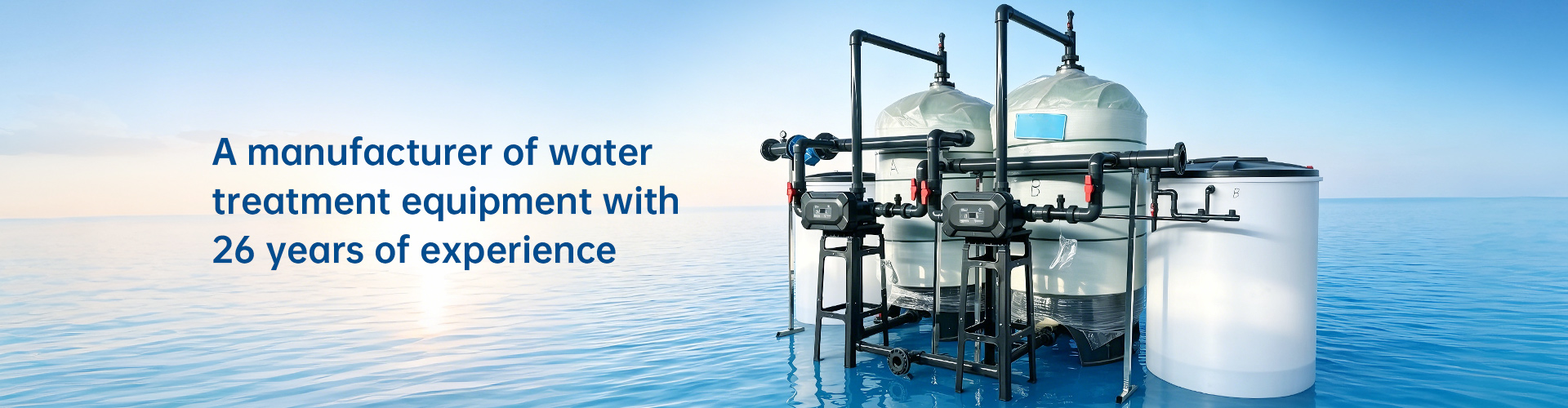
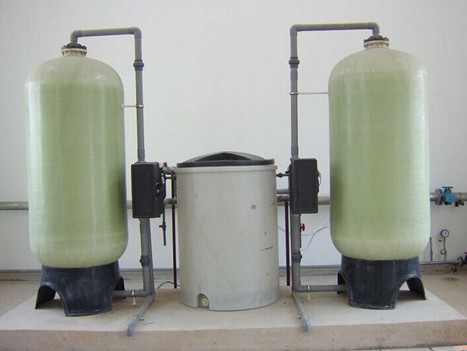
Boiler softened water equipment is a kind of raw water pretreatment device launched for the problem of scale formation in boilers, which removes calcium and magnesium ions as well as elements that cause scale formation in boilers from the raw water.
2Principle Editing: Since the hardness of water is mainly formed and represented by calcium and magnesium, cation exchange resin (water softener) is generally used to remove the hardness of waterCa2+,Mg2+The main components that form scale are displaced and carried out within the resinCa2+,Mg2+The increase, resin removalCa2+,Mg2+Its efficiency gradually decreases.
When the resin has absorbed a certain amount of calcium and magnesium ions, it undergoes regeneration. The regeneration process involves flushing the resin layer with brine from the salt tank to displace the hardness ions on the resin and discharge them out of the tank with the regeneration waste liquid. Thus, the resin regains its softening exchange function
3Boiler softened water treatment parameters and usage requirements edit raw water hardness:3-10mg-N/L(1mg-N/L=2.8German degree=50mg/LCaCO3Hardness)If the hardness of the raw water is higher than10mg-N/L,When selecting the model, increase the size by one type or use two-stage softening.
●Hardness of the outlet≤0.03mg-N/L
●Inlet water pressure0.2-0.6Mpa
●Operating temperature2-50℃
●Self-controlled power supply220V,50Hz
●Power consumption<10W
●Salt consumption<100g/Gram equivalent
4The law stipulates that water treated by boiler water softening equipment, whether boiled or drunk, falls within the category of domestic drinking water. To ensure the hygiene of drinking water for daily use (hereinafter referred to as drinking water) and safeguard human health, the Measures for the Supervision and Administration of the Hygiene of Drinking Water for Daily Use, formulated in accordance with the relevant provisions of the Law of the People's Republic of China on the Prevention and Control of Infectious Diseases and the Regulations on Urban Water Supply, stipulates: Units and individuals engaged in the production of products related to drinking water hygiene shall, in accordance with the regulations, apply to the government's health administrative department for the approval document of product hygiene license. Only after obtaining the approval document can they produce and sell such products. No unit or individual may produce, sell or use the products mentioned in the preceding paragraph without approval documents. All imported products related to drinking water hygiene must be approved by the Ministry of Health before they can be imported and sold. The specific management measures shall be separately formulated by the Ministry of Health.
Where any person violates the provisions of these Measures by producing or selling products related to drinking water hygiene without a hygiene license approval document, the health administrative department of the local people's government at or above the county level shall order him to make improvements and may impose illegal gains3A fine of not more than one times the amount, but not exceeding30000Yuan, or bu500More than yuan10000A fine of less than yuan
The method for querying water-related approval documents: Search on Baidu for "Health Supervision of the Ministry of Health"→Public inquiry→Approval Document Database for Water-related products→Enter the product name or approval number→Query result. You can also check the provincial and municipal water-related approval documents through the friendly links on the Ministry of Health's Health supervision website.
5Fully automatic equipment editing⒈Users can choose manual control systems according to their conditions to save costs.
⒉If the user24For continuous water usage within hours, alternating regeneration can be selected based on the water usage time, with one as a backup and the other in use.
⒊Users can also, based on the water quality requirements, configure a multi-media filter for the first stage to remove sediment, rust, colloids and suspended solids from the water. The secondary configurable activated carbon filter is used to remove pigments, odors, biochemical organic matter in water, and reduce the residual chlorine value and pollution in water. Three-level configuration of water softening equipment.
⒋The effluent quality meets the national standard for low-pressure boiler feed water.
⒌Time control-Timing type; Flow control-Metering type. In terms of operation, various combination methods such as single tank, double tank and multiple tanks are adopted. When making a selection, users can choose according to their needs. In terms of operation, this product not only has the function of automatic operation but also can be operated manually.
⒍Technical indicators and job requirements
Inlet water pressure0.18-0.6Mpa Operating temperature1-55℃
Source water hardness<8mmol/L Operation mode: Automatic/Manual
Effluent hardness≤0.03mmol/L RegenerantNaCL
Regeneration method: Downstream flow/"Countercurrent" Exchanger001*7Strongly acidic ion exchange resin
Control method: Time/"Traffic"
Working power supply220V/50Hz
The chemical equation for converting hard water to softened water
Calcium removal
CaCO3+2NaCl=CaCl2+Na2CO3
Removal of magnesium
MgCO3+2NaCl=MgCl2+Na2CO3
Types of control valves for boiler softened water equipment
<1>; Semi-automatic (manual) control valve
<2>; Fully automatic flow control valve
<3>; Fully automatic time-type control valve
6Regeneration process of boiler softened water equipment: Edit1Backwashing: After the equipment has been in operation for a period of time, a lot of impurities brought by the raw water will be intercepted on the upper part of the resin. Only after removing these impurities can the ion exchange resin be exposed and the regeneration effect be guaranteed. The backwashing process involves water being washed in from the bottom of the resin and flowing out from the top, which can wash away the dirt trapped at the top. This process usually requires5-15About a minute.
2Salt absorption(Regeneration)The process of injecting brine into the resin tank is that traditional equipment uses a salt pump to inject brine, while fully automatic equipment uses a dedicated built-in injector to draw in the brine(As long as there is a certain pressure in the incoming water, that's it Can be). In the actual working process, the regeneration effect of salt water flowing slowly through the resin is better than that of simply soaking the resin in salt water. Therefore, water softening equipment all adopt the method of salt water flowing slowly through the resin for regeneration. This process generally requires30It takes about minutes, but the actual time is affected by the amount of salt used.
3Slow rinse(Replacement)After the salt water flows through the resin, the process of slowly rinsing all the salt in the resin with the original water at the same flow rate is called slow rinsing. Since a large number of calcium and magnesium ions on the functional groups are still exchanged with sodium ions during this rinsing process, based on practical experience, this process is the main process of regeneration, so many people call this process displacement. This process usually takes the same amount of time as salt absorption, that is30About a minute.
4Rapid rinsing: To thoroughly wash away the remaining salt, the resin should be rinsed with raw water at a flow rate close to the actual working condition. The effluent from this process should be qualified soft water. Under normal circumstances, the quick rinse process is5-15Minutes.
7Analysis and Editing of the Characteristics of Industrial Boiler Softened Water Equipment1. Automation of water softening process: Introduce a controller and control the device through a synchronous motor drive program to achieve the automation of the entire process of ion exchange and resin regeneration. Just add the regenerant regularly, and continuous or intermittent water supply can be achieved under fully automatic conditions.
2. The foundation needs to be level, and a common cement surface is fine. There should be a floor drain or drainage ditch near the water softener.
3. The overall design of the water softener is reasonable, enabling the effective working exchange capacity of the resin to be fully utilized.
4. Stable water output: The controller can accurately control the flow rate, regeneration time and the degree of each regeneration stage to ensure stable water output.
5. Labor-saving: No need for dedicated personnel to stand by. Easy to install. It can be installed and used on the same day.
6. Water-saving: The water production rate of the water softener has reached98%That's all.
7. Small floor space: Only the floor space of the resin tank and the salt tank needs to be provided, saving the space occupied by pipelines and salt pumps.
8. Convenient adjustment: Users can adjust the regeneration cycle and regeneration time according to their actual situation and needs by themselves.
9. It adopts electronic control mode and has a power-off memory function. It can query historical records such as peak water production time and total cumulative water production volume, and analyze water usage.
8Analysis and Editing of the Reasons for Excessive Hardness of Softened Water in Boiler Softened Water Equipment⒉Multiple tests were conducted at the sampling port of the soft water equipment, all of which were found to be substandard. This situation was discussed separately as the initial water test hardness exceeding the standard for newly installed soft water equipment and the hardness exceeding the standard for in-use soft water equipment.
AThe reasons for the hardness of the newly installed soft water equipment exceeding the standard during the first water test:
a At the junction of the pipe and the control valveOIf the conical sealing ring has not formed a seal, the following should be inspected at this time:
l Whether the length of the pipe is sufficient and whether the outer diameter meets the requirements
l Did you forget to install it?OConical sealing ring
l OCheck if the sealing ring is damaged
b The pipe is damaged and has cracks.
c Water supplyTDSThe ratio of the value to the height of the resin layer is too large.
d Water supplyTDSThe ratio of the value to the resin exchange capacity is too large.
e The inlet and outlet are connected in reverse.
B The reasons for the excessive hardness of soft water in use by soft water equipment:
a Water supplyTDSThe ratio of the value to the height of the resin layer or the resin exchange capacity is too large. Compared with the initial water test of the new resin, the water supply is treated with a soft water equipmentTDSThe value requirements are stricter when the height of the resin layer is1.5The total hardness of the meter is13mmol/LWater supplyTDSvalue≧900mg/LWhen doing so, ensure the hardness of the soft water≤0.03mmol/LIt will be rather difficult.
b The reduction of resin exchange capacity caused by resin poisoning and aging. The excessive hardness of soft water caused by this reason is a gradual process, not a sudden and obvious over-limit.
c There is too little salt in the salt tank. When the water level in the salt tank is normal but the height of the salt is less than that of the water1/3At that time, the brine absorbed in the middle and later stages of the brine absorption process is very likely to be unsaturated, resulting in the brine concentration diluted by the jet injector being lower than the regeneration requirements, which affects the regeneration effect.
d The total water volume in the salt tank is too low. Our experience is that in the resin tank, every100LThe amount of water required in the salt tank for resin is approximately35-40LIf the standard is too low, it will lead to insufficient regeneration.
e The salt water inhalation is too slow. Within the normal time, sufficient salt water cannot be inhaled. The reasons are as follows:
l The water supply pressure is too low
l The upper and lower water distribution areas are severely clogged with silt and other debris
l Poor drainage of wastewater caused by deformation or bending of the wastewater hose
l There are too many impurities in the resin layer
l There is a leakage point on the salt suction pipe, which causes air to be sucked in
l There is a foreign object in the jet injector
l The air check valve malfunctioned, closing prematurely or getting clogged
l The selection of the jet injector is too small
Analysis of the reasons for the excessive hardness of softened water in boiler softened water equipment:
Soft water resin is a specialized resin specifically designed for softening hard water. Through ion exchange technology, it reduces the hardness of water to less than50 mg/L(CaCO3) . The soft water resin is produced by the built-in resin tank of the soft water machine, which displaces the hardness ions in the water when water passes through. It is what is commonly referred to as the "ion exchange softening method".
There is a large amount of gas in the resin tank. This gas may come from the presence of gas in the feed water or the air check valve not closing tightly during the slow wash process.
No large grains of non-iodized salt were used.
Internal leakage of the control valve: When there is internal leakage of a general control valve, it often occurs that both the soft water port and the waste water port discharge water simultaneously. However, for64Dor74AIn this series, internal leakage may occur through small holes on the ceramic moving plate. If it is this kind of internal leakage, qualified soft water can be detected at the wastewater outlet when in the positive flushing position, but the hardness of the soft water exceeds the standard when it is transferred to the operating position.
Key points for construction and installation
1The pipeline should be equipped with force-bearing supports to prevent the control valve from being subjected to force.
2When the inlet pipe of the water softener is connected to the domestic water pipeline, a backflow preventer should be installed on the inlet pipe.3If the inlet water pressure is lower than0.15MPaAt that time, pressurization measures should be adopted.
4The length of the sewage pipe should be less than6m; No valve is installed on the pipe. The outlet should not be higher than the valve body, and the terminal should be open to avoid siphoning.
5Except for water softeners that use water-driven multi-way valves, there must be one on site220VPower supply.
6Iodized salt must not be used; calcium-enriched salt should be used as a regenerant.
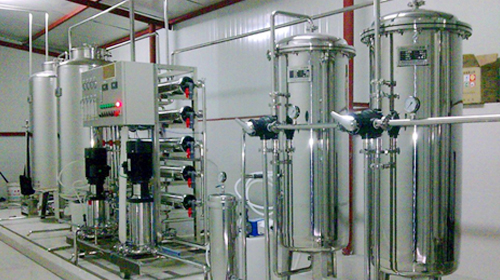
The requirements for water quality in industrial production are getting higher and higher. Ordinary tap water or well water contains impurities such as sediment, suspended solids, calcium and magnesium ions, heavy metals, and organic matter. Direct use will cause equipment scaling and corrosion, unstable product quality, increased energy consumption, and higher failure rates. Therefore, reverse osmosis pure water equipment has become an ideal choice for modern industrial water treatment.











 Landline:+86 010 59792055
Landline:+86 010 63780188
 Mobile:+86 13910114728
 Email:bjyuanlai@163.com
 Email:Wanda Plaza, Fengke Road, Fengtai District, BeijingBseat6Courtyard No.3Building No.7layer708
Yuanlai Homepage Softened water equipment Reverse osmosis pure water equipment Water supply equipment Engineering case Technical service Enter Yuanlai Site map
Softened water equipment Reverse osmosis pure water equipment Water purification equipment Water supply equipment Automatic dosing equipment High-purity water (ultra-pure water) equipment Wholesale of water treatment accessories
Electric power industry Petrochemical industry The electronic semiconductor industry The photovoltaic new energy industry Pharmaceuticals & Biochemical Engineering School research units Food and beverage industry Enterprises and public institutions
Reverse osmosis membrane Star-counting pump Fleck Valve Runxin Valve Instruments and meters Ultrafiltration membrane Softening resin Resin tank
Telephone consultation
"Online message
Wechat consultation