Bookmark this site Online message 中文站Welcome to the official website of Beijing Yuanlai Water Treatment Equipment Co., LTD.!
Service Hotline
+86 010 59792055 / +86 13910114728

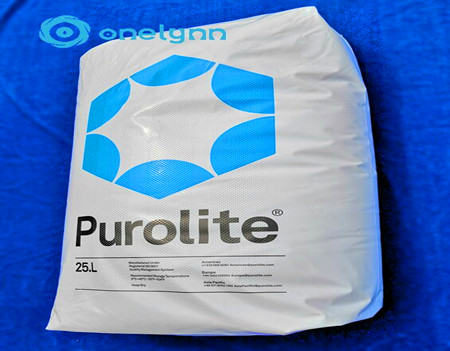
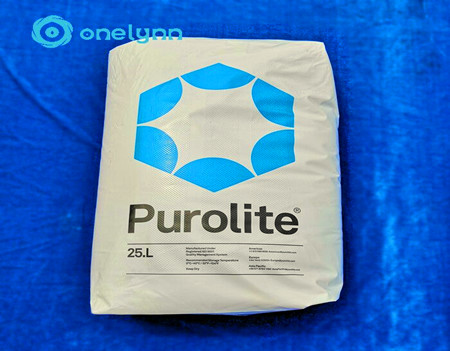
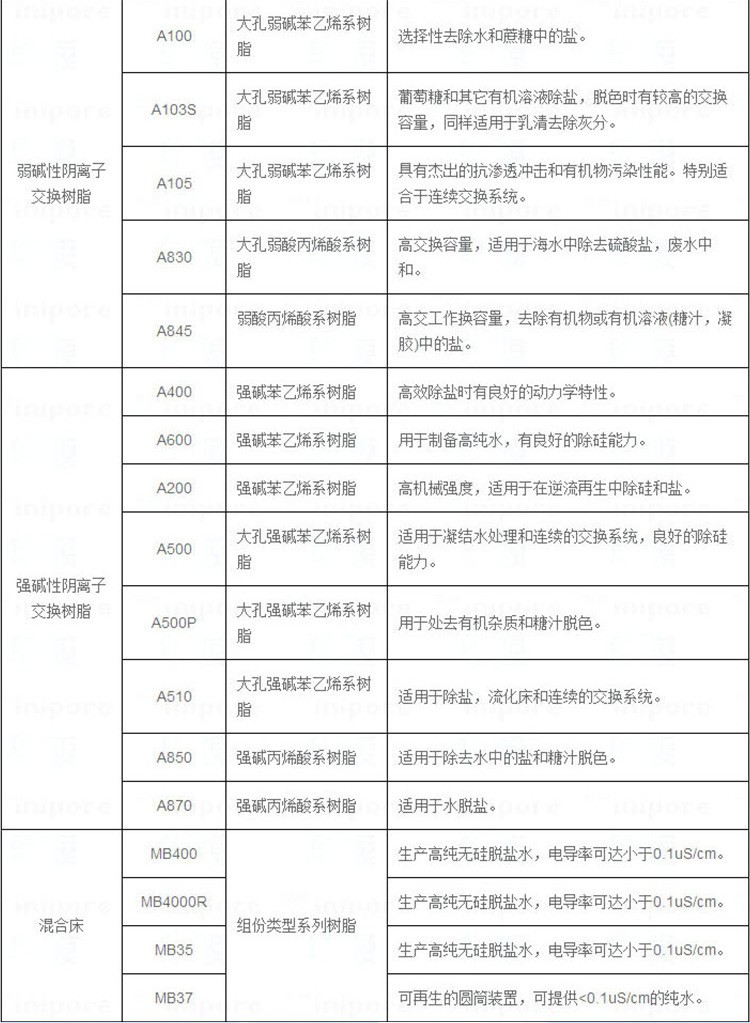
I. Ion Exchange Resin: Perlite resinC100E
It is a solid with a porous network structure, which is composed of two parts: the resin matrix and the active groups. Ion exchange resins can be classified into seven types based on the nature of their functional groups: strong acid, weak acid, strong base, weak base, composite, amphoteric and REDOX resins. When ion exchange resin is used as the ion exchanger, when the aqueous solution passes through the resin, the active groups in the ion exchange resin interact with the ions of the same charge in the aqueous solution (such as those in water)Ca2-,Mg2+,Fe2+Plasma exchanges with each other to achieve the purpose of softening water, desalination or removing metal ions from water. Ion exchange resins are often used in water treatment for water softening (softening means reducing the temperature of water)Ca2+,Mg2+The content; It is used for desalination (that is, reducing dissolved salts in water) and recovering heavy metal ions from wastewater, etc.
Ii. Regeneration Principle of Perlite Resin
When the soft water resin has replaced a certain amount of hardness ions such as calcium and magnesium in the water, it can no longer soften the water. At this point, a water softener is needed to regenerate the resin, which is the reduction and regeneration method after the resin is contaminated by calcium.
1"Use"NaWhen regenerating strong cation exchange resin with solution, it is advisable to adopt a stepwise regeneration method. Start at a low concentrationNaThe solution is regenerated because what is desorbed from the resin at this timeCa2+High concentration, butNaThe concentration is relatively low, even if a small amount is formedCa2+NaSediment can also be washed away by the solution. Then gradually improveNaThe concentration, which is desorbed from the resin at this timeCa2+Low concentration, no formationNaSedimentation.
2Since weak cation exchange resins are regenerated using the waste liquid from the regeneration of strong cation exchange resins. Therefore, while acid is being fed in, the weak cation exchanger also feeds in dilution waterJF9201The water inflow after filtration should be such that the liquid level does not exceed the acid inlet of the exchanger. In addition, pay attention to observing the color of the regeneration waste liquid discharged from the weak cation exchanger. If it appears as white turbid, adjust the concentration of the incoming acid immediately.
3After the acid is fed in, the weak cation exchanger should be fed in immediatelyJF9201The filtered water is replaced and cleaned, and the strong cation exchanger is immediately replaced and cleaned with refined water.
4Calcium contamination is more likely to occur in winter due to the low temperature of the regenerant. Therefore, before regeneration, the weak cation exchanger should be scrubbed and backwashed, and the pipeline of the regeneration waste liquid between the weak cation exchanger and the strong cation exchanger should be backflushed to prevent potential problems before they occur.
This process is required in a household water softener2-3It takes about an hour, usually referred to as the backwashing regeneration of the water softener. The amount of resin regenerant required varies depending on the model of the water softener machine.Na"
Iii. Overview of Perlite Resin Softening Device
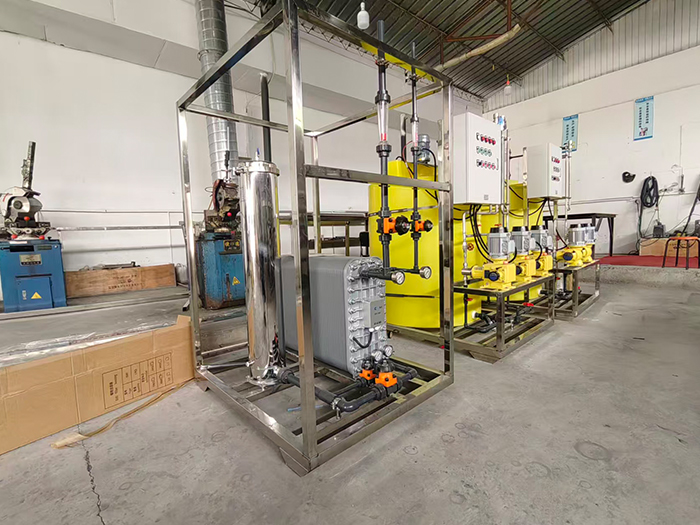
Water softening equipment is also known as water softening devices, water softeners, water softeners, water softening equipment, and water quality softeners. It softens the source water by using cation resin,The main purpose is to enable the cation resin to adsorb calcium and magnesium ions in water(The main components that form scale)It can reduce the hardness of the source water and carry out intelligent resin regeneration for recycling. Its main uses: softening and desalination, electronic descaling devices, filtration and separation, boiler softening, industrial softening equipment, softening devices, household tap water softening, etc. When reverse osmosis equipment is used to treat groundwater to produce pure water, a water softening device is also configured to fully remove calcium and magnesium ions from the water.
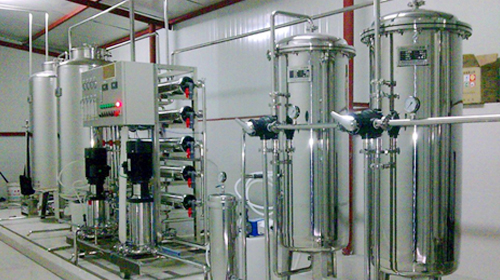
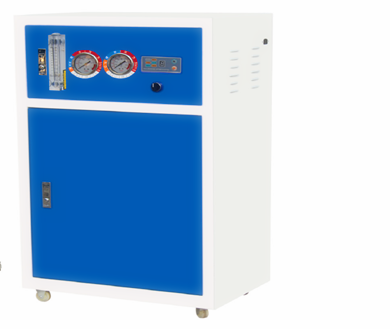
The requirements for water quality in industrial production are getting higher and higher. Ordinary tap water or well water contains impurities such as sediment, suspended solids, calcium and magnesium ions, heavy metals, and organic matter. Direct use will cause equipment scaling and corrosion, unstable product quality, increased energy consumption, and higher failure rates. Therefore, reverse osmosis pure water equipment has become an ideal choice for modern industrial water treatment.











 Landline:+86 010 59792055
Landline:+86 010 63780188
 Mobile:+86 13910114728
 Email:bjyuanlai@163.com
 Email:Wanda Plaza, Fengke Road, Fengtai District, BeijingBseat6Courtyard No.3Building No.7layer708
Yuanlai Homepage Softened water equipment Reverse osmosis pure water equipment Water supply equipment Engineering case Technical service Enter Yuanlai Site map
Softened water equipment Reverse osmosis pure water equipment Water purification equipment Water supply equipment Automatic dosing equipment High-purity water (ultra-pure water) equipment Wholesale of water treatment accessories
Electric power industry Petrochemical industry The electronic semiconductor industry The photovoltaic new energy industry Pharmaceuticals & Biochemical Engineering School research units Food and beverage industry Enterprises and public institutions
Reverse osmosis membrane Star-counting pump Fleck Valve Runxin Valve Instruments and meters Ultrafiltration membrane Softening resin Resin tank
Telephone consultation
"Online message
Wechat consultation