Bookmark this site Online message 中文站Welcome to the official website of Beijing Yuanlai Water Treatment Equipment Co., LTD.!
Service Hotline
+86 010 59792055 / +86 13910114728

ROReverse osmosis equipment,Reverse osmosis,Pure water equipment
Q&a on Reverse osmosis technology
1.How often should the reverse osmosis pure water machine system be cleaned?
Under normal circumstances, when the standardized flux decreases10~15%At this time, or the desalination rate of the system decreases10~15%Or the operating pressure and the pressure difference between sections increase10~15%It should be cleaned.ROSystem. The frequency of cleaning is directly related to the degree of system pretreatment. WhenSDI15<3At that time, the cleaning frequency may be once a year4"Second;" whenSDI15in5When left or right, the cleaning frequency may need to be doubled, but the cleaning frequency depends on the actual situation of each project site.
2.What isSDI?
The currently effective evaluationRO/NFA possible good technique for colloid contamination in the system feed water is to measure the sedimentation density index of the feed water(SDIAlso known as the pollution blockage index)This is hereROThe important parameters determined before the design areRO/NFDuring operation, regular measurements should be conducted(Daily measurement of surface water2~3time),ASTM D4189-82The standards for this test have been stipulated. The feed water regulations for the membrane system areSDI15value≤5. ReduceSDIEffective pretreatment techniques include multi-media filters, ultrafiltration, microfiltration, etc. Adding polydielectric before filtration can sometimes enhance the above-mentioned physical filtration and reduce itSDIThe ability to value.
3Which process should be chosen for general influent, reverse osmosis or ion exchange?
Under many influent conditions, both ion exchange resins and reverse osmosis are technically feasible. The choice of process should be determined by economic comparison. Generally speaking, the higher the salt content, the more economical reverse osmosis is; the lower the salt content, the more economical ion exchange is. Due to the wide popularity of reverse osmosis technology, reverse osmosis has been adopted+Ion exchange process or multi-stage reverse osmosis or reverse osmosis+The combined process of other deep desalination technologies has become a recognized water treatment solution that is more reasonable in terms of technology and economy. For more in-depth information, please consult Beijing Yuanlai Water Treatment Company.
4.Reverse osmosis membrane elements can generally be used for several years?
The service life of a membrane depends on its chemical stability, the physical stability of the components, washability, the source of the feed water, pretreatment, cleaning frequency, and the level of operation and management, etc. According to economic analysis, it is usually5More than one year.
5.What are the differences between reverse osmosis and nanofiltration?
Nanofiltration is a membrane-based liquid separation technology that lies between reverse osmosis and ultrafiltration. Reverse osmosis can remove small solutes with molecular weights less than0.0001Micrometers, nanofiltration can remove molecular weights within0.001Solute of about micrometers. Nanofiltration is essentially a type of low-pressure reverse osmosis, used in situations where the purity of the treated water is not particularly strict. Nanofiltration is suitable for treating well water and surface water. Nanofiltration is suitable for water treatment systems that do not require a high desalination rate like reverse osmosis, but it has a high ability to remove hardness components and is sometimes called a "softening membrane". The operating pressure of nanofiltration systems is low, and their energy consumption is lower than that of the corresponding reverse osmosis systems.
6.What separation capabilities does membrane technology have?
Reverse osmosis is currently a precise liquid filtration technology. Reverse osmosis membranes can handle inorganic molecules such as dissolved salts and have a molecular weight greater than100Organic substances play a role in retention, while on the other hand, water molecules can freely pass through the reverse osmosis membrane. The typical removal rate of soluble salts is>95~99%. The operating pressure is from when the incoming water is brackish water7bar(100psi)When reaching the sea water69bar(1,000psi). Nanofiltration can remove particles1nm(10Mr)The impurities and molecular weight are greater than200~400The removal rate of organic matter and dissolved solids20~98%Salts containing monovalent anions(Such asNaClorCaCl2)The removal rate is20~80%And salts containing divalent anions(Such asMgSO4)The removal rate is relatively high, which is90~98%. Ultrafiltration is for greater than100~1,000Mr(0.01~0.1Micron)It has a separating effect on macromolecules. All dissolved salts and small molecules can pass through the ultrafiltration membrane. The substances that can be removed include colloids, proteins, microorganisms and macromolecular organic substances. The molecular weight cut-off of most ultrafiltration membranes is1,000~100,000. The range of particles removed by microfiltration is approximately0.1~1Under normal circumstances, suspended solids and large particle colloids can be retained, while large molecules and dissolved salts can freely pass through microfiltration membranes. Microfiltration membranes are used to remove microflocs or total suspended solidsTSSThe typical pressure on both sides of the membrane is1~3bar.
7.What is the maximum allowable concentration of silica in the feed water for reverse osmosis membranes?
The allowable concentration of silicon dioxide depends on the temperature.pHThe value and scale inhibitor, usually when no scale inhibitor is added, the maximum allowable concentration at the concentrated water end is100ppmSome scale inhibitors can allow the concentration of silica in concentrated water to be240ppmPlease consult Beijing Yuanlai Water Treatment.
8.Chromium pairROWhat influence does the membrane have?
Some heavy metals, such as chromium, can catalyze the oxidation of chlorine, thereby causing irreversible performance degradation of the membrane. This is because it is in waterCr6+thanCr3+Its stability is poor. It seems that metal ions with a higher oxidation valence have a stronger destructive effect. Therefore, the concentration of chromium should be reduced or minimized in the pretreatment sectionCr6+Restore toCr3+.
9. ROWhat kind of pretreatment is generally required for a system?
The typical composition of a pretreatment system is as follows: coarse filtration(~80Micron)To remove large particles, oxidants such as sodium hypochlorite are added, followed by precise filtration through a multi-media filter or clarifier. Then, sodium bisulfite is added to reduce the residual chlorine and other oxidants. Finally, a security filter is installed before the high-pressure pump inlet. The function of the security filter, as the name suggests, is to serve as a backup safety measure to prevent accidental damage to the impeller and membrane elements of the high-pressure pump by large particles. Water sources with a higher content of suspended particles usually require a higher degree of pretreatment to meet the specified influent requirements. For water sources with high hardness content, it is recommended to use softening or add acid and scale inhibitors, etc. For water sources with high microbial and organic matter content, activated carbon or anti-pollution membrane elements should also be used.
10.Can reverse osmosis remove microorganisms such as viruses?
Reverse osmosis(RO)It is extremely dense and has a very high removal rate for viruses, bacteriophages, and is rarely present3logAbove(Removal rate>99.9%). However, it should also be noted that in many cases, microorganisms may still breed again on the membrane product water side. This mainly depends on the assembly, monitoring and maintenance methods. That is to say, the ability of a certain system to remove microorganisms mainly depends on whether the system design, operation and management are appropriate rather than the nature of the membrane element itself.
11.What influence does temperature have on water production?
The higher the temperature, the higher the water production, and vice versa. When operating under higher temperature conditions, the operating pressure should be reduced to keep the water production constant, and vice versa.
12.What are particle and colloid contamination? How to measure?
Once the reverse osmosis or nanofiltration system is clogged with particles and colloids, it will seriously affect the water production of the membrane and sometimes also reduce the desalination rate. The early symptoms of colloidal fouling are an increase in system pressure difference. The sources of particles or colloids in the membrane feed water vary from place to place and often include sludge, colloidal silicon, iron corrosion products, etc. If the polyaluminum and ferric chloride or cationic polydielectric used in the pretreatment section cannot be effectively removed in the clarifier or medium filter, it may also cause fouling. In addition, cationic polydiatomics can also react with anionic scale inhibitors, and the precipitates will clog the membrane elements. The tendency of such clogging in water or whether the pretreatment is qualified should be adoptedSDI15For evaluation, please consult Beijing Yuanlai Water Treatment Equipment Co., Ltd. for detailed introduction.
13.How long is it allowed to shut down without system flushing?
If the system uses a post-delay agent, when the water temperature is20~38℃Between them, approximately4Hours; in20℃When it's below, approximately8Hours; If no scale inhibitor is used in the system, approximately1Oh my god.
The above is Beijing Yuanlai SharingROReverse osmosis equipment,Reverse osmosis,Pure water equipmentIf you have any questions about water treatment equipment, please consult Beijing Yuanlai Water Treatment Equipment Co., LTD. We have been engaged in the water treatment industry for many years and are worthy of your trust!
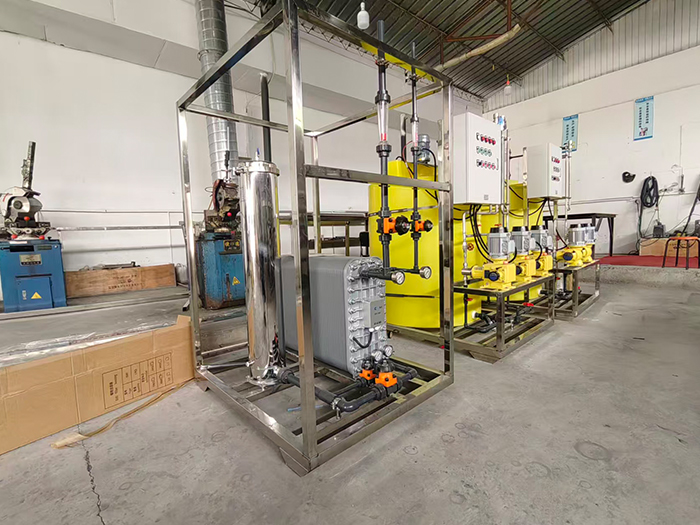
Yuan LaiEDIThe ultra-pure water equipment uses electro-deionization technology.EDIElectrodeionization is a water purification method that combines the dual advantages of electrodialysis and ion exchange. It does not require acid-base chemical regeneration and can continuously and stably prepare high-purity ultrapure water. Under the action of a direct current electric field, ion separation in water is completed. At the same time, water is electrolyzed to generate hydrogen ions and hydroxide ions, achieving automatic regeneration of the resin without the need to stop the machine for manual regeneration. The pre-treatment combined with reverse osmosis can prevent oxidized substances from damaging the resin, ensuring stable effluent quality and widely meeting the high-standard water usage requirements of various industries.
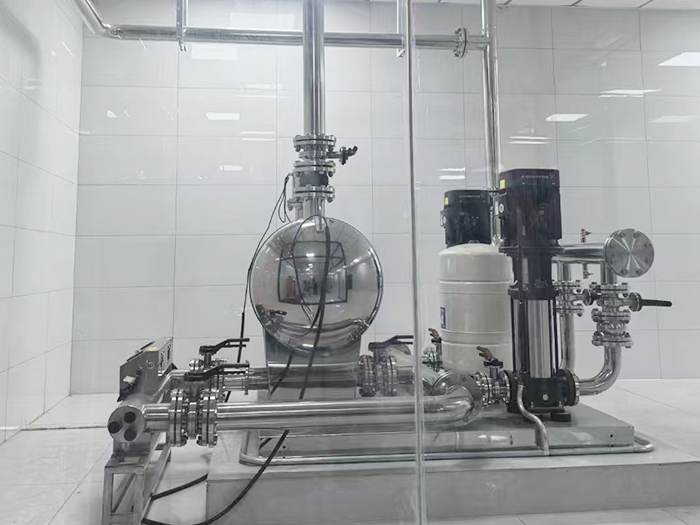
The non-negative pressure water supply equipment can be directly connected to the municipal water supply network, making full use of the residual pressure of the original network for superimposed water supply. Fully enclosed operation does not require the construction of a domestic water tank, eliminating secondary pollution. Intelligent variable frequency voltage stabilization, energy-saving, quiet and easy installation, it is the preferred equipment for secondary water supply in high-rise residential buildings and commercial buildings.
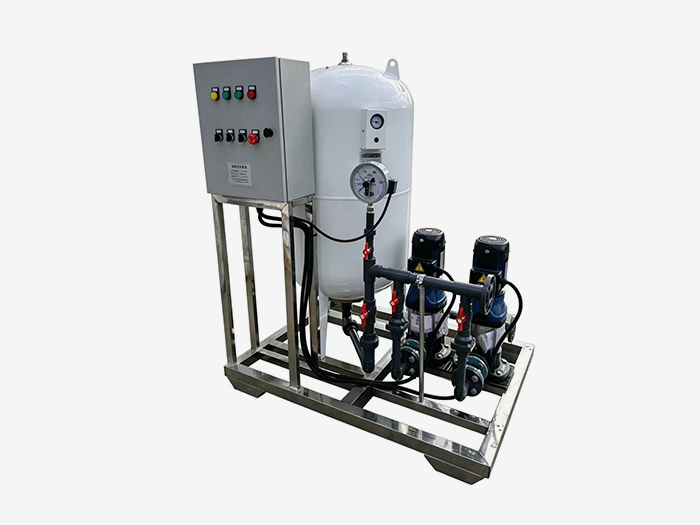
Constant pressure water supply equipment is widely used in central air conditioning, floor heating, industrial closed-loop water circulation, and boiler systems. It integrates automatic pressure stabilization, automatic water replenishment, automatic exhaust, pressure relief and buffering functions. It stabilizes the pressure in the pipeline network, eliminates abnormal sounds caused by air blockage, and prevents damage from negative pressure and water shortage in the pipeline. It is an essential supporting equipment for HVAC and circulating water systems.











 Landline:+86 010 59792055
Landline:+86 010 63780188
 Mobile:+86 13910114728
 Email:bjyuanlai@163.com
 Email:Wanda Plaza, Fengke Road, Fengtai District, BeijingBseat6Courtyard No.3Building No.7layer708
Yuanlai Homepage Softened water equipment Reverse osmosis pure water equipment Water supply equipment Engineering case Technical service Enter Yuanlai Site map
Softened water equipment Reverse osmosis pure water equipment Water purification equipment Water supply equipment Automatic dosing equipment High-purity water (ultra-pure water) equipment Wholesale of water treatment accessories
Electric power industry Petrochemical industry The electronic semiconductor industry The photovoltaic new energy industry Pharmaceuticals & Biochemical Engineering School research units Food and beverage industry Enterprises and public institutions
Reverse osmosis membrane Star-counting pump Fleck Valve Runxin Valve Instruments and meters Ultrafiltration membrane Softening resin Resin tank
