Bookmark this site Online message 中文站Welcome to the official website of Beijing Yuanlai Water Treatment Equipment Co., LTD.!
Service Hotline
+86 010 59792055 / +86 13910114728

In some of our industrial production activities, boilers are needed in many industrial links. The position of boilers in industrial production is unshakable. However, the hardness of water quality nowadays is very high. After being heated at high temperatures in boilers, scale will form, which can cause certain damage to the boilers and reduce their service life. Therefore, most boiler industries have successfully introduced water softening equipment, which can remove calcium and magnesium ions from water and thus prevent the formation of scale.
Most of the boilers we use nowadays are made of metal and are fully enclosed in a tank shape. If the water used in such boilers is not softened during operation, scale will form on the inner walls of the boilers, pipes and other places. This is because ordinary water contains a large amount of inorganic salts, mineral elements, etc. After being heated, these substances will crystallize and coagulate in water and adhere to the inner walls of the boiler or pipes. Over time, as the scale accumulates more and more, it will clog the pipes and affect the heating effect of the boiler. In severe cases, it may even cause the pipes of the boiler to burst.
Since boilers are usually heated during operation, the increasing heating pressure inside the boiler can cause damage to it..
The boiler can operate economically, reliably and stably, and produce qualified steam or hot water. Be familiar with the water used in the boiler, understand the harm of poor water quality to the boiler, master the water and steam quality standards, do a good job in the treatment of boiler water and necessary in-furnace chemical treatment, and strictly supervise the water and steam quality in accordance with the standard requirements during operation. It is extremely important to ensure the water quality and steam quality of the boiler as well as its economic operation.
Controlling the hardness of feed water is a fundamental requirement in the operation of boilers. When there is hardness in the boiler feed water, it indicates that there isCa2+,Mg2+Exists. The presence of these ions can cause scaling, corrosion, slag accumulation and other hazards in the boiler body. At this time, the operation of the boiler is extremely dangerous and uneconomical. Generally, soft water is required as the feed water for steam boilers, which is also an important measure to control scaling inside the boiler.
Boiler water
Water is the blood of industry, and boilers are the heart of industry. The working conditions of a boiler are a harsh and complex environment. During the operation of a boiler, the impact of poor water quality on it is a slow accumulation process. Once discovered, the consequences are irreparable. Boiler water treatment is to provide qualified blood for the heart and is an indispensable means to ensure the economic operation of boilers. Therefore, it is necessary to do a good job in the water treatment of industrial boilers. Improper water treatment will cause a series of problems such as scaling, corrosion and steam-water azeotroboiling in boilers.
The main working principle of water softening equipment is the transformation of cations and anions. Let the raw water pass through the anion and cation exchangers to remove calcium and magnesium ions from the water. Calcium and magnesium ions are the main components that form scale. This can effectively prevent scale. Especially in the boiler industry, previously, the water used in boilers was all tap water. After the tap water was heated and boiled, a thick layer of scale formed on the inner walls and bottom of the boiler. The thermal conductivity of the scale was very poor, and its thermal conductivity was dozens to hundreds of times smaller than that of the boiler steel plate, which would seriously hinder heat transfer and increase fuel consumption. After scale forms on the heating surface, the heat of the metal is difficult to be transferred to the pot water due to the obstruction of the scale, causing the wall temperature of the metal to rise sharply. When the temperature exceeds the allowable temperature that the metal can withstand, the strength of the metal decreases, leading to overheating and deformation of the metal. In severe cases, it may cause bulging, cracking, and even explosion and other accidents. Nowadays, the vast majority of boiler enterprises are using boiler water softening equipment.
Boiler water usually contains a considerable amount of impurities,Among them, the main ones are calcium and magnesium salts.It contains a relatively high amount of calcium salts, magnesium salts, and has a hardness of8Water above 100 degrees,It is called hard water. Heat the boiler with hard water,It is prone to form hard scale.Scale has relatively poor heat conduction capacity,It hinders the conduction of heat to hot water,Increased energy consumption.According to the calculation,The thickness of the scale is5In millimeters,Fuel consumption will need to increase15%.Scale has a corrosive effect on the inner walls of boiler tubes,And it will also bulge due to overheating and deformation,Very burst pipe,A serious equipment accident occurred; Sometimes explosions even occur,It caused casualties among boiler workers and people near the factory.Therefore,When using a boiler, efforts should be made to reduce the hardness of the water,Turn it into soft water,This is boiler water treatment.
The main methods for controlling water hardness in small boilers,It adopts the sodium ion exchange method outside the furnace,To remove calcium and magnesium ions from water,Prevent or minimize the formation of ice scale inside the boiler body.
This method is to set up a filter outside the boiler,It contains a layer of sodium ion exchanger that is difficult to dissolve inside,It can undergo exchange reactions with cations in water.When hard water passes through the filter,Calcium, magnesium and other cations in water,Absorbed by the exchanger,And the sodium ions in the exchangerNa+Replace it in water.Like this,Hard water turns into soft water.
After the exchanger has been in use for a certain period of time,The sodium ions in it will gradually decrease,If not supplemented,Then it can no longer play the role of soft water.Therefore, it is necessary to use salt or other sodium type chemicals as reducing agents.Input the salt solution into the filter,When it flows through the exchanger layer,Because the concentration of sodium ions in the reducing solution is relatively high,It can elute the calcium and magnesium ions originally absorbed by the ion exchanger,Transform the exchanger back into the sodium form,Restore the ability to continue softening hard water,This is the regeneration (or reduction) of ion exchangers..
Through the regenerative effect of salt,Enable the exchanger to be continuously recycled,Achieve the purpose of long-term softening of hard water.Because the price of salt is low,And the operation is simple and convenient.,Therefore,Many factories are willing to adopt it.
The purposes of boiler water treatment can be simply summarized into the following four types:
1.Prevent corrosion from forming in boilers and steam systems.
2.Prevent the formation of scale and deposits on heat transfer surfaces.
3.Maintain high-purity steam quality and prevent the occurrence of steam-water azeotropic phenomena.
4.Extend the service life of the boiler.
Beijing Yuanlai Water Treatment Equipment Co., Ltd. is dedicated to customizing water treatment solutions for you.
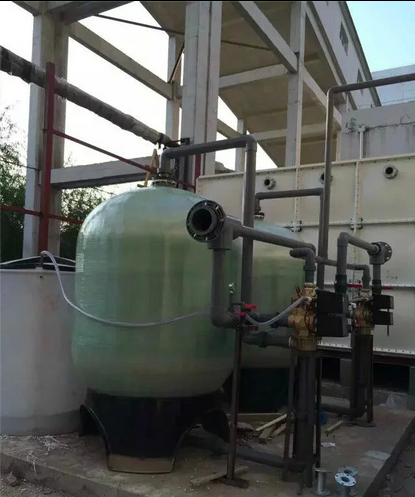
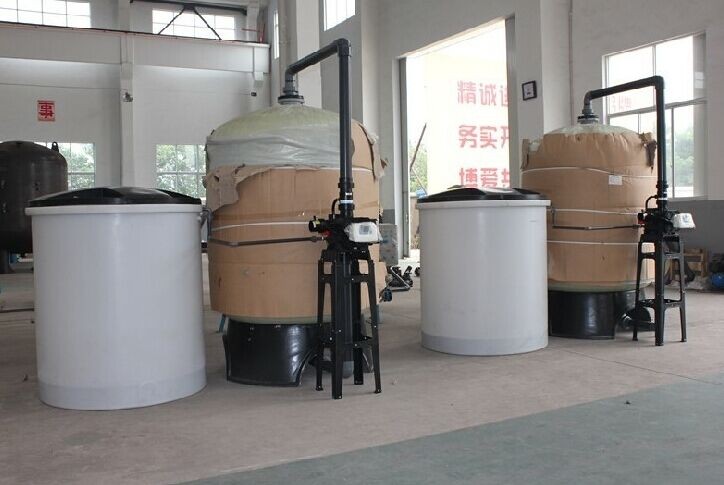
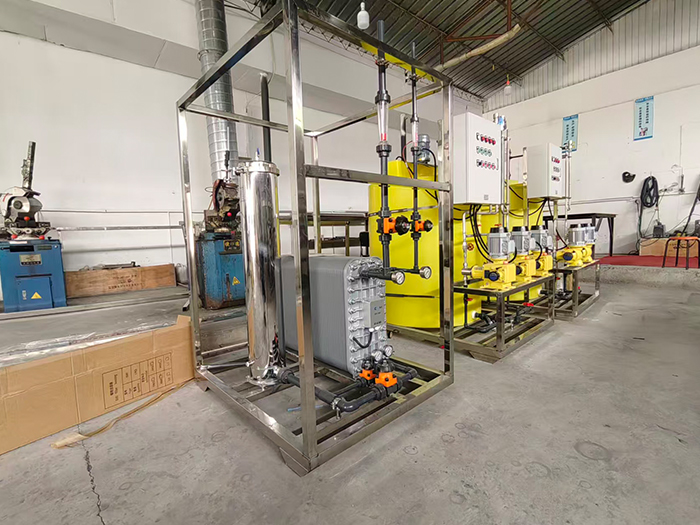
Yuan LaiEDIThe ultra-pure water equipment uses electro-deionization technology.EDIElectrodeionization is a water purification method that combines the dual advantages of electrodialysis and ion exchange. It does not require acid-base chemical regeneration and can continuously and stably prepare high-purity ultrapure water. Under the action of a direct current electric field, ion separation in water is completed. At the same time, water is electrolyzed to generate hydrogen ions and hydroxide ions, achieving automatic regeneration of the resin without the need to stop the machine for manual regeneration. The pre-treatment combined with reverse osmosis can prevent oxidized substances from damaging the resin, ensuring stable effluent quality and widely meeting the high-standard water usage requirements of various industries.
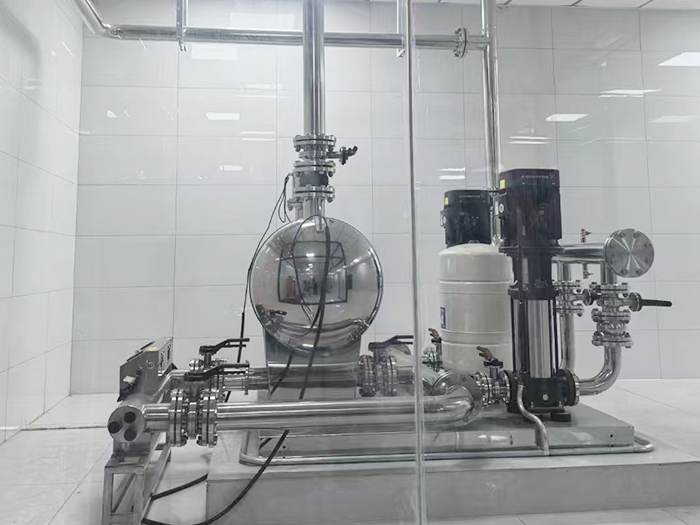
The non-negative pressure water supply equipment can be directly connected to the municipal water supply network, making full use of the residual pressure of the original network for superimposed water supply. Fully enclosed operation does not require the construction of a domestic water tank, eliminating secondary pollution. Intelligent variable frequency voltage stabilization, energy-saving, quiet and easy installation, it is the preferred equipment for secondary water supply in high-rise residential buildings and commercial buildings.
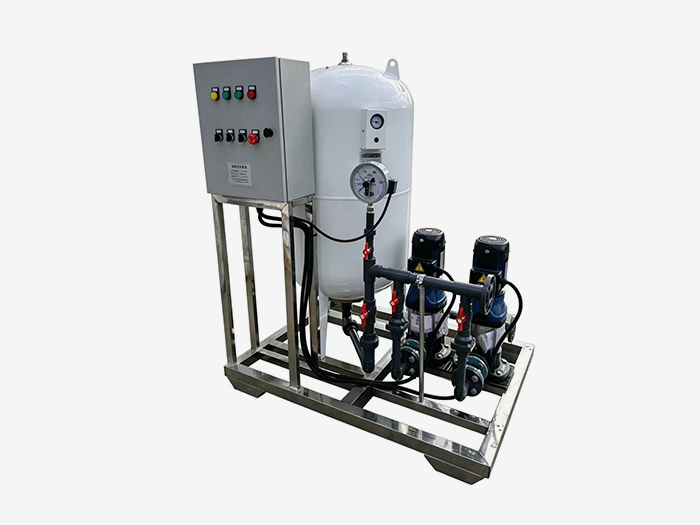
Constant pressure water supply equipment is widely used in central air conditioning, floor heating, industrial closed-loop water circulation, and boiler systems. It integrates automatic pressure stabilization, automatic water replenishment, automatic exhaust, pressure relief and buffering functions. It stabilizes the pressure in the pipeline network, eliminates abnormal sounds caused by air blockage, and prevents damage from negative pressure and water shortage in the pipeline. It is an essential supporting equipment for HVAC and circulating water systems.












 Landline:+86 010 59792055
Landline:+86 010 63780188
 Mobile:+86 13910114728
 Email:bjyuanlai@163.com
 Email:Wanda Plaza, Fengke Road, Fengtai District, BeijingBseat6Courtyard No.3Building No.7layer708
Yuanlai Homepage Softened water equipment Reverse osmosis pure water equipment Water supply equipment Engineering case Technical service Enter Yuanlai Site map
Softened water equipment Reverse osmosis pure water equipment Water purification equipment Water supply equipment Automatic dosing equipment High-purity water (ultra-pure water) equipment Wholesale of water treatment accessories
Electric power industry Petrochemical industry The electronic semiconductor industry The photovoltaic new energy industry Pharmaceuticals & Biochemical Engineering School research units Food and beverage industry Enterprises and public institutions
Reverse osmosis membrane Star-counting pump Fleck Valve Runxin Valve Instruments and meters Ultrafiltration membrane Softening resin Resin tank
