Bookmark this site Online message 中文站Welcome to the official website of Beijing Yuanlai Water Treatment Equipment Co., LTD.!
Service Hotline
+86 010 59792055 / +86 13910114728

chapter The total the
article In order to standardize the water treatment work of boilers, prevent and reduce accidents caused by boiler scaling, corrosion and deterioration of steam quality, and ensure the economic, energy-saving and environmentally friendly operation of boilers, this rule is formulated in accordance with the "Regulations on the Supervision of Special Equipment" and relevant boiler technical specifications.
article The boiler water treatment as stipulated in these rules mainly refers to the measures taken to prevent boiler scaling and corrosion and ensure the quality of water and steam (including boiler cleaning).
Article 3 This rule applies to fixed pressure-bearing boilers (hereinafter referred to as boilers) that use water as the medium within the scope stipulated in the Special Equipment Supervision Regulations.
Article 4 The production (including design, manufacture, installation, transformation and maintenance, hereinafter the same) and user units of boilers and water treatment systems (equipment), as well as the institutions engaged in boiler water treatment inspection and testing work (hereinafter referred to as inspection institutions), the manufacturing units of boiler water treatment chemicals and resins, the design units of boiler rooms, the boiler water treatment service units and the boiler chemical cleaning units shall abide by these rules.
Boiler water treatment equipment, chemicals and resins imported or produced and used within the territory in accordance with foreign norms and standards shall also comply with the requirements of these rules.
Article 5 Boiler users shall adopt appropriate water treatment methods based on the type, type, structure and capacity of the boilers they use to ensure the water quality of the boilers. The water quality of industrial boilers shall comply withGB/T 1576-2001The water and steam quality of power station boilers shall comply with the "Industrial Boiler Water Quality" standardGB/T 12145-1999The provisions of the "Water and Steam Quality Standard for Thermal Power Generating Units and Steam Power Equipment" (hereinafter referred to as the "water quality standard").
Boiler user units and boiler water treatment operation personnel shall, in accordance with these rules, carry out the management, operation of boiler water treatment equipment and regular daily water and steam quality testing and analysis, etc.
Article 6 Inspection institutions shall, in accordance with the requirements for special equipment inspection and testing institutions, be approved by the General Administration of Quality Supervision, Inspection and Quarantine of the People's Republic of China.
Inspection institutions and their boiler water treatment inspection and testing personnel (hereinafter referred to as water treatment inspection personnel) shall carry out the inspection and testing work of boiler water treatment (hereinafter referred to as water treatment inspection) in accordance with these rules.
Article 7 To achieve energy conservation and emission reduction in boilers, steam condensate water should be recycled and reused as much as possible to lower the blowdown rate.
Article 8 Encourage and support the National Boiler Water Treatment Industry Association to enhance industry self-discipline in water treatment equipment, chemicals,
On the basis of voluntary participation by resin manufacturing units or boiler chemical cleaning units, registration of boiler water treatment equipment, chemicals and resins should be carried out, and the qualifications of boiler chemical cleaning units should be evaluated to guide the healthy development of the boiler water treatment industry and improve the quality of boiler water treatment products and chemical cleaning.
Article 9 Quality and technical supervision departments at all levels are responsible for supervising the implementation of these rules.
chapter Design and Manufacture
Article 10 The design unit of the boiler water treatment system shall, in accordance with these rules, design a reasonable and effective boiler water treatment plan based on the water quality standards, the provisions of the design specifications and the requirements of the user unit for water and steam quality. The plan rarely includes water treatment methods, main system design, equipment selection, instrument and meter configuration, etc.
Article 11 Newly designed and manufactured boilers should be equipped with water sampling points on the boilers. For rated evaporation capacity greater than or equal to1t/hThe steam boiler and its rated thermal power are greater than or equal to0.7MWHot water boilers should be equipped with water sampling and cooling devices for the boiler. When there are requirements for steam quality, a steam sampling and cooling device should be provided. The water sample sampling points should ensure that the water and steam samples taken are representative and meet the requirements for samples in relevant standards.
Article 12 Production units of boiler water treatment equipment, chemicals and resins shall have dedicated technical personnel and skilled workers commensurate with the products they produce, necessary production conditions and testing means, and a sound quality assurance system. The products they produce shall comply with the requirements of relevant norms and standards, and they shall be responsible for the quality of the products they produce.
Article 13 When the boiler water treatment equipment leaves the factory, the following documents and materials should be attached:
(one)Water treatment equipment drawings (general layout, pipeline system drawings, etc.);
(two)Product quality certification document;
(three)Equipment installation and operation manual.
Article 14 When water treatment chemicals and resins leave the factory, the following documents and materials should be attached:
(one)Product Qualification certificate
(two)User Manual.
Chapter Three Installation and commissioning
Article 15 The installation unit of the boiler water treatment system (equipment) (hereinafter referred to as the installation unit) shall have dedicated technical personnel and skilled workers commensurate with its installation project, have a sound quality assurance system, install in accordance with the boiler water treatment design plan and relevant norms and standards, keep records, be responsible for the installation quality, and accept the supervision and inspection carried out by the inspection institution. After the completion acceptance, the installation completion documents should be provided to the boiler user unit and filed in the boiler technical file.
Article 16 After the installation of the water treatment system (equipment) outside the pot is completed, it should be debugged by a unit with debugging capabilities to determine reasonable operating parameters.
Boilers that adopt in-boiler dosing treatment should be debugged by units with commissioning capabilities to determine reasonable and effective dosing methods and quantities.
The water and steam quality after commissioning should meet the requirements of water quality standards, and the commissioning report should be filed in the boiler technical archives of the boiler user unit.
Chapter Four Usage management
Article 17 Boiler user units shall, in light of their own actual conditions, establish and improve systems for water treatment management, job responsibilities, operation and maintenance, and strictly enforce them.
Article 18 Boiler users shall, in accordance with the number of boilers, parameters, water source conditions and water treatment methods, be equipped with full-time or part-time water treatment operation personnel.
Article 19 Boiler users shall, in accordance with the provisions of these rules and water quality standards, regularly conduct laboratory tests and analyses of water and steam quality. The time, items, data and corresponding measures taken for each laboratory analysis should be filled in the water quality laboratory record form.
The total evaporation capacity of the boiler is greater than or equal to1t/hThe total rated heat power of the steam boiler is greater than or equal to0.7MWThe user units of hot water boilers should conduct less inspection of water and steam quality per shift1This analysis.
Ten To prevent corrosion and resin contamination of standby or idle boilers and water treatment equipment, the boiler user units shall do a good job in protection.
Article 11 Boiler users shall, in accordance with the regulations, submit an application for boiler water treatment inspection to the inspection agency.
Twelve Boiler water treatment operators, in accordance with the "Supervision and Administration Measures for Special Equipment Operators", can only engage in the management and operation of boiler water treatment after passing the assessment and obtaining the qualification. The assessment of boiler water treatment operation personnel shall be conducted in accordance with the contents required by the "Boiler Water Treatment Operation Personnel Assessment Outline".
Thirteen Articles The boiler user is responsible for accidents caused by improper boiler water treatment, and the boiler water treatment operation personnel are responsible for the quality of the work they undertake.
Chapter Five Boiler water treatment inspection
Article 14 Boiler water treatment inspection work includes supervision and inspection of water treatment system installation, supervision and inspection of water treatment during operation, and inspection of water treatment during boiler shutdown. Boiler water treatment inspection work is part of the boiler inspection work. Boiler water treatment inspection shall be carried out in accordance with the "Boiler Water Treatment Inspection Rules".
The supervision and inspection cycle for water treatment operation is as follows:
(one)Sampling and inspecting the water and steam quality of boilers by boiler user units should be conducted at least every six months1Secondly, for units that fail the sampling inspection, the frequency of sampling inspection should be increased.
(two)The water treatment equipment and its operation status should be inspected at least once a year1This inspection.
The supervision and inspection of water treatment system installation shall be carried out in combination with the supervision and inspection of boiler installation, and the inspection of water treatment during boiler shutdown shall be conducted in combination with the internal inspection of the boiler. The items and requirements for boiler water treatment inspection shall be carried out in accordance with the "Boiler Water Treatment Inspection Rules", and separate "Boiler Water Treatment System Installation Supervision Inspection Report", "Operation Water Treatment Supervision Inspection Report", and "Boiler Shutdown Water Treatment Inspection Report" shall be issued as required.
Fifteen Articles While conducting boiler water treatment inspections, inspection institutions should understand the water quality of the water source, as well as the boiler water treatment methods, water quality qualification rate, steam condensate recovery and utilization, and sewage discharge of the boiler user units. For units that fail the water treatment inspection, rectification suggestions shall be put forward. If serious accident hazards are found, the inspection institution shall immediately report in writing to the local quality and technical supervision department.
Sixteen Articles Water treatment inspection personnel can only engage in boiler water treatment inspection work after passing the assessment in accordance with relevant regulations and technical specifications.
Article 17 Inspection institutions and their water treatment inspection personnel are responsible for the quality of the inspection work they undertake.
Chapter Six Boiler cleaning
Eighteen Articles Boiler cleaning is divided into chemical cleaning and physical cleaning. Boiler users should choose the appropriate cleaning method based on the actual situation of the boiler and cannot replace normal boiler water treatment work with cleaning.
Boiler chemical cleaning is carried out in accordance with the requirements of the "Boiler Chemical Cleaning Rules".
Nineteen Articles Boiler chemical cleaning units shall have dedicated technical personnel, equipment, instruments and meters, and quality assurance systems that are commensurate with the chemical cleaning business they undertake.
Article 30 Before the start-up of newly-built boilers and when the degree of scaling and corrosion on the heating surfaces of in-use boilers reaches the cleaning conditions stipulated in the "Boiler Chemical Cleaning Rules", cleaning should be carried out. Inspection institutions may also put forward cleaning suggestions based on the actual situation.
When chemical cleaning methods are adopted, the boiler user unit shall entrust a chemical cleaning unit with the corresponding qualifications or capabilities to carry out chemical cleaning on the boiler.
Article 31 The boiler cleaning unit is responsible for the quality of its cleaning. When conducting chemical cleaning, the inspection of the cleaning quality shall be carried out in accordance with the provisions of the "Boiler Chemical Cleaning Rules".
Chapter Seven Supervision and management
Article 32 The quality and technical supervision department shall have dedicated personnel responsible for the supervision and management of boiler water treatment.
Article 33 When the quality and technical supervision department issues the boiler use registration certificate, it shall verify the installation technical data and commissioning report of the water treatment system (equipment). The boiler use registration certificate shall not be issued if the water quality is not up to standard.
Article 34 The quality and technical supervision department shall conduct random checks on the water quality management systems and their implementation of boiler users from time to time. For boiler users whose water treatment is substandard and causes severe scaling or corrosion, they shall be ordered to rectify within a prescribed time limit.
Chapter Eight Attached to the the
Article 35 Boiler water treatment inspection is charged in accordance with relevant regulations.
Article 36 These rules shall be interpreted by the General Administration of Quality Supervision, Inspection and Quarantine of the People's Republic of China.
Article 37 This rule starts from2008years12month1Effective from today, original1999The "Supervision and Administration Rules for Boiler Water Treatment" of the year edition is simultaneously abolished.
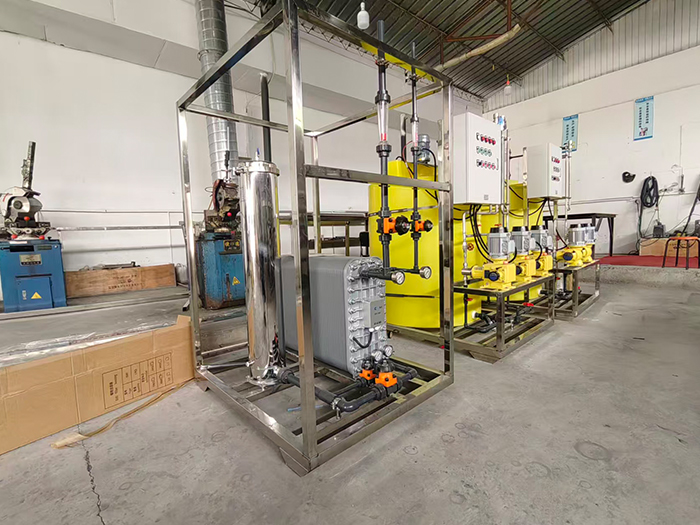
Yuan LaiEDIThe ultra-pure water equipment uses electro-deionization technology.EDIElectrodeionization is a water purification method that combines the dual advantages of electrodialysis and ion exchange. It does not require acid-base chemical regeneration and can continuously and stably prepare high-purity ultrapure water. Under the action of a direct current electric field, ion separation in water is completed. At the same time, water is electrolyzed to generate hydrogen ions and hydroxide ions, achieving automatic regeneration of the resin without the need to stop the machine for manual regeneration. The pre-treatment combined with reverse osmosis can prevent oxidized substances from damaging the resin, ensuring stable effluent quality and widely meeting the high-standard water usage requirements of various industries.
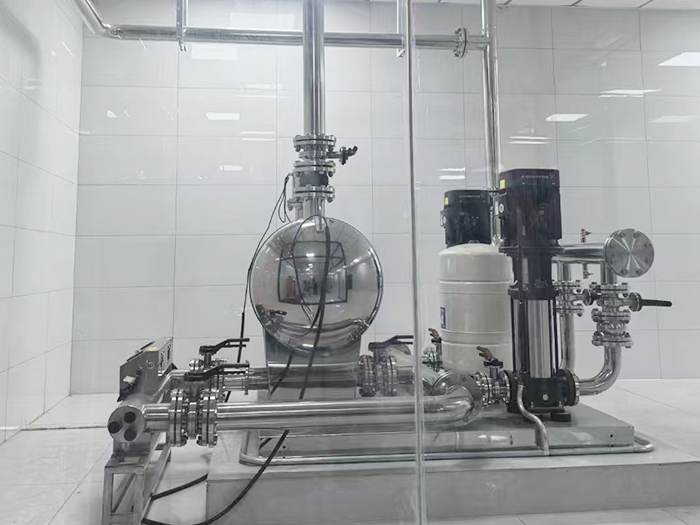
The non-negative pressure water supply equipment can be directly connected to the municipal water supply network, making full use of the residual pressure of the original network for superimposed water supply. Fully enclosed operation does not require the construction of a domestic water tank, eliminating secondary pollution. Intelligent variable frequency voltage stabilization, energy-saving, quiet and easy installation, it is the preferred equipment for secondary water supply in high-rise residential buildings and commercial buildings.
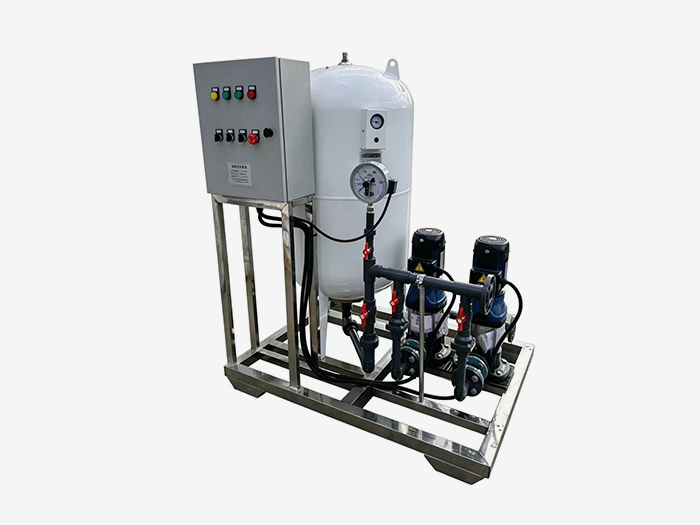
Constant pressure water supply equipment is widely used in central air conditioning, floor heating, industrial closed-loop water circulation, and boiler systems. It integrates automatic pressure stabilization, automatic water replenishment, automatic exhaust, pressure relief and buffering functions. It stabilizes the pressure in the pipeline network, eliminates abnormal sounds caused by air blockage, and prevents damage from negative pressure and water shortage in the pipeline. It is an essential supporting equipment for HVAC and circulating water systems.











 Landline:+86 010 59792055
Landline:+86 010 63780188
 Mobile:+86 13910114728
 Email:bjyuanlai@163.com
 Email:Wanda Plaza, Fengke Road, Fengtai District, BeijingBseat6Courtyard No.3Building No.7layer708
Yuanlai Homepage Softened water equipment Reverse osmosis pure water equipment Water supply equipment Engineering case Technical service Enter Yuanlai Site map
Softened water equipment Reverse osmosis pure water equipment Water purification equipment Water supply equipment Automatic dosing equipment High-purity water (ultra-pure water) equipment Wholesale of water treatment accessories
Electric power industry Petrochemical industry The electronic semiconductor industry The photovoltaic new energy industry Pharmaceuticals & Biochemical Engineering School research units Food and beverage industry Enterprises and public institutions
Reverse osmosis membrane Star-counting pump Fleck Valve Runxin Valve Instruments and meters Ultrafiltration membrane Softening resin Resin tank
