Bookmark this site Online message 中文站Welcome to the official website of Beijing Yuanlai Water Treatment Equipment Co., LTD.!
Service Hotline
+86 010 59792055 / +86 13910114728

Points to note for the daily operation and maintenance of metering pumps in winter
The metering pump is a special positive displacement pump that can meet the requirements of various strict process flows. Its flow rate can be adjusted steplessly within the range of 0-100%, and it is used to transport liquids, especially corrosive liquids. Metering pumps are also known as quantitative pumps or proportional pumps. The metering pump belongs to the reciprocating positive displacement pump and is used for precise metering. Generally, the stability accuracy of the metering pump is required not to exceed ± ± ±. 1%. Generally speaking, there are two types of metering pumps: plunger metering pumps and diaphragm metering pumps. The plunger metering pump has the advantages of high metering accuracy, wide adjustment range and high pressure. However, there is leakage at the packing seal. After the packing is corroded and worn, it will affect the metering accuracy of the pump. The flow rate of this type of metering pump is generally 4 to 4000 liters per hour, and the pressure is usually around 5 liters per hour. Below 105 pascals. The main body of the diaphragm metering pump
Details >Three factors to consider when choosing reverse osmosis (RO) membranes
Reverse osmosis membranes are the core components for achieving reverse osmosis. They are artificial semi-permeable membranes with certain characteristics made by simulating biological semi-permeable membranes. It is generally made of polymer materials. Such as cellulose acetate membrane, aromatic polyacylhydrazine membrane, aromatic polyamide membrane. The diameter of the surface micropores is generally between 0.5 and 10nm, and the degree of permeability is related to the chemical structure of the membrane itself. Some polymer materials have good salt repulsion, but their water permeation rate is not good. Some polymer materials have a chemical structure with more hydrophilic groups, so the permeation rate of water is relatively fast. The three factors to consider when choosing a reverse osmosis (RO) are: desalination rate, water production, and recovery rate. 1. Desalination rate and salt Permeation rate of RO Reverse Osmosis Membranes The desalination rate of RO reverse osmosis membrane elements is determined during their manufacturing and forming process, and the level of desalination rate depends on the reverse osmosis RO
Details >12 Common Problems and Causes of Reverse Osmosis Equipment
Reverse osmosis equipment is to pass the raw water through fine filters, granular activated carbon filters, compressed activated carbon filters, etc. Then, it is pressurized by a pump and uses reverse osmosis membranes (RO membranes) with a pore size of 1/10,000 μm to turn high-concentration water into low-concentration water. At the same time, it isolates a large amount of industrial pollutants, heavy metals, viruses and other impurities mixed in the water. So as to meet the physical and chemical indicators and hygiene standards for drinking water and produce pure water. Reverse osmosis equipment is commonly used in the electronics industry, pharmaceutical industry, beverage industry, seawater, brackish water extraction, and domestic water supply, etc. Now let's talk about 12 common problems and causes of reverse osmosis equipment. 1. Low water supply pressure; The feed water flow rate is inappropriate. B System leakage; C Insufficient inlet water pressure of the high-pressure pump or leakage at the pump section
Details >8 Precautions for the Installation and Operation of PE Water Tanks
The PE water tanks frequently used in water treatment are made of polyethylene material. They are tough in texture, light and tough, and have excellent corrosion resistance. Clean and beautiful Economical and durable, heat and cold resistant, odorless, meeting drinking water standards, and customizable, it is widely favored by all sectors. Now let's talk about 8 precautions for the installation and operation of PE plastic water tanks and storage tanks. 1. The cement ground foundation for installing the PE water tank should be level and capable of withstanding the corresponding load-bearing force. If it is used in an air steel structure, the gap should not be too large, and iron plates should be laid on top to keep it level and ensure that the bottom surface of the PE storage tank is flat, so as to increase the service life of the PE storage tank. Please remove any sharp objects or stones from the PE storage tank placement area. Due to the fact that the bottom of the PE storage tank inevitably protrudes into the tank during the molding process, a spherical crown is formed
Details >The calculation method and precautions for the desalination rate of reverse osmosis (RO) membranes
Reverse osmosis (RO) membranes are the core components for achieving reverse osmosis. They are artificial semi-permeable membranes with certain characteristics made by simulating biological semi-permeable membranes. The pore size of reverse osmosis (RO) membranes is extremely small, thus they can effectively remove dissolved salts, colloids, microorganisms, organic matter and other substances from water. The system has the advantages of good water quality, low energy consumption, no pollution, simple process and easy operation. The desalination rate is one of the key factors determining the performance of reverse osmosis (RO) membranes. Now let's talk about the calculation method of the desalination rate of reverse osmosis (RO) membranes. The common test conditions for desalination rate are 225psi (15.5bar), a test solution concentration (NaCl) of 2000ppm, and a recovery rate of 15%. Ii. Calculation Method of Desalination Rate Desalination rate =1- (effluent conductivity/Influent conductivity), for example: Influent conductivity 300, first-grade fresh water 10
Details >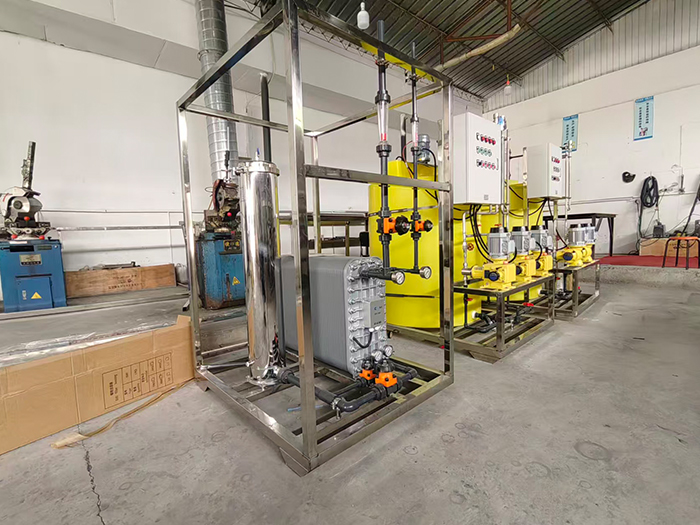
Yuan LaiEDIThe ultra-pure water equipment uses electro-deionization technology.EDIElectrodeionization is a water purification method that combines the dual advantages of electrodialysis and ion exchange. It does not require acid-base chemical regeneration and can continuously and stably prepare high-purity ultrapure water. Under the action of a direct current electric field, ion separation in water is completed. At the same time, water is electrolyzed to generate hydrogen ions and hydroxide ions, achieving automatic regeneration of the resin without the need to stop the machine for manual regeneration. The pre-treatment combined with reverse osmosis can prevent oxidized substances from damaging the resin, ensuring stable effluent quality and widely meeting the high-standard water usage requirements of various industries.
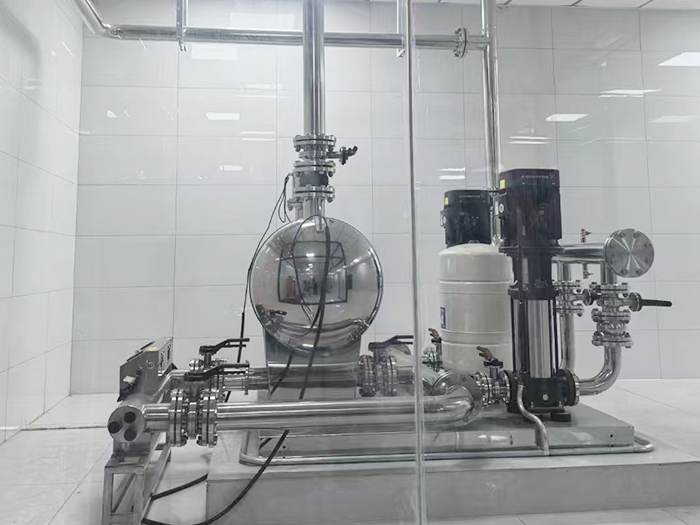
The non-negative pressure water supply equipment can be directly connected to the municipal water supply network, making full use of the residual pressure of the original network for superimposed water supply. Fully enclosed operation does not require the construction of a domestic water tank, eliminating secondary pollution. Intelligent variable frequency voltage stabilization, energy-saving, quiet and easy installation, it is the preferred equipment for secondary water supply in high-rise residential buildings and commercial buildings.
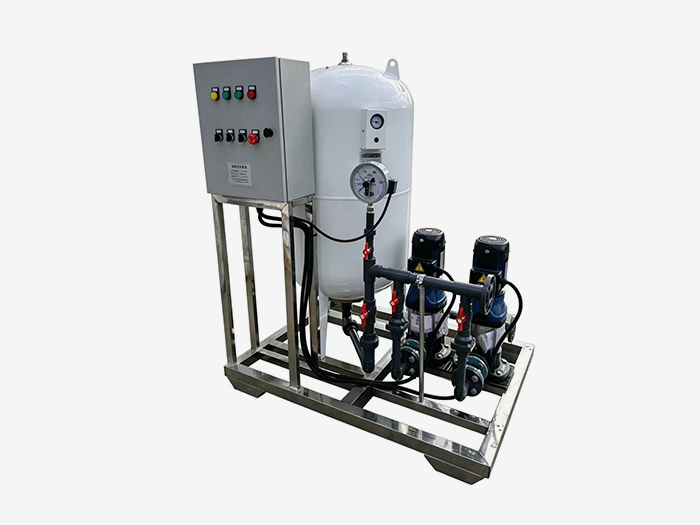
Constant pressure water supply equipment is widely used in central air conditioning, floor heating, industrial closed-loop water circulation, and boiler systems. It integrates automatic pressure stabilization, automatic water replenishment, automatic exhaust, pressure relief and buffering functions. It stabilizes the pressure in the pipeline network, eliminates abnormal sounds caused by air blockage, and prevents damage from negative pressure and water shortage in the pipeline. It is an essential supporting equipment for HVAC and circulating water systems.











 Landline:+86 010 59792055
Landline:+86 010 63780188
 Mobile:+86 13910114728
 Email:bjyuanlai@163.com
 Email:Wanda Plaza, Fengke Road, Fengtai District, BeijingBseat6Courtyard No.3Building No.7layer708
Yuanlai Homepage Softened water equipment Reverse osmosis pure water equipment Water supply equipment Engineering case Technical service Enter Yuanlai Site map
Softened water equipment Reverse osmosis pure water equipment Water purification equipment Water supply equipment Automatic dosing equipment High-purity water (ultra-pure water) equipment Wholesale of water treatment accessories
Electric power industry Petrochemical industry The electronic semiconductor industry The photovoltaic new energy industry Pharmaceuticals & Biochemical Engineering School research units Food and beverage industry Enterprises and public institutions
Reverse osmosis membrane Star-counting pump Fleck Valve Runxin Valve Instruments and meters Ultrafiltration membrane Softening resin Resin tank
