Bookmark this site Online message 中文站Welcome to the official website of Beijing Yuanlai Water Treatment Equipment Co., LTD.!
Service Hotline
+86 010 59792055 / +86 13910114728

Interpretation of the Causes of edi Device Accessories and Membrane Stack blockage
The edi device is simpler to operate and more stable in operation than the traditional mixed bed technology. Moreover, it uses relatively fewer auxiliary accessories, such as PH neutralization devices and acid-base metering devices. It generates very little excess emission substances throughout the entire process, and these substances meet the emission standards and do not require further treatment. The accessory parts used in the edi device: 1. Highly stable power supply equipment: Effectively maintains the stability of the entire system to provide a stable current to the system, and the current does not change in any way with the quality of the incoming water. 2. System flow control equipment: To ensure the stable operation of the module, when there is no water entering the module, the power supply of the module should be immediately turned off. 3. Pressure gauges: Pressure gauges are installed at the inlet water end, product water end and concentrated water end to measure the inlet water pressure. 4. Inlet and outlet flow meters: Facilitate the adjustment of water production rate
Details >Can Dow FILMTECTM membrane elements be used for concentrating or purifying organic solvents?
Answer: Hydrophobic solvents are incompatible with FILMTECTM membrane elements. However, hydrophilic solvents such as ethanol can. Hydrophilic solvents will not damage the membrane elements but will cause membrane swelling, altering the membrane's desalination and water production characteristics. Additionally, high-concentration organic solvents will undergo extraction from the sealing and bonding lines of the membrane elements. Long-term contact will damage the bonding and sealing. At present, it is still impossible to estimate how long the membrane element can withstand. We suggest conducting compatibility tests on membrane sheets. If the results are good, then small-scale element tests can be carried out.
Details >Perlite soft water resin, drinking water softening resin, Perlite cation resin C100E
Introduction to Perlite Softening Resin C100E Purolite C100E is a gell-based polystyrene sulfonic acid cation exchange resin. It is a top-grade high-purity product that complies with Section 21 D3.25 of the US FDA regulations. It features excellent chemical and physical stability, high strength, high exchange capacity, and good selectivity. It is mainly used in hard water softening and desalination processes. It is particularly suitable for the preparation of household or industrial drinking water, the separation and extraction of amino acids, pharmaceuticals, hydrometallurgy, and the treatment of electroplating wastewater, etc. The packaging specification of this product is 25L per pack, with an all-English outer packaging. Approximately weighing 20KG per package, the factory ion form is Na type Perlite softening resin C100E. Operating technical parameters: Perlite soft water resin C100E application scope: main
Details >Daily maintenance methods for reverse osmosis equipment in pure water processes
Daily maintenance methods for reverse osmosis equipment in pure water processes Reverse osmosis is an important part of pure water treatment processes. Reverse osmosis refers to membrane separation technology that uses pressure as the driving force through membranes. Reverse osmosis equipment is the product of membrane separation technology. After the raw water passes through fine filters, activated carbon filters, iron and manganese removal devices and other equipment, through the action of pumps, the reverse osmosis membrane is used to reduce the water concentration. At the same time, industrial pollutants, heavy metals, viruses and other harmful substances in the water quality are filtered out, making the water meet the physical and chemical indicators and hygiene standards for drinking. The cleaning method for reverse osmosis equipment in the pure water process: ① Select the cleaning agent formula, prepare the cleaning solution in the cleaning water tank, circulate the cleaning solution with a pump, stir it evenly and set it aside. ② Close the inlet and outlet water valves and the discharge valve on the reverse osmosis device, and then open the reverse osmosis
Details >Regarding the softening exchange of water softening equipment
The workflow for softening exchange in water softening equipment is roughly the same. Water softening equipment consists of five steps, which may vary due to different processes, adding or subtracting some traditional processes. The requirements for different water qualities prepared. Five rapid cleaning processes: work (sometimes referred to as water production, the same below), backwashing and salt absorption (regeneration), slow rinsing (displacement). Almost all the operations of different water softening equipment may involve some additional processes due to different needs or in the actual control process. Any five processes developed based on sodium ion exchange water softening equipment (among which, automatic water softening equipment can add a brine replenishment process). Salt (renewable): During the process of injecting brine into the resin tank, traditional equipment uses salt to inject brine into the pump, while automatic equipment is a special type of internal device
Details >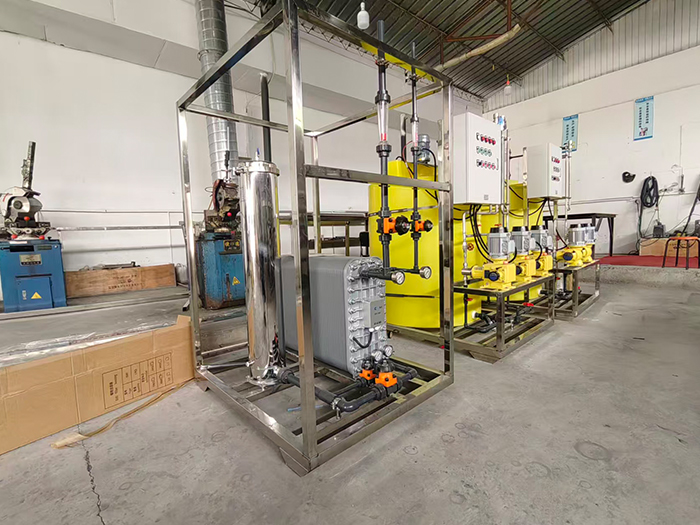
Yuan LaiEDIThe ultra-pure water equipment uses electro-deionization technology.EDIElectrodeionization is a water purification method that combines the dual advantages of electrodialysis and ion exchange. It does not require acid-base chemical regeneration and can continuously and stably prepare high-purity ultrapure water. Under the action of a direct current electric field, ion separation in water is completed. At the same time, water is electrolyzed to generate hydrogen ions and hydroxide ions, achieving automatic regeneration of the resin without the need to stop the machine for manual regeneration. The pre-treatment combined with reverse osmosis can prevent oxidized substances from damaging the resin, ensuring stable effluent quality and widely meeting the high-standard water usage requirements of various industries.
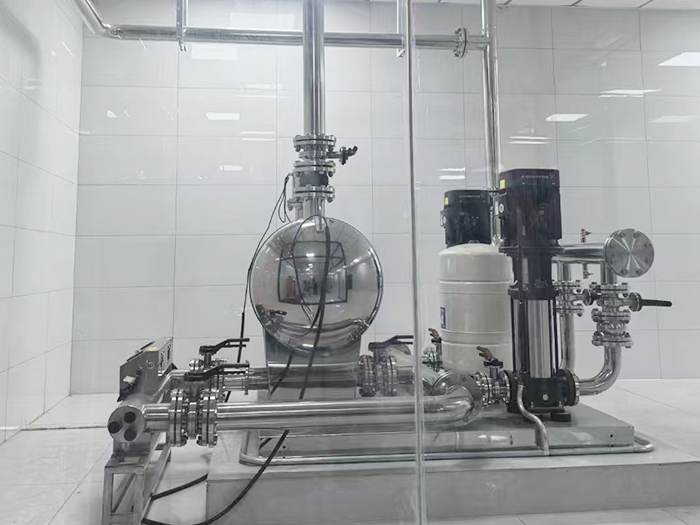
The non-negative pressure water supply equipment can be directly connected to the municipal water supply network, making full use of the residual pressure of the original network for superimposed water supply. Fully enclosed operation does not require the construction of a domestic water tank, eliminating secondary pollution. Intelligent variable frequency voltage stabilization, energy-saving, quiet and easy installation, it is the preferred equipment for secondary water supply in high-rise residential buildings and commercial buildings.
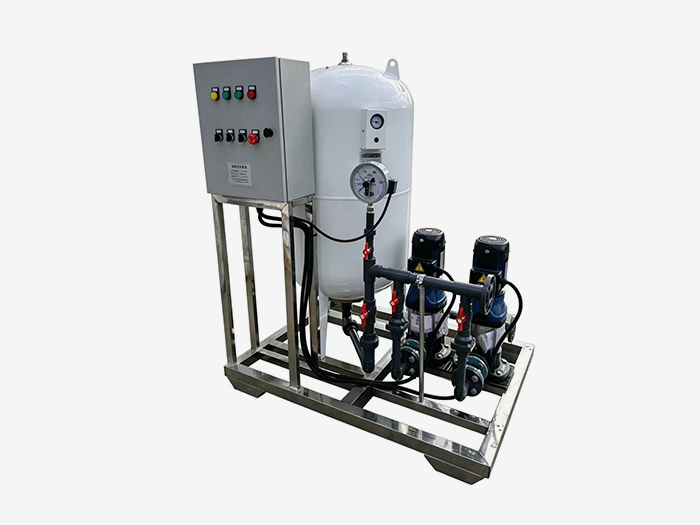
Constant pressure water supply equipment is widely used in central air conditioning, floor heating, industrial closed-loop water circulation, and boiler systems. It integrates automatic pressure stabilization, automatic water replenishment, automatic exhaust, pressure relief and buffering functions. It stabilizes the pressure in the pipeline network, eliminates abnormal sounds caused by air blockage, and prevents damage from negative pressure and water shortage in the pipeline. It is an essential supporting equipment for HVAC and circulating water systems.











 Landline:+86 010 59792055
Landline:+86 010 63780188
 Mobile:+86 13910114728
 Email:bjyuanlai@163.com
 Email:Wanda Plaza, Fengke Road, Fengtai District, BeijingBseat6Courtyard No.3Building No.7layer708
Yuanlai Homepage Softened water equipment Reverse osmosis pure water equipment Water supply equipment Engineering case Technical service Enter Yuanlai Site map
Softened water equipment Reverse osmosis pure water equipment Water purification equipment Water supply equipment Automatic dosing equipment High-purity water (ultra-pure water) equipment Wholesale of water treatment accessories
Electric power industry Petrochemical industry The electronic semiconductor industry The photovoltaic new energy industry Pharmaceuticals & Biochemical Engineering School research units Food and beverage industry Enterprises and public institutions
Reverse osmosis membrane Star-counting pump Fleck Valve Runxin Valve Instruments and meters Ultrafiltration membrane Softening resin Resin tank
