Bookmark this site Online message 中文站Welcome to the official website of Beijing Yuanlai Water Treatment Equipment Co., LTD.!
Service Hotline
+86 010 59792055 / +86 13910114728

Ion exchange resins are commonly used in water treatment in our production and daily life. To make full use of them and bring us more reasonable and effective convenience, let's compare cationic resins below001*7"Anion201*7And the regeneration method of mixed bed resin.
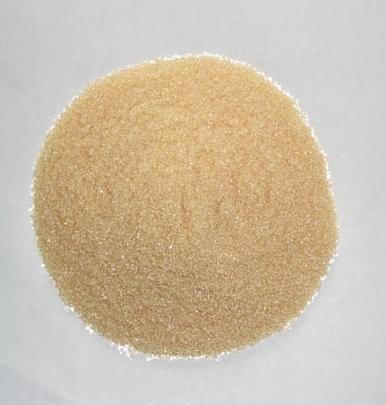
I.001×7Cation exchange resin
1,Pretreatment of resin
Load the resin into the exchanger, backwash the resin with clean water, and the effluent is clear as.
First, introduce approximately twice the volume of the resin4%NaOHUse twice the volume of the last oneNaOHSoak the resin in solution4-8hWash it with clean waterpHfor9Then, pass in about twice the volume of the resin on either side4%HClSoak the resin in the latter volume of hydrochloric acid solution4-8hWash it with clean waterpHfor5Left and right.
2,Regeneration
A,Use approximately2Twice the volume of the resin2-3%HClto3-5m/hThe flow rate passes through the resin layer from top to bottom, and the regeneration waste liquid is discharged through the drainage pipe.
B,Then use pure water (if pure water is not available, tap water can be used first)3-5m/hThe flow rate passes through the resin layer from top to bottom, and the waste liquid is discharged through the drainage pipe.
C,Close the acid inlet valve, open the water inlet valve, and use the incoming water to perform forward washing on the resin. After the effluent is qualified, put it into operation.
Ii.201×7Anion exchange resin
1,Pretreatment of resin
Load the resin into the exchanger, backwash the resin with clean water, and the effluent is clear as.
First, introduce approximately twice the volume of the resin4%HClSoak the resin in the latter volume of hydrochloric acid solution4-8hWash it with clean waterpHfor5Left and right. Then, approximately twice the volume of the resin is introduced4%NaOHSoak the resin in the latter volume of sodium hydroxide solution4-8hWash it with clean waterpHfor9Left and right. After that, it can be reused.
2,Regeneration
A,Use approximately2Twice the volume of the resin3-4% NaOHto3-5m/hThe flow rate is upward through the resin layer from bottom to top, and the regeneration waste liquid is discharged through the drainage pipe.
B,Then use pure water (if pure water is not available, tap water can be used first)3-5m/hThe flow rate is upward through the resin layer from bottom to top, and the waste liquid is discharged through the drainage pipe.
C,Close the alkali inlet door and open the water inlet door. Use the effluent from the cation bed (this effluent from the cation bed is the effluent after the acidity drops during the cation bed washing and the acidity basically reaches equilibrium) to perform forward washing on the resin. After the effluent is qualified, put it into operation.
Iii. Mixed Bed Resin
1,Pretreatment of resin
Load the resin into the exchanger, backwash the resin with clean water, and the effluent is clear as.
First, introduce approximately twice the volume of the resin4%HClSoaking4-8hWash it with clean waterpHfor3-5Then, use about twice the volume of the resin4%NaOHSoaking4-8h.
2,Regeneration of resin
A,After alkali soaking, without cleaning, a large backwash is carried out directly. At the beginning of the backwash, the flow rate should be low. Once the resin becomes loose, gradually increase the backwash flow rate to ensure that the expansion rate of the entire resin layer is at50-70%Maintain10minLeft and right, observe whether the stratification is clear.
B,After backwashing and layering, water is poured onto the resin surface approximately100mmAt this point, start the regeneration pump and the middle drain. After adjusting the balance of the liquid level and water inflow through the sight glass, begin to introduce the alkaline and acidic solutions. These solutions will pass through the cation and anion resin layers respectively and then be discharged simultaneously through the middle drain pipe. If the acid solution has been completely fed in but the alkali solution has not yet been completely fed in, the cleaning water should still be passed through the lower part at the same flow rate to prevent the alkali solution from flowing into the lower part and contaminating the regenerated cation resin.
Then, the cleaning water passes through the top and bottom simultaneously at the same flow rate, and the conductivity of the discharged water in the straight middle is less than10μs/cm,Na+Less than100ppb. Afterwards, reduce the flow rate of the lower inlet water and clean it simultaneously. The conductivity of the middle discharge water is less than10μs/cm,Na+Less than100ppb. Conversely, increase the flow rate of the lower inlet water Reduce the flow rate of the upper inlet water and clean it simultaneously. The conductivity of the effluent from the middle discharge is less than10μs/cm,Na+Less than100ppb.
After that, perform a small forward wash followed by a large forward wash, and the direct conductivity is less than10μs/cmThat's all. During the forward washing process, sometimes to enhance the forward washing effect, it can be carried out once2-3minShort-term backwashing to remove residual liquid from dead corners.
C,Anion, anion resinBefore mixing, the water level in the exchanger should be lowered to the surface of the resin250-400mmAt this point, the pressure of compressed air is generally adopted0.1-0.15MPaThe traffic is2.0-3.0m3/(m2.s)The mixing time is generally0.5-1.0minIf the time is too long, it is easy to wear out the resin. To prevent the resin from re-separating during the sedimentation process and affecting the degree of resin mixing, in addition to introducing appropriate compressed air, there still needs to be a sufficient drainage speed to force the resin to fall rapidly and avoid re-separation of the resin.
D,"Formal washingThe mixed resin layer still needs to be treated with deionized water20-30m/hCarry out forward washing at the flow rate until the effluent meets the standardsSiO2Content lower than10-20μg/lThe electrical conductivity is lower0.2μs/cm Only then can it be put into operation.
The above are cations.001*7"Anion201*7If you have any questions regarding the use of ion exchange resins, please consult Beijing Yuanlai Water Treatment Equipment Co., LTD., a first-level agent of Piaolite, specializing in the water treatment industry15In this year, you can trust us!

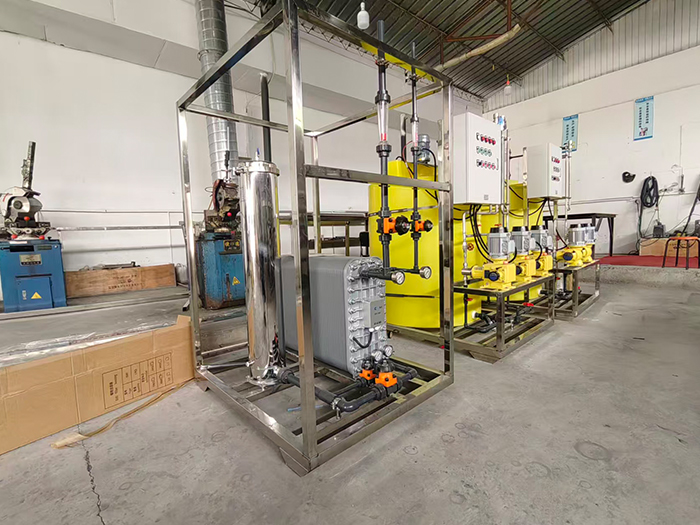
Yuan LaiEDIThe ultra-pure water equipment uses electro-deionization technology.EDIElectrodeionization is a water purification method that combines the dual advantages of electrodialysis and ion exchange. It does not require acid-base chemical regeneration and can continuously and stably prepare high-purity ultrapure water. Under the action of a direct current electric field, ion separation in water is completed. At the same time, water is electrolyzed to generate hydrogen ions and hydroxide ions, achieving automatic regeneration of the resin without the need to stop the machine for manual regeneration. The pre-treatment combined with reverse osmosis can prevent oxidized substances from damaging the resin, ensuring stable effluent quality and widely meeting the high-standard water usage requirements of various industries.
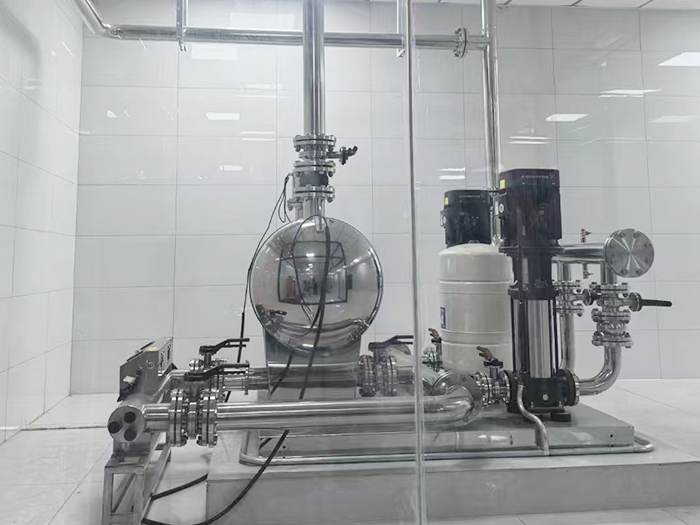
The non-negative pressure water supply equipment can be directly connected to the municipal water supply network, making full use of the residual pressure of the original network for superimposed water supply. Fully enclosed operation does not require the construction of a domestic water tank, eliminating secondary pollution. Intelligent variable frequency voltage stabilization, energy-saving, quiet and easy installation, it is the preferred equipment for secondary water supply in high-rise residential buildings and commercial buildings.
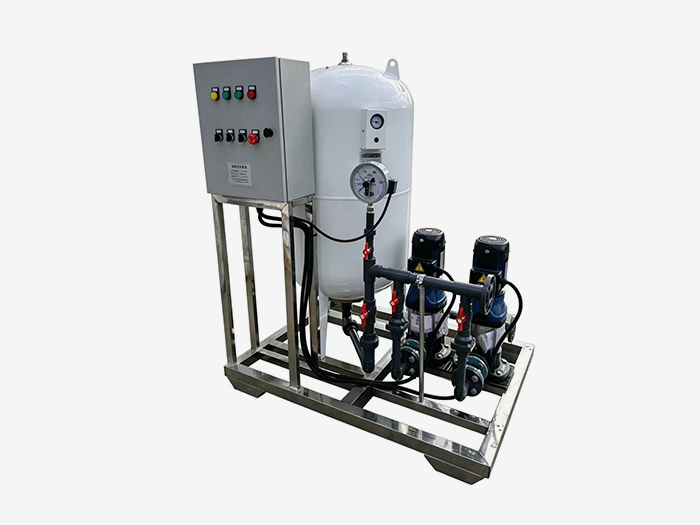
Constant pressure water supply equipment is widely used in central air conditioning, floor heating, industrial closed-loop water circulation, and boiler systems. It integrates automatic pressure stabilization, automatic water replenishment, automatic exhaust, pressure relief and buffering functions. It stabilizes the pressure in the pipeline network, eliminates abnormal sounds caused by air blockage, and prevents damage from negative pressure and water shortage in the pipeline. It is an essential supporting equipment for HVAC and circulating water systems.











 Landline:+86 010 59792055
Landline:+86 010 63780188
 Mobile:+86 13910114728
 Email:bjyuanlai@163.com
 Email:Wanda Plaza, Fengke Road, Fengtai District, BeijingBseat6Courtyard No.3Building No.7layer708
Yuanlai Homepage Softened water equipment Reverse osmosis pure water equipment Water supply equipment Engineering case Technical service Enter Yuanlai Site map
Softened water equipment Reverse osmosis pure water equipment Water purification equipment Water supply equipment Automatic dosing equipment High-purity water (ultra-pure water) equipment Wholesale of water treatment accessories
Electric power industry Petrochemical industry The electronic semiconductor industry The photovoltaic new energy industry Pharmaceuticals & Biochemical Engineering School research units Food and beverage industry Enterprises and public institutions
Reverse osmosis membrane Star-counting pump Fleck Valve Runxin Valve Instruments and meters Ultrafiltration membrane Softening resin Resin tank
