Bookmark this site Online message 中文站Welcome to the official website of Beijing Yuanlai Water Treatment Equipment Co., LTD.!
Service Hotline
+86 010 59792055 / +86 13910114728

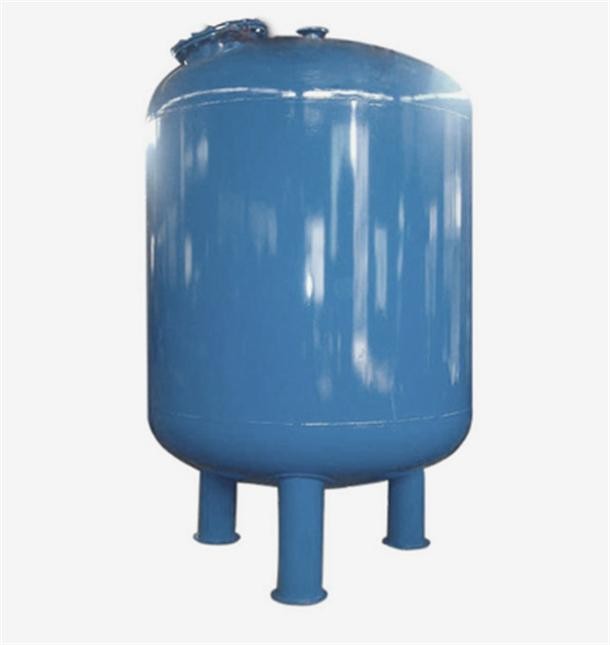
Activated carbon filters are a commonly used water treatment device. As a pretreatment for water treatment desalination systems, they can adsorb residual chlorine that cannot be removed in the previous filtration stage,It can effectively ensure the service life of the subsequent equipment, improve the effluent quality, prevent pollution, especially the free residual oxygen poisoning pollution of the reverse osmosis membrane and ion exchange resin in the subsequent stage. It also adsorbs the leakage from the previous stageSmall-molecule organic substances and other polluting substances have a relatively obvious adsorption and removal effect on water odors, colloids and pigments, heavy metal ions, etc., and also have the ability to reduceCODThe function. It can be further reducedROWater ingressSDIvalue.
An activated carbon filter canRemove color and odor;It can adsorb organic matter, colloidal particles and microorganisms in water.Adsorb non-metallic substances such as oxygen, ammonia, bromine and iodine, as well as metal ions such as silver, arsenic, bismuth, cobalt, hexavalent chromium, mercury, antimony and tin. Therefore, it is widely applied in industries such as medicine, electronics, chemical engineering, and industrial wastewater treatment.
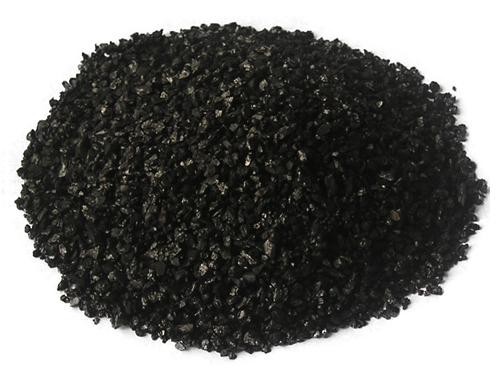
Activated carbon is an important component of the activated carbon filter, and its effectiveness directly affects the filtration effect. The adsorption capacity of activated carbon is limited. After the activated carbon filter has been in operation for a certain period of time, the adsorption of activated carbon will reach a saturated state. At this state, the adsorption effect will decrease. Therefore, in order to ensure the operation of the filter, Now let's talk about the methods to quickly determine whether the activated carbon in the activated carbon filter has become ineffective.
1,Take a certain amount of new activated carbon and conduct an adsorption experiment with colored water, such as using a mineral water bottle*Put activated carbon on the bottle cap (the amount of activated carbon can be determined by yourself), add clear water to the bottle (the amount can be determined by yourself, but not too much), then pour the activated carbon into the bottle and add a few dropsYellow medicineorMethyl blueWait (the amount can be determined by yourself, but not too much), shake or let it stand for a certain period of time, then take out the solution in the bottle (no activated carbon is allowed), this is the solutionA.
2,In addition, repeat the above steps again, but only add activated carbon, to make it a solution that has not been treated with activated carbonB.
3,Then, the used activated carbon can be used for experimental comparison to see if the depth of the water color in the bottle is between that of the solutionAorBWhere can one determine whether activated carbon still has its usage effect? It should be noted that the addition amount of these activated carbons, the amount of clear water, the quantity and the shaking time should be fixed.
The above are the quick methods to determine whether the activated carbon in the activated carbon filter has become ineffective. If you encounter any problems during the use of the filter, please consult Beijing Yuanlai Water Treatment Equipment Co., LTD., which focuses on the water treatment industry15In this year, you can trust us!

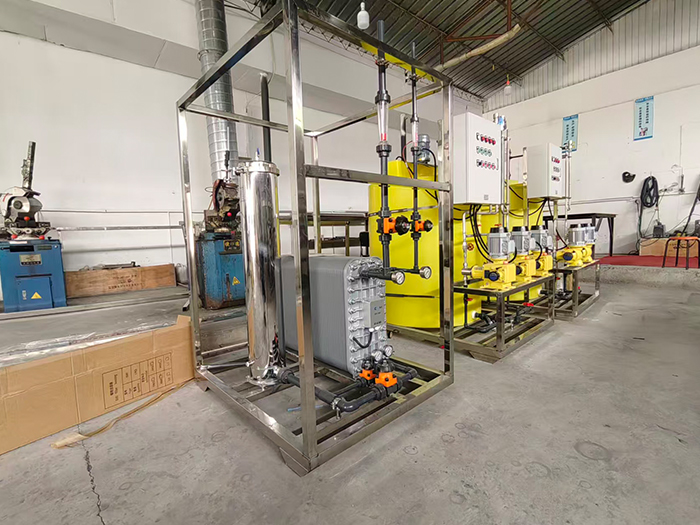
Yuan LaiEDIThe ultra-pure water equipment uses electro-deionization technology.EDIElectrodeionization is a water purification method that combines the dual advantages of electrodialysis and ion exchange. It does not require acid-base chemical regeneration and can continuously and stably prepare high-purity ultrapure water. Under the action of a direct current electric field, ion separation in water is completed. At the same time, water is electrolyzed to generate hydrogen ions and hydroxide ions, achieving automatic regeneration of the resin without the need to stop the machine for manual regeneration. The pre-treatment combined with reverse osmosis can prevent oxidized substances from damaging the resin, ensuring stable effluent quality and widely meeting the high-standard water usage requirements of various industries.
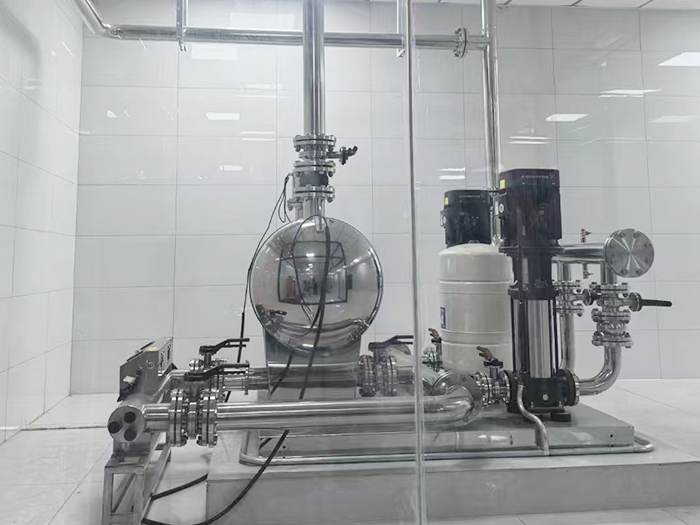
The non-negative pressure water supply equipment can be directly connected to the municipal water supply network, making full use of the residual pressure of the original network for superimposed water supply. Fully enclosed operation does not require the construction of a domestic water tank, eliminating secondary pollution. Intelligent variable frequency voltage stabilization, energy-saving, quiet and easy installation, it is the preferred equipment for secondary water supply in high-rise residential buildings and commercial buildings.
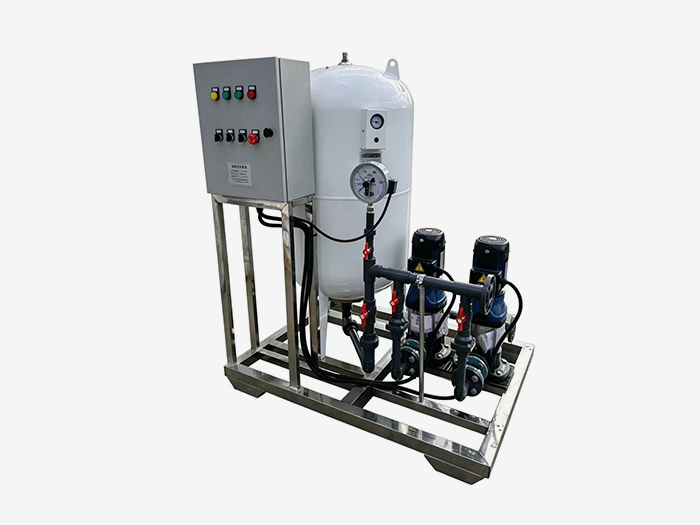
Constant pressure water supply equipment is widely used in central air conditioning, floor heating, industrial closed-loop water circulation, and boiler systems. It integrates automatic pressure stabilization, automatic water replenishment, automatic exhaust, pressure relief and buffering functions. It stabilizes the pressure in the pipeline network, eliminates abnormal sounds caused by air blockage, and prevents damage from negative pressure and water shortage in the pipeline. It is an essential supporting equipment for HVAC and circulating water systems.











 Landline:+86 010 59792055
Landline:+86 010 63780188
 Mobile:+86 13910114728
 Email:bjyuanlai@163.com
 Email:Wanda Plaza, Fengke Road, Fengtai District, BeijingBseat6Courtyard No.3Building No.7layer708
Yuanlai Homepage Softened water equipment Reverse osmosis pure water equipment Water supply equipment Engineering case Technical service Enter Yuanlai Site map
Softened water equipment Reverse osmosis pure water equipment Water purification equipment Water supply equipment Automatic dosing equipment High-purity water (ultra-pure water) equipment Wholesale of water treatment accessories
Electric power industry Petrochemical industry The electronic semiconductor industry The photovoltaic new energy industry Pharmaceuticals & Biochemical Engineering School research units Food and beverage industry Enterprises and public institutions
Reverse osmosis membrane Star-counting pump Fleck Valve Runxin Valve Instruments and meters Ultrafiltration membrane Softening resin Resin tank
