Bookmark this site Online message 中文站Welcome to the official website of Beijing Yuanlai Water Treatment Equipment Co., LTD.!
Service Hotline
+86 010 59792055 / +86 13910114728

Product function description
1Mechanical filter
It is mainly used to remove impurities such as rust, sediment, algae and suspended solids from water, reduce water turbidity and make the turbidity of the effluent less than0.5NTU,CODMNLess than1.5mg/LThe iron content is less than0.05mg/L,SDI≤5. It can be accessed through a multi-way valve orPLCControl the backwashing, forward washing and soda water scrubbing at any time to wash away the dirt on its surface, prevent it from clogging and restore its filtering capacity.
2Activated carbon filter
Activated carbon has extremely strong adsorption and filtration performance and can effectively adsorb residual chlorine, discoloration, odor, organic matter and other substances in water. As reverse osmosis membranes are highly sensitive to residual chlorine and organic matter, activated carbon is configured to adsorb residual chlorine and organic matter, ensuring that the effluent contains residual chlorine≤0.1mg/L,SDI≤4Meet the feed water requirements of reverse osmosis membranes. It can be accessed through a multi-way valve orPLCControl the backwashing, forward washing and soda water scrubbing at any time to wash away the dirt on its surface, prevent clogging and restore its processing capacity.
3Scale inhibition device (softener
Nmg/LThe scale inhibitor can prevent hundredsmg/LCalcium carbonate precipitates out. The mechanism of action is that the long-chain anions generated by the scale inhibitor in water are prone to adsorb onto the tiny calcium carbonate grains, and at the same time, these anions are easy to react withCO32¬-Ion displacement,This displacement occurs throughout the entire layer of calcium ions dispersed in water,This thus prevents the precipitation of calcium carbonate. It adopts the American Mitonro metering pump for automatic dosing, ensuring accurate metering and reliable dosing. The dosage of the medicine is approximately2-5PPM.
At present, most pure water systems adopt scale inhibitor injection devices because they are more reliable, more environmentally friendly and have lower operating costs than softeners. It will not produce recycled wastewater like that of water softening equipment, which meets the requirements of energy conservation and emission reduction.
4Security filter
After pretreatment, a security filter is installed before the high-pressure pump to prevent impurity particles and other substances from entering the high-pressure pump and damaging the high-pressure pump and reverse osmosis membrane. Adopt the type that is loose on the outside and tight on the insidePPThe filter element (with a frame and good strength) filters water from the outside to the inside, which can extend the time when the filter element is clogged. The upper part is equipped with an exhaust valve, and pressure gauges are provided at the inlet and outlet respectively. The pressure at the inlet and outlet can be visually compared to prevent air from entering the pump and damaging it. The lower part is equipped with a drain valve, which can discharge the trapped impurities at any time.
5Secondary reverse osmosis device system
Reverse osmosis technology is currently a very mature desalination technology and also a widely used water treatment process in the market with a wide range of applications. It can precisely filter out viruses, heavy metal ions, salts and various carcinogens in water. It features low working pressure, large water production, high desalination rate and is easy to maintain. Designing an automatic flushing device can extend its service life. A two-stage reverse osmosis device is adopted to ensure the conductivity of the produced water≤2us/cm. Reverse osmosis membrane(A liquid separation membrane that uses the reverse osmosis principle for separation)The principle of separation is carried out, and its specific features are as follows:
①Under the condition that no phase change occurs at normal temperature, solute and water can be separated. It is suitable for the separation and concentration of heat-sensitive substances, as well as the separation of substances with phase change Compared with other methods, it has lower energy consumption.
②Reverse osmosis membrane(A liquid separation membrane that uses the reverse osmosis principle for separation)The separation technology has a wide range of impurity removal.
③Higher desalination(Remove cations and anions from water)It has a high water reuse rate and can retain solutes with particle sizes of several nanometers or more.
④Utilizing low pressure as the driving force for membrane separation, the separation device is simple, operation, maintenance and automatic control are convenient, and the site is hygienic.
6,PHRegulating device
As the water produced by reverse osmosis is slightly acidic, after passing through the second stage of reverse osmosisPHThe value is relatively small. To meet the process requirements, and at the same time, the membrane element demands that the feed water be neutral. This is crucial for the long-term stable operation of the secondary reverse osmosis membrane and for the desalination rate
The water production is of great benefit. Therefore, it is necessary to add alkali to the feed water before the secondary reverse osmosis membranePHAdjust to neutral. The automatic dosing is carried out by using German Aldoz or American Mitonro metering pumps, ensuring accurate metering and reliable dosing. The dosage of the medicine is approximately2-5PPM.
7Ultraviolet device
"Adopt254mmLong ultraviolet rays have a long lifespan, good effect, low power consumption, do not pollute water quality, leave no residue, and are easy to install in pipelines. It is currently an progressive and effective method.
8Terminal filter
The aperture adopted is0.22umThe microporous filter membrane can remove microorganisms and their pyrogens, ensuring that the feed water is sterile and meeting the requirements for pharmaceutical water.
Process flow
Raw water→Raw water tank→Raw water pump→Dosing device→Mechanical filter→Activated carbon filter→Dosing device/Softening→Security filter→First-stage high-pressure pump→First-stage reverse osmosis→Middle water tank→PHAutomatic adjustment→Secondary high-pressure pump→Secondary reverse osmosis→Sterile purified water tank→Purified water pump→Ultraviolet device→Terminal membrane filtration→Water usage point→Purified water is recycled back to the pure water tank→Pipeline system→Online water quality testing→"OnlinePH"Detection→Online flow velocity detection (optional.ROMembrane cleaning device
Scope of application
◇Purified water for pharmaceutical preparations, large-volume medical parenterals, biological preparations, genetic engineering, renal dialysis, medical devices, etc. It can also be applied as follows
◇Purification and preparation of water for the beverage industry, beverages, beer, liquor, and other products
◇It is applicable to the production of direct drinking water in communities, schools, factories and other units.
◇It can be used for the production of bottled water such as barrel water and mineral water.
◇In industrial production, useful substances are concentrated and recovered from aqueous solutions
◇The pure water device serves as the primary desalination equipment for the production of high-purity water.
◇Water used in the electronics industry for rinsing electronic components such as integrated circuits, silicon wafers, and display tubes
◇Other process water: Ultra-pure water for automotive and home appliance coating, coated glass, cosmetics, fine chemicals, etc.
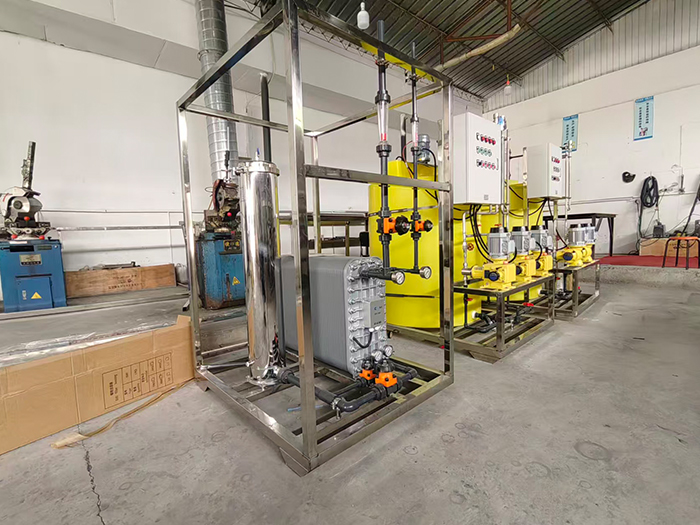
Yuan LaiEDIThe ultra-pure water equipment uses electro-deionization technology.EDIElectrodeionization is a water purification method that combines the dual advantages of electrodialysis and ion exchange. It does not require acid-base chemical regeneration and can continuously and stably prepare high-purity ultrapure water. Under the action of a direct current electric field, ion separation in water is completed. At the same time, water is electrolyzed to generate hydrogen ions and hydroxide ions, achieving automatic regeneration of the resin without the need to stop the machine for manual regeneration. The pre-treatment combined with reverse osmosis can prevent oxidized substances from damaging the resin, ensuring stable effluent quality and widely meeting the high-standard water usage requirements of various industries.
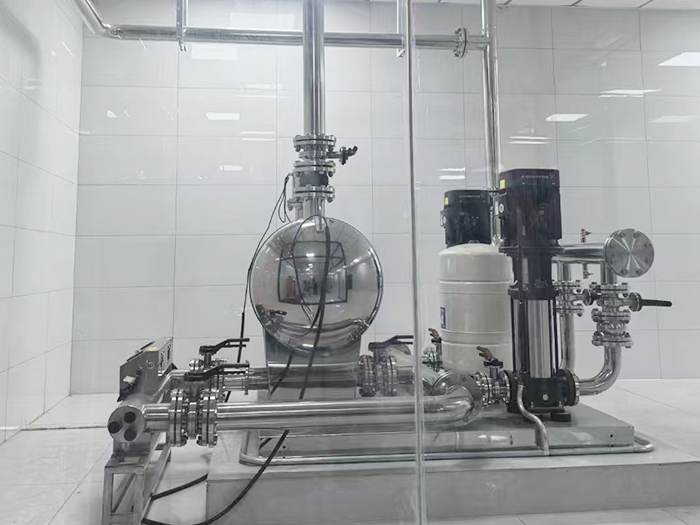
The non-negative pressure water supply equipment can be directly connected to the municipal water supply network, making full use of the residual pressure of the original network for superimposed water supply. Fully enclosed operation does not require the construction of a domestic water tank, eliminating secondary pollution. Intelligent variable frequency voltage stabilization, energy-saving, quiet and easy installation, it is the preferred equipment for secondary water supply in high-rise residential buildings and commercial buildings.
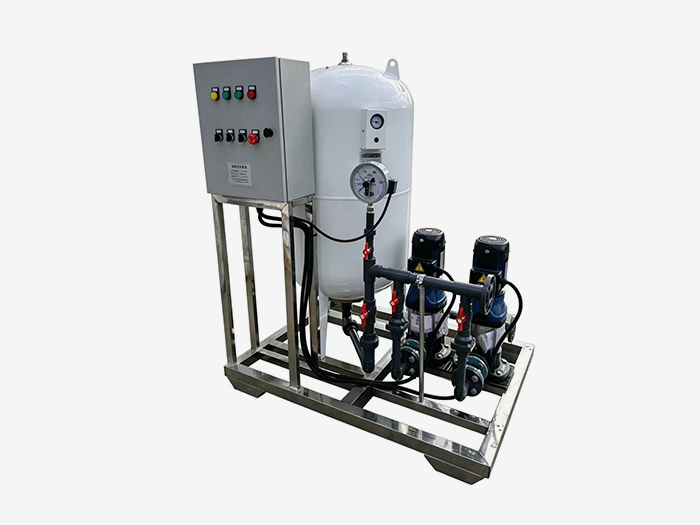
Constant pressure water supply equipment is widely used in central air conditioning, floor heating, industrial closed-loop water circulation, and boiler systems. It integrates automatic pressure stabilization, automatic water replenishment, automatic exhaust, pressure relief and buffering functions. It stabilizes the pressure in the pipeline network, eliminates abnormal sounds caused by air blockage, and prevents damage from negative pressure and water shortage in the pipeline. It is an essential supporting equipment for HVAC and circulating water systems.











 Landline:+86 010 59792055
Landline:+86 010 63780188
 Mobile:+86 13910114728
 Email:bjyuanlai@163.com
 Email:Wanda Plaza, Fengke Road, Fengtai District, BeijingBseat6Courtyard No.3Building No.7layer708
Yuanlai Homepage Softened water equipment Reverse osmosis pure water equipment Water supply equipment Engineering case Technical service Enter Yuanlai Site map
Softened water equipment Reverse osmosis pure water equipment Water purification equipment Water supply equipment Automatic dosing equipment High-purity water (ultra-pure water) equipment Wholesale of water treatment accessories
Electric power industry Petrochemical industry The electronic semiconductor industry The photovoltaic new energy industry Pharmaceuticals & Biochemical Engineering School research units Food and beverage industry Enterprises and public institutions
Reverse osmosis membrane Star-counting pump Fleck Valve Runxin Valve Instruments and meters Ultrafiltration membrane Softening resin Resin tank
