Bookmark this site Online message 中文站Welcome to the official website of Beijing Yuanlai Water Treatment Equipment Co., LTD.!
Service Hotline
+86 010 59792055 / +86 13910114728

Beijing Yuanlai provides: Friends living in rural areas or the suburbs of cities may encounter the following phenomena: It is very difficult to dig a self-provided well, and the freshly drawn water is particularly clear, no different from tap water. However, after being left for a period of time, such as a few hours or overnight, the color turns darker, "yellow", and gives off a fishy smell. Everyone has no idea what's going on. They all think that the water must have been polluted or that some chemical substances have reacted in it. In fact, these are all very normal and common phenomena. Because groundwater is rich in minerals and does not come into contact with air, it has been in an anaerobic environment for a long time. In this environment, iron and manganese ions exist in a divalent form. Once they come into contact with air, they will be oxidized into yellow precipitates of trivalent iron. The reason why the water turns yellow is this. Don't worry about removing yellow rust from groundwater. We have mature water treatment solutions!
Why use well water (groundwater, river water, etc.) treatment equipment?
China is rich in underground water resources, among which many underground water sources contain excessive iron and manganese, and are called iron and manganese-containing groundwater. When the iron content in water is relatively high, the water has an iron-fishy smell, which affects the taste of the water. As water for production in papermaking, textile, dyeing, chemical and leather refining industries, it will reduce the quality of the products. Water containing iron can cause rust spots on household items such as porcelain basins and bathtubs, and yellow or brownish-yellow stains when washing clothes. Iron precipitateFe2O3It will grow iron, clog pipes and sometimes red water will appear. The problems that occur in water with a high manganese content are similar to those in water with a high iron content. For instance, it can cause the water to lose its color, smell and taste, damage the quality of industrial products such as textiles, papermaking and brewing, contaminate household appliances to turn brown or black, and leave slightly black or light gray stains on washed clothes. For this reason, China's "Hygienic Standard for Drinking Water"GB5749-85It is stipulated that the concentrations of iron and manganese shall not exceed the limit respectively0.3mg/Land0.1mg/LRaw water that exceeds the standard must be treated for iron and manganese removal to make the quality of the raw water meet the national tap water standard.
Solution
Process flow chart
Raw water (groundwater)/"River water→Oxidation treatment→Booster pump→Specialized iron and manganese removal water purification material→Activated carbon filter (optional, deep purification, regulating water quality taste)→Water usage points (meeting national tap water standards).
Process description
The main function of the sedimentation tank is to prolong the chemical reaction time between iron and manganese ions in water and oxygen ions in the air, generating ferric oxide/Precipitates such as manganese dioxide.
The main function of the booster pump is to pressurize the raw water and provide a power source for the system. The light horizontal multistage centrifugal pump adopts a maintenance-free mechanical seal. All the flow-through parts of the pump are made of stainless steel.304or316It is made of low noise, resistant to light corrosion, with an attractive appearance, small size, light weight and long service life.
CTMThe main function of the iron and manganese removal filter is to retain compounds of trivalent iron or tetravalent manganese. Through further reactions of the deep filter material, the residual divalent iron and manganese are adsorbed and intercepted, thereby achieving the removal effect.
The main function of the activated carbon filter is to adsorb the discoloration, odor, residual chlorine, by-products of chlorine, organic matter, some pigments and harmful substances (such as pesticides, chlorinated hydrocarbons, aromatic compounds) in the raw water, reducing the chemical oxygen demandCOD. Activated carbon is widely used in the purification of domestic water and industrial water in industries such as industry and chemical engineering. Due to its large specific surface area and the fact that its surface is covered with evenly distributed carbon20-30Due to its micropores, activated carbon has a very high adsorption capacity. In addition, the surface of activated carbon contains a large number of functional groups such as hydroxyl and carboxyl groups, which can chemically adsorb various organic substances and exert electrostatic attraction. Therefore, activated carbon can also remove organic substances such as humic acid, fulvic acid, and lignosulfonic acid from water, as well as substances harmful to reverse osmosis membranes like residual chlorine. Generally, it can be removed63%-86%Colloidal substances50%The iron on both sides, as well as47-60%Organic matter. The process by which activated carbon removes residual chlorine is a simple oxidation-reduction process. This process may cause the activated carbon to break down, but the broken activated carbon does not affect the effect of removing residual chlorine. Therefore, the effect of activated carbon in removing residual chlorine is very strong.
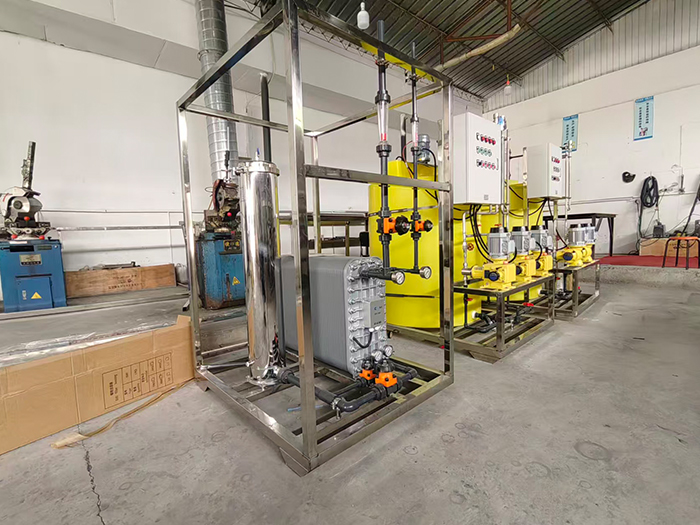
Yuan LaiEDIThe ultra-pure water equipment uses electro-deionization technology.EDIElectrodeionization is a water purification method that combines the dual advantages of electrodialysis and ion exchange. It does not require acid-base chemical regeneration and can continuously and stably prepare high-purity ultrapure water. Under the action of a direct current electric field, ion separation in water is completed. At the same time, water is electrolyzed to generate hydrogen ions and hydroxide ions, achieving automatic regeneration of the resin without the need to stop the machine for manual regeneration. The pre-treatment combined with reverse osmosis can prevent oxidized substances from damaging the resin, ensuring stable effluent quality and widely meeting the high-standard water usage requirements of various industries.
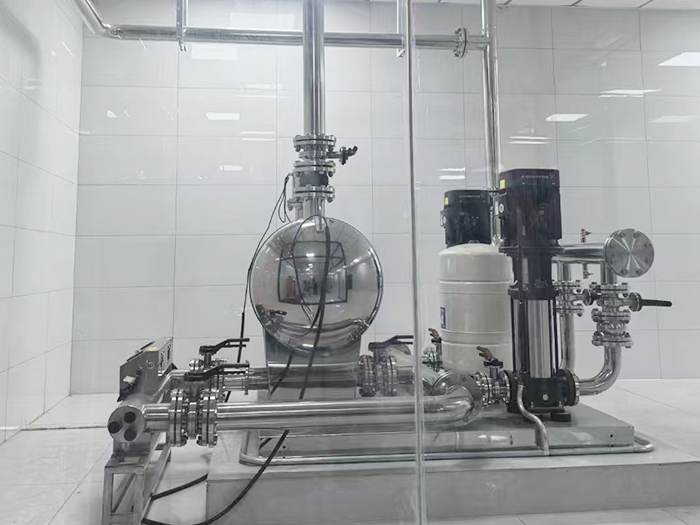
The non-negative pressure water supply equipment can be directly connected to the municipal water supply network, making full use of the residual pressure of the original network for superimposed water supply. Fully enclosed operation does not require the construction of a domestic water tank, eliminating secondary pollution. Intelligent variable frequency voltage stabilization, energy-saving, quiet and easy installation, it is the preferred equipment for secondary water supply in high-rise residential buildings and commercial buildings.
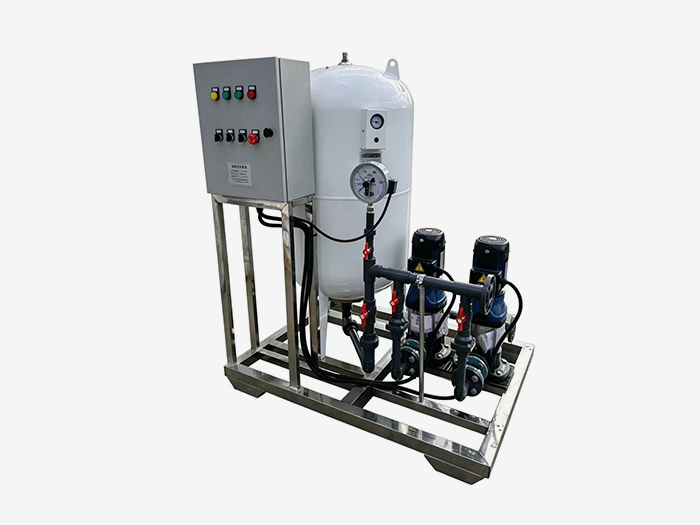
Constant pressure water supply equipment is widely used in central air conditioning, floor heating, industrial closed-loop water circulation, and boiler systems. It integrates automatic pressure stabilization, automatic water replenishment, automatic exhaust, pressure relief and buffering functions. It stabilizes the pressure in the pipeline network, eliminates abnormal sounds caused by air blockage, and prevents damage from negative pressure and water shortage in the pipeline. It is an essential supporting equipment for HVAC and circulating water systems.











 Landline:+86 010 59792055
Landline:+86 010 63780188
 Mobile:+86 13910114728
 Email:bjyuanlai@163.com
 Email:Wanda Plaza, Fengke Road, Fengtai District, BeijingBseat6Courtyard No.3Building No.7layer708
Yuanlai Homepage Softened water equipment Reverse osmosis pure water equipment Water supply equipment Engineering case Technical service Enter Yuanlai Site map
Softened water equipment Reverse osmosis pure water equipment Water purification equipment Water supply equipment Automatic dosing equipment High-purity water (ultra-pure water) equipment Wholesale of water treatment accessories
Electric power industry Petrochemical industry The electronic semiconductor industry The photovoltaic new energy industry Pharmaceuticals & Biochemical Engineering School research units Food and beverage industry Enterprises and public institutions
Reverse osmosis membrane Star-counting pump Fleck Valve Runxin Valve Instruments and meters Ultrafiltration membrane Softening resin Resin tank
