Bookmark this site Online message 中文站Welcome to the official website of Beijing Yuanlai Water Treatment Equipment Co., LTD.!
Service Hotline
+86 010 59792055 / +86 13910114728

The application of reverse osmosis equipment is becoming increasingly widespread. This equipment adopts reverse osmosis membrane separation technology and is an important device for removing most of the salts, viruses and other impurities in the raw water. It is also a key treatment link to ensure the quality of the effluent from the equipment. How can we ensure the better operation of reverse osmosis equipment? Let's take a look at the faults of reverse osmosis equipment and their analysis and handling below.
Fault Analysis of Reverse Osmosis Equipment
The main fault phenomena of reverse osmosis equipment fall into three categories: reduced water permeability, increased salt permeability (decreased desalination rate), and increased pressure drop. However, there are many causes for these faults. It is necessary to try to identify the essence of the problem from these fault phenomena as soon as possible, so as to implement maintenance and repair measures as soon as possible.
Common problems in reverse osmosis equipment are the decline in desalination rate and the reduction in product water volume. If either or both of them decrease slowly, it may be a common phenomenon caused by the formation of dirt or scale, which can be solved by appropriate cleaning. A sudden or rapid performance drop indicates that there is a problem with the processing system or improper operation. Problems have occurred and need to be resolved as soon as possible. Delaying the resolution will result in the reverse osmosis membrane being unable to restore its original performance.
The prerequisite for timely detection of problems is to keep corresponding records. When it is found that the desalination rate and water production of the system have decreased, the first step should be to calibrate the instruments to avoid misjudgment due to instrument issues. These instruments include conductivity meters, flow meters, pressure gauges, thermometers, etc. Secondly, the recorded operational data should be "standardized". Due to temperature and water ingressTDSChanges in recovery rate, service life and water flux, etc. will all cause variations in desalination rate and water production. The standardized water production volume and desalination rate are calculated and then compared with the initial operation data to confirm whether there are any faults in the system.
During the long-term operation of reverse osmosis devices, various contaminants such as colloids, microorganisms, inorganic scale, and metal oxides will gradually accumulate on the membrane surface. These substances deposit on the membrane surface, which can cause a decline in the performance of the reverse osmosis device. To restore the performance of the membrane, it is necessary to carry out chemical cleaning on the membrane.
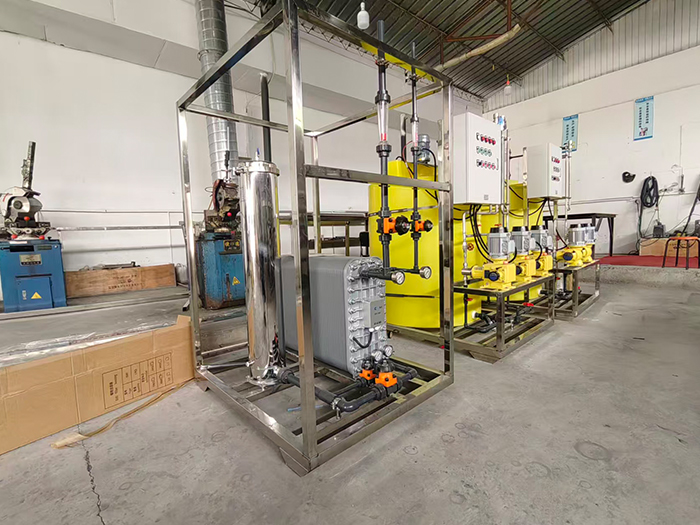
Yuan LaiEDIThe ultra-pure water equipment uses electro-deionization technology.EDIElectrodeionization is a water purification method that combines the dual advantages of electrodialysis and ion exchange. It does not require acid-base chemical regeneration and can continuously and stably prepare high-purity ultrapure water. Under the action of a direct current electric field, ion separation in water is completed. At the same time, water is electrolyzed to generate hydrogen ions and hydroxide ions, achieving automatic regeneration of the resin without the need to stop the machine for manual regeneration. The pre-treatment combined with reverse osmosis can prevent oxidized substances from damaging the resin, ensuring stable effluent quality and widely meeting the high-standard water usage requirements of various industries.
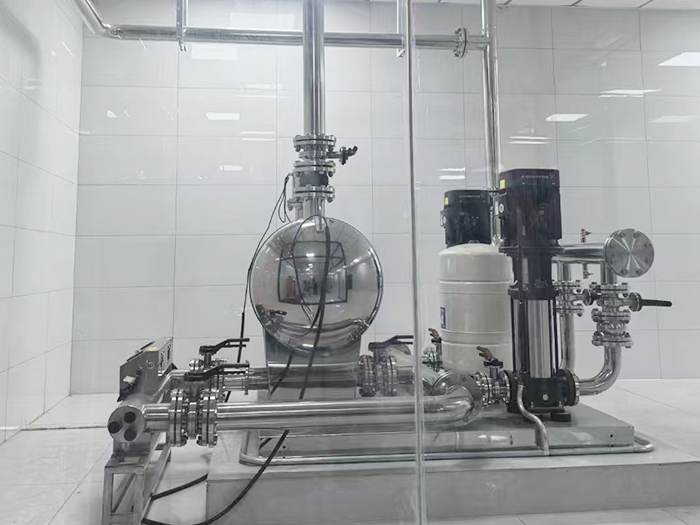
The non-negative pressure water supply equipment can be directly connected to the municipal water supply network, making full use of the residual pressure of the original network for superimposed water supply. Fully enclosed operation does not require the construction of a domestic water tank, eliminating secondary pollution. Intelligent variable frequency voltage stabilization, energy-saving, quiet and easy installation, it is the preferred equipment for secondary water supply in high-rise residential buildings and commercial buildings.
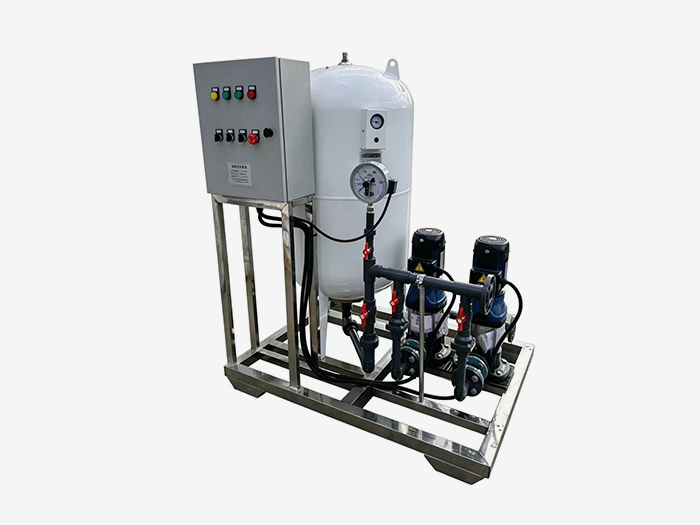
Constant pressure water supply equipment is widely used in central air conditioning, floor heating, industrial closed-loop water circulation, and boiler systems. It integrates automatic pressure stabilization, automatic water replenishment, automatic exhaust, pressure relief and buffering functions. It stabilizes the pressure in the pipeline network, eliminates abnormal sounds caused by air blockage, and prevents damage from negative pressure and water shortage in the pipeline. It is an essential supporting equipment for HVAC and circulating water systems.











 Landline:+86 010 59792055
Landline:+86 010 63780188
 Mobile:+86 13910114728
 Email:bjyuanlai@163.com
 Email:Wanda Plaza, Fengke Road, Fengtai District, BeijingBseat6Courtyard No.3Building No.7layer708
Yuanlai Homepage Softened water equipment Reverse osmosis pure water equipment Water supply equipment Engineering case Technical service Enter Yuanlai Site map
Softened water equipment Reverse osmosis pure water equipment Water purification equipment Water supply equipment Automatic dosing equipment High-purity water (ultra-pure water) equipment Wholesale of water treatment accessories
Electric power industry Petrochemical industry The electronic semiconductor industry The photovoltaic new energy industry Pharmaceuticals & Biochemical Engineering School research units Food and beverage industry Enterprises and public institutions
Reverse osmosis membrane Star-counting pump Fleck Valve Runxin Valve Instruments and meters Ultrafiltration membrane Softening resin Resin tank
