Bookmark this site Online message 中文站Welcome to the official website of Beijing Yuanlai Water Treatment Equipment Co., LTD.!
Service Hotline
+86 010 59792055 / +86 13910114728

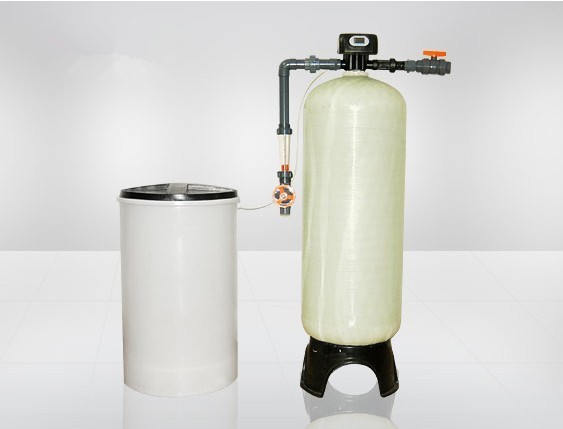
The fully automatic water softening equipment system has a simple structure and low requirements for the installation site.And it has the following characteristics:
1,No power supply required: Eliminates electrical system failures and power outages, simplifies installation, and is especially suitable for soft water treatment of oil and gas boilers with explosion-proof requirements.
2,Simple management: No need for users to have focused knowledge. It truly belongs to "foolproof fully automatic", and all management is just regular salt addition.
3,Continuous water discharge: The dual-tank system, one in use and one on standby, can operate for a full day24Continuous water output for hours;
4,Flow control: Ensures economic and reliable operation;
5,Countercurrent regeneration: The regeneration method adopts a countercurrent process, and softened water is used for regeneration and cleaning, achieving low salt consumption and high-quality effluent.
6,Simple maintenance: Extremely low failure rate.
Operating features of fully automatic water softening equipment
1Single-tank time type: It adopts microcomputer time control. After the equipment runs for the set time, it automatically enters the regeneration state and can be regenerated once a day or once every few days.
2Single-tank flow type: It adopts turbine flow control or electronic flow sensor control. When the water production of the equipment reaches the preset flow rate, it automatically enters the regeneration state and can be regenerated multiple times a day.
3The dual-tank flow type can be further classified into the one-in-use and one-standby type and the simultaneous operation and separate regeneration type.
4One-in-use and one-standby type: One tank operates while the other is on standby. When the effluent from the first operating tank reaches the set flow rate, it enters the regeneration stage. At the same time, the other tank enters the working state. In this way, the two tanks alternate in operation for regeneration, which can24Continuous water supply for hours.
5Simultaneous operation and separate regeneration type: Two tanks operate simultaneously. Once the flow rate is reached, one regenerates first and the other continues to discharge water. The one that regenerates first enters the working state after regeneration is completed, while the other enters the regeneration state. After both tanks have completed regeneration, they enter the simultaneous working state again.
Now let's talk about some tips for selecting fully automatic water softening equipment
1Before selecting the model, the operating parameters should be determined:
aWater production volume during the working cycle
The periodic water production volume refers to the amount of qualified water produced by the soft water equipment after regeneration.
Water output during the working cycle(Cubic meters= Exchange capacity(gn)/ Hardness of raw water(mgnL)
That is to say, the water output during the working cycle(Cubic meters)=The resin filling volume of the equipment(L)/Hardness of raw water
bPeriodic salt consumption
Salt consumption(kg)=Resin filling quality(kg)×0.15
cSystem water usage time: Operating time,Hourly water consumption,Average valueandPeak value;
d"Original"Total hardness: The water source is municipal tap water,Groundwater,Surface water source(jiang,The river,Lake water)? "Sure"The hardness of the raw water in the usage area;
eThe required unit flow rate of soft water(Tons of/"Hour). Select the standard model of the water softener based on this;
fSetting of periodic water production capacityAfter the model of the water softener is set, the theoretical cycle water production can be determined based on the hardness of the raw water and the exchange working capacity of the resin used(Tons of);
2When selecting a model, it is necessary to determine the equipmentDesign type
The selection of water softening equipment is mainly based on water demand, raw water hardness and applicable occasionsThere are various models of equipment with the same water output, and they can be selected according to the actual water usage.
Hardness of raw water:
Hardness of raw water≤3m·mol/LAt that time, the time-controlled type can be selected, calculated based on the maximum water production capacity of the equipment;
Hardness of raw water≤6m·mol/LAt that time, the selection can be made based on the maximum water production capacity of the equipment listed in the table;
Hardness of raw water≤8m·mol/LAt that time, the average water production capacity of the equipment can be selected for selection;
Hardness of raw water8~10m·mol/LIt should be calculated based on the minimum water production capacity of the equipment,Or adopt a multi-level system;
Hardness of raw water≥10m·mol/LMulti-stage treatment must be selected. Generally, two-stage treatment can meet the requirements.
Water usage scenarios: If a hot water boiler or other similar equipment is used, the selection can be made based on the high-water production capacity of the equipment; If water is supplied to a steam boiler, it is generally based on the boiler's evaporation capacity1.2It should be matched with the water production capacity of the equipment.
If you encounter any problems when selecting fully automatic water softening equipment, please consult Beijing Yuanlai Treatment Equipment Co., LTD.15With years of focus on the water treatment industry, you can trust us!
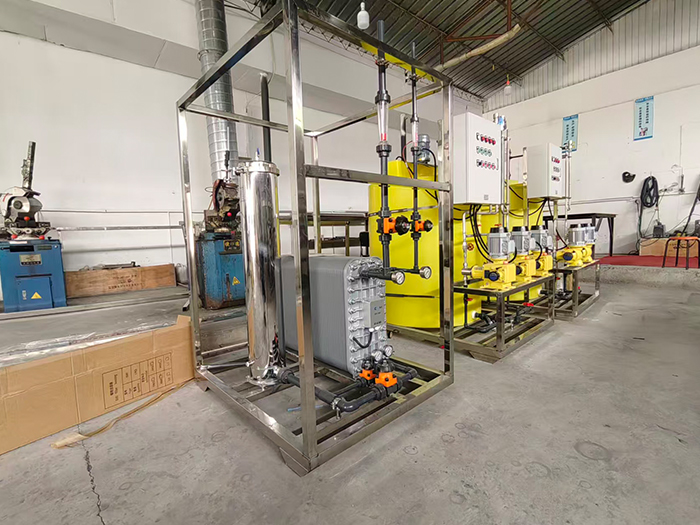
Yuan LaiEDIThe ultra-pure water equipment uses electro-deionization technology.EDIElectrodeionization is a water purification method that combines the dual advantages of electrodialysis and ion exchange. It does not require acid-base chemical regeneration and can continuously and stably prepare high-purity ultrapure water. Under the action of a direct current electric field, ion separation in water is completed. At the same time, water is electrolyzed to generate hydrogen ions and hydroxide ions, achieving automatic regeneration of the resin without the need to stop the machine for manual regeneration. The pre-treatment combined with reverse osmosis can prevent oxidized substances from damaging the resin, ensuring stable effluent quality and widely meeting the high-standard water usage requirements of various industries.
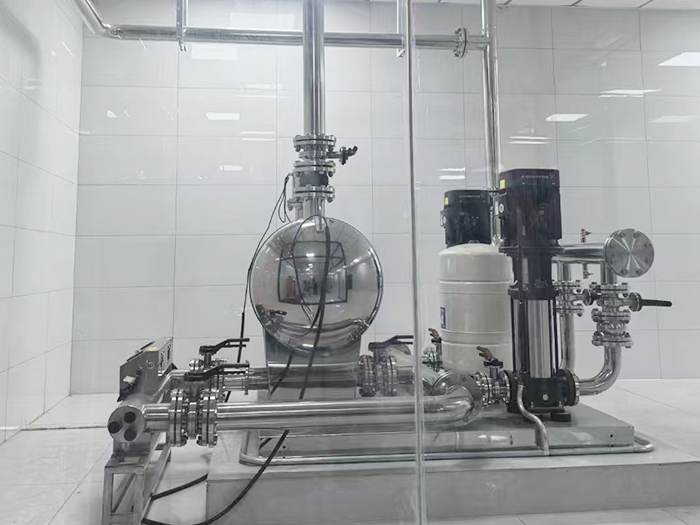
The non-negative pressure water supply equipment can be directly connected to the municipal water supply network, making full use of the residual pressure of the original network for superimposed water supply. Fully enclosed operation does not require the construction of a domestic water tank, eliminating secondary pollution. Intelligent variable frequency voltage stabilization, energy-saving, quiet and easy installation, it is the preferred equipment for secondary water supply in high-rise residential buildings and commercial buildings.
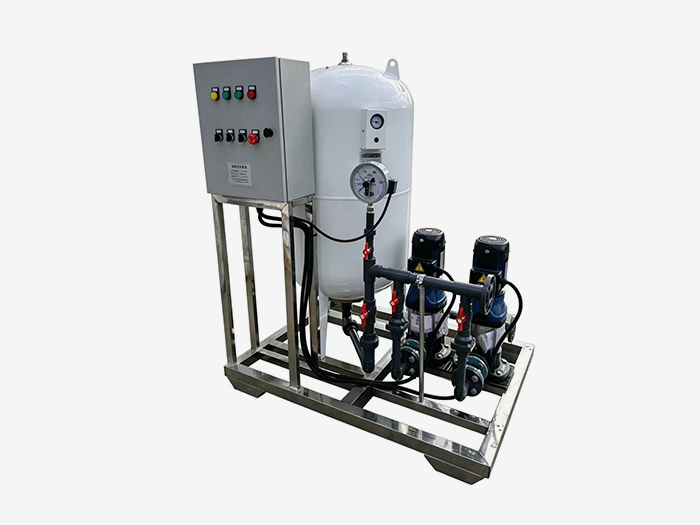
Constant pressure water supply equipment is widely used in central air conditioning, floor heating, industrial closed-loop water circulation, and boiler systems. It integrates automatic pressure stabilization, automatic water replenishment, automatic exhaust, pressure relief and buffering functions. It stabilizes the pressure in the pipeline network, eliminates abnormal sounds caused by air blockage, and prevents damage from negative pressure and water shortage in the pipeline. It is an essential supporting equipment for HVAC and circulating water systems.











 Landline:+86 010 59792055
Landline:+86 010 63780188
 Mobile:+86 13910114728
 Email:bjyuanlai@163.com
 Email:Wanda Plaza, Fengke Road, Fengtai District, BeijingBseat6Courtyard No.3Building No.7layer708
Yuanlai Homepage Softened water equipment Reverse osmosis pure water equipment Water supply equipment Engineering case Technical service Enter Yuanlai Site map
Softened water equipment Reverse osmosis pure water equipment Water purification equipment Water supply equipment Automatic dosing equipment High-purity water (ultra-pure water) equipment Wholesale of water treatment accessories
Electric power industry Petrochemical industry The electronic semiconductor industry The photovoltaic new energy industry Pharmaceuticals & Biochemical Engineering School research units Food and beverage industry Enterprises and public institutions
Reverse osmosis membrane Star-counting pump Fleck Valve Runxin Valve Instruments and meters Ultrafiltration membrane Softening resin Resin tank
