Bookmark this site Online message 中文站Welcome to the official website of Beijing Yuanlai Water Treatment Equipment Co., LTD.!
Service Hotline
+86 010 59792055 / +86 13910114728

The main control indicators for the deep filtration process of granular filter media include: filtration rate and filter cell area, head loss area, head loss and working cycle, the dirt-holding capacity of the filter media layer and the depth of impurity penetration.
(1)Filtration rate and filter area
Filtration rate is the flow rate passing through a unit area, with the unitm/h. Filtration rate is an important indicator for controlling the investment in filter tanks, influencing water quality and operation management. There are two situations of filtration speed: one is the filtration speed under normal working conditions; Another type is the forced filtration rate adopted by the remaining filters to share the processing capacity when a certain filter is unable to operate due to flushing, maintenance or other reasons. The filtration rate is related to the composition of the filter media in the filter tank, as shown in the following table:
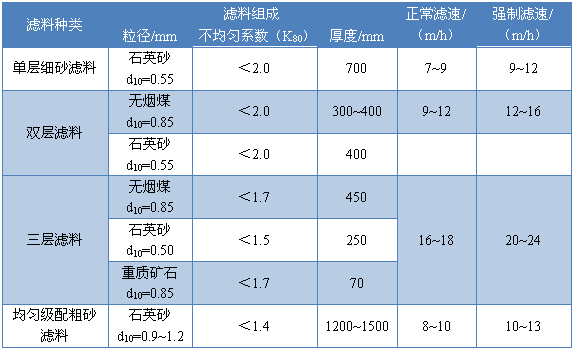
Note: The relative density of the filter material is quartz sand2.50~2.70; Anthracite1.4~1.6; Heavy ore 4.40~5.20.
(1)Working cycle and head loss
The period from the start of filtration to the end of flushing in the filter tank is the working cycle of the rapid filter tank. The working cycle is generally12~24hHead loss refers to the difference between the water level on the filter layer during filtration and the water level at the outlet of the main collection pipe after filtration. Head loss is an indicator that determines the flushing of a filter. Generally, the large head loss of a common rapid filter before flushing is approximately controlled at2~3m.
(2)Impurity penetration depth and the dirt-holding capacity of the filter layer
During the filtration process, when a water sample is taken from a certain depth below the surface of the filter layer and precisely meets the filtration water quality requirements, this depth is the penetration depth of impurities. Under the premise of ensuring the quality of the effluent from the filter, the greater the penetration depth of impurities, the better, which indicates that the entire filter layer can fully play its role. Within one filtration cycle, if calculated based on the entire filter layer, the mass of impurities retained in a unit volume of filter material is the dirt-holding capacity of the filter layer, with the unit beingkg/m3. A large dirt-holding capacity indicates that the filter layer plays a significant role in water purification. The dirt-holding capacity of the filter layer is closely related to the depth of impurity penetration.
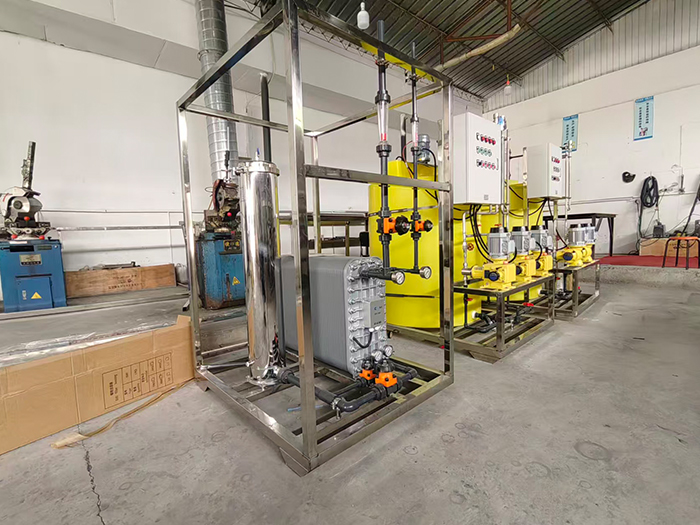
Yuan LaiEDIThe ultra-pure water equipment uses electro-deionization technology.EDIElectrodeionization is a water purification method that combines the dual advantages of electrodialysis and ion exchange. It does not require acid-base chemical regeneration and can continuously and stably prepare high-purity ultrapure water. Under the action of a direct current electric field, ion separation in water is completed. At the same time, water is electrolyzed to generate hydrogen ions and hydroxide ions, achieving automatic regeneration of the resin without the need to stop the machine for manual regeneration. The pre-treatment combined with reverse osmosis can prevent oxidized substances from damaging the resin, ensuring stable effluent quality and widely meeting the high-standard water usage requirements of various industries.
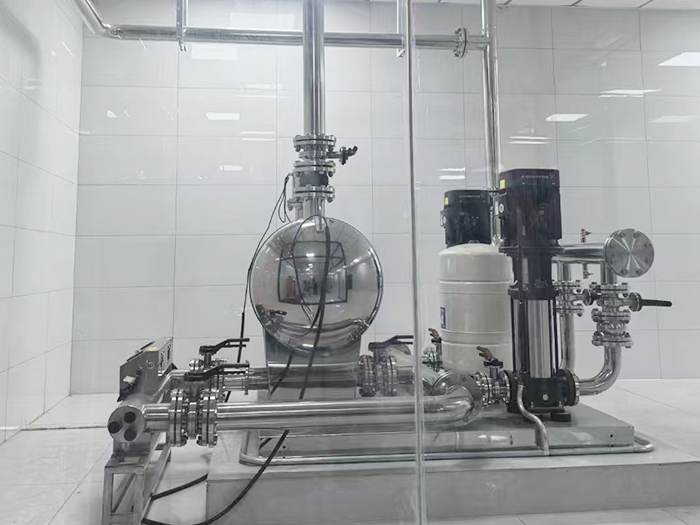
The non-negative pressure water supply equipment can be directly connected to the municipal water supply network, making full use of the residual pressure of the original network for superimposed water supply. Fully enclosed operation does not require the construction of a domestic water tank, eliminating secondary pollution. Intelligent variable frequency voltage stabilization, energy-saving, quiet and easy installation, it is the preferred equipment for secondary water supply in high-rise residential buildings and commercial buildings.
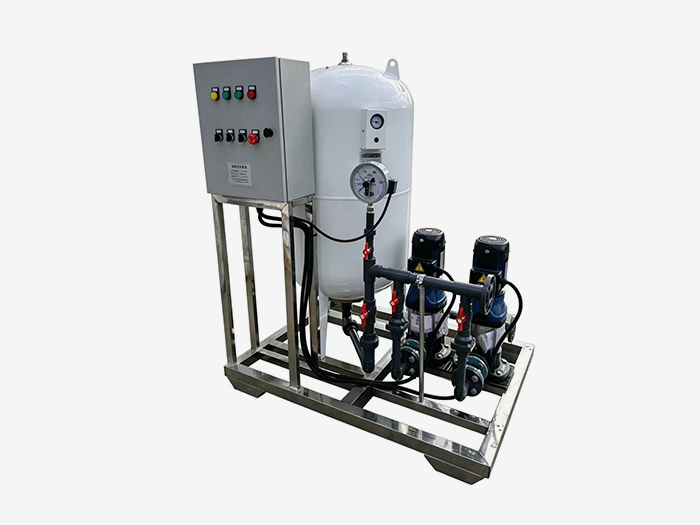
Constant pressure water supply equipment is widely used in central air conditioning, floor heating, industrial closed-loop water circulation, and boiler systems. It integrates automatic pressure stabilization, automatic water replenishment, automatic exhaust, pressure relief and buffering functions. It stabilizes the pressure in the pipeline network, eliminates abnormal sounds caused by air blockage, and prevents damage from negative pressure and water shortage in the pipeline. It is an essential supporting equipment for HVAC and circulating water systems.












 Landline:+86 010 59792055
Landline:+86 010 63780188
 Mobile:+86 13910114728
 Email:bjyuanlai@163.com
 Email:Wanda Plaza, Fengke Road, Fengtai District, BeijingBseat6Courtyard No.3Building No.7layer708
Yuanlai Homepage Softened water equipment Reverse osmosis pure water equipment Water supply equipment Engineering case Technical service Enter Yuanlai Site map
Softened water equipment Reverse osmosis pure water equipment Water purification equipment Water supply equipment Automatic dosing equipment High-purity water (ultra-pure water) equipment Wholesale of water treatment accessories
Electric power industry Petrochemical industry The electronic semiconductor industry The photovoltaic new energy industry Pharmaceuticals & Biochemical Engineering School research units Food and beverage industry Enterprises and public institutions
Reverse osmosis membrane Star-counting pump Fleck Valve Runxin Valve Instruments and meters Ultrafiltration membrane Softening resin Resin tank
