Bookmark this site Online message 中文站Welcome to the official website of Beijing Yuanlai Water Treatment Equipment Co., LTD.!
Service Hotline
+86 010 59792055 / +86 13910114728


When operating a centrifugal pump, the following points should be noted
①Do not operate without water. Do not adjust the suction inlet to reduce the discharge volume. Do not operate at too low a flow rate.
②Monitor the operation process, completely prevent the leakage of the stuffing box, and use new packing when replacing the stuffing box.
③Ensure that the mechanical seal has sufficient water flow for flushing. Excessive water flow is prohibited for water-cooled bearings.
④Do not use too much lubricant.
⑤Conduct inspections according to the recommended cycle. Establish operation records, including operation hours, adjustment and replacement of packing, addition of lubricants and other maintenance measures and times. The suction and discharge pressure, flow rate, input power, temperature of the washing liquid and bearings, as well as the vibration conditions of the centrifugal pump should all be measured and recorded regularly.
⑥The main unit of a centrifugal pump relies on atmospheric pressure to lift water from a lower place to a higher one, and atmospheric pressure can only support about10.3mThe water column causes the main unit of the centrifugal pump to leave the water surface12Mi can't work.
Maintenance of centrifugal pumps
Analysis of Mechanical Seal Failure in Centrifugal Pumps
The shutdown of a centrifugal pump is mainly caused by the failure of the mechanical seal. The manifestations of failure are mostly leakage. The causes of leakage are as follows:
①The leakage of the sealing surface of the dynamic and static rings is mainly caused by: the flatness and roughness of the end face do not meet the requirements, or there are scratches on the surface. There are granular substances between the end faces, causing the two end faces to be unable to operate in the same way. The installation was not in place and the method was incorrect.
②The main reasons for the leakage of the compensation ring sealing ring are: deformation of the gland and uneven preload force. Incorrect installation; The quality of the sealing ring does not meet the standard. The selection of the sealing ring is incorrect.
The actual application effect shows that the parts where the sealing elements fail most frequently are the end faces of the moving and stationary rings. Cracking on the end faces of the moving and stationary rings of the centrifugal pump seal is a common failure phenomenon. The main reasons are:
①When installing, if the gap at the sealing surface is too large, the flushing fluid cannot carry away the heat generated by the friction pair in time. The flushing fluid leaked from the gap of the sealing surface, causing the end face to overheat and get damaged.
②The vaporization and expansion of the liquid medium cause the two end faces to be separated by the vaporization and expansion force. When the two sealing surfaces are tightly pressed together, the lubricating film is damaged, resulting in overheating of the end face surface.
③The lubricity of the liquid medium is poor. Coupled with the overload of the operating pressure, the tracking rotation of the two sealing surfaces is not synchronized. For example, the rotational speed of a high-speed pump is20445r/minThe diameter of the sealing surface is175pxAfter the pump starts running, its linear speed can reach as high as75 m/sWhen one sealing surface lags behind and cannot track the rotation, the instantaneous high temperature causes damage to the sealing surface.
④The sealing flushing liquid orifice plate or filter screen is clogged, resulting in insufficient water volume and causing the mechanical seal to fail.
In addition, there are grooves on the sealing surface and notches during end face bonding, which lead to the failure of sealing elements. The main reasons are:
①The liquid medium is not clean and contains tiny hard particles that slide into the sealing surface at a very high speed, scratching the end face and causing it to fail.
②The coaxiality of the transmission parts of the pump and motor is poor. After the pump is started, the end face is shaken and rubbed once every revolution. The running trajectory of the moving ring is not concentric, causing the end face to vaporize, overheat and wear.
③The frequent occurrence of the hydraulic characteristics of the liquid medium causes vibration of the pump set, resulting in misalignment of the sealing surface and failure.
Corrosion of sealing elements by liquid media, stress concentration, combination of soft and hard materials, erosion, auxiliary sealing0Ring shapeVThe incompatibility of shaped rings, concave rings with liquid media, deformation, etc. can all cause damage and failure of the mechanical seal surface. Therefore, a comprehensive analysis of the damage forms should be conducted to identify the root cause and ensure the long-term operation of the mechanical seal.
Storage of centrifugal pumps
①For pumps that have not yet been installed, a suitable anti-rust agent should be applied to the unpainted surfaces. Bearings lubricated with oil should be filled with an appropriate amount of oil. Bearings lubricated with grease should only be filled with one type of grease and mixed grease should not be used.
②For a short period of time, clean liquid is pumped in to flush, draw the suction pipe line, discharge the pipeline, pump casing and impeller, and drain the flushing liquid from the pump casing, suction pipe line and discharge pipeline.
③Drain the oil from the bearing box, then add clean oil, thoroughly clean the grease and refill it with new grease.
④Seal the suction and discharge ports, store the pump in a clean and dry place, protect the motor windings from moisture, and spray anti-rust and anti-corrosion liquid inside the pump casing.
⑤The pump shaft should be rotated once a month to prevent freezing and lubricate the bearings.
Requirements after the centrifugal pump stops running
①After the centrifugal pump stops running, the inlet valve of the pump should be closed. After the pump cools down, the valves of the auxiliary system should be closed in sequence.
②The shutdown of high-temperature pumps should be carried out in accordance with the provisions of the equipment technical documents. After shutdown, every deviation should be made20one30minRotate the pump half a turn until the temperature of the pump body drops50℃Stop.
③When the cryogenic pump is shut down, unless there are special requirements, the pump should always be filled with liquid. The suction valve and the discharge valve should be kept open all the time. For cryogenic pumps with double-end face mechanical seals, the liquid level controller and the sealing liquid in the pump sealing cavity should maintain the grouting pressure of the pump.
④For pumps transporting media that are prone to crystallization, solidification, sedimentation, etc., after stopping the pump, it is necessary to prevent blockage and promptly flush the pump and pipelines with clean water or other media.
⑤Drain the accumulated liquid in the pump to prevent rust and cracking due to freezing.
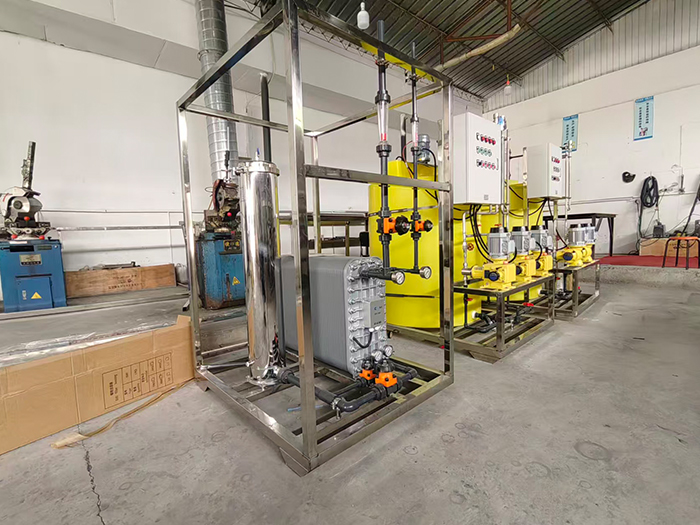
Yuan LaiEDIThe ultra-pure water equipment uses electro-deionization technology.EDIElectrodeionization is a water purification method that combines the dual advantages of electrodialysis and ion exchange. It does not require acid-base chemical regeneration and can continuously and stably prepare high-purity ultrapure water. Under the action of a direct current electric field, ion separation in water is completed. At the same time, water is electrolyzed to generate hydrogen ions and hydroxide ions, achieving automatic regeneration of the resin without the need to stop the machine for manual regeneration. The pre-treatment combined with reverse osmosis can prevent oxidized substances from damaging the resin, ensuring stable effluent quality and widely meeting the high-standard water usage requirements of various industries.
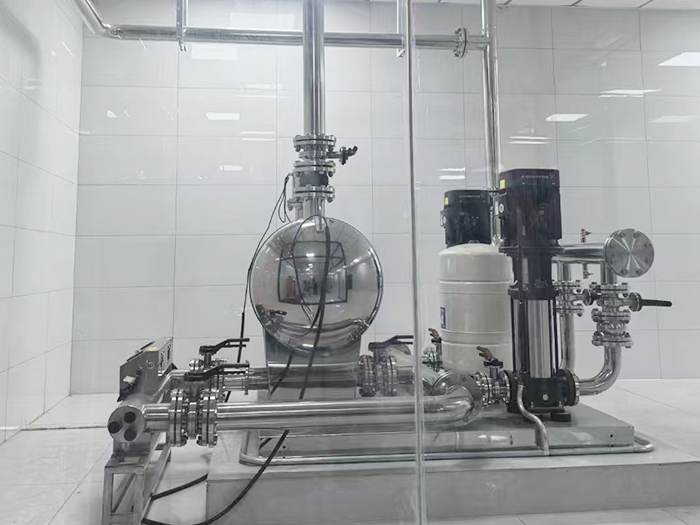
The non-negative pressure water supply equipment can be directly connected to the municipal water supply network, making full use of the residual pressure of the original network for superimposed water supply. Fully enclosed operation does not require the construction of a domestic water tank, eliminating secondary pollution. Intelligent variable frequency voltage stabilization, energy-saving, quiet and easy installation, it is the preferred equipment for secondary water supply in high-rise residential buildings and commercial buildings.
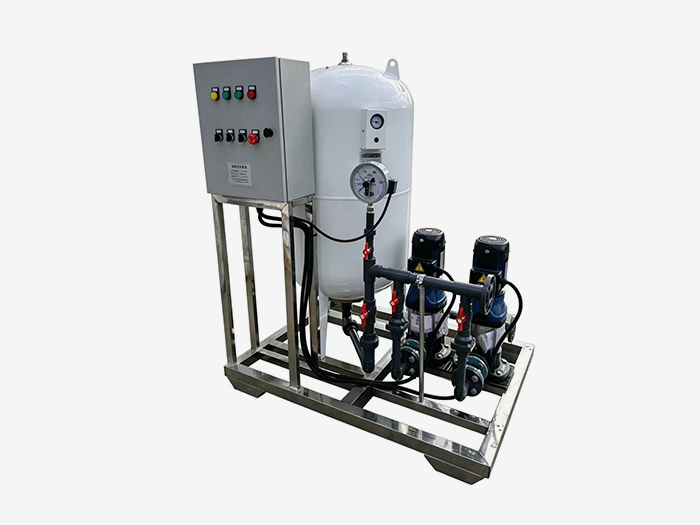
Constant pressure water supply equipment is widely used in central air conditioning, floor heating, industrial closed-loop water circulation, and boiler systems. It integrates automatic pressure stabilization, automatic water replenishment, automatic exhaust, pressure relief and buffering functions. It stabilizes the pressure in the pipeline network, eliminates abnormal sounds caused by air blockage, and prevents damage from negative pressure and water shortage in the pipeline. It is an essential supporting equipment for HVAC and circulating water systems.











 Landline:+86 010 59792055
Landline:+86 010 63780188
 Mobile:+86 13910114728
 Email:bjyuanlai@163.com
 Email:Wanda Plaza, Fengke Road, Fengtai District, BeijingBseat6Courtyard No.3Building No.7layer708
Yuanlai Homepage Softened water equipment Reverse osmosis pure water equipment Water supply equipment Engineering case Technical service Enter Yuanlai Site map
Softened water equipment Reverse osmosis pure water equipment Water purification equipment Water supply equipment Automatic dosing equipment High-purity water (ultra-pure water) equipment Wholesale of water treatment accessories
Electric power industry Petrochemical industry The electronic semiconductor industry The photovoltaic new energy industry Pharmaceuticals & Biochemical Engineering School research units Food and beverage industry Enterprises and public institutions
Reverse osmosis membrane Star-counting pump Fleck Valve Runxin Valve Instruments and meters Ultrafiltration membrane Softening resin Resin tank
