Bookmark this site Online message 中文站Welcome to the official website of Beijing Yuanlai Water Treatment Equipment Co., LTD.!
Service Hotline
+86 010 59792055 / +86 13910114728

I. Introduction to Ion Exchange Resins
Ion exchangeResinIt has functional groups(There are active groups that can exchange ions)High-molecular compounds with a reticular structure and insolubility, usually spherical particulate matter.
The full name of ion exchange resin consists of the classification name, the skeleton (or gene) name, and the basic name. The pore structure is divided into gel type and macroporous type. Any resin with a physical pore structure is called macroporous resin, and "macroporous" is added before the full name. Those classified as acidic should have "Yang" added before their names, and those classified as alkaline should have "Yin" added before their names. For example: macroporous strongly acidic styrene-based cation exchange resin.
Basic classification
Ion exchange resins can also be classified into styrene-based resins and acrylic resins based on the type of their matrix. The types of chemically active groups in resins determine the main properties and categories of the resins. First, it is distinguished asCationic resinandAnionic resinThere are two major categories, which can respectively undergo ion exchange with cations and anions in the solution. Cationic resins are further classified into strongly acidic and weakly acidic types, while anionic resins are divided into strongly basic and weakly basic types (Or it can be further classified into medium-strong acid and medium-strong base types).
Ion exchange"Technology"For a considerable period of time, certain natural substances such as zeolite and sulfonated coal produced by sulfonating coal can all be used as ion exchangers. However, with the rapid development of modern organic synthesis industrial technology, many kinds of ion exchange resins with excellent performance have been researched and produced, and a variety of new application methods have been developed. Ion exchange technology has developed rapidly and is widely applied in many industries, especially in high-tech industries and scientific research fields. In recent years, hundreds of types of resins have been produced both at home and abroad, with an annual output of hundreds of thousands of tons.
In industrial applications, the advantages of ion exchange resins mainly include large processing capacity, wide decolorization range, high decolorization capacity, the ability to remove various ions, repeated regeneration and reuse, long working life, and relatively low operating costs(Although the initial investment cost is relatively high). A variety of new technologies based on ion exchange resins, such as chromatographic separation, ion exclusion, and electrodialysis, each have their own functions and can perform various special tasks that are difficult to achieve by other methods. The development and application of ion exchange technology are still advancing rapidly.
Ii.Application fields of ion exchange resins
With the rapid development of modern organic synthesis industrial technology,Ion exchangeTechnology has developed rapidly and has been widely applied in many industries.
1)Water treatment
The demand for ion exchange resins in the water treatment field is very large, accounting for approximatelyIon exchange resinOutput90%It is used for the removal of various cations and anions in water. At present, the largest consumption of ion exchange resins is in the pure water treatment of thermal power plants, followed by atomic energy, semiconductors, electronics industries, etc.
2)"Industry
Ion exchange resins can be used in industrial equipment such as sugar refining, monosodium glutamate production, wine refining, and biological product manufacturing. For instance, the production of high fructose corn syrup involves extracting starch from corn, followed by hydrolysis to produce glucose and fructose. Then, through ion exchange treatment, high fructose corn syrup can be generated. The consumption of ion exchange resins in industry is second only to that of water treatment.
3)Pharmaceutical industry
Ion exchange resins in the pharmaceutical industry play a significant role in the development of new generations of resins and the quality improvement of original resins. The successful development of streptomycin is a prominent example. In recent years, research has also been conducted in areas such as commissions for traditional Chinese medicine.
4)Synthetic chemistry and petrochemical industries
In organic synthesis, acids and bases are commonly used as catalysts for reactions such as esterification, hydrolysis, transesterification and hydration. Ion exchange resins can be used instead of inorganic acids and bases to carry out the above reactions, and they have more advantages. Such asResinIt can be reused repeatedly, the product is easy to separate, the reactor will not be corroded, it does not pollute the environment, and the reaction is easy to control, etc.
Methyl tert-butyl etherMTBEThe preparation of it is to use macroporous ion exchange resin as the catalyst, which is produced by the reaction of isobutylene with methanol, replacing the original tetraethyl lead that could cause serious pollution to the environment.
5)Environmental protection
Ion exchange resins have been applied to many highly concerned environmental protection issues. At present, many aqueous or non-aqueous solutions contain toxic ions or non-ionic substances, which can be recycled and reused with resins. For instance, removing metal ions from electroplating waste liquid and recovering useful substances from film production waste liquid, etc.
6)Hydrometallurgy and others
Ion exchange resins can be used to separate, concentrate, purify uranium from low-grade uranium ores and extract rare earth elements and precious metals.
Iii. Issues to Note in Resin Application
1, Ion exchange resinIt contains a certain amount of moisture and should not be stored outdoors. During storage and transportation, it should be kept moist to prevent air drying and dehydration, which may cause the resin to break. If the resin dehydrates during storage, it should first be treated with concentrated brine.10%Soak and then gradually dilute. Do not directly put it into water to avoid sudden expansion of the resin and breakage.
2, During winter storage, transportation and use, it should be maintained at5-40℃In a certain temperature environment, avoid excessive cold or heat to prevent quality issues. If there is no insulation equipment in winter, it can be usedResinIt is stored in brine, and the concentration of the brine can be determined according to the temperature.
3, Ion exchange resinIn industrial products, there are often small amounts of low polymers and unreacted monomers, as well as inorganic impurities such as iron, lead and copper. When the resin comes into contact with water, acid, alkali or other solutions, the above substances will transfer into the solution, affecting the quality of the effluent. Therefore, new resin is pre-treated before use. Generally, it is first fully expanded with water, and then It can be used for inorganic impurities (mainly iron compounds) therein4-5%Dilute hydrochloric acid can be used to remove organic impurities2-4%Remove with dilute sodium hydroxide solution and wash until nearly neutral. If used in pharmaceutical preparation, it must be soaked in ethanol for treatment.
4, ResinDuring use, it is necessary to prevent contact with metals (such as iron, copper, etc.), oil stains, organic molecules, microorganisms, strong oxidants, etc., to avoid reducing the ion exchange capacity or even losing its function. Therefore, the resin should be activated irregularly according to the situation. The activation method can be determined according to the contamination situation and conditions. Generally, the cation resin is easily affected during softeningFeThe contamination can be treated by soaking in hydrochloric acid and then gradually diluting. The anion resin is prone to organic contamination and can be used10%NaCl+2-5%NaOHSoak or rinse with a mixed solution, and use it if necessary1%Soak in hydrogen peroxide solution for several minutes. Other methods include alternating acid-base treatment, bleaching treatment, alcohol treatment, and various other methods, etc.
5, Pretreatment of new resin: In industrial products of ion exchange resin, there are often small amounts of oligomers and unreacted monomers, as well as inorganic impurities such as iron, lead and copper. When resin comes into contact with water, acid, alkali or other solutions, the above substances will transfer into the solution, affecting the quality of the effluent. Therefore, new resin should be pre-treated before use. Generally, the resin is first expanded with water, and then the inorganic impurities (mainly iron compounds) within it can be used4-5%Dilute hydrochloric acid can be used to remove organic impurities2-4%Wash with a dilute sodium hydroxide solution until nearly neutral.
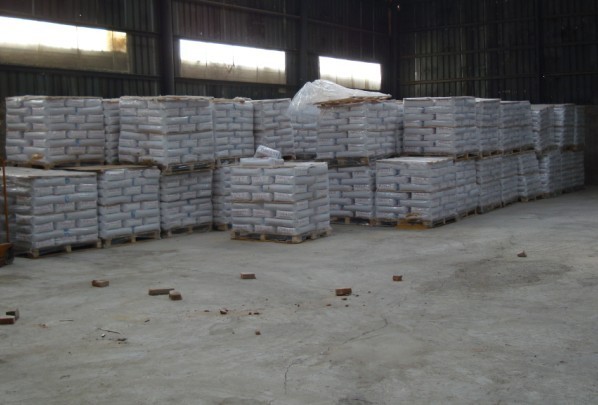
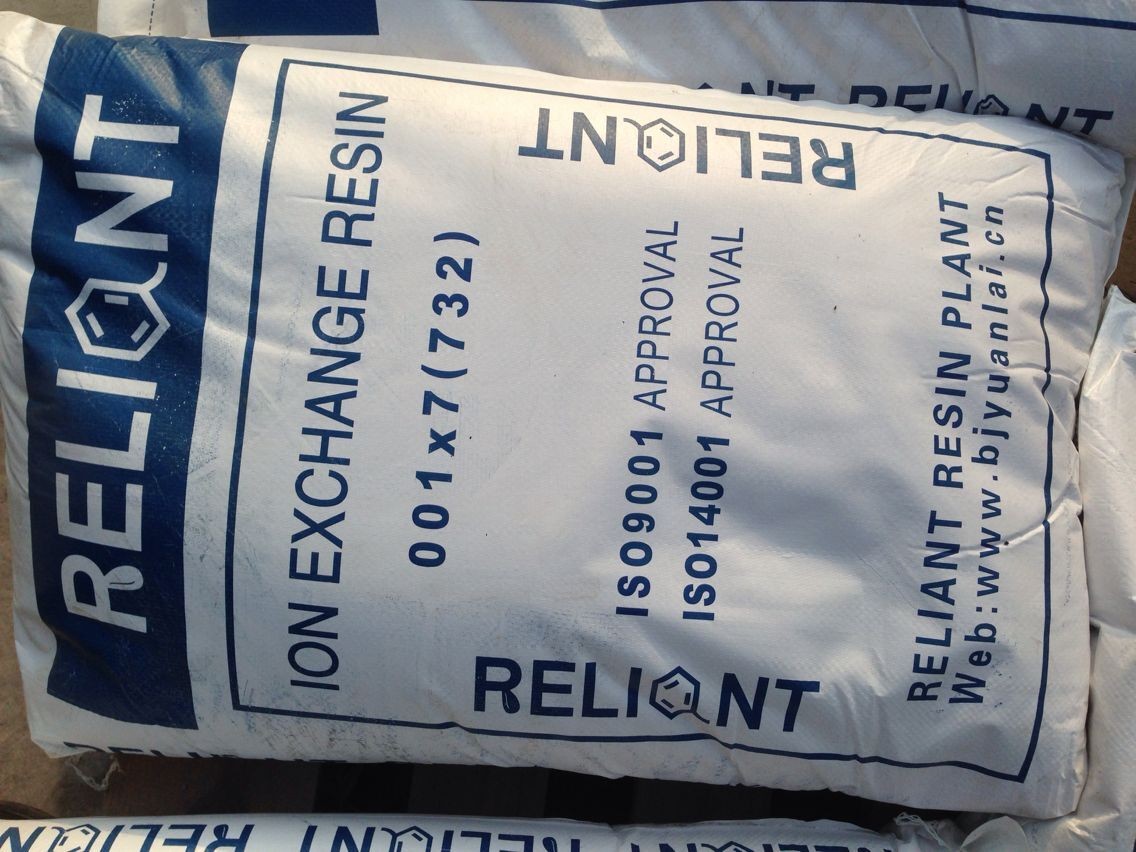
Beijing Yuanlai Water Treatment Company, a manufacturer of ion exchange softening resins, offers a one-stop after-sales service with a one-year warranty. We can choose both domestic and imported soft water resins for water softening equipment, and industrial-grade ones are all in stock.
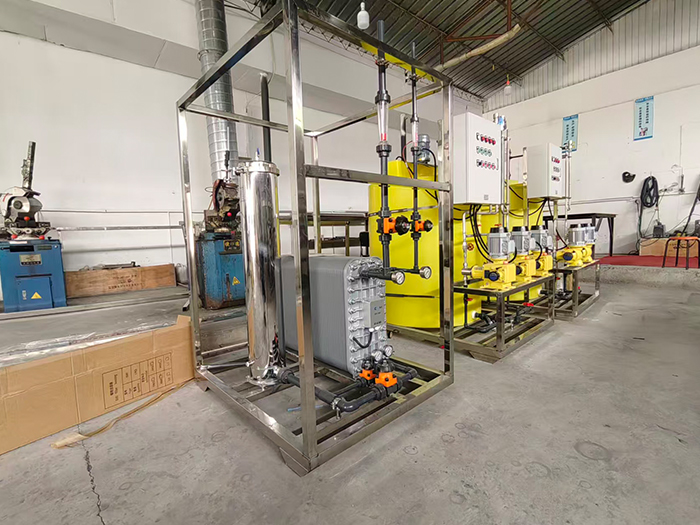
Yuan LaiEDIThe ultra-pure water equipment uses electro-deionization technology.EDIElectrodeionization is a water purification method that combines the dual advantages of electrodialysis and ion exchange. It does not require acid-base chemical regeneration and can continuously and stably prepare high-purity ultrapure water. Under the action of a direct current electric field, ion separation in water is completed. At the same time, water is electrolyzed to generate hydrogen ions and hydroxide ions, achieving automatic regeneration of the resin without the need to stop the machine for manual regeneration. The pre-treatment combined with reverse osmosis can prevent oxidized substances from damaging the resin, ensuring stable effluent quality and widely meeting the high-standard water usage requirements of various industries.
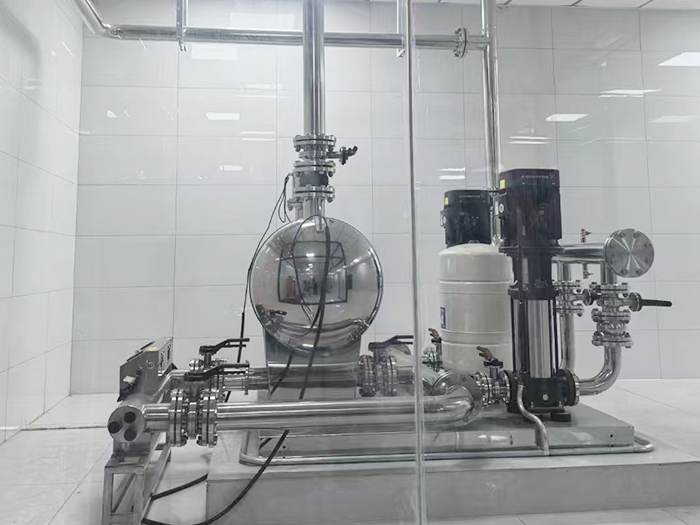
The non-negative pressure water supply equipment can be directly connected to the municipal water supply network, making full use of the residual pressure of the original network for superimposed water supply. Fully enclosed operation does not require the construction of a domestic water tank, eliminating secondary pollution. Intelligent variable frequency voltage stabilization, energy-saving, quiet and easy installation, it is the preferred equipment for secondary water supply in high-rise residential buildings and commercial buildings.
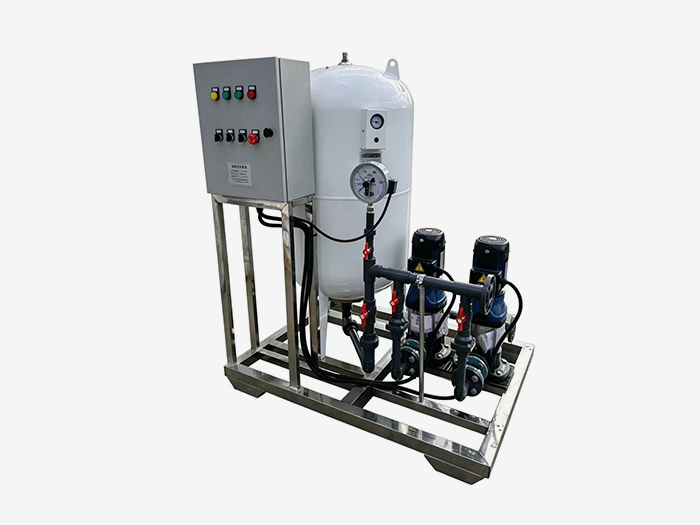
Constant pressure water supply equipment is widely used in central air conditioning, floor heating, industrial closed-loop water circulation, and boiler systems. It integrates automatic pressure stabilization, automatic water replenishment, automatic exhaust, pressure relief and buffering functions. It stabilizes the pressure in the pipeline network, eliminates abnormal sounds caused by air blockage, and prevents damage from negative pressure and water shortage in the pipeline. It is an essential supporting equipment for HVAC and circulating water systems.












 Landline:+86 010 59792055
Landline:+86 010 63780188
 Mobile:+86 13910114728
 Email:bjyuanlai@163.com
 Email:Wanda Plaza, Fengke Road, Fengtai District, BeijingBseat6Courtyard No.3Building No.7layer708
Yuanlai Homepage Softened water equipment Reverse osmosis pure water equipment Water supply equipment Engineering case Technical service Enter Yuanlai Site map
Softened water equipment Reverse osmosis pure water equipment Water purification equipment Water supply equipment Automatic dosing equipment High-purity water (ultra-pure water) equipment Wholesale of water treatment accessories
Electric power industry Petrochemical industry The electronic semiconductor industry The photovoltaic new energy industry Pharmaceuticals & Biochemical Engineering School research units Food and beverage industry Enterprises and public institutions
Reverse osmosis membrane Star-counting pump Fleck Valve Runxin Valve Instruments and meters Ultrafiltration membrane Softening resin Resin tank
