Bookmark this site Online message 中文站Welcome to the official website of Beijing Yuanlai Water Treatment Equipment Co., LTD.!
Service Hotline
+86 010 59792055 / +86 13910114728

Filtration, as a conventional water treatment process, plays an effective role in reducing turbidity in domestic drinking water and industrial water treatment. The material used for filtration is called filter material, which purifies water. The types of filter materials include quartz sand, anthracite, activated carbon, fiber balls, etc.
Manganese sand filter material
Manganese sand filter materialIt is made from domestic natural manganese ore sand with excellent quality, dense grains, high mechanical strength, strong chemical activity, not easy to break and insoluble in water. It is produced through processes such as water washing, grinding to remove impurities, drying, magnetic separation, screening and dust removal. Then, the processed manganese sand is mixed in a certain gradation. It has water treatmentFilter materialThe ideal gradation ratio enables it to have a large specific surface area, strong dirt interception capacity, significant oxidation catalytic effect and low backwash loss rate within a unit volume.
Manganese sand filter material has a rough appearance, presenting a brown or light gray color, and is often usedDrinking water for daily useThe iron and manganese removal filtration devices have an excellent water filtration effect. (Note:MnO2≥35%It can remove both iron and manganese.MnO2≤30%Manganese sand filter media, which can only be used for iron removal from groundwater, are mainly used to reduce the total content of iron and manganese in water. According to the hygiene standards for drinking water in China, its iron content≤0.3㎎/LManganese content≤0.1㎎/LDrinking water with excessive iron and manganese content for a long time can seriously affect one's health.
Working principle of manganese sand filter material
IronFe2+The state exists in underground (well) water, where the water has an odd color and smell and is pollutedIon exchange resinHowever, it reduces the exchange capacity. Over a long period of time, iron scale will form, which affects heat transfer and can corrode equipment. And in manganese sandMnO2withFe2+REDOX reactions occur, causingFe2+"Change"Fe3+And generate Fe(OH)3Sedimentation is achieved, and the backwashing function of the manganese sand filter is utilized to achieve the purpose of removal and purification.
The natural manganese sand filter material used for iron and manganese removal from groundwater should mainly have manganese oxide in its manganese form. Manganese content (less than)MnO2The calculation (hereinafter the same) should not be less than35%The natural manganese sand filter material can be used for both iron removal and manganese removal from groundwater. The manganese content is20%~30%The natural manganese sand filter material is only suitable for iron removal from groundwater. The manganese content is less than20%Manganese ore sand is not suitable for use.
Tourmaline
Tourmaline is a kind of composite mineral or medicinal rock that is harmless to living organisms and has certain biological activity.
Tourmaline contains aluminosilicates (feldspar), which have the ability to adsorb pigments. If tourmaline is ground into powder, the ion dissolution and adsorption effects will be enhanced. The treatment of water with tourmaline turns it into a belt+"-Water with a large number of electric atom groups. Tourmaline can adsorb ions in water. After passing through water, tourmaline can dissolve macronutrients that are useful to the human body and organisms. In water solution, tourmaline can also dissolve amino acids needed by the human body.
[The function of SLATE]
(1It has strong adsorption capacity
Adsorption refers to the complete dissolution of a solid with porosity and a huge surface area, resulting in chemical and physical reactions. Tourmaline is porous and has a strong adsorption capacity. Considering that its main components are silicon dioxide and aluminum oxide, it is easy to understand. That is to say, due to its porosity, the surface is very large. As the feldspar partially weathering into a kaolin-like state and so on, it always maintains a strong adsorption and exchange effect.
(2Dissolve minerals
The beverage water contains an appropriate amount of minerals, which can improve water quality and also has the effect of inhibiting and adsorbing organic substances. Therefore, when tourmaline is put into water, it can adsorb and decompose free chlorine, impurities, organic matter, and miscellaneous bacteria in the water, and supply minerals to the water. Therefore, it can prevent water from spoiling and provide good water. Static state: The activity of the class is inhibited and it is in a static state. The so-called bacteriostatic effect is the function of halting the proliferation of microorganisms.
(3Adjust the water quality
In terms of minerals such as iron, magnesium and fluorine, when they are absent from water, they dissolve out; conversely, when they are present in excessive amounts in water, they adsorb. This effect andPHRegarding this, except for water that is overly acidic or overly alkaline, adding tourmaline to purified water can bring the water closer to neutrality by using the addition method in most cases (alkaline) and the circulation method in a few cases (acidic). Moreover, after the water circulates several times in the tourmaline layer, even if the water volume is large, it can still be regulatedPH.
Note: It can be clearly seen from the above table that it can adsorb slightly too muchMgThat is, it dissolves less, and the same phenomenon is also observed for iron, manganese, etc. From this fact, the buffering effect of tourmaline in water can be understood.
(4The purification effect of tourmaline on water
Tourmaline is a kind of neutral alkaline semi-igneous rock, close to volcanic rock.
[The characteristics of tourmaline]
a.Porous b.Strong adsorption capacity and water purification function c.The natural minerals contained in the tourmaline are prone to release oxygen from the countless small holes on the tourmaline. Purify water by absorbing bleaching powder and other toxic substances. The minerals such as calcium, iron and sodium released from tourmaline can improve drinking water.
Activated carbon
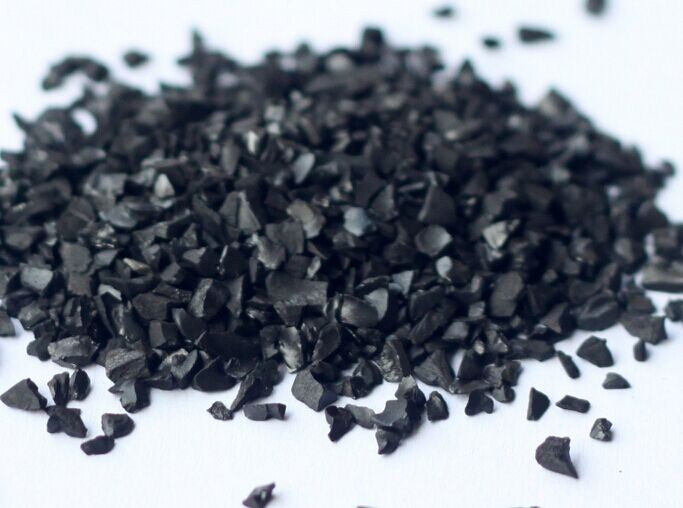
Activated carbonAlso known as activated carbon black, it is amorphous carbon in the form of black powder or granules. In addition to carbon, the main components of activated carbon also include oxygen, hydrogen and other elements. Due to the irregular arrangement of microcrystalline carbon in its structure, there are fine pores between the cross-connections. During activation, carbon structure defects will occur. Therefore, it is a porous carbon with low bulk density and large specific surface area.
The main uses of activated carbon:
Decolorization and filtration to decolorize colored liquids; Absorb various gases and vapors; For chromatographic analysis; Reducing agents for methanol, tin and silicon; Granular substances can be used as carriers for catalysts.
Classification of activated carbon types
Due to differences in raw material sources, manufacturing methods, appearance shapes and application scenarios, there are many types of activated carbon. So far, there is no precise statistical material, but there are approximately thousands of varieties.
By appearance and shape:
1. Powdered activated carbon
2. Granular activated carbon
3. Unshaped granular activated carbon
4. Cylindrical activated carbon
5. Spherical activated carbon
6. Other shapes of activated carbon
By material:
Coconut shell activated carbon,Fruit shell activated carbonWood-based activated carbon, coal-based activated carbon, rice husk activated carbon...
Fruit shell activated carbonIt is mainly made from fruit shells and wood chips through carbonization, activation and refined processing. It features a large specific surface area, high strength, uniform particle size, well-developed pore structure and strong adsorption performance. It can effectively adsorb free chlorine, phenol, sulfur, oil, gum, residues and other organic pollutants in water, as well as recover organic solvents, etc. Applicable toPharmaceutical,Petrochemical industrySugar productionBeverageIn the wine purification industry, in the decolorization, refinement, purification of organic solvents andSewage treatmentIt is applied in various aspects.
Purpose:
Nut shell activated carbon is widely used inDrinking water,Industrial waterIt can effectively adsorb free chlorine, phenol, sulfur and other organic pollutants in water, especially mutagens, for deep purification of wastewater, purification of domestic and industrial water quality and gas-phase adsorption, such as water purification treatment in power plants, petrochemicals, oil refineries, beverage, sugar and wine making, pharmaceuticals, electronics, fish farming, shipping and other industries.THMThe precursor substances of it can achieve purification, removal of impurities and odor. The product has more functions such as decolorization, purification, impurity removal, deodorization, odor elimination, carrier, purification and recycling.
Coconut shell activated carbon
Coconut shell activated carbonThis product is made from high-quality imported coconut shells and has an irregular granular shape. It features high mechanical strength, well-developed pore structure, large specific surface area, fast adsorption speed, high adsorption capacity, easy regeneration and long service life.
Mainly usedBeverages"Alcoholic beveragesAir purificationDeodorization of activated carbon and high-purity drinking water, removal of heavy metals in water, dechlorination and decolorization of liquids. And it can be widely used in solvent recovery and gas separation in the chemical industry, etc.
Identification methods for genuine and fake coconut shell activated carbon
Because coconut shell activated carbon is much more expensive than coal-based activated carbon, and the finished productActivated carbonThe material is generally not easily recognizable by the general public. There are often unscrupulous sellers in the market who take advantage of consumers' inability to identify the material and sell coal-based activated carbon as coconut shell activated carbon. This phenomenon is quite serious in both civilian and industrial fields.
Here are several simple ways to distinguish them
1Coconut shell activated carbon belongs toFruit shell activated carbonThis category, whose main features are low density and light hand feel, feels significantly lighter in hand than coal-based activated carbon. For activated carbon of the same weight, the volume of coconut shell activated carbon is generally larger than that of coal-based activated carbon.
2Coconut shell activated carbon is generally in the form of crushed granules or flakes, while shaped activated carbon, such as columnar or spherical activated carbon, is mostly coal-based carbon.
3Because coconut shell activated carbon has a low density and a light feel, it can be placed in water. Generally, coal-based carbon sinks to the bottom faster, while coconut shell activated carbon floats on the water for a longer time. As the activated carbon adsorbs water molecules and reaches saturation, its own weight increases and it gradually sinks to the bottom completely. When all the activated carbon has sunk to the bottom, you will see that each piece of activated carbon is wrapped in a small bubble. It's crystal clear and very interesting.
4Coconut shell activated carbon has a small-molecule pore structure. When activated carbon is put into water, the air it expels while adsorbing water molecules will produce many very tiny bubbles (just visible to the naked eye), which float densely and continuously to the water surface. Coal-based activated carbon generally has a macromolecular pore structure, and the bubble phase it generates is also relatively large.
Quartz sand
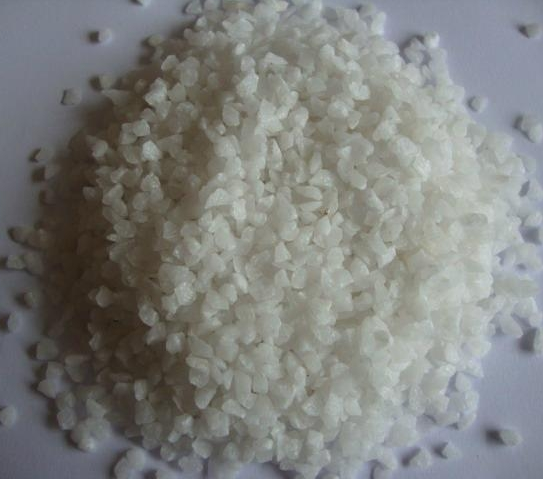
Quartz sandQuartz particles are made by crushing and processing quartz stone. It is a non-metallic mineral, a hard, wear-resistant and chemically stable silicate mineral. Its main mineral components areSiO2,Quartz sandIts color is milky white or colorless and semi-transparent, and its hardness7It is brittle without dissociation and has a conchoidal fracture.
Quartz sandIt is an important industrial mineral raw material, not a hazardous chemical, and is widely used in glass, casting, ceramics and refractory materials, ferrosilicon smelting, metallurgical fluxes, metallurgy, construction, chemical industry, plastics, rubber. High purityQuartz sandAbrasive and other industries. It can be transported by road, train or water. Industrial production is generally50KGor25KGPackaging and export ton bag packaging. Common specifications0.5-1.0mm 0.6-1.2mm 1-2mm 2-4mm 4-8mm 8-16mm 16-32mm.(mmIn millimeters.
Ordinary quartz sand is generally a kind of water treatment filter material made from natural quartz ore through crushing, water washing, drying and secondary screening. At present, it is a widely used and large-volume water purification material in the water treatment industry. This filter material features: no impurities, no sharp corners, high density, high mechanical strength, and a long service life. It is an ideal material for chemical water treatment. It is applicable to single-layer and double-layer filter tanks, filters and ion exchangers, and all indicators meetCJ/T43-2005"Standard. Particle size range5-220The product can be produced according to the particle size required by the user. Main uses: metallurgy, silicon carbide, glass and glass products, enamel, cast steel, water filtration, sodium silicate, chemical industry, spray painting and other industries.
The application of quartz sand as a water treatment filter material
Due to the fact that the particle size of quartz sand in a three-layer filter bed is smaller than that in a double-layer filter bed, and there is an even finer layer of heavy anthracite filter material beneath the quartz sand layer, under the same other conditions, or even with a slightly higher filtration rate, the water quality after filtration in a three-layer filter bed is better than that in a double-layer filter bed. When using quartz sand, try to use it in combination.
Sponge iron
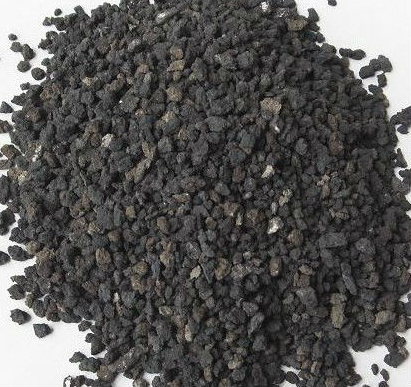
Sponge iron, also known as direct reduced iron, is made from high-quality ore and removed through a filtering sedimentation method based on the principle of REDOX reactions. After water treatment, the dissolved oxygen content in pipelines, boilers and circulating water can be reduced to meet the corrosion requirements of dissolved oxygen0.05mg/LBelow. It features low backwashing frequency, high compressive strength, no powdering or caking, and large specific surface area. It has the advantages of high activity and good regeneration effect.
The application scope of sponge iron filter material
1It is suitable for make-up water in hot water boilers;
2It is suitable for feed water in low-pressure steam boilers;
3It is suitable for replenishing water in industrial circulating cooling water;
4It is applicable to water injection in oil fields
Principle of deaeration
Sponge iron filter material, normal temperature filtration deoxidation chemical deoxidation, using high-quality mineral powder(Active sponge iron)The main component of sponge iron is iron. Its loose and porous internal structure provides a specific surface area that is comparable to that of ordinary iron filings5-10The water can undergo a rapid and thorough oxidation reaction between oxygen and iron, and be removed through a filtering sedimentation method. After treatment, the dissolved oxygen content in the circulating water of pipelines, boilers and boilers can be reduced to a certain level0.05 mg/LBelow.
Working conditions of sponge iron
1.It can deaerate at room temperature without heating
2.It can supply water at any time without the need for a deaerated water tank or preparation time
3.The deaeration effect is stable and reliable, and the effluent meets the water quality standards of the low-pressure pot
4.It is easy to install and does not require high-level installation
Anthracite
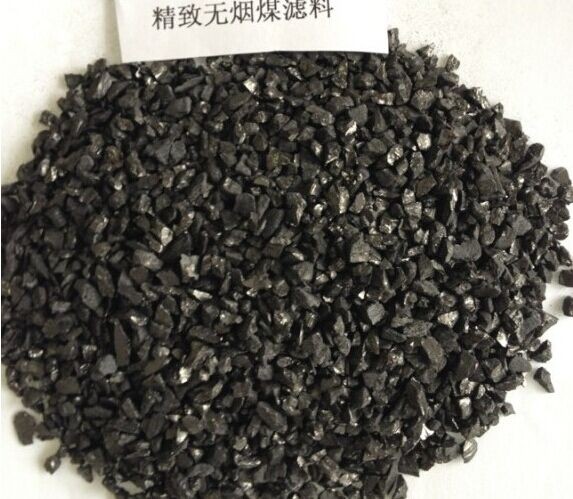
Anthracite, commonly known as white coal or red coal. It is coal with a high degree of coalification. Anthracite has a high fixed carbon content, a low volatile matter yield, a high density, high hardness, a high flash point, and does not produce smoke when burning. Black and hard, with a metallic luster. It does not get stained when rubbed with grease. The fracture is shell-shaped and the flame is short with little smoke when burning. No coking. The general carbon content is90%The above volatile substances are10%Below. No thickness of the gelatinous layer. Calorific value approximately6000-6500Kilocalories/Kilograms. Sometimes, coal with an extremely high content of volatile substances is called semi-anthracite. The very small ones are called high anthracite.
Standard coal
The standard filter material is made from high-quality carbon blocks through careful selection, crushing and screening. It has a good appearance gloss, is in the form of multi-faceted particles, and has strong compressive and wear resistance. It is generally used for double-layer and triple-layer filtration.
Anthracite filter material is a type of filter material used in the water treatment industry. It is specially selected from deep well minerals and has a high percentage of carbon content. Anthracite filter material is manually classified to reduce irrelevant minerals and lower ash content. After filtration and rinsing, it is ensured to be suitable for water filtration. Due to its good solid particle retention capacity, anthracite can reliably enhance the cleaning ability of suspended particles.
Common specifications 0.6-1.2mm 0.8-1.8mm 1-2mm 3-6mm 4-8mm.
Pebble
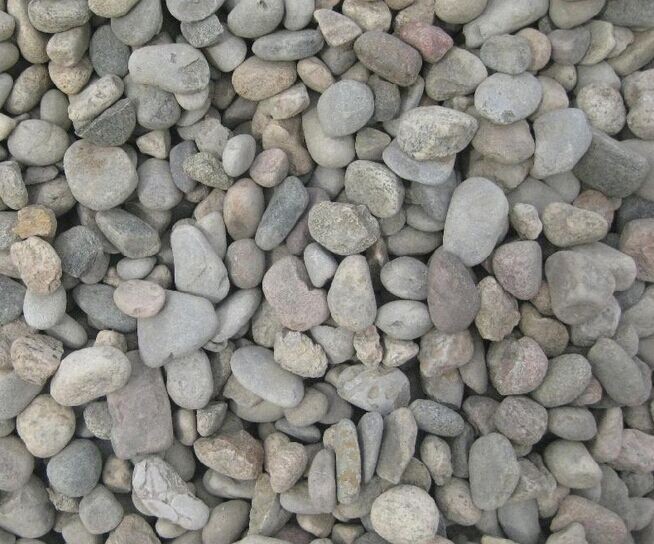
Pebbles are by-products of yellow sand mining and are so named because they resemble goose eggs. Pebbles, as a kind of pure natural stone, mainly consist of silicon dioxide as their chemical component, followed by a small amount of iron oxide and trace amounts of manganese, copper, aluminum, magnesium and other elements and compounds. They themselves have different pigments.
The function of pebbles
Pebbles also provide excellent materials for water purification, sewage treatment, power generation, landscaping and other projects. It also provides raw and auxiliary materials for ceramics, precision casting, papermaking, grinding, chemical engineering, monocrystalline silicon, national defense and other industries.
Activated zeolite
Activated zeolite is made by subjecting natural zeolite to various special processes. Its characteristic is that its adsorption performance and ion exchange performance are both stronger than those of natural zeolite. It can not only remove turbidity, color and odor from water, but also has an adsorption and exchange effect on harmful heavy metals in water. It is also conducive to removing various micro-pollutants in water. Moreover, the water leachate does not contain toxic or harmful substances to the human body, and it is more effective in removing iron and fluorine from water. Therefore, activated zeolite is a new type of ideal filter material for industrial water supply, wastewater treatment and tap water filtration.
Fiber ball
Fiber balls are spherical filter materials made by tying fiber filaments together. Compared with traditional rigid filter materials, they have the advantages of good elasticity, no floating on the water surface, large voids, long working cycle and small head loss. It is widely used in various water treatment industries. During the filtration process, the voids in the filter layer gradually decrease along the direction of water flow, which is in line with the ideal porosity distribution of filter materials, which is larger at the top and smaller at the bottom. This results in advantages such as fast filtration speed, large dirt-holding capacity, good filtration effect, reusability without the need for complete replacement, and time and labor saving.
Fiber ball filter media can retain tiny suspended solids that are difficult to settle and remove. The filtration rate is higher than that of traditional sand filter materials3.5The filter material can be backwashed and regenerated, and can be managed automatically, with a general filtration rate30m/hCoarse filter the feed water100mg/lEffluentSS≤5mg/lFine filtration of the feed water20mg/lEffluent≤2mg/l. It is widely applied to high-standard water in industries such as oil fields, chemical engineering, power, and metallurgy. Recycling, side filtration and wastewater reuse.
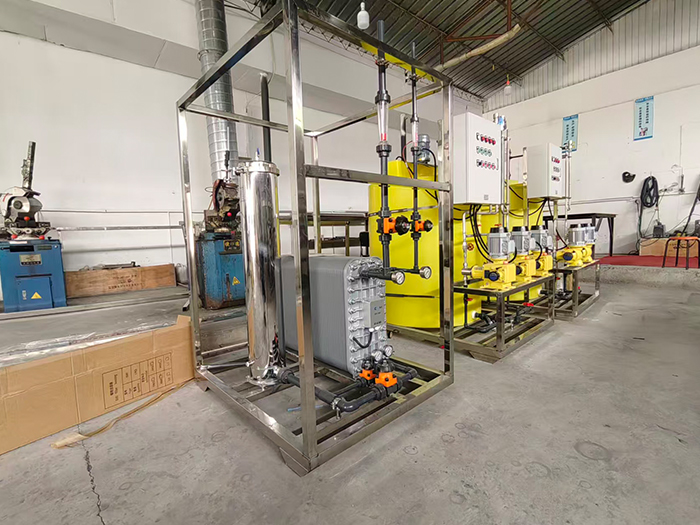
Yuan LaiEDIThe ultra-pure water equipment uses electro-deionization technology.EDIElectrodeionization is a water purification method that combines the dual advantages of electrodialysis and ion exchange. It does not require acid-base chemical regeneration and can continuously and stably prepare high-purity ultrapure water. Under the action of a direct current electric field, ion separation in water is completed. At the same time, water is electrolyzed to generate hydrogen ions and hydroxide ions, achieving automatic regeneration of the resin without the need to stop the machine for manual regeneration. The pre-treatment combined with reverse osmosis can prevent oxidized substances from damaging the resin, ensuring stable effluent quality and widely meeting the high-standard water usage requirements of various industries.
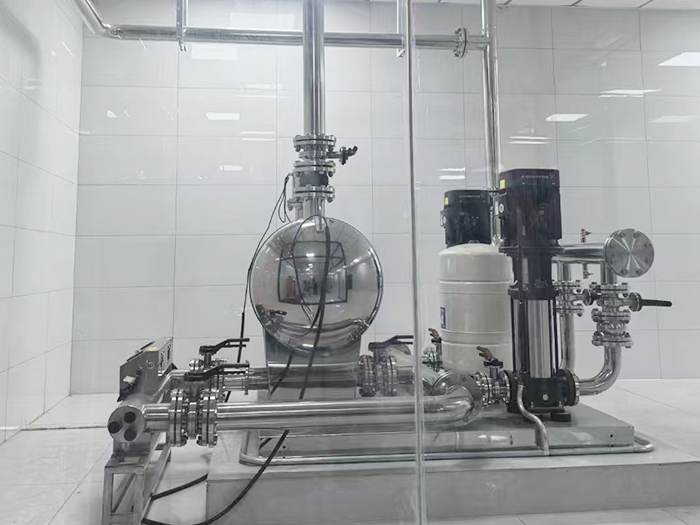
The non-negative pressure water supply equipment can be directly connected to the municipal water supply network, making full use of the residual pressure of the original network for superimposed water supply. Fully enclosed operation does not require the construction of a domestic water tank, eliminating secondary pollution. Intelligent variable frequency voltage stabilization, energy-saving, quiet and easy installation, it is the preferred equipment for secondary water supply in high-rise residential buildings and commercial buildings.
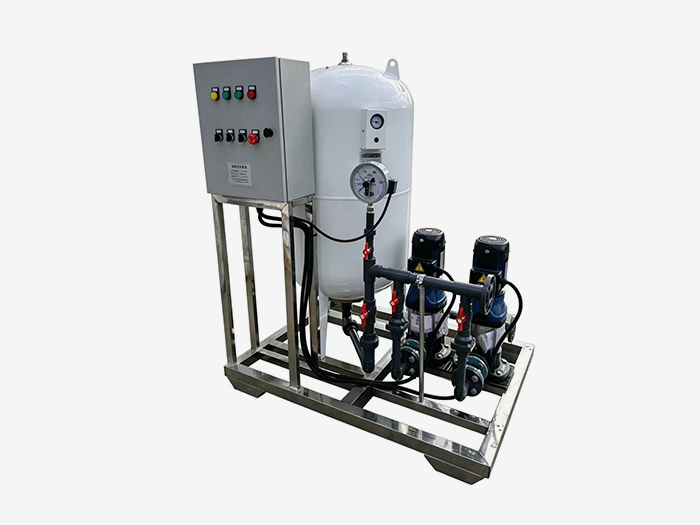
Constant pressure water supply equipment is widely used in central air conditioning, floor heating, industrial closed-loop water circulation, and boiler systems. It integrates automatic pressure stabilization, automatic water replenishment, automatic exhaust, pressure relief and buffering functions. It stabilizes the pressure in the pipeline network, eliminates abnormal sounds caused by air blockage, and prevents damage from negative pressure and water shortage in the pipeline. It is an essential supporting equipment for HVAC and circulating water systems.











 Landline:+86 010 59792055
Landline:+86 010 63780188
 Mobile:+86 13910114728
 Email:bjyuanlai@163.com
 Email:Wanda Plaza, Fengke Road, Fengtai District, BeijingBseat6Courtyard No.3Building No.7layer708
Yuanlai Homepage Softened water equipment Reverse osmosis pure water equipment Water supply equipment Engineering case Technical service Enter Yuanlai Site map
Softened water equipment Reverse osmosis pure water equipment Water purification equipment Water supply equipment Automatic dosing equipment High-purity water (ultra-pure water) equipment Wholesale of water treatment accessories
Electric power industry Petrochemical industry The electronic semiconductor industry The photovoltaic new energy industry Pharmaceuticals & Biochemical Engineering School research units Food and beverage industry Enterprises and public institutions
Reverse osmosis membrane Star-counting pump Fleck Valve Runxin Valve Instruments and meters Ultrafiltration membrane Softening resin Resin tank
