Bookmark this site Online message 中文站Welcome to the official website of Beijing Yuanlai Water Treatment Equipment Co., LTD.!
Service Hotline
+86 010 59792055 / +86 13910114728

Beijing Yuanlai will answer some common questions from customers about water treatment
1, What are the water quality standards for tap water?
The water quality indicators of tap water should meet the requirements of (Standard for Drinking Water Quality) "GB5749-85The relevant standards in) include (35The new standards that are about to be piloted include (88) This indicator.
2,PHWhen test strips are used to measure the pH of a solution, the color change is related toPHWhat is the relationship between the values?
PHWhen test strips are used to measure the pH of a solution, the color change is related toPHThe relationship between the values is: PHvalue ≤4 5 6 7 8 9 ≥10 Color red orange yellow green Cyan (blue-green) blue The purple
3What are electrical conductivity and resistivity? How do they convert to each other? withTDSSo what about the relationship?
One of the detection parameters for pure water is conductivity or resistivity, which reflects the ion content contained in the water. The unit of electrical conductivity is (μs/cmThe detection instrument is a (conductivity) meter, and the common models areCM-230" The unit of resistivity is (MΩ.CMThe detection instrument is a resistivity meter, and the common models areRM-230" Total dissolved solids(TDS)It is the general term for inorganic salts and organic substances dissolved in water. Its main components include calcium, magnesium, sodium, potassium ions, as well as carbonate ions, bicarbonate ions, chloride ions, sulfate ions and nitrate ions.
4What are the common industrial pure water quality standards for customers?
The water quality requirements for industrial pure water of common customers are as follows:
Hardware electroplating factory Production water for rinsing plated parts Electrical conductivity≤10~20μs/cm
Plastic electroplating factory Production water for rinsing plated parts Electrical conductivity≤10μs/cm
Hardware, plastic, gold plating, silver Production water for rinsing plated parts Electrical conductivity≤2μs/cm
Circuit board factory Antioxidant/Micro-erosion rinse pure water Electrical conductivity≤10μs/cm
Electronics and electrical appliance factory Industrial pure water Resistivity≥2MΩ.CM
Glass shell production factory Water for rinsing glass shell production Resistivity≥2MΩ.CM
Aluminum alloy production plant Pure water for coating rinsing Resistivity≥2MΩ.CM
Precision Hardware Components Factory Pure water for surface treatment rinsing Resistivity≥5MΩ.CM
Automobile paint factory Pure water for rinsing painted surfaces Resistivity≥5MΩ.CM
Printing and dyeing factory Pure water for dyeing and printing Resistivity≥2MΩ.CM
Nickel-metal-hydride batteries, electronics factories Industrial ultrapure water Resistivity≥10MΩ.CM
Color display manufacturer Ultra-pure water for picture tube flushing Resistivity≥18MΩ.CM
Computer Factory Ultra-pure water for hard disk production flushing Resistivity≥18MΩ.CM
For laboratory use Electronic-grade ultrapure water Resistivity≥18MΩ.CM
Coated glass factory Electronic ultrapure water for coating Resistivity≥17~18MΩ.CM
Ultra-thin float glass factory Ultra-pure water for coating industry Resistivity≥17MΩ.CM
Semiconductor factory Ultra-pure water for production Resistivity≥15MΩ.CM
Liquid crystal display factory LCDUltrapure water for rinsing Resistivity≥12~15MΩ.CM
5What are the filter elements of security filters and precision filters?
The filter elements of security filters and precision filters are:
(1)PPCotton melt-blown filter element: Used in the vast majority of industrial or drinking water pretreatment applications, including10,20,30,40Models such as inch.
(2Wound filter elements (also available.10"Cun20The inch and other models are mainly used for industrial filtration of coarse particles and silt,According to the degree of tightness,There are also differences in density.
(3Activated carbon filter elements: They are divided into mesh activated carbon for industrial use and granular activated carbon for pure water machines. The main purpose is to remove the unpleasant smell and color from the water. The main materials of activated carbon are anthracite, fruit shells, and carbon produced by burning coconut shells (referred to as coconut shell carbon). The main differences among them are:a The degree of adsorption is different;b The resistance to impact varies. Coconut shells are better, but they are more expensive.
(4Microfiltration membrane filter element: It is used for the subsequent treatment of ultrapure water or purified water after the ultraviolet device to remove the residue. The filtration accuracy is0.22μm,0.45μm,1.0μm,2.0μmWait, the price is relatively high.
6What is an ion exchange pure water machine?
The mechanism of action of each treatment unit in the ion exchange process
(1Sand filter: Also known as mechanical filter, it is filled with refined quartz sand or good anthracite. In small equipment, quartz sand is generally selected0.5-1.0mmOr1.0-2.0mmIn large-scale equipment, quartz sand is used as graded sand and gravel, that is, the particle size ranges from top to bottom, generally0.5-1.0mmOr1.0-2.0mmAccount for80%,2.0-4.0mmOr4.0-8.0mm,8.0-16.0mm. As the supporting layer below. The suspended solids, colloids and organic matter in the raw water are respectively removed by contact filtration to reduce the water pollution indexSDI≤1.
(2Activated carbon filter: It uses activated carbon to adsorb colloids, color, humus and residual chlorine in water, and the residual chlorine content in the effluent≤0.1PPM.
(3Compound bed: Utilizing strong acid and strong base type ion exchange resins for initial desalination, it extends the regeneration cycle of the mixed bed, increases the water production capacity per cycle of the mixed bed, and enhances the conductivity of the effluent≤10μs/cm.
(4Mixed bed: Utilizing strong acid and strong base type ion exchange resins for deep desalination, the resistivity of the effluent water≥5MΩ·cmRegeneration cycle≥1Zhou
(5)1μFine filter: It is used to filter and remove worn fine resin particles.
7What are the components of a reverse osmosis main unit?
Process description of reverse osmosis pretreatment: The composition and purpose of the pretreatment and reverse osmosis sections are to provide qualified feed water for the reverse osmosis device.
A. Feed water requirements for reverse osmosis systems:
1) Pollution index SDI≤4 2) Residual chlorine<0.1 ppm 3) Turbidity <1NTU
4) Water supplyFe3+ ≤0.01ppm
5) The suitable range of water supply temperature 10~30℃ 6) Calcium carbonate saturation indexLSI 0
B. Pretreatment is to make the reverse osmosis feed water meet the above requirements through methods such as flocculation, filtration and adsorption, and achieve the following purposes:
Prevent scaling on the reverse osmosis membrane surface (including.CaCO3,CaSO4,SrSO4,CaF2,SiO2Iron and aluminum oxides, etc.
Prevent the clogging of reverse osmosis membranes by colloidal substances and suspended solid particles; Prevent the clogging and degradation of reverse osmosis membranes by organic substances; Prevent the fouling of reverse osmosis membranes by microorganisms;
Prevent oxidative substances from oxidizing and damaging reverse osmosis membranes;
C. The composition of the pretreatment system
The raw water contains various impurities, such as suspended solids, colloids, organic matter and inorganic matter. To remove suspended solids, colloids, organic matter and other substances from water, the raw water pretreatment section is equipped with multi-media mechanical filters, activated carbon filters, security filters, flocculant dosing and other devices.
Mechanical filters and activated carbon columns can effectively remove suspended solids, colloids, organic matter and other impurities in water, and adsorb humus, color, odor, residual chlorine and other substances in tap water. They can reduce the turbidity and pollution index of water. Water treated by them is clean and odorless, and is called clear water. The mechanical filter is filled with anthracite and quartz sand, while the activated carbon filter is filled with good activated carbon.
8, What parts does the pretreatment of raw water include?
The pretreatment section of raw water includes:
The raw water contains various impurities, such as suspended solids, colloids, organic matter and inorganic matter. To ensure the normal operation of the reverse osmosis pre-desalination section in this system, suspended solids, colloids, organic matter, etc. in the water are removed first to make the feed water for reverse osmosis meet the requirements. Therefore, a raw water pretreatment section is set up in this system. The raw water pretreatment section includes devices such as mechanical filters, activated carbon filters, and security filters.
8.1Mechanical filter
Reverse osmosis equipment has relatively high requirements for the turbidity of the feed water, especially the pollution index of the reverse osmosis feed waterSDIThe value requirement is less than4The turbidity is less than1NTU. The filter materials in the multi-media filter include five specifications of quartz sand and anthracite, which are used to remove suspended solids and destabilized colloids from the raw water.
Before the raw water enters the mechanical filter, a flocculant is added to more thoroughly remove organic matter, colloids and other impurities from the water. It is sent to the activated carbon filter and the security filter for further treatment as the feed water for the reverse osmosis equipment.
8.2 Activated carbon filter
The reverse osmosis equipment requires that the residual chlorine content of the feed water be less than0.1mg/lTherefore, an activated carbon filter is used to remove residual chlorine from the raw water to prevent the reverse osmosis membrane from being contaminated.
At the same time, it can further adsorb organic matter in the raw water. The activated carbon filter is filled with refined shell-type activated carbon, which is used to adsorb residual chlorine, organic matter, some pigments and harmful substances in the raw water, reducing the chemical oxygen demandCOD. Activated carbon is widely used in the purification of domestic water and industrial water in industries such as industry and chemical engineering. Due to its large specific surface area and the fact that its surface is covered with evenly distributed carbon20-30Due to its micropores, activated carbon has a very high adsorption capacity. In addition, the surface of activated carbon contains a large number of functional groups such as hydroxyl and carboxyl groups, which can chemically adsorb various organic substances and exert electrostatic attraction. Therefore, activated carbon can also remove organic substances such as humic acid, fulvic acid, and lignosulfonic acid from water, as well as harmful substances like residual chlorine that are detrimental to reverse osmosis membranes, preventing the oxidation of reverse osmosis membranes. It can usually be removed63%-86%Colloidal substances50%The iron on both sides, as well as47-60%Organic matter.
The process by which activated carbon removes residual chlorine is a simple oxidation-reduction process. This process may cause the activated carbon to break down, but the broken activated carbon does not affect the effect of removing residual chlorine. Therefore, the effect of activated carbon in removing residual chlorine is very strong.
The activated carbon filter utilizes the adsorption performance of activated carbon to remove impurities from liquids and purify them. Its adsorption capacity is reflected in the following aspects:
1It can adsorb organic matter, colloidal particles and microorganisms in water.
2It can adsorb non-metallic substances such as chlorine, ammonia, bromine and iodine.
3It can adsorb metal ions, such as silver, arsenic, chromium, hexavalent chromium, mercury, antimony, tin and other ions.
4It can effectively remove color and odor, and in the pharmaceutical industry, eliminate heat sources in water, thereby extending the service life of exchange resins.
8.3Security filter
Security filters belong to microfiltration equipment and play a safety role in the pretreatment system. When the mechanical filter is in an abnormal working condition, they act as a safeguard to ensure that qualified water supply can be provided under any circumstances,To prevent particles in water and pipelines from entering the water pump and reverse osmosis system, a security filter is specially set up as the subsequent filtration device. When the pressure difference between the inlet and outlet of the filter is greater than0.1MpaWhen necessary, the filter element needs to be replaced (as the medium being filtered directly enters the voids of the microporous filter membrane, it is difficult to restore the flux through acid and alkali cleaning). The filter structure can meet the requirement of quickly replacing the filter element. Quickly calculate the filter element flow rate20"5μ=1Tons of/Hours, and so on for others.
9What is the process flow of a reverse osmosis pure water machine? What is the composition and function of the reverse osmosis desalination system?
1.1The process flow of reverse osmosis pure water machine
Water contains various inorganic salts, which cannot be removed by conventional filtration. However, the traditional ion exchange method faces problems such as high acid and alkali consumption, short regeneration cycle, high labor intensity for workers and serious environmental pollution. Reverse osmosis technology is a new high-tech that has emerged in the past two decades. It utilizes the principle of reverse osmosis and adopts reverse osmosis membranes with highly selective permeability. It can achieve the removal rate of inorganic salts in water99%. Therefore, it has the advantages of simple operation, low energy consumption and no pollution, and has been widely adopted in the preparation of pure water.
2.1 High-pressure pump
The high-pressure pump is set up to make the feed water for reverse osmosis reach a certain pressure, allowing the reverse osmosis process to proceed, that is, to overcome the osmotic pressure and enable water molecules to pass through the reverse osmosis membrane to reach the fresh water layer.
The high-pressure pump is a stainless steel multistage centrifugal pump. The better ones include the Grundfos pump from Denmark. The commonly used ones are the domestic Hangzhou Nanfang pump and the Grundfos pump from Denmark. The flow-through materials of all are316(Actually.304)
The electronic control system is designed with various humanized functions such as automatic shutdown at low pressure, automatic shutdown at high pressure, water shortage protection, and full water shutdown.
2.2 Reverse osmosis membrane modules and pressure vessels
Reverse osmosis devices can remove the vast majority of inorganic salts, particles, viruses and other dissolved substances from water.
The reverse osmosis membrane modules are produced by Hydranautics of the United StatesCPA3High desalination rate low-pressure membrane, made of aromatic polyamide composite membrane, the desalination rate of a single membrane is99.7%,It is currently the reverse osmosis membrane module with the highest desalination rate in the world. The system's desalination rate is97%The above recovery rate is85~60%That's all.
Knowledge of membranes
By specification:2Inch films such as:2021,2015;4Inch films such as:4040;8Cun Mo ru8040;4Inch film diameter106mm,8Inch film diameter201mm.
By model:ESPA1Low-pressure composite membrane, with large water flux and high desalination rate99.2% ESPA2Low-pressure composite membrane, with large water flux and high desalination rate99.6% ESPA3Low-pressure composite membrane, with large water flux and high desalination rate98.5%
Hydranautics membranes from the United States are among the best quality and longest-standing membranes in the world today, with a global market share of70%,
Other membranes of the same quality include Dow Membranes from the United States and Beijing Yuanlai Water Treatment Company.4Cun he8All inch films are in stock and available to meet the needs of various industries.
Beijing Yuanlai Water Treatment Equipment Co., Ltd. is a one-stop inventory and wholesaler of water treatment equipment and water treatment accessories. We offer immediate supply in Beijing and one-stop shopping to meet all your needs! We are dedicated to providing water treatment equipment solution implementation plans!
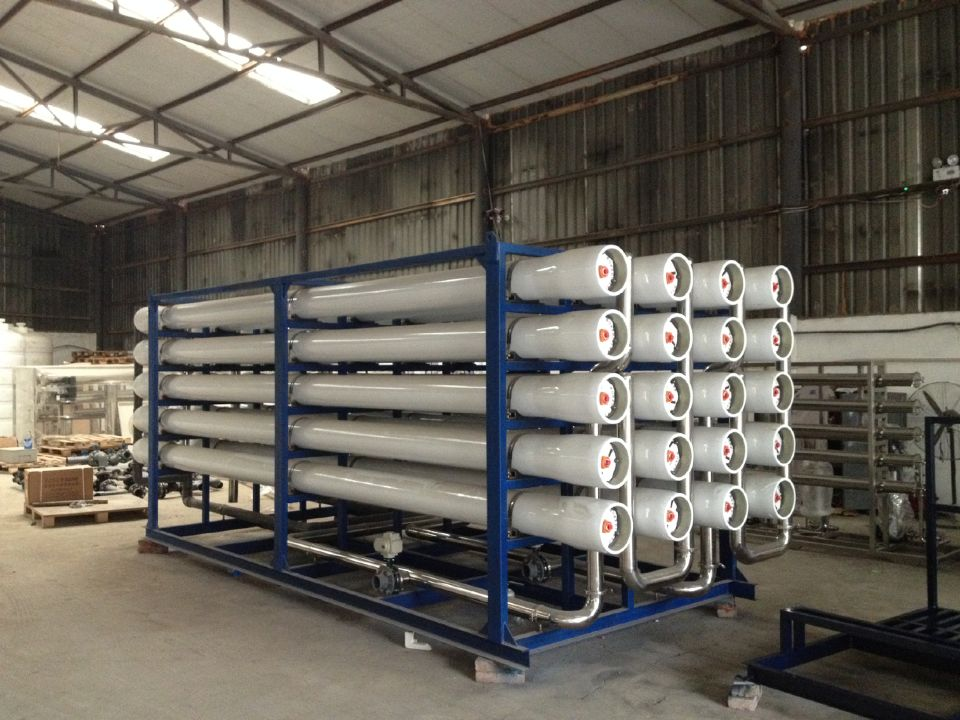
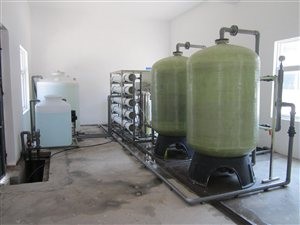
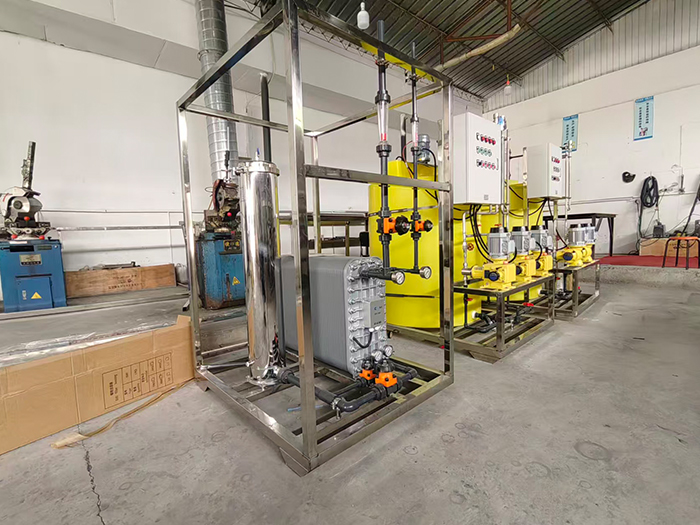
Yuan LaiEDIThe ultra-pure water equipment uses electro-deionization technology.EDIElectrodeionization is a water purification method that combines the dual advantages of electrodialysis and ion exchange. It does not require acid-base chemical regeneration and can continuously and stably prepare high-purity ultrapure water. Under the action of a direct current electric field, ion separation in water is completed. At the same time, water is electrolyzed to generate hydrogen ions and hydroxide ions, achieving automatic regeneration of the resin without the need to stop the machine for manual regeneration. The pre-treatment combined with reverse osmosis can prevent oxidized substances from damaging the resin, ensuring stable effluent quality and widely meeting the high-standard water usage requirements of various industries.
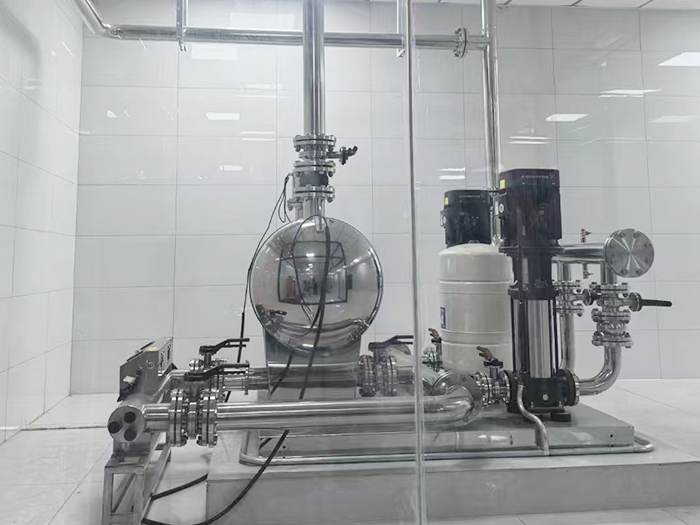
The non-negative pressure water supply equipment can be directly connected to the municipal water supply network, making full use of the residual pressure of the original network for superimposed water supply. Fully enclosed operation does not require the construction of a domestic water tank, eliminating secondary pollution. Intelligent variable frequency voltage stabilization, energy-saving, quiet and easy installation, it is the preferred equipment for secondary water supply in high-rise residential buildings and commercial buildings.
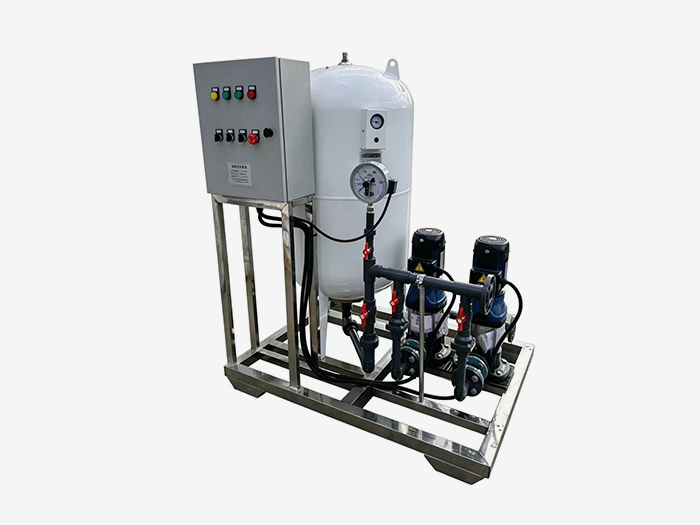
Constant pressure water supply equipment is widely used in central air conditioning, floor heating, industrial closed-loop water circulation, and boiler systems. It integrates automatic pressure stabilization, automatic water replenishment, automatic exhaust, pressure relief and buffering functions. It stabilizes the pressure in the pipeline network, eliminates abnormal sounds caused by air blockage, and prevents damage from negative pressure and water shortage in the pipeline. It is an essential supporting equipment for HVAC and circulating water systems.











 Landline:+86 010 59792055
Landline:+86 010 63780188
 Mobile:+86 13910114728
 Email:bjyuanlai@163.com
 Email:Wanda Plaza, Fengke Road, Fengtai District, BeijingBseat6Courtyard No.3Building No.7layer708
Yuanlai Homepage Softened water equipment Reverse osmosis pure water equipment Water supply equipment Engineering case Technical service Enter Yuanlai Site map
Softened water equipment Reverse osmosis pure water equipment Water purification equipment Water supply equipment Automatic dosing equipment High-purity water (ultra-pure water) equipment Wholesale of water treatment accessories
Electric power industry Petrochemical industry The electronic semiconductor industry The photovoltaic new energy industry Pharmaceuticals & Biochemical Engineering School research units Food and beverage industry Enterprises and public institutions
Reverse osmosis membrane Star-counting pump Fleck Valve Runxin Valve Instruments and meters Ultrafiltration membrane Softening resin Resin tank
