Bookmark this site Online message 中文站Welcome to the official website of Beijing Yuanlai Water Treatment Equipment Co., LTD.!
Service Hotline
+86 010 59792055 / +86 13910114728

Water is an important component of the human body. The proportion of water in an adult's body weight is approximately50-60%; It is also one of the six essential nutrients for the human body, playing a significant role in human cells, metabolism, nutrient transportation, and waste excretion.
Nowadays, people are paying more and more attention to water health issues, which has led to the development of water treatment equipment. There are many types of water treatment equipment, such as mineral water equipment and purified water equipment, etc. The hardness and price of water treated by different water treatment equipment also vary.
Simply put, "water treatment" is the process of removing some harmful substances from water that are not needed for production and daily life through physical, chemical and biological means. It is a process of water quality adjustment, including sedimentation, filtration, coagulation, flocculation, corrosion inhibition and scale prevention, carried out for specific uses. As social production and life are closely related to water. Therefore, the application scope involved in the water treatment field is extremely wide, forming a huge industrial application.
Water treatment includes two types: sewage treatment and drinking water treatment. In some places, sewage treatment is further divided into two types, namely sewage treatment and reclaimed water reuse. Commonly used water treatment chemicals include: polyaluminium chloride, polyaluminium ferric chloride, basic aluminium chloride, polyacrylamide, activated carbon and various filter materials, etc.
The effect of water treatment can be measured by water quality standards.
The processing of raw water (raw water) to meet the water quality requirements of finished water (domestic water, production water or dischargeable wastewater).
When raw water is processed for domestic or industrial use, it is called water supply treatment.
Impurities in water and treatment methods Impurities in water include coarse substances carried, suspended matter, colloids and dissolved substances. Coarse substances such as floating aquatic plants in rivers, garbage, large aquatic organisms, sand and gravel in wastewater, and large pieces of dirt, etc. In water supply projects, coarse impurities are removed by the facilities of water intake structures and are not included in the scope of water treatment.
Nanofiltration membranes, also known as low-pressure reverse osmosis membranes, were specifically defined by Japanese scholar Toshiro Ohtani as the separation principle of nanofiltration membranes: operating pressure≤1.50mPaMolecular weight cut-off200~1000,NaClThe retention rate≤90%The membrane can be regarded as a nanofiltration membrane.
Nanofiltration membrane separation technology has been separated from reverse osmosis technology and has become an independent separation technology between ultrafiltration and reverse osmosis. It has been widely applied in many fields such as seawater desalination, ultra-pure water manufacturing, industry, and environmental protection, and has become an important branch of water treatment technology.
The principle of nanofiltration technology
Dissolution and diffusion principle: The permeate dissolves in the membrane and diffuses and transfers along its driving force gradient, forming a chemical equilibrium between phases on the surface of the nanofiltration membrane. The form of transfer is:=Concentrationo"Mobility"oThe driving force enables a substance to overcome the osmotic pressure when passing through a membrane.
The process of pure water treatment depends on the quality of the raw water.
If the raw water is municipal tap water, the general process is
Sand filter--Activated carbon filter--Softening (optional)--Security filter--Reverse osmosis--"Ultraviolet"--Produced water
If it is ordinary surface water, a flocculant should be added before entering the above process.
If it is well water, an iron and manganese removal filter should be added after sand filtration.
Water is purified through circulation.
Quartz sand filtration is one of the effective means to remove suspended solids from water and is an important unit in advanced wastewater treatment, wastewater reuse and water supply treatment. Its function is to further remove the already flocculated pollutants in the water. Through the interception, sedimentation and adsorption effects of the filter material, the purpose of water purification is achieved.
Scope of application
1. It is used to require the turbidity of the effluent≤5mg/LIndustrial water, domestic water and municipal water supply systems that can meet the drinking water quality standards;
2. The removal of suspended and solid substances in industrial wastewater;
3. It can be used as a pretreatment device in ion exchange softening and desalination systems, and as a coarse filtration device for industrial water supply with low water quality requirements.
And it is used in swimming pool circulation treatment systems, cooling circulation water purification systems, etc.
Common water treatment methods include:
(1) Sediment filtration method
(2) Hard water softening method
(3) Activated carbon adsorption method
(4) Deionization method
(V) Reverse osmosis method
(6) Ultrafiltration method
(7) Distillation method
(8) Ultraviolet method
(IX) Biochemical method.
(10) Mixed ion exchange method
Algaecides - of great significance for the treatment of industrial circulating cooling water. The harm of microbial reproduction in industrial circulating cooling water is that it may accelerate the corrosion of metals, cause slime deposition, thereby corroding equipment and bringing great hidden dangers and economic losses to industrial production.
Common algaecides
1.Oxidizing algaecide
Chlorides: Chlorine gas, bleaching powder, chlorine dioxide, dichloroisocyanuric acid or trichloroisocyanuric acid and its sodium salts.
Bromines: halogenated hydantoin, hypobromite, bromine chloride, etc.
Ozone and peroxides.
2.Non-oxidizing algaecide
Quaternary ammonium salts, quaternary phosphonium salts, isothiazolinones, organic aldehydes and other types of non-oxidizing algaecides.
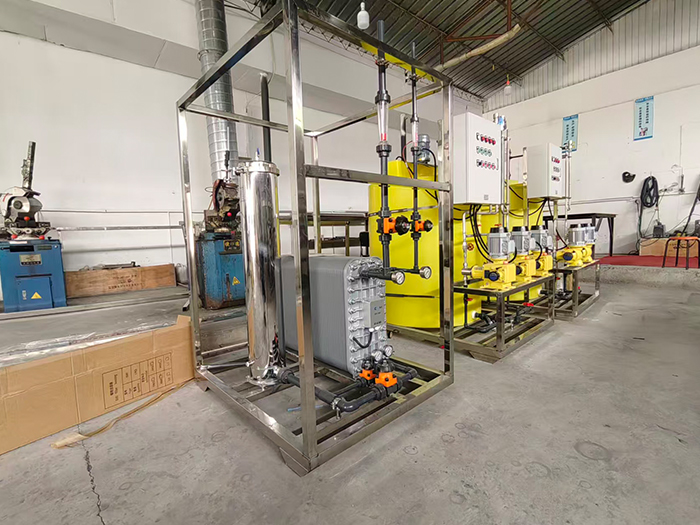
Yuan LaiEDIThe ultra-pure water equipment uses electro-deionization technology.EDIElectrodeionization is a water purification method that combines the dual advantages of electrodialysis and ion exchange. It does not require acid-base chemical regeneration and can continuously and stably prepare high-purity ultrapure water. Under the action of a direct current electric field, ion separation in water is completed. At the same time, water is electrolyzed to generate hydrogen ions and hydroxide ions, achieving automatic regeneration of the resin without the need to stop the machine for manual regeneration. The pre-treatment combined with reverse osmosis can prevent oxidized substances from damaging the resin, ensuring stable effluent quality and widely meeting the high-standard water usage requirements of various industries.
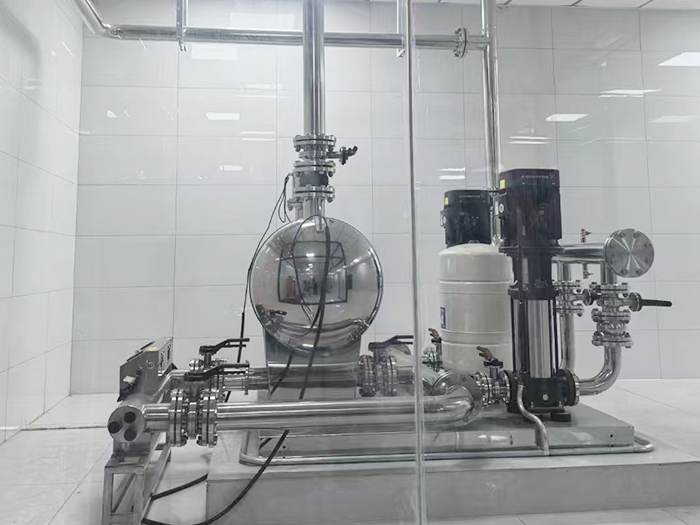
The non-negative pressure water supply equipment can be directly connected to the municipal water supply network, making full use of the residual pressure of the original network for superimposed water supply. Fully enclosed operation does not require the construction of a domestic water tank, eliminating secondary pollution. Intelligent variable frequency voltage stabilization, energy-saving, quiet and easy installation, it is the preferred equipment for secondary water supply in high-rise residential buildings and commercial buildings.
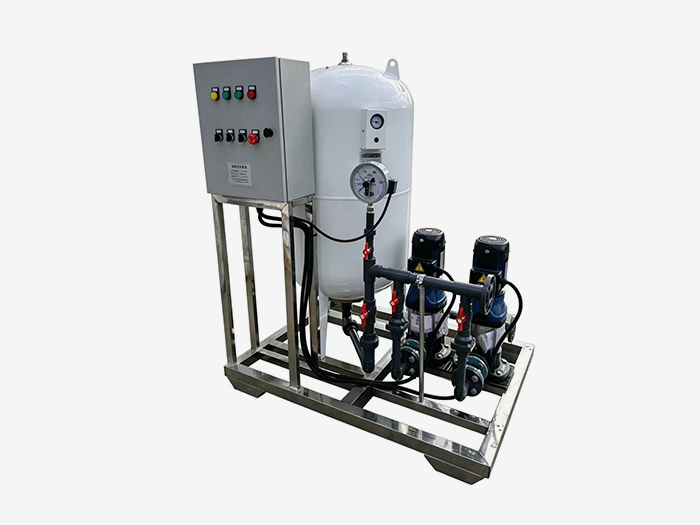
Constant pressure water supply equipment is widely used in central air conditioning, floor heating, industrial closed-loop water circulation, and boiler systems. It integrates automatic pressure stabilization, automatic water replenishment, automatic exhaust, pressure relief and buffering functions. It stabilizes the pressure in the pipeline network, eliminates abnormal sounds caused by air blockage, and prevents damage from negative pressure and water shortage in the pipeline. It is an essential supporting equipment for HVAC and circulating water systems.











 Landline:+86 010 59792055
Landline:+86 010 63780188
 Mobile:+86 13910114728
 Email:bjyuanlai@163.com
 Email:Wanda Plaza, Fengke Road, Fengtai District, BeijingBseat6Courtyard No.3Building No.7layer708
Yuanlai Homepage Softened water equipment Reverse osmosis pure water equipment Water supply equipment Engineering case Technical service Enter Yuanlai Site map
Softened water equipment Reverse osmosis pure water equipment Water purification equipment Water supply equipment Automatic dosing equipment High-purity water (ultra-pure water) equipment Wholesale of water treatment accessories
Electric power industry Petrochemical industry The electronic semiconductor industry The photovoltaic new energy industry Pharmaceuticals & Biochemical Engineering School research units Food and beverage industry Enterprises and public institutions
Reverse osmosis membrane Star-counting pump Fleck Valve Runxin Valve Instruments and meters Ultrafiltration membrane Softening resin Resin tank
