Bookmark this site Online message 中文站Welcome to the official website of Beijing Yuanlai Water Treatment Equipment Co., LTD.!
Service Hotline
+86 010 59792055 / +86 13910114728

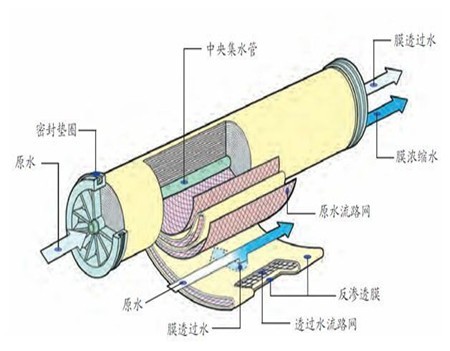
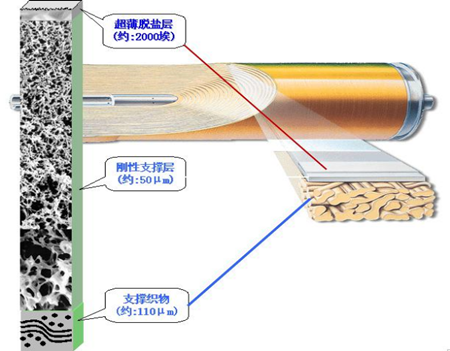
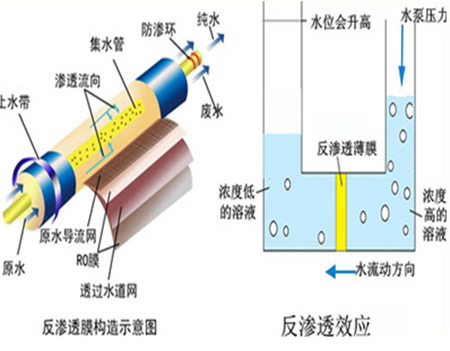
ROReverse osmosis equipment is generally a pure water equipment system. During the usage process, due to a series of issues such as the design, maintenance, operation and management of the equipment, problems often occurROWhat exactly causes the phenomenon of membrane blockageROWhat about the clogging of the membrane? How should we deal with different clogging substances? Now, Yuanlai Water Treatment will answer your questions one by one.
Calcium carbonate scale
Calcium carbonate scale is a kind of mineral scale. As a scale inhibitor/When the dispersant addition system malfunctions or acid is addedpHThe water supply was caused by a malfunction in the regulating systempHWhen the height increases, calcium carbonate scale may deposit. Early detection of calcium carbonate scale is extremely necessary to prevent the crystals deposited on the membrane surface from damaging the membrane elements. Early detected calcium carbonate scale can be reduced by lowering the feed waterpHvalue3~5"Run1~2The method of removal in hours. For calcium carbonate scale with a long deposition time, low can be usedpHThe citric acid solution of the value is cleaned and removed.
Calcium sulfate, barium sulfate, strontium sulfate scale
Sulfate scale is a mineral scale much harder than calcium carbonate scale and is not easy to remove. Sulfate scale can be found in scale inhibitors/The dispersant addition system malfunctions or sulfuric acid is added for adjustmentpHIt was deposited over time. Early detection of sulfate scale is extremely necessary to prevent the crystals deposited on the membrane surface from damaging the membrane elements. Barium sulfate and strontium sulfate scale are rather difficult to remove because they are almost insoluble in all cleaning solutions. Therefore, special attention should be paid to prevent the formation of such scale.
Metal oxide/Hydroxide pollution
Typical metal oxide and metal hydroxide pollution includes iron, zinc, manganese, copper, aluminum, etc. The formation of this kind of scale may be caused by the pipelines and containers of the device(tank/slot)The corrosion products may be oxidized metal ions, chlorine, ozone, potassium, permanganate in the air, or caused by the use of iron or aluminum coagulant AIDS in the pretreatment filtration system.
Polymerized silica scale
Silicone gel scale is caused by the supersaturated state of dissolved silicon and polymers, and is extremely difficult to remove. It should be noted that the contamination of silicon is different from that of silica gel. Silica gel contamination may be caused by association with metal hydroxides or organic substances. The removal of silicon scale is very difficult and traditional chemical cleaning methods can be adopted. If traditional methods fail to solve the problem of removing this scale, please contact the technical department of Hydranautics. Existing chemical cleaning agents, such as ammonium hydrogen fluoride, have been successfully used in some projects. However, when using them, the operational hazards and damage to equipment of this method must be considered, and protective measures should be taken.
Colloidal contamination
Colloids are particles of inorganic substances or a mixture of organic and inorganic substances suspended in water, and they do not settle due to their own gravity. Colloidal substances usually contain one or more of the following main components, such as iron, aluminum, silicon, sulfur or organic matter.
Pollution from insoluble natural organic matter(NOM):
Pollution from insoluble natural organic matter(NOM-Natural Organic Matter)It is usually caused by the decomposition of nutrients in surface water or deep well water. The chemical mechanism of organic pollution is very complex. The main organic components are either humic acid or fulvic acid. InsolubleNOMAdsorption onto the membrane surface can causeROThe rapid contamination of membrane elements, once the absorption effect occurs, will gradually lead to the formation of gels or lumps in the contamination process.
Microbial deposition
Organic deposits are formed by slime, mold and other pollutants, which are difficult to remove, especially when the water supply channels are blocked. Blockage of the feed water passage will make it difficult for clean feed water to enter the membrane element fully and evenly. To inhibit the further growth of this sediment, it is important not only to clean and maintain itROThe system also needs to be cleaned, including the pretreatment, pipelines and ends, etc.
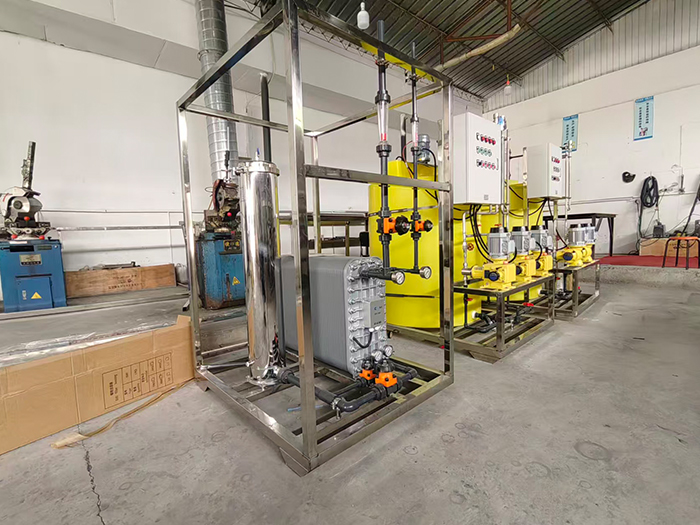
Yuan LaiEDIThe ultra-pure water equipment uses electro-deionization technology.EDIElectrodeionization is a water purification method that combines the dual advantages of electrodialysis and ion exchange. It does not require acid-base chemical regeneration and can continuously and stably prepare high-purity ultrapure water. Under the action of a direct current electric field, ion separation in water is completed. At the same time, water is electrolyzed to generate hydrogen ions and hydroxide ions, achieving automatic regeneration of the resin without the need to stop the machine for manual regeneration. The pre-treatment combined with reverse osmosis can prevent oxidized substances from damaging the resin, ensuring stable effluent quality and widely meeting the high-standard water usage requirements of various industries.
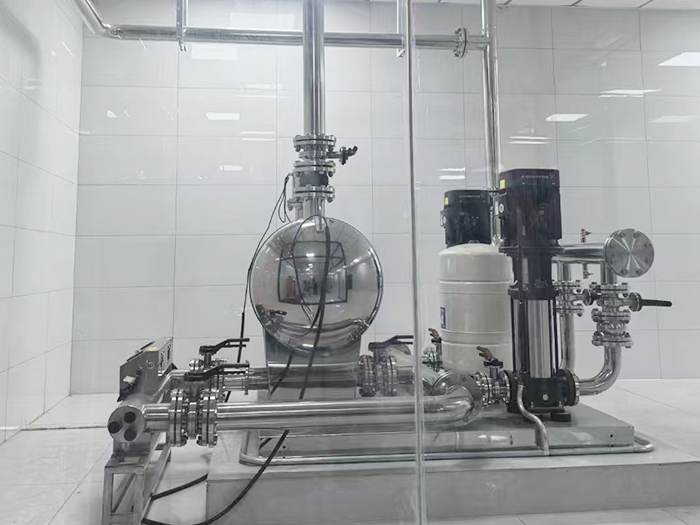
The non-negative pressure water supply equipment can be directly connected to the municipal water supply network, making full use of the residual pressure of the original network for superimposed water supply. Fully enclosed operation does not require the construction of a domestic water tank, eliminating secondary pollution. Intelligent variable frequency voltage stabilization, energy-saving, quiet and easy installation, it is the preferred equipment for secondary water supply in high-rise residential buildings and commercial buildings.
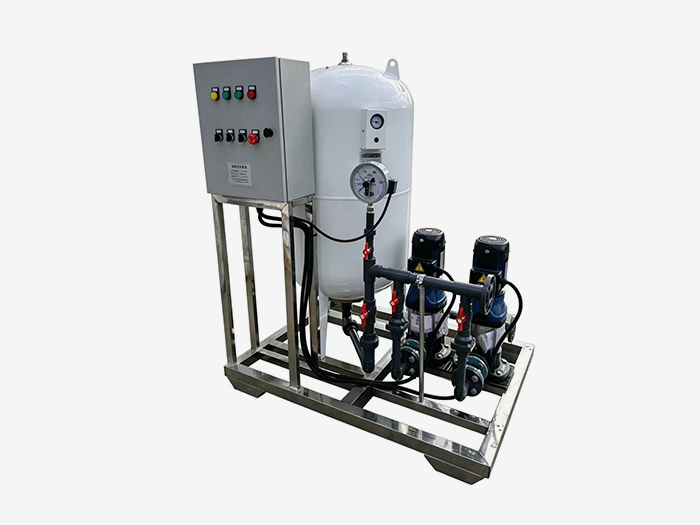
Constant pressure water supply equipment is widely used in central air conditioning, floor heating, industrial closed-loop water circulation, and boiler systems. It integrates automatic pressure stabilization, automatic water replenishment, automatic exhaust, pressure relief and buffering functions. It stabilizes the pressure in the pipeline network, eliminates abnormal sounds caused by air blockage, and prevents damage from negative pressure and water shortage in the pipeline. It is an essential supporting equipment for HVAC and circulating water systems.











 Landline:+86 010 59792055
Landline:+86 010 63780188
 Mobile:+86 13910114728
 Email:bjyuanlai@163.com
 Email:Wanda Plaza, Fengke Road, Fengtai District, BeijingBseat6Courtyard No.3Building No.7layer708
Yuanlai Homepage Softened water equipment Reverse osmosis pure water equipment Water supply equipment Engineering case Technical service Enter Yuanlai Site map
Softened water equipment Reverse osmosis pure water equipment Water purification equipment Water supply equipment Automatic dosing equipment High-purity water (ultra-pure water) equipment Wholesale of water treatment accessories
Electric power industry Petrochemical industry The electronic semiconductor industry The photovoltaic new energy industry Pharmaceuticals & Biochemical Engineering School research units Food and beverage industry Enterprises and public institutions
Reverse osmosis membrane Star-counting pump Fleck Valve Runxin Valve Instruments and meters Ultrafiltration membrane Softening resin Resin tank
