Bookmark this site Online message 中文站Welcome to the official website of Beijing Yuanlai Water Treatment Equipment Co., LTD.!
Service Hotline
+86 010 59792055 / +86 13910114728

Before making the right choice of a laboratory ultrapure water machine, it is necessary to have a good understanding of the following concepts: What is pure water?What is ultrapure water? What are the differences between the two?
Pure water, also known as purified water, refers to water that meets the hygiene standards for domestic drinking water as the raw water, and is processed through electrodialysis, ion exchange methods,Reverse osmosisWater that is sealed in containers, free of any additives, colorless and transparent, and can be drunk directly, and is produced by distillation and other appropriate processing methods. The space water and distilled water sold on the market are all pure water.
Ultrapure water is water that is further developed on the basis of pure water, with almost all conductive media in the water removed, and a very low level of colloidal substances, gases and organic matter that do not dissociate in the water removed. The resistivity is greater than18MΩ*cm Or close18.25MΩ*cm veryLimit value. Ultra-pure water is a level that is difficult to achieve through general processes. Microfiltration technology and ultrafiltration technology can be integrated.Reverse osmosis"Technology, EDI Two or more technologies in ion exchange technology, through reasonable process design and equipment selection, can produce ultrapure water with a resistivity of up to18.20MΩ*cm.
The differences between pure water and ultrapure water lie in many aspects. Here, only some of them are listed and summarized as follows:
1,The electrical conductivity varies. The electrical conductivity of pure water is2-10us/cmBetween them, the electrical conductivity of ultrapure water is 0.056us/cm.
2The difficulty of manufacturing varies. Currently, the pure water used in the market is basically all processedBeijingReverse osmosisEquipmentIt is produced by methods such as distillation, andUltra-pure waterEquipmentIt is produced on the basis of pure water through a series of complex purification techniques such as photo-oxidation technology, fine treatment and polishing.
3The indicators such as heavy metals, particle count, etc. also vary greatly. The impurity content of pure water is ppmGrade, while ultrapure water is ppbGrade, simply put, ultrapure water contains almost no impurities and is close to theoretical water.
4The fields of application are also different.
5The requirements for the material of the conveying pipes are also different. The requirements for the material of the conveying pipes for ultrapure water are much stricter than those for ultrapure water.
The current situation of the domestic ultrapure water machine market
At present in ChinaUltra-pure water machineProducers have made considerable progress, but the overall technical level is relatively low, and there are still relatively few manufacturers that can truly produce ultrapure water. Many manufacturers have achieved a resistivity of18.2MΩ NaN Pure water is often misunderstood as ultrapure water. In fact, this is a misunderstanding. Since many organic molecules and particles do not exist in the form of ions, they do not affect the measurement of resistivity. The result is that even when the resistivity reading is good, there may still be organic matter and other contaminants in the water. Such water cannot be called ultrapure water. True ultrapure water contains almost no impurities. Therefore, domestic producers still need to make efforts in this regard.
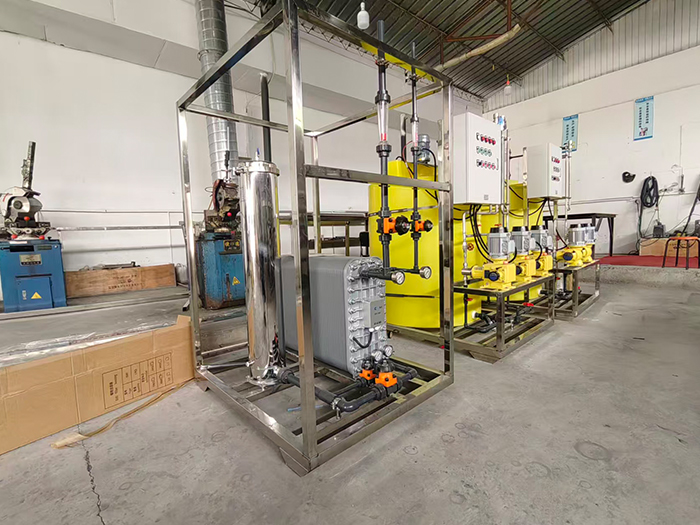
Yuan LaiEDIThe ultra-pure water equipment uses electro-deionization technology.EDIElectrodeionization is a water purification method that combines the dual advantages of electrodialysis and ion exchange. It does not require acid-base chemical regeneration and can continuously and stably prepare high-purity ultrapure water. Under the action of a direct current electric field, ion separation in water is completed. At the same time, water is electrolyzed to generate hydrogen ions and hydroxide ions, achieving automatic regeneration of the resin without the need to stop the machine for manual regeneration. The pre-treatment combined with reverse osmosis can prevent oxidized substances from damaging the resin, ensuring stable effluent quality and widely meeting the high-standard water usage requirements of various industries.
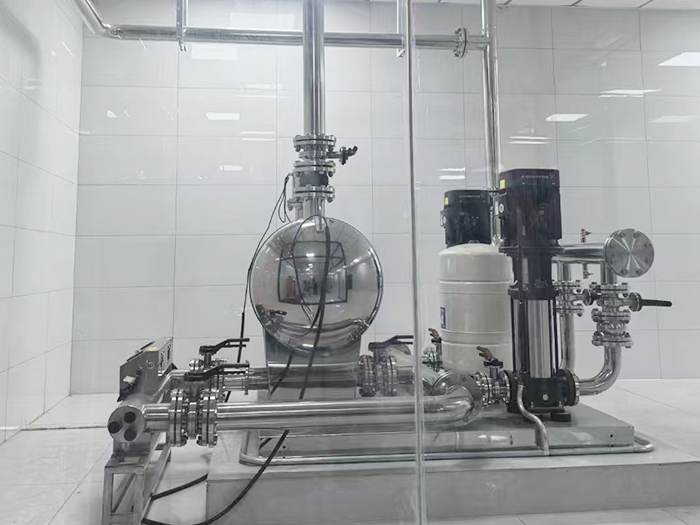
The non-negative pressure water supply equipment can be directly connected to the municipal water supply network, making full use of the residual pressure of the original network for superimposed water supply. Fully enclosed operation does not require the construction of a domestic water tank, eliminating secondary pollution. Intelligent variable frequency voltage stabilization, energy-saving, quiet and easy installation, it is the preferred equipment for secondary water supply in high-rise residential buildings and commercial buildings.
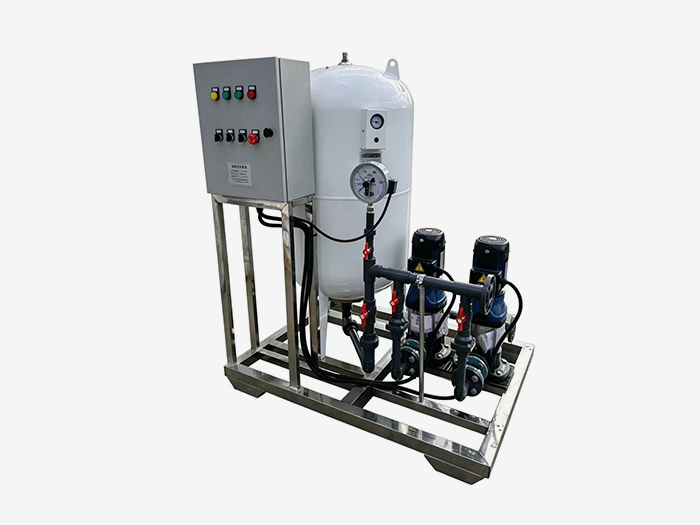
Constant pressure water supply equipment is widely used in central air conditioning, floor heating, industrial closed-loop water circulation, and boiler systems. It integrates automatic pressure stabilization, automatic water replenishment, automatic exhaust, pressure relief and buffering functions. It stabilizes the pressure in the pipeline network, eliminates abnormal sounds caused by air blockage, and prevents damage from negative pressure and water shortage in the pipeline. It is an essential supporting equipment for HVAC and circulating water systems.











 Landline:+86 010 59792055
Landline:+86 010 63780188
 Mobile:+86 13910114728
 Email:bjyuanlai@163.com
 Email:Wanda Plaza, Fengke Road, Fengtai District, BeijingBseat6Courtyard No.3Building No.7layer708
Yuanlai Homepage Softened water equipment Reverse osmosis pure water equipment Water supply equipment Engineering case Technical service Enter Yuanlai Site map
Softened water equipment Reverse osmosis pure water equipment Water purification equipment Water supply equipment Automatic dosing equipment High-purity water (ultra-pure water) equipment Wholesale of water treatment accessories
Electric power industry Petrochemical industry The electronic semiconductor industry The photovoltaic new energy industry Pharmaceuticals & Biochemical Engineering School research units Food and beverage industry Enterprises and public institutions
Reverse osmosis membrane Star-counting pump Fleck Valve Runxin Valve Instruments and meters Ultrafiltration membrane Softening resin Resin tank
