Bookmark this site Online message 中文站Welcome to the official website of Beijing Yuanlai Water Treatment Equipment Co., LTD.!
Service Hotline
+86 010 59792055 / +86 13910114728

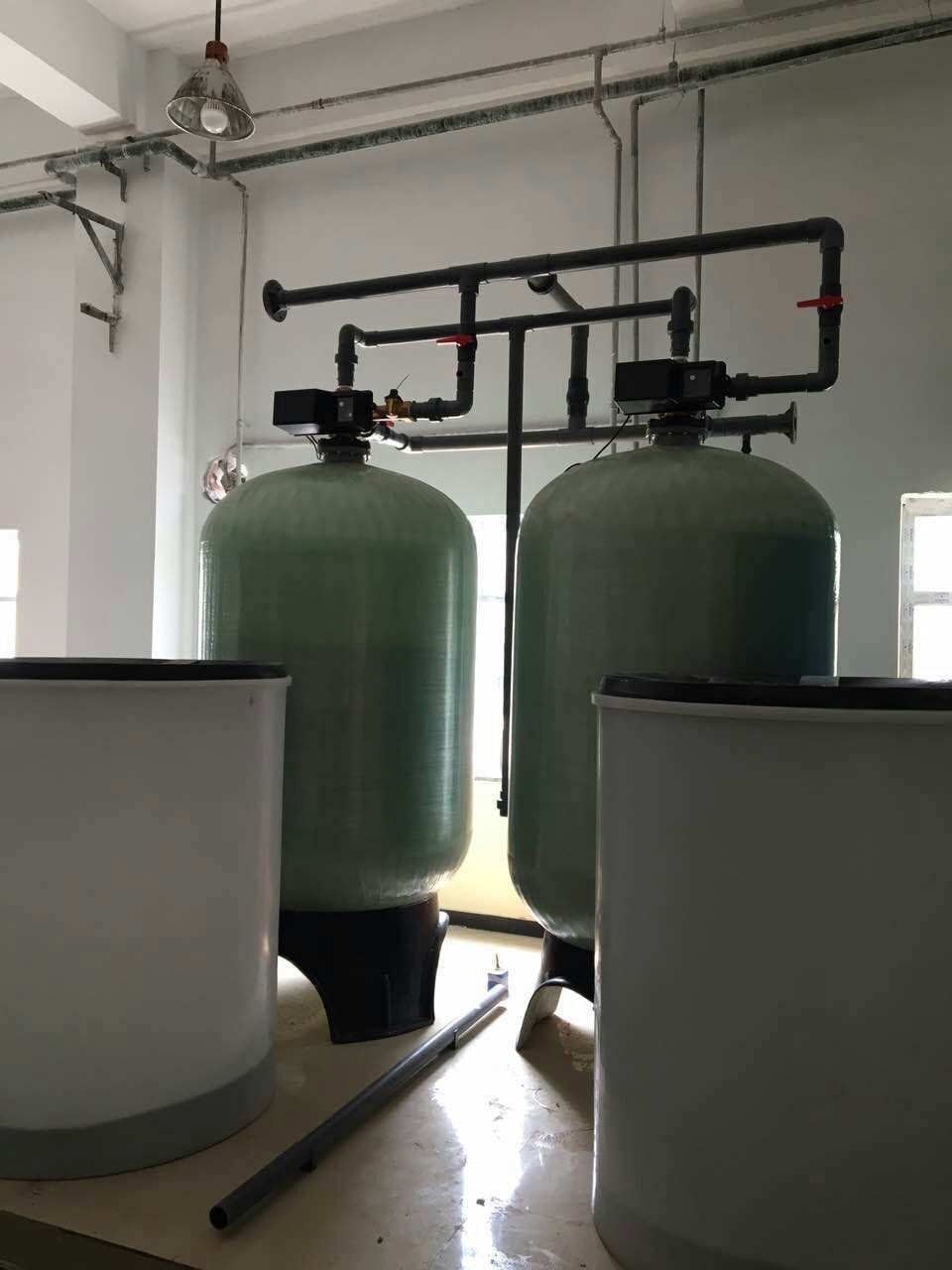
I.50T/HSoftened water treatmentSystem
Softened water project"Plan"
1.0 Softened water"Design Foundation"
The provided water production capacity is50Tons of/One set of hourly water softening system equipment.
1 According to the water quality test report provided by Party A(Not provided).
2 System performance24Continuous water supply for hours, with a fully automatic control system.
3 This design scheme is based on the principles of stable equipment operation, reasonable structure and performance compliance. It strictly follows various standards and technical specifications for system design, and is aimed at reducing investment for users, lowering operating costs, simplifying maintenance and upkeep, and ensuring smooth operation.
4 This design is based on the design standards for softened water preparation devices. The equipment components should meet the following requirements:
AThe structure design is reasonable, reliable and easy to disassemble and assemble.
BTo facilitate disassembly, replacement and cleaning of parts, standardized, universal and systematic components should be adopted as much as possible in the design.
CThe inner and outer surfaces of the equipment should be smooth, flat, free of dead corners and easy to clean. The exterior parts are resistant to corrosion and rust.
DThe equipment for softening water should be made of materials that do not pollute the water quality.
EIf a softened water tank is needed, materials that will not cause secondary pollution to the water quality should be adopted to ensure water quality.
FSoftened water is recommended to be conveyed by stainless steel pumps that are easy to disassemble and clean.
GIn the design, a continuously operating fully automatic softened water production system will be adopted based on the actual water quality of your factory's raw water.
Ii. Installation of water distributors and Pipes for Softening Water Equipment
A. withPVCThe glue bonds the pipe to the water distributor seat together.
B. Insert the bonded tubes into the resin tank.
C. Tighten the branch pipe of the water distributor onto the water distributor base.
D. After the water distributor is installed, the pipe should stand vertically in the exchange tank and then be placed above the tank opening planePVCCut off the pipe.
Place the resin tank at the selected position. Bond the pipe and the lower water distributor firmly with adhesive. Insert the pipe into the resin tank with the lower water distributor facing down. The height of the pipe along with the height of the lower water distributor should be flush with the tank opening. Cut off the excess part of the pipe. Note that the upper opening of the pipe should be smooth and free of burrs. Take out the tube.
Add the resin to the resin tank, but do not fill it up. The reserved space is for the backwashing of the resin, with a height equal to that of the resin layer40%-60%Left and right.
The upper water distributor is placed on the central tube or first fixed at the bottom of the control valve. Note that no matter where the upper water distributor is placed, it should be ensured that it will not fall off and cause the resin to escape.
Insert the central tube into the bottom of the control valve. Note: The tube passes through the insideOShape the ring and apply a lubricant that is insoluble in water before screwing it into the valve to avoid damaging the sealing ring. Fix the upper water distributor on the multi-way valve.
Then insert the core tube along with the multi-way valve vertically into the resin tank. It is better not to tilt it. Then tighten the multi-way valve.
Iii.Daily usage precautions and maintenance of water softening equipment:
Appendix I: Fault Handling Guide
The system is designed with a low failure rate and low maintenance requirements. However, if problems arise, this chapter lists the possible causes and solutions. The controller is easy to maintain, replace and set up. For specific details, please refer to the relevant content.
The water inlet of the equipment should be kept open all the time when in use, except when the equipment is under maintenance and needs to be closed. If no water is needed, the outlet valve can be closed.
If the effluent quality is substandard due to the failure of equipment regeneration, manual regeneration can be carried out.
When the equipment is out of use for a long time, salt water needs to be sucked into the tank for protection. The preparatory work steps are more than usual1/2For concentrated brine, manually regenerate the equipment. After the equipment has sucked the brine clean by itself, immediately close the water inlet, cut off the power supply at the same time, and close the water outlet valve.
When it is put back into use, just prepare the same amount of brine as in normal operation. First, open the water inlet valve, then connect the power supply. Let the equipment reset by itself and then manually regenerate it once. After that, you can open the water outlet valve. The equipment can then produce qualified softened water.
If the industrial salt used is too dirty, the salt tank should be cleaned once a year. It is better to replace the filter cloth on the salt well during the cleaning process to ensure the smooth progress of the salt absorption process.
4. The regeneration of the fully automatic water softener starts when the set flow rate is reached. The working process of the water softener is generally composed of the following several steps in a cycle:
A. The fully automatic softening equipment is in operation(Work)
Raw water is under a certain pressure(0.20-0.6Mpa)At a low flow rate, it enters the device through the valve cavity of the controllerIon exchange resinThe container(Resin tank)What is contained in the resinNa+With cations in water(Ca2+,Mg2+,Fe2+... Such as)Carry out the exchange to make the container release waterCa2+,Mg2+The ion content meets the set requirements, achieving the softening of hard water.
B. Backwashing of fully automatic softening equipment
After the resin fails, before regeneration, it should be backwashed with water from bottom to top first. The purpose of backwashing is twofold. One is to loosen the compacted resin layer during operation through backwashing, which is conducive to the full contact between the resin particles and the regenerant;One is to ensure that the suspended solids and broken resin accumulated on the surface of the resin are discharged along with the backwash water, thereby preventing the water flow resistance of the exchanger from increasing continuously.
C. The fully automatic softening equipment regenerates and absorbs salt
Regeneration brine flows through the exhausted resin layer at a certain concentration and flow rate to restore its original exchange capacity.
D. Replacement of fully automatic softening equipment(Slow cleaning)
After the regenerant has been completely fed in, there is still salt solution in the exchanger that has not participated in the regeneration exchange. It is cleaned with clean water at a flow rate less than or equal to that of the regenerant(Slow cleaning)To fully utilize the regenerative effect of the salt solution and reduce the load on the forward wash.
E. The fully automatic softening equipment is undergoing forward washing(Quick cleaning)
The purpose is to clean the residual regeneration waste liquid in the resin layer, usually until the effluent is qualified after cleaning at a normal flow rate.
F. Fill the regenerant tank of the fully automatic softening equipment with water
Inject water into the regenerant tank equal to the amount of salt required for one regeneration
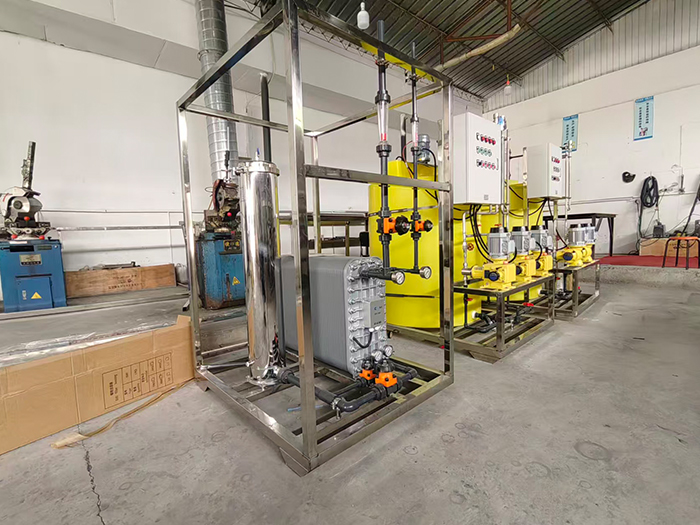
Yuan LaiEDIThe ultra-pure water equipment uses electro-deionization technology.EDIElectrodeionization is a water purification method that combines the dual advantages of electrodialysis and ion exchange. It does not require acid-base chemical regeneration and can continuously and stably prepare high-purity ultrapure water. Under the action of a direct current electric field, ion separation in water is completed. At the same time, water is electrolyzed to generate hydrogen ions and hydroxide ions, achieving automatic regeneration of the resin without the need to stop the machine for manual regeneration. The pre-treatment combined with reverse osmosis can prevent oxidized substances from damaging the resin, ensuring stable effluent quality and widely meeting the high-standard water usage requirements of various industries.
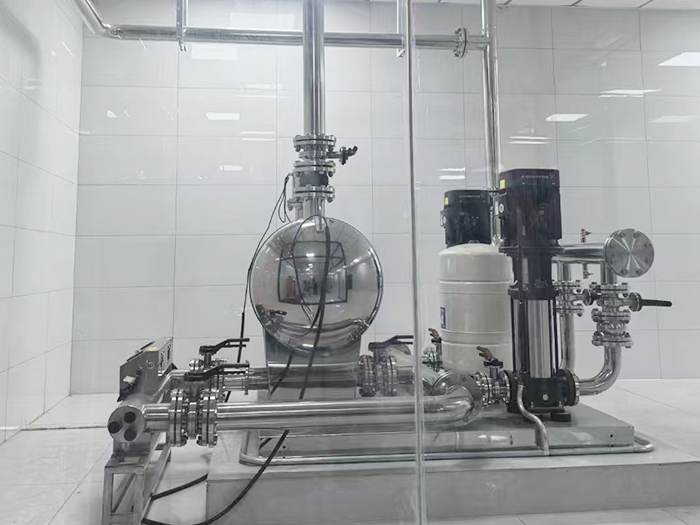
The non-negative pressure water supply equipment can be directly connected to the municipal water supply network, making full use of the residual pressure of the original network for superimposed water supply. Fully enclosed operation does not require the construction of a domestic water tank, eliminating secondary pollution. Intelligent variable frequency voltage stabilization, energy-saving, quiet and easy installation, it is the preferred equipment for secondary water supply in high-rise residential buildings and commercial buildings.
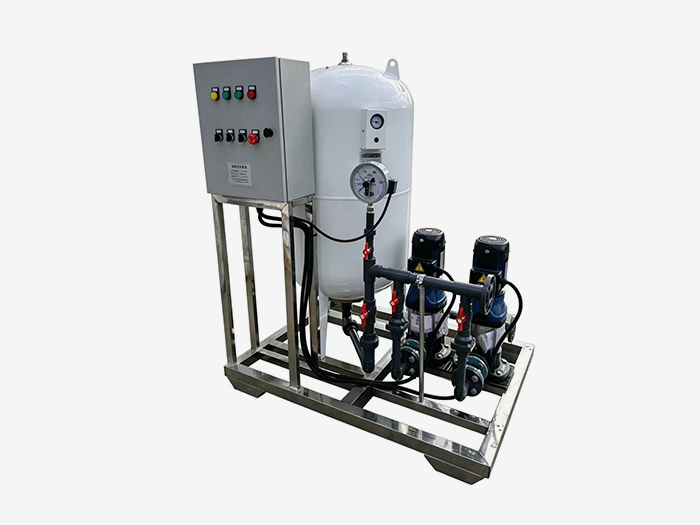
Constant pressure water supply equipment is widely used in central air conditioning, floor heating, industrial closed-loop water circulation, and boiler systems. It integrates automatic pressure stabilization, automatic water replenishment, automatic exhaust, pressure relief and buffering functions. It stabilizes the pressure in the pipeline network, eliminates abnormal sounds caused by air blockage, and prevents damage from negative pressure and water shortage in the pipeline. It is an essential supporting equipment for HVAC and circulating water systems.











 Landline:+86 010 59792055
Landline:+86 010 63780188
 Mobile:+86 13910114728
 Email:bjyuanlai@163.com
 Email:Wanda Plaza, Fengke Road, Fengtai District, BeijingBseat6Courtyard No.3Building No.7layer708
Yuanlai Homepage Softened water equipment Reverse osmosis pure water equipment Water supply equipment Engineering case Technical service Enter Yuanlai Site map
Softened water equipment Reverse osmosis pure water equipment Water purification equipment Water supply equipment Automatic dosing equipment High-purity water (ultra-pure water) equipment Wholesale of water treatment accessories
Electric power industry Petrochemical industry The electronic semiconductor industry The photovoltaic new energy industry Pharmaceuticals & Biochemical Engineering School research units Food and beverage industry Enterprises and public institutions
Reverse osmosis membrane Star-counting pump Fleck Valve Runxin Valve Instruments and meters Ultrafiltration membrane Softening resin Resin tank
