Bookmark this site Online message 中文站Welcome to the official website of Beijing Yuanlai Water Treatment Equipment Co., LTD.!
Service Hotline
+86 010 59792055 / +86 13910114728

For many years, Dow has been committed to improving FILMTEC reverse osmosis membrane technology. Dow RO reverse osmosis membrane elements feature a stable high desalination rate, are easy to clean, and come in a complete range of models, suitable for various water treatment projects with different water qualities and quantities. Several commonly used Dow RO reverse osmosis membranes nowadays, such as BW30-400, BW30-365, BW30-400IG, BW30-365IG... Wait a moment. The application of Dow membrane products in the United States: Dow membranes are widely used in fields such as power, petrochemical, steel, electronics, medicine, beverages, municipal and environmental protection. They play a significant role in seawater and brackish water desalination, boiler feed water, industrial pure water and electronic-grade ultra-pure water preparation, drinking pure water production, wastewater treatment and special separation processes. The usage conditions of Dow membrane elements in the United States: Dow FILMTEC membrane elements come in different models, each designed for different applications and usage conditions: XLE ultra-low energy consumption (pressur
Details >Softening water equipment removes heavy metals from water, turning hard water into soft water. Drinking soft water treated by softening water equipment tastes good and has no peculiar smell. Using soft water can save money. Because soft water does not form scale and does not cause rust, it will reduce the amount of soap and laundry detergent used in household washing, and decrease the occurrence of chronic diseases such as heart, brain and kidney problems. Meanwhile, soft water can effectively inhibit. When a skin injury or similar accident occurs, first wash the affected area with soft water, then soak absorbent cotton, gauze, towel, etc. in soft water and gently rub the affected area. This can quickly heal the wound and make the caused swelling disappear immediately. This is because soft water has the function of regenerating cell tissues.
Details >Desalinated water equipment for pharmaceutical production
Overview of Demineralized water Equipment for Pharmaceutical Production: Demineralized water equipment for pharmaceutical production is a water treatment device specially designed and produced for the production water in the pharmaceutical industry. The effluent quality of this equipment can meet the production requirements of the pharmaceutical industry. There are various process flows for desalinated water. Customers can choose the suitable water treatment equipment according to their actual production needs. No matter which process flow it is, the effluent quality does not change much. This article mainly introduces the advantages and disadvantages of desalinated water equipment with different process flows. Advantages and disadvantages of the three process flows of demineralized water equipment: 1. Ion exchange method: Using ion exchange resin, its advantages lie in low initial investment and less space occupation, but the disadvantages are that it requires frequent ion regeneration, consumes a large amount of acid and alkali, and has a certain destructive effect on the environment. 2. Reverse osmosis +
Details >What are the operation modes of ion exchangers
What are the operation modes of ion exchangers? This article analyzes the changes in conductivity at the end of the operation of a unitized ion exchanger and explains that the end point of a unitized ion exchanger can be determined by the changes in the online conductivity value. This method is used to determine the endpoint instead of the conventional approach of simultaneously analyzing SiO2 and conductivity. Engineers from Beijing Yuanlai will briefly introduce the operation mode of the ion exchanger. Ion exchangers have several operation modes based on different replacement methods: (1) Co-current regeneration and co-current softening mode: Both the raw water and the reduced liquid enter from the top of the exchanger and flow downward. In this method, the water flows from top to bottom. As the flow direction of the water is consistent with that of the reducing solution, the reducing solution cannot undergo a good reduction reaction with the ineffective exchanger, resulting in waste
Details >What should I do if the reverse osmosis device produces low water and doesn't work?
After many users purchased reverse osmosis devices, they found that the water production of the reverse osmosis devices began to decline. In response to this phenomenon, we will explain to users the reasons for the decrease in the water production of reverse osmosis equipment. 1. Reduction of reverse osmosis membranes. Operate according to the number of membranes initially designed. 2. Low-voltage operation. It should be operated in accordance with the working pressure required by the equipment. 3. Membrane module compaction occurs. When the pressure exceeds the standard, the membrane module will become compacted. At this point, the membrane module needs to be replaced. 4. The working temperature drops. It should operate in accordance with the prescribed temperature. 5. Oil has entered. It should be noted that oily substances must not enter the equipment. 6. Operate at a high recovery rate. When the recovery rate is higher than 75%, the concentrated water decreases and the concentrated water in the membrane rises, resulting in a decline in the produced water.
Details >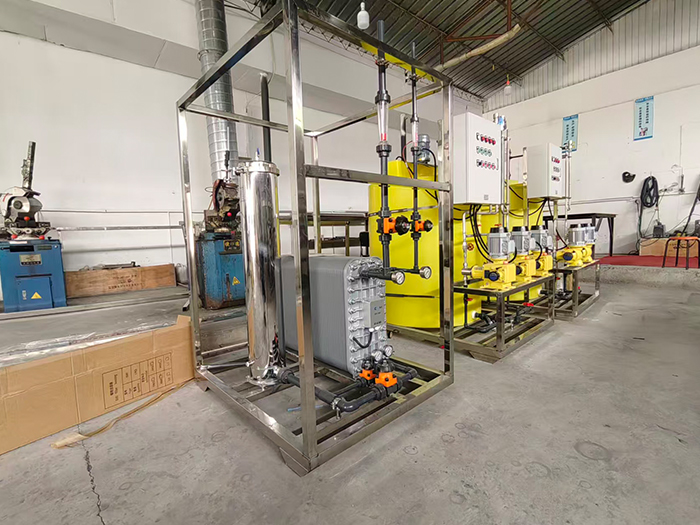
Yuan LaiEDIThe ultra-pure water equipment uses electro-deionization technology.EDIElectrodeionization is a water purification method that combines the dual advantages of electrodialysis and ion exchange. It does not require acid-base chemical regeneration and can continuously and stably prepare high-purity ultrapure water. Under the action of a direct current electric field, ion separation in water is completed. At the same time, water is electrolyzed to generate hydrogen ions and hydroxide ions, achieving automatic regeneration of the resin without the need to stop the machine for manual regeneration. The pre-treatment combined with reverse osmosis can prevent oxidized substances from damaging the resin, ensuring stable effluent quality and widely meeting the high-standard water usage requirements of various industries.
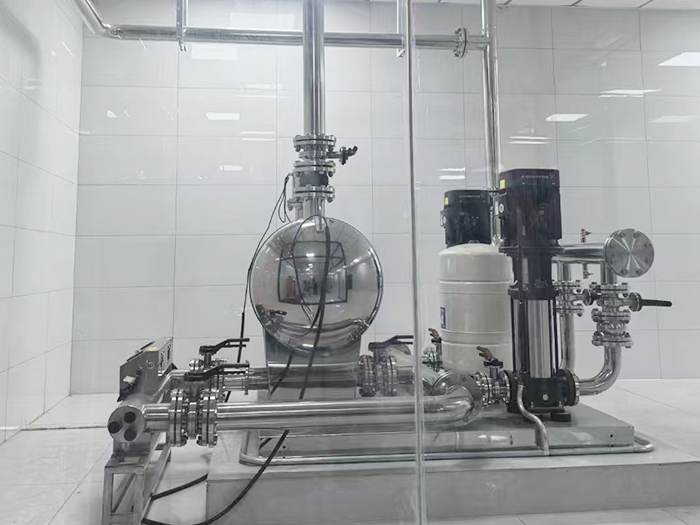
The non-negative pressure water supply equipment can be directly connected to the municipal water supply network, making full use of the residual pressure of the original network for superimposed water supply. Fully enclosed operation does not require the construction of a domestic water tank, eliminating secondary pollution. Intelligent variable frequency voltage stabilization, energy-saving, quiet and easy installation, it is the preferred equipment for secondary water supply in high-rise residential buildings and commercial buildings.
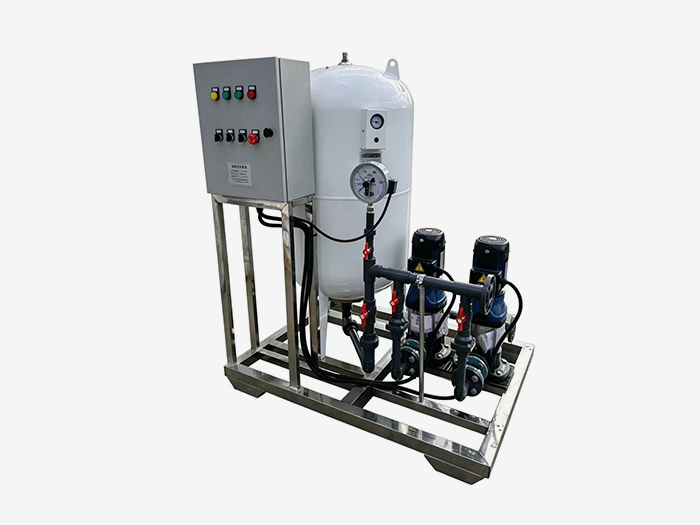
Constant pressure water supply equipment is widely used in central air conditioning, floor heating, industrial closed-loop water circulation, and boiler systems. It integrates automatic pressure stabilization, automatic water replenishment, automatic exhaust, pressure relief and buffering functions. It stabilizes the pressure in the pipeline network, eliminates abnormal sounds caused by air blockage, and prevents damage from negative pressure and water shortage in the pipeline. It is an essential supporting equipment for HVAC and circulating water systems.











 Landline:+86 010 59792055
Landline:+86 010 63780188
 Mobile:+86 13910114728
 Email:bjyuanlai@163.com
 Email:Wanda Plaza, Fengke Road, Fengtai District, BeijingBseat6Courtyard No.3Building No.7layer708
Yuanlai Homepage Softened water equipment Reverse osmosis pure water equipment Water supply equipment Engineering case Technical service Enter Yuanlai Site map
Softened water equipment Reverse osmosis pure water equipment Water purification equipment Water supply equipment Automatic dosing equipment High-purity water (ultra-pure water) equipment Wholesale of water treatment accessories
Electric power industry Petrochemical industry The electronic semiconductor industry The photovoltaic new energy industry Pharmaceuticals & Biochemical Engineering School research units Food and beverage industry Enterprises and public institutions
Reverse osmosis membrane Star-counting pump Fleck Valve Runxin Valve Instruments and meters Ultrafiltration membrane Softening resin Resin tank
