Bookmark this site Online message 中文站Welcome to the official website of Beijing Yuanlai Water Treatment Equipment Co., LTD.!
Service Hotline
+86 010 59792055 / +86 13910114728

Tianjin Tanggu Explosion Incident - Beware of boiler Equipment explosions
Before the incident began, Beijing Yuanlai Water Treatment Equipment Co., Ltd. expressed its deep condolences over the Tianjin explosion, praying for the rest of the victims and the recovery of the injured. Although it is said that" "Accident" And ";" "Story" On the surface, it seems to be just a difference in the order of the characters, but the direct meanings expressed by the two are completely opposite. Accidents always occur unexpectedly. At the very least, they cause losses; at the worst, they directly lead to casualties. Before an accident occurs, one may think it's far away from oneself, but when it happens, it might be not far from oneself. Whether in industry or household use, boiler equipment is a tool we commonly use, and the convenience it brings to production and life is beyond doubt. However, boiler equipment also implies dangers, and this might be
Details >Introduction to the Working Principle of Reverse Osmosis Equipment
Reverse osmosis is a membrane separation technology that uses pressure as the driving force and the mechanical energy of selectively permeable (semi-permeable) membranes. When the pressure applied in the system is greater than the osmotic pressure of the feed water solution, water molecules continuously pass through the membrane, flow through the product water channel into the pipe, and then flow out from one end. Impurities in the water, such as ions, organic matter, viruses, etc., are retained on the feed water side of the membrane. Then it flows out from the concentrated water outlet end, thereby achieving the purpose of separation and purification. Reverse osmosis water treatment equipment, applying membrane separation technology, can effectively remove charged ions, inorganic substances, colloidal particles, and organic matter from water. It is an excellent device in the processes of high-purity water preparation, brackish water desalination and wastewater treatment. It is widely used in fields such as electronics, medicine, light textile, chemical engineering, and power generation.
Details >The principle and application of reverse osmosis equipment
The principle and application of reverse osmosis equipment I. RO Reverse Osmosis Pure Water equipment The reverse osmosis device uses sufficient pressure to make the solvent (usually water) in the solution pass through the reverse osmosis membrane (or semi-permeable membrane) and separate it out. Because this process is opposite to the direction of natural osmosis, it is called reverse osmosis. After reverse osmosis treatment, the content of impurities in water is reduced, and the purity of water quality is improved. Its desalination rate can reach over 97%, and it can remove most of the colloids and large-molecular-weight organic matter in water. Reverse osmosis can adapt to various types of raw water with different salt contents, especially in water treatment projects with high salt content, it can achieve excellent technical and economic benefits. Reverse osmosis has a high desalination rate, high recovery rate, stable operation, small floor space and simple operation, which makes reverse osmosis equipment widely used in various types of desalinated water
Details >The Working Principle and Application of Boiler Softened Water Treatment
The working principle and application of boiler softened water treatment equipment: The fully automatic softened water equipment control system technology is formed, easy to operate and reliable in operation. Whether a boiler can operate economically or not, water quality treatment is of great significance. The boiler softening water device is a kind of pre-treatment device for removing hardness from raw water launched in response to boiler scaling. It removes calcium and magnesium ions from the raw water, preventing scale formation inside the boiler, improving the heat exchange utilization rate of the boiler, and ensuring the stable operation of the boiler. This article provides you with a detailed introduction to the working principle and application of boiler softened water treatment equipment. The hardness of water is mainly formed and represented by calcium and magnesium. The principle of sodium ion exchange softening treatment is to pass the raw water through sodium-type cation exchange resin, so that the hardness components Ca2+ and Mg2+ in the water react with N in the resin
Details >What are the working principles of boiler water softening equipment?
I. Working Principle of the Product: The hardness of water in boiler water softening equipment, fully automatic water softening equipment, and Fleck water softening equipment is mainly composed of cations: calcium (Ca2+) and magnesium (Mg2+) ions. When the raw water containing hardness ions passes through the resin layer of the exchanger, the calcium and magnesium ions in the water are exchanged with the sodium ions in the resin. The resin adsorbs the calcium and magnesium ions while the sodium ions enter the water. Thus, the water flowing out of the exchanger is softened water with the hardness ions removed. As the exchange process continues, when all the Na+ ions in the resin are removed, the resin loses its exchange function. At this point, a Nacl solution is used to regenerate the resin, displacing the Ca2+ and Mg2+ ions adsorbed by the resin. The resin then adsorbs sodium ions again, restoring its softening exchange capacity. Ii. Production
Details >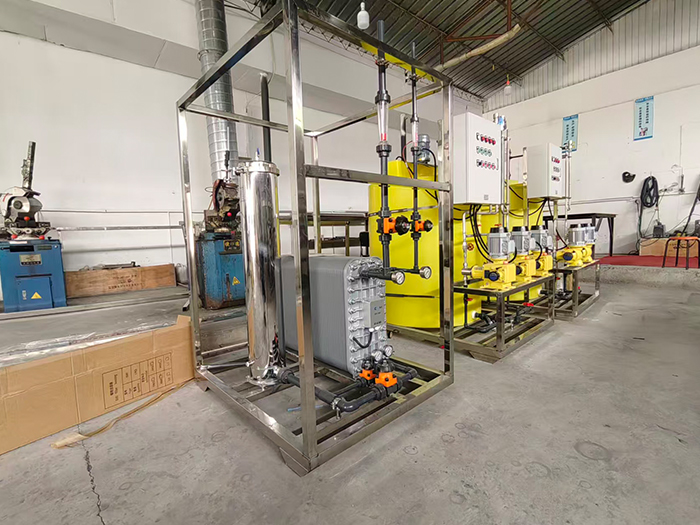
Yuan LaiEDIThe ultra-pure water equipment uses electro-deionization technology.EDIElectrodeionization is a water purification method that combines the dual advantages of electrodialysis and ion exchange. It does not require acid-base chemical regeneration and can continuously and stably prepare high-purity ultrapure water. Under the action of a direct current electric field, ion separation in water is completed. At the same time, water is electrolyzed to generate hydrogen ions and hydroxide ions, achieving automatic regeneration of the resin without the need to stop the machine for manual regeneration. The pre-treatment combined with reverse osmosis can prevent oxidized substances from damaging the resin, ensuring stable effluent quality and widely meeting the high-standard water usage requirements of various industries.
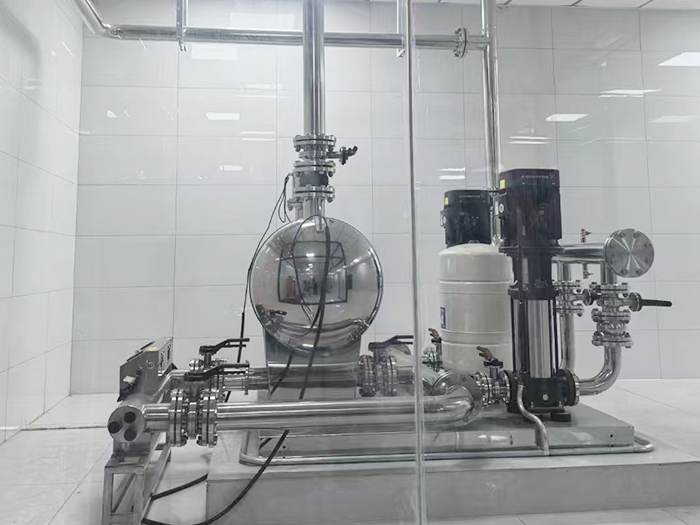
The non-negative pressure water supply equipment can be directly connected to the municipal water supply network, making full use of the residual pressure of the original network for superimposed water supply. Fully enclosed operation does not require the construction of a domestic water tank, eliminating secondary pollution. Intelligent variable frequency voltage stabilization, energy-saving, quiet and easy installation, it is the preferred equipment for secondary water supply in high-rise residential buildings and commercial buildings.
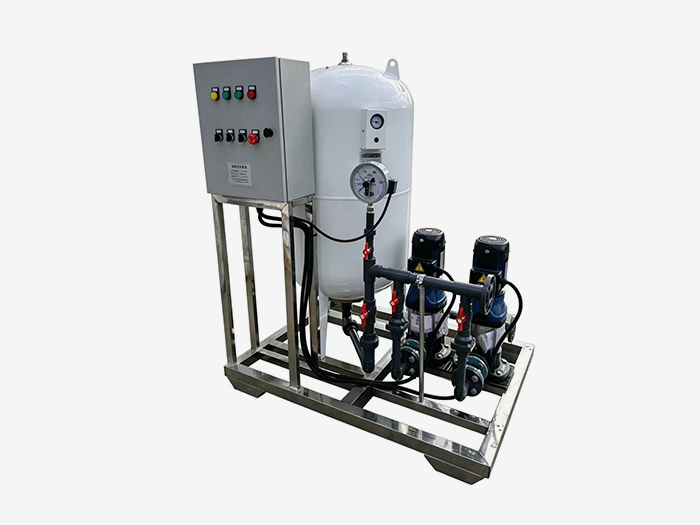
Constant pressure water supply equipment is widely used in central air conditioning, floor heating, industrial closed-loop water circulation, and boiler systems. It integrates automatic pressure stabilization, automatic water replenishment, automatic exhaust, pressure relief and buffering functions. It stabilizes the pressure in the pipeline network, eliminates abnormal sounds caused by air blockage, and prevents damage from negative pressure and water shortage in the pipeline. It is an essential supporting equipment for HVAC and circulating water systems.











 Landline:+86 010 59792055
Landline:+86 010 63780188
 Mobile:+86 13910114728
 Email:bjyuanlai@163.com
 Email:Wanda Plaza, Fengke Road, Fengtai District, BeijingBseat6Courtyard No.3Building No.7layer708
Yuanlai Homepage Softened water equipment Reverse osmosis pure water equipment Water supply equipment Engineering case Technical service Enter Yuanlai Site map
Softened water equipment Reverse osmosis pure water equipment Water purification equipment Water supply equipment Automatic dosing equipment High-purity water (ultra-pure water) equipment Wholesale of water treatment accessories
Electric power industry Petrochemical industry The electronic semiconductor industry The photovoltaic new energy industry Pharmaceuticals & Biochemical Engineering School research units Food and beverage industry Enterprises and public institutions
Reverse osmosis membrane Star-counting pump Fleck Valve Runxin Valve Instruments and meters Ultrafiltration membrane Softening resin Resin tank
