Bookmark this site Online message 中文站Welcome to the official website of Beijing Yuanlai Water Treatment Equipment Co., LTD.!
Service Hotline
+86 010 59792055 / +86 13910114728

Analysis of the Working Principle of Boiler Softened Water Equipment and the Causes of excessive water hardness
The commonly used boiler softened water system consists of three parts: the controller section, the cation resin exchange section and the salt section(Sodium ion)Regeneration part. Cation exchange technology is the working principle of the boiler soft water system. Beijing Yuanlai Boiler softening water equipment is mainly applied to steam boilers, steam generators, coal-fired heating furnaces and water exchange heating boilers, etc.
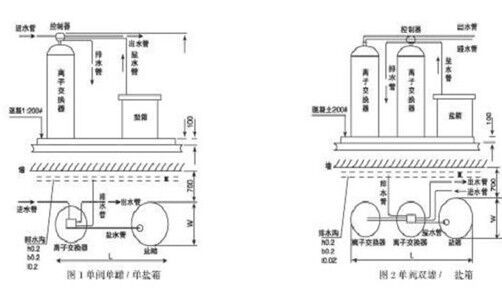
The working principle of boiler water softening equipment
Since the hardness of water is mainly formed and represented by calcium and magnesium, cation exchange resins are generally used(Water softener)Take the waterCa2+,Mg2+(The main components that form scale)Replace it out and let it enter the resinCa2+,Mg2+The increase, resin removalCa2+,Mg2+Its efficiency gradually decreases. When the resin has absorbed a certain amount of calcium and magnesium ions, it undergoes regeneration. The regeneration process involves flushing the resin layer with brine from the salt tank to displace the hardness ions on the resin and discharge them out of the tank with the regeneration waste liquid. Thus, the resin regains its softening exchange function. The hardness of water is mainly formed and represented by calcium and magnesium. The principle of sodium ion exchange softening treatment is to pass the raw water through sodium-type cation exchange resin to reduce the hardness components in the waterCa2+,Mg2+In the resinNa+Exchange with each other, thereby adsorbing substances in waterCa2+,Mg2+Soften the water.
Analysis of the Reasons for Excessive Hardness of softened Water in Boiler Softened Water Equipment(1)
1The sampling port of the soft water equipment was tested as qualified, but the water hardness in the soft water tank exceeded the standard. The reasons for this phenomenon are as follows:
AThe regeneration cycle is set too high or the flowmeter malfunctions cause inaccurate measurement, resulting in the resin not being regenerated in time when it should be regenerated, and thus the excess water is injected into the soft water tank.
BThe forward wash time is too short, causing some of the waste brine that should have been washed away during the forward wash to be carried into the soft water tank.
Analysis of the Reasons for Excessive Hardness of softened Water in Boiler Softened Water Equipment(2)
2There is a large amount of gas in the resin tank. This gas may come from the presence of gas in the feed water or the air check valve not closing tightly during the slow wash process.
aNo large grains of non-iodized salt were used.
bInternal leakage of the control valve: When there is internal leakage of a general control valve, it often occurs that both the soft water port and the waste water port discharge water simultaneously. However, for64Dor74AIn this series, internal leakage may occur through small holes on the ceramic moving plate. If it is this kind of internal leakage, qualified soft water can be detected at the wastewater outlet when in the positive flushing position, but the hardness of the soft water exceeds the standard when it is transferred to the operating position.
Analysis of the Reasons for Excessive Hardness of softened Water in Boiler Softened Water Equipment(3)
3Multiple tests were conducted at the sampling port of the soft water equipment, all of which were found to be substandard. This situation was discussed separately as the initial water test hardness exceeding the standard for newly installed soft water equipment and the hardness exceeding the standard for in-use soft water equipment.
AThe reasons for the hardness of the newly installed soft water equipment exceeding the standard during the first water test:
a At the junction of the pipe and the control valveOIf the conical sealing ring has not formed a seal, the following should be inspected at this time:
Whether the length of the pipe is sufficient and whether the outer diameter meets the requirements.
Did you forget to install it?OShaped sealing ring.
OCheck if the sealing ring is damaged.
b The pipe is damaged and has cracks.
c Water supplyTDSThe ratio of the value to the height of the resin layer is too large.
d Water supplyTDSThe ratio of the value to the resin exchange capacity is too large.
e The inlet and outlet are connected in reverse.
B The reasons for the excessive hardness of soft water in use by soft water equipment:
a Water supplyTDSThe ratio of the value to the height of the resin layer or the resin exchange capacity is too large. Compared with the initial water test of the new resin, the water supply is treated with a soft water equipmentTDSThe value requirements are stricter when the height of the resin layer is1.5The total hardness of the meter is13mmol/LWater supplyTDSvalue≥900mg/LWhen doing so, ensure the hardness of the soft water≤0.03mmol/LIt will be rather difficult.
b The reduction of resin exchange capacity caused by resin poisoning and aging. The excessive hardness of soft water caused by this reason is a gradual process, not a sudden and obvious over-limit.
c There is too little salt in the salt tank. When the water level in the salt tank is normal but the height of the salt is less than that of the water1/3At that time, the brine absorbed in the middle and later stages of the brine absorption process is very likely to be unsaturated, resulting in the brine concentration diluted by the jet injector being lower than the regeneration requirements, which affects the regeneration effect.
d The total water volume in the salt tank is too low. Our experience is that in the resin tank, every100LThe amount of water required in the salt tank for resin is approximately35-40LIf the standard is too low, it will lead to insufficient regeneration.
e The salt water inhalation is too slow. Within the normal time, sufficient salt water cannot be inhaled. The reasons are as follows:
The water supply pressure is too low.
The upper and lower water distribution areas are severely clogged with silt and other debris.
Poor drainage of wastewater caused by deformation or bending of the wastewater hose.
There are too many impurities in the resin layer.
There is a leakage point on the salt suction pipe, which causes air to be sucked in.
There is a foreign object in the jet injector.
The air check valve malfunctioned, closing prematurely or getting clogged.
The selection of the jet injector is too small.
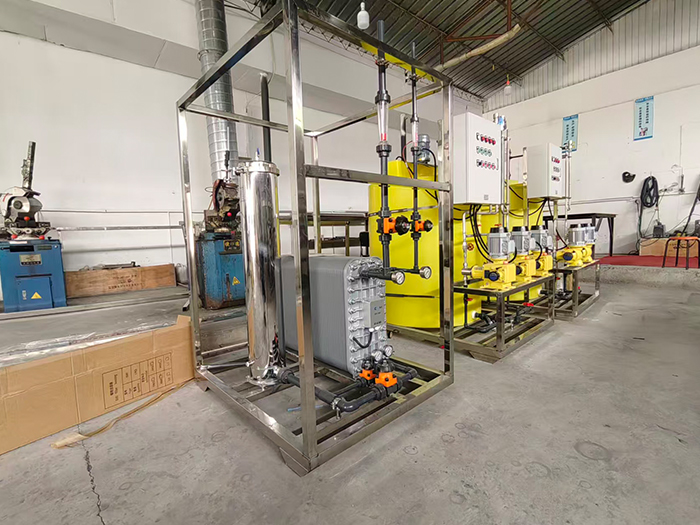
Yuan LaiEDIThe ultra-pure water equipment uses electro-deionization technology.EDIElectrodeionization is a water purification method that combines the dual advantages of electrodialysis and ion exchange. It does not require acid-base chemical regeneration and can continuously and stably prepare high-purity ultrapure water. Under the action of a direct current electric field, ion separation in water is completed. At the same time, water is electrolyzed to generate hydrogen ions and hydroxide ions, achieving automatic regeneration of the resin without the need to stop the machine for manual regeneration. The pre-treatment combined with reverse osmosis can prevent oxidized substances from damaging the resin, ensuring stable effluent quality and widely meeting the high-standard water usage requirements of various industries.
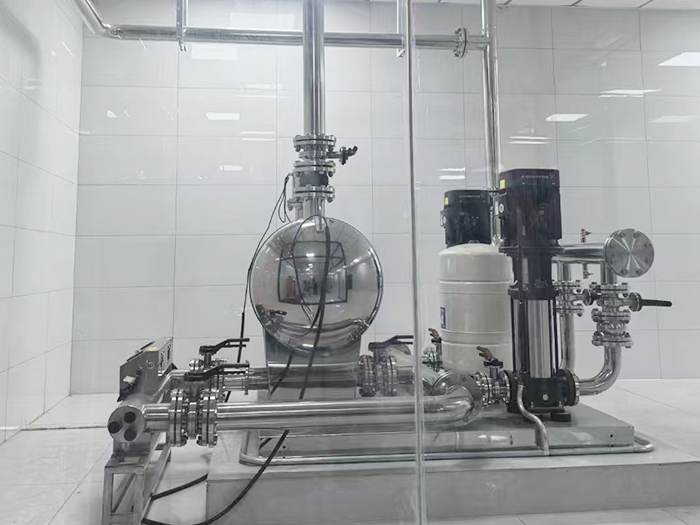
The non-negative pressure water supply equipment can be directly connected to the municipal water supply network, making full use of the residual pressure of the original network for superimposed water supply. Fully enclosed operation does not require the construction of a domestic water tank, eliminating secondary pollution. Intelligent variable frequency voltage stabilization, energy-saving, quiet and easy installation, it is the preferred equipment for secondary water supply in high-rise residential buildings and commercial buildings.
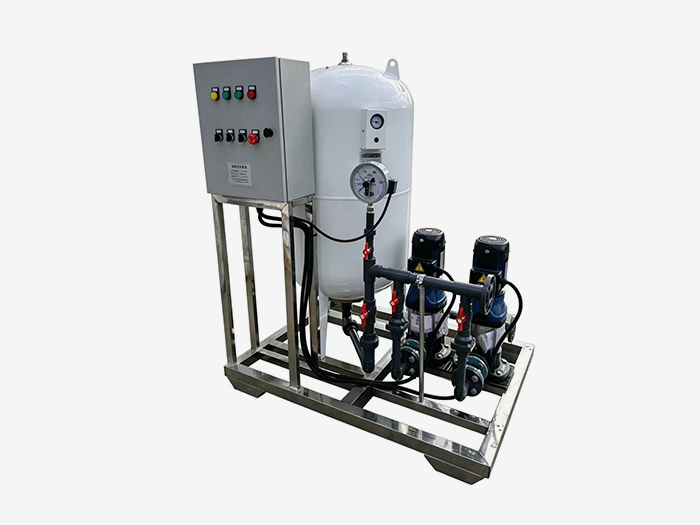
Constant pressure water supply equipment is widely used in central air conditioning, floor heating, industrial closed-loop water circulation, and boiler systems. It integrates automatic pressure stabilization, automatic water replenishment, automatic exhaust, pressure relief and buffering functions. It stabilizes the pressure in the pipeline network, eliminates abnormal sounds caused by air blockage, and prevents damage from negative pressure and water shortage in the pipeline. It is an essential supporting equipment for HVAC and circulating water systems.











 Landline:+86 010 59792055
Landline:+86 010 63780188
 Mobile:+86 13910114728
 Email:bjyuanlai@163.com
 Email:Wanda Plaza, Fengke Road, Fengtai District, BeijingBseat6Courtyard No.3Building No.7layer708
Yuanlai Homepage Softened water equipment Reverse osmosis pure water equipment Water supply equipment Engineering case Technical service Enter Yuanlai Site map
Softened water equipment Reverse osmosis pure water equipment Water purification equipment Water supply equipment Automatic dosing equipment High-purity water (ultra-pure water) equipment Wholesale of water treatment accessories
Electric power industry Petrochemical industry The electronic semiconductor industry The photovoltaic new energy industry Pharmaceuticals & Biochemical Engineering School research units Food and beverage industry Enterprises and public institutions
Reverse osmosis membrane Star-counting pump Fleck Valve Runxin Valve Instruments and meters Ultrafiltration membrane Softening resin Resin tank
