Bookmark this site Online message 中文站Welcome to the official website of Beijing Yuanlai Water Treatment Equipment Co., LTD.!
Service Hotline
+86 010 59792055 / +86 13910114728

Application process of one-in-use and one-standby water softening equipment
The application process analysis of the one-in-use and one-standby softening water equipment: The pretreatment system of industrial water supply treatment involves multiple processes. Generally, electrodialysis, reverse osmosis, ion exchange and other treatment processes are regarded as the main processes. To ensure the safe and economical operation of these main processes, the raw water needs to be treated to the influent water quality indicators allowed by these water treatment devices. In engineering, we often refer to the water quality before entering the main process
Details >Production process of water softening equipment
The standard working process of fully automatic water softening equipment mainly includes five steps: working (sometimes called water production, the same below), backwashing, salt absorption (regeneration), slow rinsing (replacement), and fast rinsing. All the processes of different water softening equipment are very similar. However, due to the differences in actual processes or control requirements, there may be some additional procedures. Any water softening equipment based on sodium ion exchange is developed on the basis of these five processes (among which, fully automatic water softening equipment will add a brine recharging process). Backwashing of fully automatic water softening equipment: After working for a period of time, the softening equipment will intercept a lot of impurities brought by the raw water on the upper part of the resin. Only after removing these impurities can the ion exchange resin be exposed and the regeneration effect be guaranteed. The backwashing process is when water washes from the bottom of the resin
Details >Installation and Operation Manual for Fully Automatic Water Softener
I. Basic environment and conditions suitable for this type of equipment: Inlet pressure of tap water: 0.2MPa-0.6MPa; Working temperature: 2℃-50℃; Hardness of raw water: ≤ Soft water hardness of 10mmol/L: ≤ 0.03mmol/L Power supply: 220V/50HZ Regeneration method: Co-current regeneration is the main method (some models use counter-current regeneration). Process system layout form: Single tank softening or parallel connection of softeners in two or more tanks. Resin model: 001. 7 Strong acid styrene type cation exchange resin. Ii. Installation and Start-up of water Softener 1. The water softener should be installed on a solid and level ground. The distance from the drainage ditch should be as short as possible. It should be more than 3 meters away from heat sources such as boilers and must not be close to acidic water
Details >Introduction, explanation and precautions of water purifiers
With the rapid development of modern industry, water pollution incidents keep emerging. The traditional tap water treatment process has long been unable to meet people's requirements for the treatment process of healthy drinking water. The traditional method of boiling water cannot remove harmful substances such as heavy metals, arsenic compounds, fluorides and nitrites from tap water. It is even more powerless against organic pollutants in tap water (such as pesticides, herbicides, synthetic detergents, etc.). Many people in society who are concerned about drinking water health have begun to consider installing household water purifiers (water treatment equipment) to safeguard the drinking water health of themselves and their families. When these people strolled around the market, they found that there were a wide variety of brands. The salespeople were even exaggerating their own water purifiers and belittling other brands to nothing, leaving even more consumers confused. Under the
Details >The workflow of softened water treatment
The working principle is that since the hardness of water is mainly formed and represented by calcium and magnesium, cation exchange resin (water softener) is generally used to replace Ca2+ and Mg2+ (the main components of scale) in water. As the amount of Ca2+ and Mg2+ in the resin increases, the efficiency of the resin in removing Ca2+ and Mg2+ gradually decreases. When the resin has absorbed a certain amount of calcium and magnesium ions, it undergoes regeneration. The regeneration process involves flushing the resin layer with brine from the salt tank to displace the hardness ions on the resin and discharge them out of the tank with the regeneration waste liquid. Thus, the resin regains its softening exchange function. Since the hardness of water is mainly formed and represented by calcium and magnesium, the principle of sodium ion exchange softening treatment is to pass the raw water through sodium-type cation exchange resin
Details >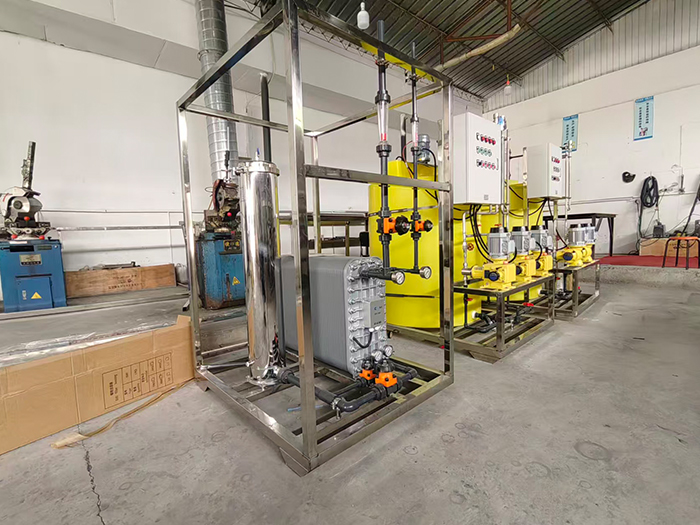
Yuan LaiEDIThe ultra-pure water equipment uses electro-deionization technology.EDIElectrodeionization is a water purification method that combines the dual advantages of electrodialysis and ion exchange. It does not require acid-base chemical regeneration and can continuously and stably prepare high-purity ultrapure water. Under the action of a direct current electric field, ion separation in water is completed. At the same time, water is electrolyzed to generate hydrogen ions and hydroxide ions, achieving automatic regeneration of the resin without the need to stop the machine for manual regeneration. The pre-treatment combined with reverse osmosis can prevent oxidized substances from damaging the resin, ensuring stable effluent quality and widely meeting the high-standard water usage requirements of various industries.
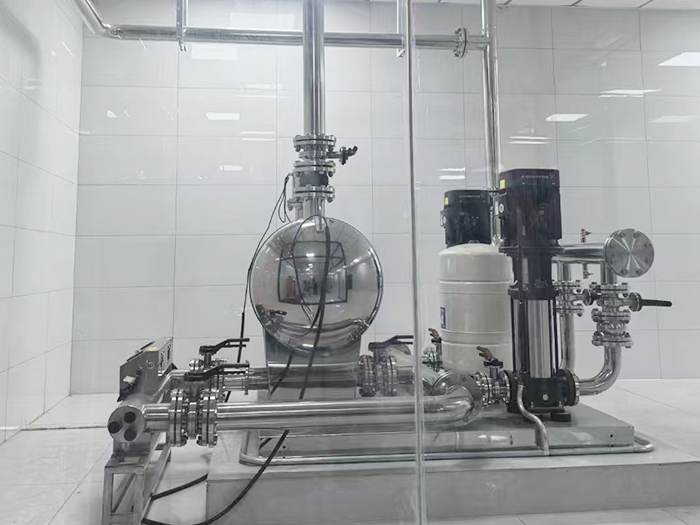
The non-negative pressure water supply equipment can be directly connected to the municipal water supply network, making full use of the residual pressure of the original network for superimposed water supply. Fully enclosed operation does not require the construction of a domestic water tank, eliminating secondary pollution. Intelligent variable frequency voltage stabilization, energy-saving, quiet and easy installation, it is the preferred equipment for secondary water supply in high-rise residential buildings and commercial buildings.
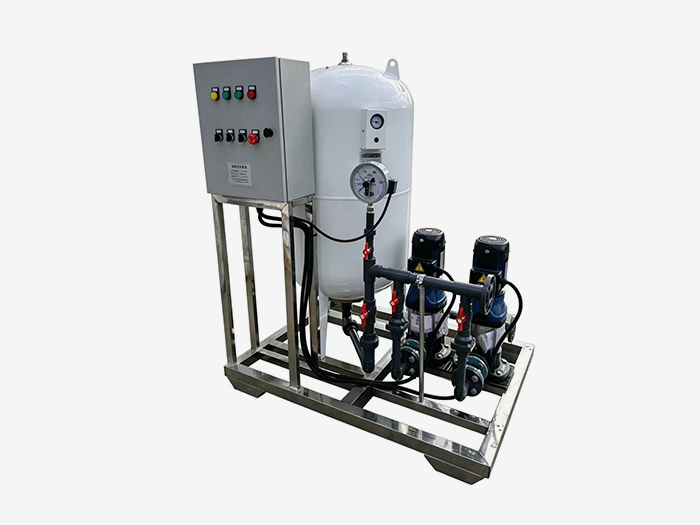
Constant pressure water supply equipment is widely used in central air conditioning, floor heating, industrial closed-loop water circulation, and boiler systems. It integrates automatic pressure stabilization, automatic water replenishment, automatic exhaust, pressure relief and buffering functions. It stabilizes the pressure in the pipeline network, eliminates abnormal sounds caused by air blockage, and prevents damage from negative pressure and water shortage in the pipeline. It is an essential supporting equipment for HVAC and circulating water systems.











 Landline:+86 010 59792055
Landline:+86 010 63780188
 Mobile:+86 13910114728
 Email:bjyuanlai@163.com
 Email:Wanda Plaza, Fengke Road, Fengtai District, BeijingBseat6Courtyard No.3Building No.7layer708
Yuanlai Homepage Softened water equipment Reverse osmosis pure water equipment Water supply equipment Engineering case Technical service Enter Yuanlai Site map
Softened water equipment Reverse osmosis pure water equipment Water purification equipment Water supply equipment Automatic dosing equipment High-purity water (ultra-pure water) equipment Wholesale of water treatment accessories
Electric power industry Petrochemical industry The electronic semiconductor industry The photovoltaic new energy industry Pharmaceuticals & Biochemical Engineering School research units Food and beverage industry Enterprises and public institutions
Reverse osmosis membrane Star-counting pump Fleck Valve Runxin Valve Instruments and meters Ultrafiltration membrane Softening resin Resin tank
