Bookmark this site Online message 中文站Welcome to the official website of Beijing Yuanlai Water Treatment Equipment Co., LTD.!
Service Hotline
+86 010 59792055 / +86 13910114728

The workflow of softened water treatment
The working principle is that since the hardness of water is mainly formed and represented by calcium and magnesium, cation exchange resin (water softener) is generally used to replace Ca2+ and Mg2+ (the main components of scale) in water. As the amount of Ca2+ and Mg2+ in the resin increases, the efficiency of the resin in removing Ca2+ and Mg2+ gradually decreases. When the resin has absorbed a certain amount of calcium and magnesium ions, it undergoes regeneration. The regeneration process involves flushing the resin layer with brine from the salt tank to displace the hardness ions on the resin and discharge them out of the tank with the regeneration waste liquid. Thus, the resin regains its softening exchange function. Since the hardness of water is mainly formed and represented by calcium and magnesium, the principle of sodium ion exchange softening treatment is to pass the raw water through sodium-type cation exchange resin
Details >Boiler softened water solution
Solution for softening water equipment in thermal power plant boilers: Water treatment for thermal power plant boilers is of great significance. Untreated water quality can lead to residual hardness within the boiler and a tendency for scaling. Scaling inside the boiler will reduce heat transfer efficiency, increase fuel consumption and thus raise operating costs. High water hardness can cause problems for boilers in thermal power plants. The water used in boilers in thermal power plants has not been treated and has high hardness, which is prone to form scale, resulting in uneven heating of the boiler and damage to metals. Reduce thermal efficiency and increase energy consumption. Cleaning scale requires the addition of chemicals, which increases operating costs, leads to metal corrosion and easily deteriorates the quality of steam. Technical parameters for water treatment in thermal power plant boilers: Effluent hardness: ≤" 0.03mmol/L. Inlet pressure: 0.2 -0.5Mpa. water
Details >Construction Plan for Ecological Environment Monitoring Network (Full Text)
Recently, The General Office of the State Council issued the "Plan for the Construction of the Ecological Environment Monitoring Network". The following is the full content of this plan: Ecological environment monitoring is the foundation of ecological environment protection and an important support for the construction of ecological civilization. At present, China's ecological environment monitoring network has prominent problems such as incomplete coverage of scope and elements, inconsistent construction planning, standards and norms, and information release, low level of informatization and sharing, loose integration of monitoring and supervision, and the need to improve the quality of monitoring data. These issues are difficult to meet the needs of ecological civilization construction and have affected the scientificity, reliability and government credibility of monitoring. Accelerate the construction of an ecological and environmental monitoring network. I. General Requirements (1) Guiding Ideology. To implement the spirit of the 18th National Congress of the Communist Party of China and the Second, Third and Fourth Plenary Sessions of th
Details >What is the relationship between the alkalinity of water and its hardness?
The hardness of water refers to the total concentration of Ca2+ and Mg2+ in water, which includes carbonate hardness (calcium and magnesium ions precipitated in the form of carbonic acid through heating, also known as temporary hardness) and non-carbonate hardness (the part of calcium and magnesium ions that cannot precipitate after heating, also known as hardness). The alkalinity of water refers to the content of substances in water that can accept [H+] ions to undergo neutralization reactions with strong acids. The substances that produce alkalinity in water mainly include carbonate alkalinity produced by carbonates, bicarbonate alkalinity produced by bicarbonates, and hydroxide alkalinity produced by the presence of hydroxides. Therefore, alkalinity represents the total amount of carbonate ions, bicarbonate ions, hydroxide ions and some other weak acid salts in water. The aqueous solutions of these salts are all alkaline, but
Details >Nationwide pilot projects are being launched - water treatment combined with the PPP model
PPP stands for Public— Private— The abbreviation "Partnership" refers to a partner-like cooperative relationship formed between the government and private organizations, where the government and social entities (enterprises) establish a "partnership". "Benefit sharing, risk sharing, and full-process cooperation";" The community relationship enables the cooperating parties to achieve more favorable results than expected when acting alone. PPP has two major characteristics: capital conservation and efficiency improvement. Broadly speaking, PPP emphasizes a kind of cooperative relationship and encompasses many business models, such as BOT, TOT, ROT, BOO, PFI, etc. The PPP model has been applied to water treatment, and currently, many regions in China have begun to pilot the PPP model. The National Development and Reform Commission reported that Fujian Xiamen
Details >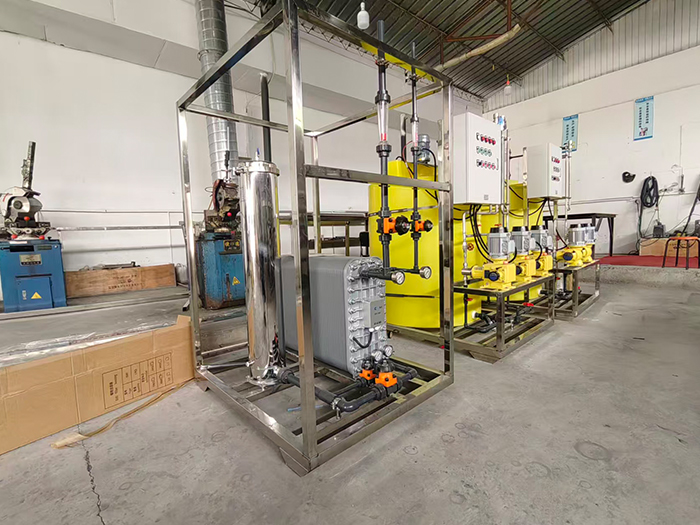
Yuan LaiEDIThe ultra-pure water equipment uses electro-deionization technology.EDIElectrodeionization is a water purification method that combines the dual advantages of electrodialysis and ion exchange. It does not require acid-base chemical regeneration and can continuously and stably prepare high-purity ultrapure water. Under the action of a direct current electric field, ion separation in water is completed. At the same time, water is electrolyzed to generate hydrogen ions and hydroxide ions, achieving automatic regeneration of the resin without the need to stop the machine for manual regeneration. The pre-treatment combined with reverse osmosis can prevent oxidized substances from damaging the resin, ensuring stable effluent quality and widely meeting the high-standard water usage requirements of various industries.
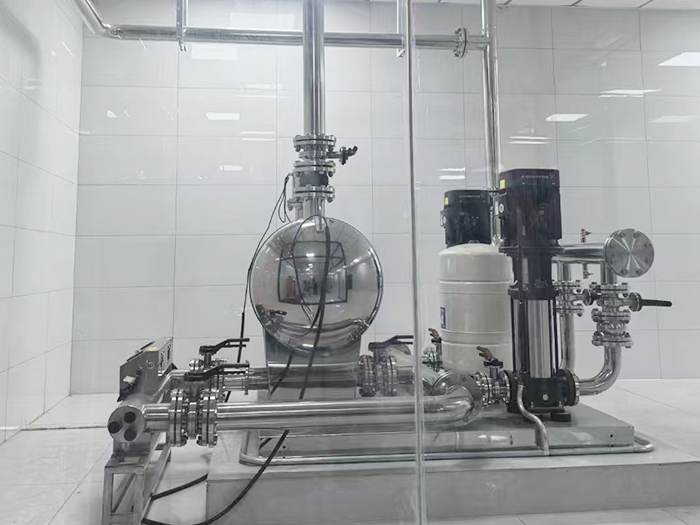
The non-negative pressure water supply equipment can be directly connected to the municipal water supply network, making full use of the residual pressure of the original network for superimposed water supply. Fully enclosed operation does not require the construction of a domestic water tank, eliminating secondary pollution. Intelligent variable frequency voltage stabilization, energy-saving, quiet and easy installation, it is the preferred equipment for secondary water supply in high-rise residential buildings and commercial buildings.
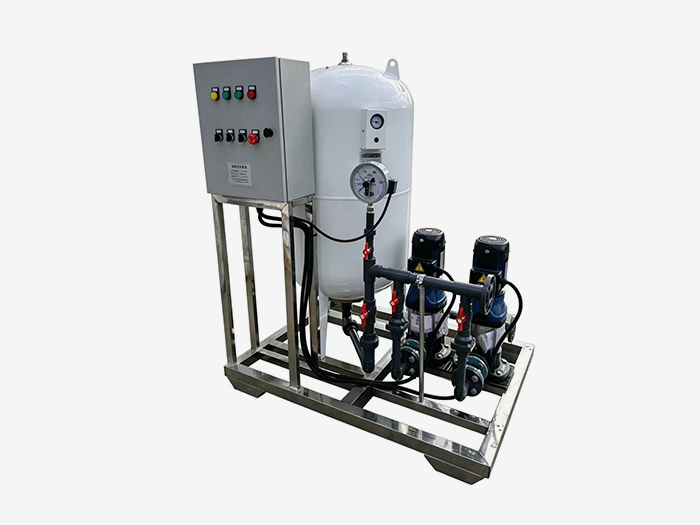
Constant pressure water supply equipment is widely used in central air conditioning, floor heating, industrial closed-loop water circulation, and boiler systems. It integrates automatic pressure stabilization, automatic water replenishment, automatic exhaust, pressure relief and buffering functions. It stabilizes the pressure in the pipeline network, eliminates abnormal sounds caused by air blockage, and prevents damage from negative pressure and water shortage in the pipeline. It is an essential supporting equipment for HVAC and circulating water systems.











 Landline:+86 010 59792055
Landline:+86 010 63780188
 Mobile:+86 13910114728
 Email:bjyuanlai@163.com
 Email:Wanda Plaza, Fengke Road, Fengtai District, BeijingBseat6Courtyard No.3Building No.7layer708
Yuanlai Homepage Softened water equipment Reverse osmosis pure water equipment Water supply equipment Engineering case Technical service Enter Yuanlai Site map
Softened water equipment Reverse osmosis pure water equipment Water purification equipment Water supply equipment Automatic dosing equipment High-purity water (ultra-pure water) equipment Wholesale of water treatment accessories
Electric power industry Petrochemical industry The electronic semiconductor industry The photovoltaic new energy industry Pharmaceuticals & Biochemical Engineering School research units Food and beverage industry Enterprises and public institutions
Reverse osmosis membrane Star-counting pump Fleck Valve Runxin Valve Instruments and meters Ultrafiltration membrane Softening resin Resin tank
