Bookmark this site Online message 中文站Welcome to the official website of Beijing Yuanlai Water Treatment Equipment Co., LTD.!
Service Hotline
+86 010 59792055 / +86 13910114728

What are the reasons for the substandard softened water output from the boiler? How to solve it!
The definition of boiler softened water equipment: The fully automatic boiler softened water equipment is a pre-treatment device for raw water launched in response to the formation of scale in boilers. It removes calcium and magnesium ions from the raw water as well as the elements that cause scale formation in boilers. 2. Working principle of Fully automatic boiler water softening equipment Since the hardness of water is mainly formed and represented by calcium and magnesium, cation exchange resin (water softener) is generally used to replace Ca2+ and Mg2+ (the main components of scale) in water. As the amount of Ca2+ and Mg2+ in the resin increases, the efficiency of the resin in removing Ca2+ and Mg2+ gradually decreases. When the resin has absorbed a certain amount of calcium and magnesium ions, it undergoes regeneration. The regeneration process involves flushing the resin layer with brine from the salt tank to displace the hardness ions on the resin and then proceed with the regeneration
Details >What are the causes of scaling on reverse osmosis membranes? How can it be prevented?
1. Introduction to Membrane Fouling: During the operation of a reverse osmosis system, suspended substances, dissolved substances, and microbial reproduction in the feed water can all cause membrane element fouling. The pretreatment of the reverse osmosis system should remove these pollutants as much as possible and minimize the possibility of membrane element contamination. The types of pollutants, their causes and treatment methods are detailed in Table 1. Generally, the main causes of membrane fouling are as follows: 1) The new device pipeline contains oil substances, residues from welding the pipeline, and dust, which were not cleaned thoroughly before membrane installation; 2) The design of the pretreatment device is unreasonable; 3) The amount of chemicals added is incorrect or the equipment malfunctions; 4) Human operational error; 5) When the operation was stopped, low-pressure flushing was not performed or the flushing conditions were not controlled correctly; 6) Water supply
Details >How to clean reverse osmosis water treatment equipment?
How to clean reverse osmosis water treatment equipment? Under normal operating conditions of the equipment, reverse osmosis membranes may also be contaminated by inorganic scale, colloids, microorganisms, metal oxides, etc. The deposition of these substances on the membrane surface can cause a decrease in the output or desalination rate of the reverse osmosis device in the water purification equipment, an increase in pressure difference, and even irreparable damage to the membrane. Therefore, in order to restore good water permeability and desalination performance, Chemical cleaning of the membrane is then required. General equipment needs to be cleaned every 3 to 12 months. If it has to be cleaned once a month, it indicates that the enterprise should pre-treat the system and adjust the operating parameters. If cleaning is required every 1 to 3 months, the operational level of the equipment needs to be enhanced. It is rather difficult to determine whether the pretreatment system needs to be improved. Under the condition that the equipment is operating normally
Details >Installation steps for water softening equipment
Basic requirements for the installation steps of water softening equipment: Water quality: 5 millimoles per liter; Water pressure: 3-4 kilograms. I. Installation parts: 1. Align the direction and position of the equipment properly. 2. Connect the lower water distributor and the pipe with PVC glue, place them in the middle of the bottom of the exchange tank, and cut the upper part of the pipe horizontally at the top of the exchange tank opening. 3. Seal the top of the pipe with transparent adhesive tape. 4. Put the cation resin into the exchange tank and remove the transparent adhesive tape. 5. Install the upper water distributor on the controller, then connect it to the pipe and tighten it. After the internal installation of the equipment is completed, bypass valves and union joints should be installed at the inlet and outlet for maintenance, and a water detector should be installed on the outlet pipe. So as to test the water quality. 7. Valves should not be installed at the sewage outlet. 8. Salt absorption
Details >What are the pretreatment methods?
Water pretreatment is the primary treatment carried out before water purification to achieve good purification results. Since most water contains a large amount of impurities such as sediment, clay, organic matter, and microorganisms, the presence of these impurities seriously affects the purification effect of water quality. To reduce or remove them, these methods are called pretreatment. Due to multiple factors such as different water quality conditions in various regions, different uses of pure water machines, different production capacities, and different system designs, the filter materials used in pretreatment also vary. The main purpose is to create a good environment before purifying water. The main methods of pretreatment include: 1. Sedimentation: It is treated by natural sedimentation methods with large volume and low flow rate, such as sedimentation tanks. 2. Filtration: The water to be treated flows through a specially filtered water system
Details >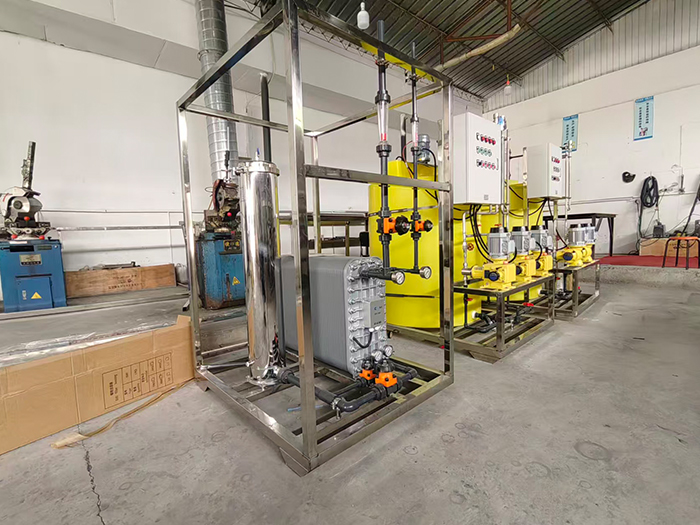
Yuan LaiEDIThe ultra-pure water equipment uses electro-deionization technology.EDIElectrodeionization is a water purification method that combines the dual advantages of electrodialysis and ion exchange. It does not require acid-base chemical regeneration and can continuously and stably prepare high-purity ultrapure water. Under the action of a direct current electric field, ion separation in water is completed. At the same time, water is electrolyzed to generate hydrogen ions and hydroxide ions, achieving automatic regeneration of the resin without the need to stop the machine for manual regeneration. The pre-treatment combined with reverse osmosis can prevent oxidized substances from damaging the resin, ensuring stable effluent quality and widely meeting the high-standard water usage requirements of various industries.
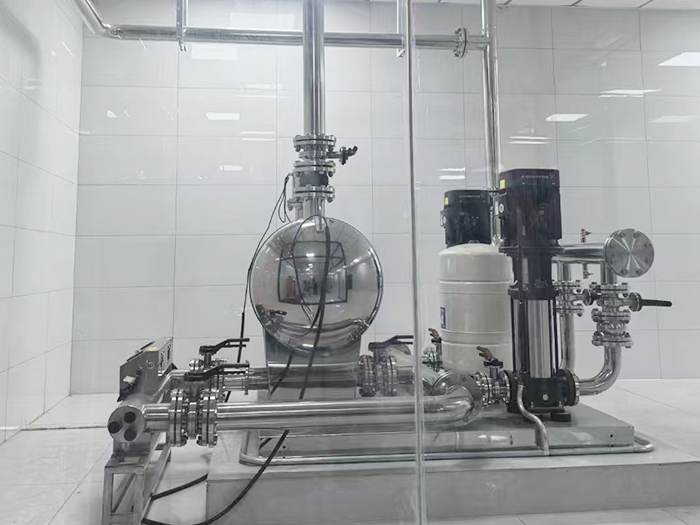
The non-negative pressure water supply equipment can be directly connected to the municipal water supply network, making full use of the residual pressure of the original network for superimposed water supply. Fully enclosed operation does not require the construction of a domestic water tank, eliminating secondary pollution. Intelligent variable frequency voltage stabilization, energy-saving, quiet and easy installation, it is the preferred equipment for secondary water supply in high-rise residential buildings and commercial buildings.
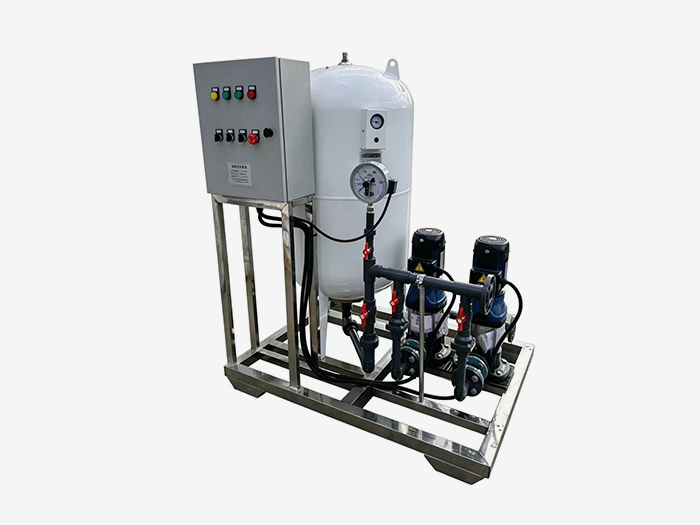
Constant pressure water supply equipment is widely used in central air conditioning, floor heating, industrial closed-loop water circulation, and boiler systems. It integrates automatic pressure stabilization, automatic water replenishment, automatic exhaust, pressure relief and buffering functions. It stabilizes the pressure in the pipeline network, eliminates abnormal sounds caused by air blockage, and prevents damage from negative pressure and water shortage in the pipeline. It is an essential supporting equipment for HVAC and circulating water systems.











 Landline:+86 010 59792055
Landline:+86 010 63780188
 Mobile:+86 13910114728
 Email:bjyuanlai@163.com
 Email:Wanda Plaza, Fengke Road, Fengtai District, BeijingBseat6Courtyard No.3Building No.7layer708
Yuanlai Homepage Softened water equipment Reverse osmosis pure water equipment Water supply equipment Engineering case Technical service Enter Yuanlai Site map
Softened water equipment Reverse osmosis pure water equipment Water purification equipment Water supply equipment Automatic dosing equipment High-purity water (ultra-pure water) equipment Wholesale of water treatment accessories
Electric power industry Petrochemical industry The electronic semiconductor industry The photovoltaic new energy industry Pharmaceuticals & Biochemical Engineering School research units Food and beverage industry Enterprises and public institutions
Reverse osmosis membrane Star-counting pump Fleck Valve Runxin Valve Instruments and meters Ultrafiltration membrane Softening resin Resin tank
