Bookmark this site Online message 中文站Welcome to the official website of Beijing Yuanlai Water Treatment Equipment Co., LTD.!
Service Hotline
+86 010 59792055 / +86 13910114728

1, Introduction to Membrane Fouling
When the reverse osmosis system is in operation, suspended substances, dissolved substances and microbial reproduction in the feed water can all cause membrane element contamination. The pretreatment of the reverse osmosis system should remove these pollutants as much as possible and minimize the possibility of membrane element contamination. The types of pollutants, their causes and treatment methods are shown in the table1. Generally, the main causes of membrane fouling are as follows:
1)The new device's pipeline contains oil substances, residues from welding the pipeline, and dust, which were not cleaned thoroughly before installing the membrane.
2)The design of the pretreatment device is unreasonable.
3) The amount of added chemicals is incorrect or the equipment malfunctions;
4)Human operational error;
5)When the operation was stopped, low-pressure flushing was not performed or the flushing conditions were not controlled correctly.
6)Changes occur in the water supply source or water quality.
The accumulation of pollutants can be known through parameters such as operating pressure, pressure difference increase, and changes in desalination rate recorded in daily data. When membrane elements are contaminated, their performance is often restored through cleaning. There are generally two ways of cleaning: physical cleaning (rinsing) and chemical cleaning (rinsing). Physical cleaning (rinsing) does not change the nature of the contaminants. It uses force to remove the contaminants from the membrane elements and restore their performance. Chemical cleaning involves the use of corresponding chemical agents to alter the composition or properties of contaminants and restore the performance of membrane elements. For particulate pollutants with low adsorption capacity, certain effects can be achieved through flushing (physical cleaning). However, for pollutants with strong adsorption capacity to the membrane, such as biological contamination, it is difficult to achieve the expected results by flushing. Chemical cleaning should be adopted for contaminants that are difficult to remove by flushing. To enhance the effectiveness of chemical cleaning, it is necessary to analyze the contamination status before cleaning to determine the type of contamination. When the types of pollutants are understood, choosing the appropriate cleaning agent can appropriately restore the performance of the membrane element.
2, Physical cleaning (rinsing
2.1 The function of rinsing
Flushing involves using low-pressure and high-flow feed water to flush the membrane elements, removing contaminants or deposits adhering to the membrane surface
2.2.1 Flushing flow rate
When the device is in operation, particulate contaminants gradually accumulate on the surface of the membrane. If the flow rate during flushing is the same as or slightly lower than that during water production, it will be very difficult to flush contaminants out of the membrane elements. Therefore, a higher flow rate should be used during flushing than during normal operation. Typically, the flushing flow rate within a single pressure vessel is:
1)8Inch membrane element7.2 - 12 m3/h;
2)4Inch membrane element1.8 - 2.5 m3/h.
2.2.2 Flushing pressure
During normal high-pressure operation, pollutants are pressed towards the membrane surface, causing contamination. So during the rinsing process, if the same high pressure is used, contaminants will still be pressed onto the membrane surface, and the cleaning effect will not be ideal. Therefore, during the flushing process, it is necessary to increase the horizontal shear force as much as possible through low pressure and high flow rate to flush out the contaminants from the membrane elements. Pressure is usually controlled at0.3 MPaBelow. If there0.3 MPaWhen it is difficult to achieve a certain flow rate, the inlet water pressure should be controlled as much as possible, with the standard of no water production or minimal water production. The general inlet water pressure should not be greater than0.4 MPa.
2.2.3 The frequency of flushing
When conditions permit, it is recommended to flush the system frequently. Increasing the number of rinses is more effective than conducting a single chemical cleaning. It is generally recommended that the frequency of rinsing be once a day. According to specific circumstances, users can control the frequency of flushing by themselves.
2.3 The steps of rinsing
① Stop the operation of the reverse osmosis system. Slowly reduce the operating pressure and stop the device. If the device is stopped quickly, the pressure will drop sharply, which may cause damage to the pipelines, pressure vessels and membrane elements.
② Regulating valve
- Fully open the concentrated water valve;
- Close the water inlet valve;
- Fully open the water production valve (if the water production valve is not fully open during operation).
If the production water valve is closed incorrectly, the membrane elements in the rear part of the pressure vessel may experience back pressure of the production water, causing damage to the membrane elements.
③ Flushing operation
- Start the low-pressure flushing pump;
- While slowly opening the inlet water pump, check the flow rate of the concentrated water flowmeter.
- Adjust the water inlet valve to regulate the flow rate and pressure to reach the standard values.
- 10 - 15After a few minutes, slowly close the water inlet valve and stop the water pump.
④ Resume normal operation. Start the system according to the daily startup procedure.
2.4 Precautions
① The inlet water pump needs to meet the inlet water flow rate during normal operation = Water production flow rate + The concentrated water flow rate should be taken into account, while also considering meeting the requirements of the flushing flow rate.
② Concentration...... Scaling is the solid precipitation of insoluble salts on the membrane surface. The way to prevent it is to ensure that the insoluble salts do not exceed the saturation limit
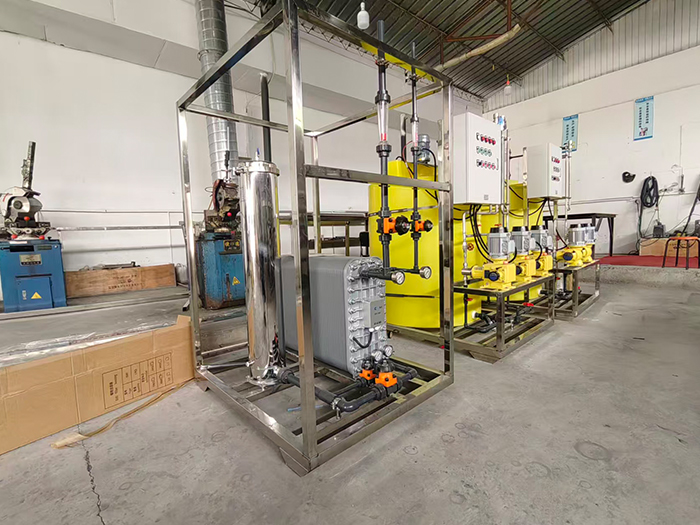
Yuan LaiEDIThe ultra-pure water equipment uses electro-deionization technology.EDIElectrodeionization is a water purification method that combines the dual advantages of electrodialysis and ion exchange. It does not require acid-base chemical regeneration and can continuously and stably prepare high-purity ultrapure water. Under the action of a direct current electric field, ion separation in water is completed. At the same time, water is electrolyzed to generate hydrogen ions and hydroxide ions, achieving automatic regeneration of the resin without the need to stop the machine for manual regeneration. The pre-treatment combined with reverse osmosis can prevent oxidized substances from damaging the resin, ensuring stable effluent quality and widely meeting the high-standard water usage requirements of various industries.
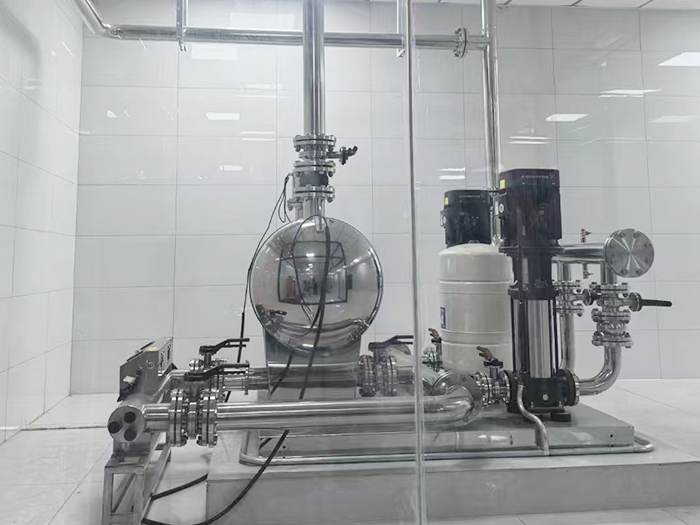
The non-negative pressure water supply equipment can be directly connected to the municipal water supply network, making full use of the residual pressure of the original network for superimposed water supply. Fully enclosed operation does not require the construction of a domestic water tank, eliminating secondary pollution. Intelligent variable frequency voltage stabilization, energy-saving, quiet and easy installation, it is the preferred equipment for secondary water supply in high-rise residential buildings and commercial buildings.
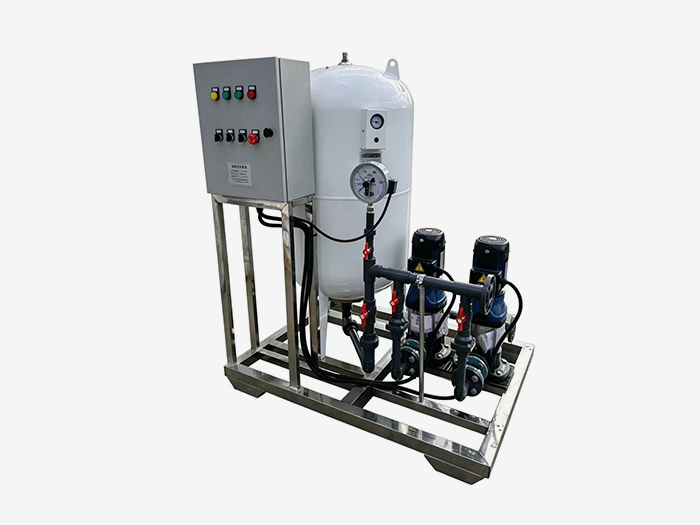
Constant pressure water supply equipment is widely used in central air conditioning, floor heating, industrial closed-loop water circulation, and boiler systems. It integrates automatic pressure stabilization, automatic water replenishment, automatic exhaust, pressure relief and buffering functions. It stabilizes the pressure in the pipeline network, eliminates abnormal sounds caused by air blockage, and prevents damage from negative pressure and water shortage in the pipeline. It is an essential supporting equipment for HVAC and circulating water systems.











 Landline:+86 010 59792055
Landline:+86 010 63780188
 Mobile:+86 13910114728
 Email:bjyuanlai@163.com
 Email:Wanda Plaza, Fengke Road, Fengtai District, BeijingBseat6Courtyard No.3Building No.7layer708
Yuanlai Homepage Softened water equipment Reverse osmosis pure water equipment Water supply equipment Engineering case Technical service Enter Yuanlai Site map
Softened water equipment Reverse osmosis pure water equipment Water purification equipment Water supply equipment Automatic dosing equipment High-purity water (ultra-pure water) equipment Wholesale of water treatment accessories
Electric power industry Petrochemical industry The electronic semiconductor industry The photovoltaic new energy industry Pharmaceuticals & Biochemical Engineering School research units Food and beverage industry Enterprises and public institutions
Reverse osmosis membrane Star-counting pump Fleck Valve Runxin Valve Instruments and meters Ultrafiltration membrane Softening resin Resin tank
