Bookmark this site Online message 中文站Welcome to the official website of Beijing Yuanlai Water Treatment Equipment Co., LTD.!
Service Hotline
+86 010 59792055 / +86 13910114728

What is the electrical conductivity of water? (1) Electrical conductivity is due to the presence of various dissolved salts in water, which exist in the form of ions. When a pair of electrodes are inserted into water and an electric current is applied, under the influence of the electric field, the charged ions move in a certain direction. The anions in the water move towards the anode and the cations move towards the cathode, thus enabling the water solution to conduct electricity. The degree of strength or weakness of water's electrical conductivity is called the conductance S (or conductance). The unit of electrical conductivity is: us/cm. Conductivity reflects the amount of salt in water and is an important indicator of water purity. The purer the water is and the less salt it contains, the greater its resistance and the smaller its conductivity. ④ Ultrapure water can hardly conduct electricity. How to remove the electrical conductivity in water (reduce the electrical conductivity in water)? What equipment is needed? ⑵ Reverse osmosis is to go
Details >Group Profile: Beijing Kanpur Environmental Protection Technology Co., LTD. Canpure Japan (Japan) Canpure Equipment International, Inc. provides innovative membrane products and membrane technologies to the global water treatment market. Kanpur Membrane products and membrane technologies have adopted multiple techniques, thus achieving excellent performance and achievements.
Details >Today, Beijing has witnessed the first snowfall of 2015. After a night of cold wind, the ambient temperature has dropped to 1℃. The boiler water softening equipment (water softener) has gradually become the main source of warmth for us. To ensure its continuous heating for us, it is necessary to have a further understanding of it. Below, we will introduce five working states of the water softening equipment (water softener) with pictures and text. The raw water of the softening water equipment enters the control valve through the water inlet, passes through the valve body from the upper part of the valve core, and then enters the tank from the top (or the outside of the resin tank pipe, the same below). Then, it passes downward through the resin layer (this is softening, and in purification, it is the carbon layer, etc., the same below), becoming softened water. It then flows through the return pipe of the lower distributor, upward through the valve body, and is discharged from the outlet of the softened water equipment after passing through the valve core. 2. The raw water for the salt absorption slow wash state softening water equipment enters from the water inlet
Details >What is the basis for judging the quality of softened water?
Softened water is closely related to our daily life and production. It is used in industries, catering, bathing, municipal heating, and manufacturing enterprises, etc. Softened water is generally produced through softened water equipment (water softeners). So, what is the basis for judging the quality of softened water? Let me introduce it to you all below. 1 When determining the electrical conductivity of water, the resistance value of water is related to its magnitude. A higher resistance value indicates poorer electrical conductivity, while a lower resistance value suggests better electrical conductivity. The magnitude of water's resistivity is related to the amount of salt in the water, the concentration of ions in the water, the charge number of ions, and the speed of ion movement. Therefore, the resistivity of pure water is very high, and that of ultrapure water is even higher. The purer the water, the greater its resistivity. 2 The electrical conductivity of water The water contains various dissolved salts and
Details >The regular working processes of five water softening devices (water softeners)
As time goes by, winter gradually approaches, and a very important heating device -; — Softening water equipment (water softener) can bring us warmth and help us withstand the cold winter. The process flow of water softening equipment (water softener) involves many aspects. Moreover, due to the different local water quality conditions and the different uses of water, the entire equipment process may vary. However, the procedures of all water softening equipment are very similar. All water softening equipment (softeners) that use sodium ion exchange as the basis for water treatment have developed from five process flows. Now let's introduce the regular working processes of these five water softening devices (water softeners). 1. The water production process involves raw water (hard water) passing through the control valve inlet and entering the resin tank filled with softening resin, then flowing through
Details >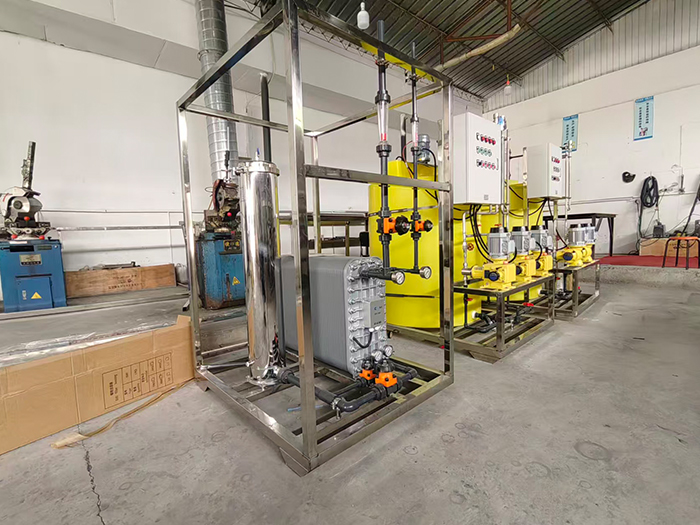
Yuan LaiEDIThe ultra-pure water equipment uses electro-deionization technology.EDIElectrodeionization is a water purification method that combines the dual advantages of electrodialysis and ion exchange. It does not require acid-base chemical regeneration and can continuously and stably prepare high-purity ultrapure water. Under the action of a direct current electric field, ion separation in water is completed. At the same time, water is electrolyzed to generate hydrogen ions and hydroxide ions, achieving automatic regeneration of the resin without the need to stop the machine for manual regeneration. The pre-treatment combined with reverse osmosis can prevent oxidized substances from damaging the resin, ensuring stable effluent quality and widely meeting the high-standard water usage requirements of various industries.
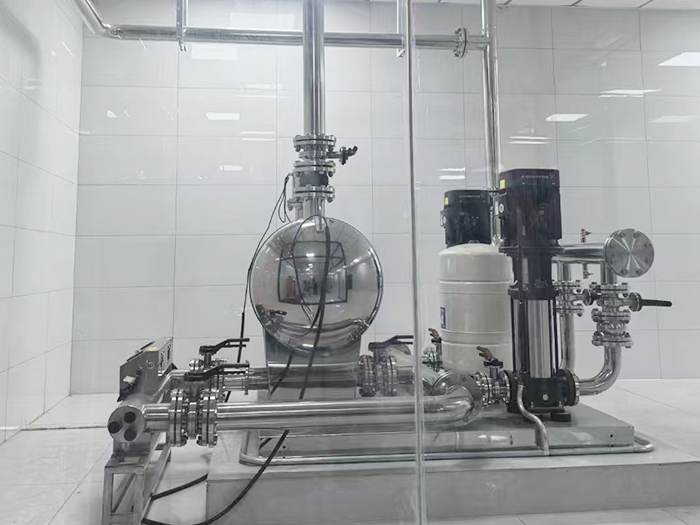
The non-negative pressure water supply equipment can be directly connected to the municipal water supply network, making full use of the residual pressure of the original network for superimposed water supply. Fully enclosed operation does not require the construction of a domestic water tank, eliminating secondary pollution. Intelligent variable frequency voltage stabilization, energy-saving, quiet and easy installation, it is the preferred equipment for secondary water supply in high-rise residential buildings and commercial buildings.
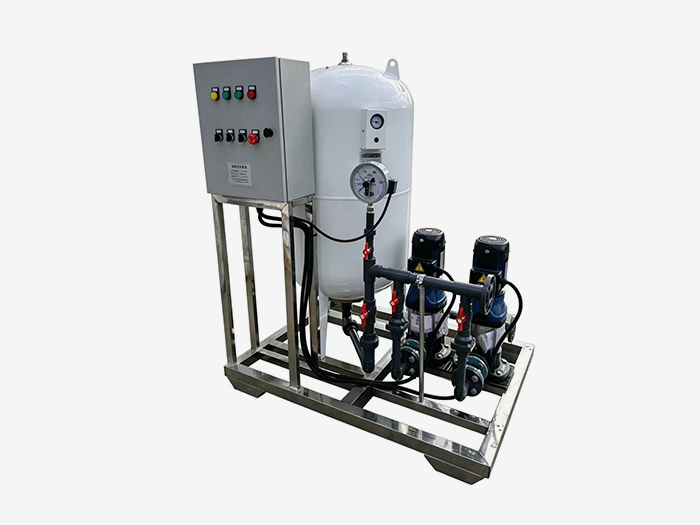
Constant pressure water supply equipment is widely used in central air conditioning, floor heating, industrial closed-loop water circulation, and boiler systems. It integrates automatic pressure stabilization, automatic water replenishment, automatic exhaust, pressure relief and buffering functions. It stabilizes the pressure in the pipeline network, eliminates abnormal sounds caused by air blockage, and prevents damage from negative pressure and water shortage in the pipeline. It is an essential supporting equipment for HVAC and circulating water systems.











 Landline:+86 010 59792055
Landline:+86 010 63780188
 Mobile:+86 13910114728
 Email:bjyuanlai@163.com
 Email:Wanda Plaza, Fengke Road, Fengtai District, BeijingBseat6Courtyard No.3Building No.7layer708
Yuanlai Homepage Softened water equipment Reverse osmosis pure water equipment Water supply equipment Engineering case Technical service Enter Yuanlai Site map
Softened water equipment Reverse osmosis pure water equipment Water purification equipment Water supply equipment Automatic dosing equipment High-purity water (ultra-pure water) equipment Wholesale of water treatment accessories
Electric power industry Petrochemical industry The electronic semiconductor industry The photovoltaic new energy industry Pharmaceuticals & Biochemical Engineering School research units Food and beverage industry Enterprises and public institutions
Reverse osmosis membrane Star-counting pump Fleck Valve Runxin Valve Instruments and meters Ultrafiltration membrane Softening resin Resin tank
