Bookmark this site Online message 中文站Welcome to the official website of Beijing Yuanlai Water Treatment Equipment Co., LTD.!
Service Hotline
+86 010 59792055 / +86 13910114728

Analysis of the Causes of Contamination of Polite Cation and Anion Exchange Resins
When the surface of the Polite ion exchange resin is covered with iron compounds or the exchange channels inside the resin are blocked by iron impurities, etc., the working exchange capacity and regeneration exchange capacity of the resin are significantly reduced, but the structure of the resin remains unchanged. This phenomenon is called the "iron" of the resin. "Poisoning" . "Causing perlite resin iron" "Poisoning" The main reasons are fourthly: 1. The water source is groundwater with a high iron content or surface water contaminated by iron. 2. The inlet pipe or the interior of the exchanger has been corroded, resulting in the formation of iron compounds. 3. The regenerant contains iron impurities. 4. The water contains large-molecule organic substances. The iron of the Perlite cation exchange resin "Poisoning" It generally only occurs in the process of softening water with salt as the regenerant, and there are mainly two situations. One is when iron is gelatinous
Details >The resin filling technology adopted by the fully automatic soft water equipment enables the resin to fully exert the ion exchange reaction and effectively prepare high-standard softened water. In the daily use of fully automatic water softening equipment, if the correct maintenance and upkeep measures are not taken, various problems will often be encountered. Here, we will introduce the reasons why the water hardness in the soft water tank exceeds the standard when the water quality is detected as qualified at the sampling port of the water softening equipment. 1. The regeneration cycle was set too high or the flowmeter malfunctioned, causing inaccurate measurement. As a result, the resin failed to regenerate in time when it should have been regenerated, leading to excessive water being injected into the soft water tank. 2. The forward wash time was too short, causing some of the waste brine that should have been washed away during the forward wash to be carried into the soft water tank. 3. Unstable water pressure in the water supply can cause insufficient water replenishment in the salt tank, insufficient salt absorption, and inadequate forward washing. Any one of these
Details >Application parameters of Beijing ultrasonic dedicated ultrapure water treatment
Overview of Pure Water Production by Ion Exchange Resin System: The ion exchange system is a traditional water treatment process that replaces various anions and cations in water through anion and cation exchange resins. By combining anion and cation exchange resins in different proportions, ion exchange cation bed systems, ion exchange anion bed systems, and ion exchange mixed bed systems can be formed The mixed bed system is usually used as the terminal process for producing ultrapure water and high-purity water after water treatment processes such as reverse osmosis. It is currently one of the irreplaceable means for preparing ultrapure water and high-purity water. The conductivity of its effluent can be lower than 1uS/cm, and the resistivity of the effluent can reach over 1MΩ.cm. According to different water qualities and usage requirements, the resistivity of the effluent can be controlled between 1 and 18MΩ.cm. It is widely applied in electronics, power, ultra-pure water, and chemical industries.
Details >The meanings of various indicators of raw water composition
The composition of raw water is an important basic data for determining the appropriate water treatment process, selecting a reasonable water quality treatment flow, using appropriate chemical agents and their dosages, and calculating water treatment equipment. (1) Salt content and total solids: 1) Salt content: The salts in water generally refer to dissolved solids that have dissociated into ionic states. The sum of the contents of anions and cations is called the salt content. The electrical conductivity of water is related to its salt content. 2) Total solids refer to the weight of substances remaining in the vessel after water evaporates at a certain temperature and is dried, including suspended solids (i.e., all residues retained on the filter) and dissolved solids (i.e., all residues passing through the filter). (2) Acidity: It refers to the content of acidic substances in water that can react with strong bases such as NaOH and KOH. These substances can be summarized into the following three categories: 1) They can all dissociate into hydrogen
Details >What are the reasons for the substandard softened water output from the boiler? How to solve it!
The definition of boiler softened water equipment: The fully automatic boiler softened water equipment is a pre-treatment device for raw water launched in response to the formation of scale in boilers. It removes calcium and magnesium ions from the raw water as well as the elements that cause scale formation in boilers. 2. Working principle of Fully automatic boiler water softening equipment Since the hardness of water is mainly formed and represented by calcium and magnesium, cation exchange resin (water softener) is generally used to replace Ca2+ and Mg2+ (the main components of scale) in water. As the amount of Ca2+ and Mg2+ in the resin increases, the efficiency of the resin in removing Ca2+ and Mg2+ gradually decreases. When the resin has absorbed a certain amount of calcium and magnesium ions, it undergoes regeneration. The regeneration process involves flushing the resin layer with brine from the salt tank to displace the hardness ions on the resin and then proceed with the regeneration
Details >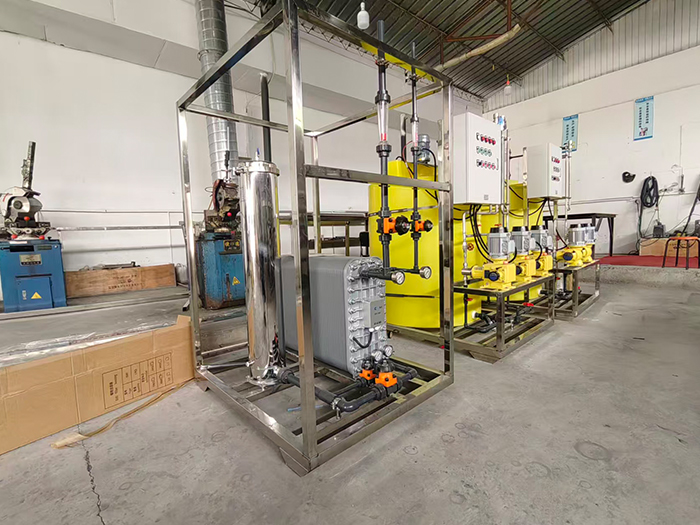
Yuan LaiEDIThe ultra-pure water equipment uses electro-deionization technology.EDIElectrodeionization is a water purification method that combines the dual advantages of electrodialysis and ion exchange. It does not require acid-base chemical regeneration and can continuously and stably prepare high-purity ultrapure water. Under the action of a direct current electric field, ion separation in water is completed. At the same time, water is electrolyzed to generate hydrogen ions and hydroxide ions, achieving automatic regeneration of the resin without the need to stop the machine for manual regeneration. The pre-treatment combined with reverse osmosis can prevent oxidized substances from damaging the resin, ensuring stable effluent quality and widely meeting the high-standard water usage requirements of various industries.
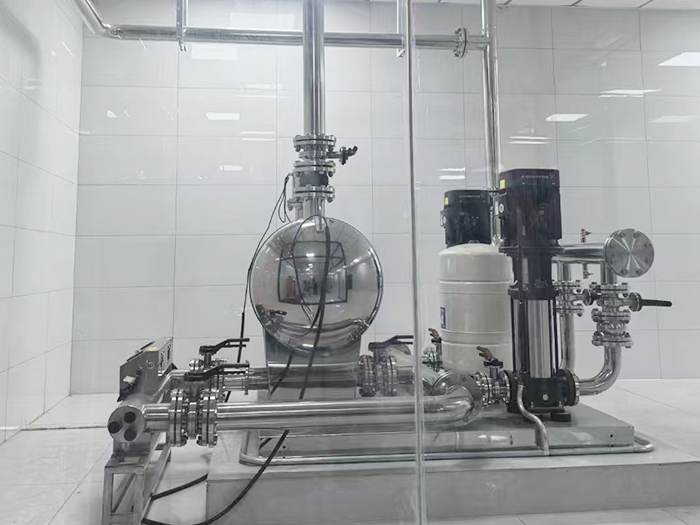
The non-negative pressure water supply equipment can be directly connected to the municipal water supply network, making full use of the residual pressure of the original network for superimposed water supply. Fully enclosed operation does not require the construction of a domestic water tank, eliminating secondary pollution. Intelligent variable frequency voltage stabilization, energy-saving, quiet and easy installation, it is the preferred equipment for secondary water supply in high-rise residential buildings and commercial buildings.
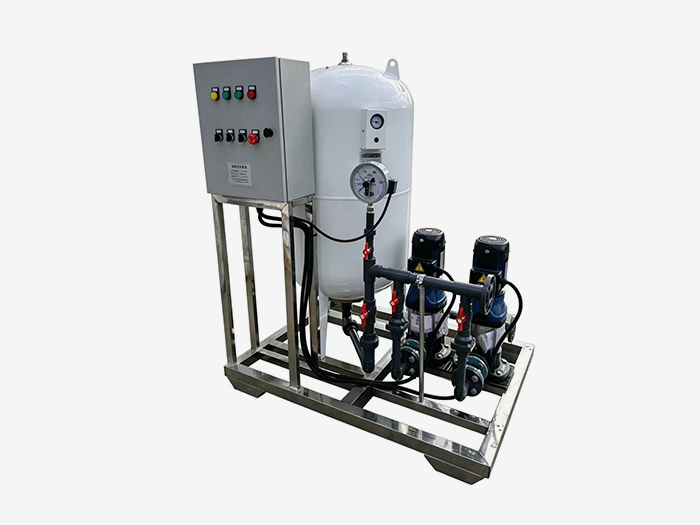
Constant pressure water supply equipment is widely used in central air conditioning, floor heating, industrial closed-loop water circulation, and boiler systems. It integrates automatic pressure stabilization, automatic water replenishment, automatic exhaust, pressure relief and buffering functions. It stabilizes the pressure in the pipeline network, eliminates abnormal sounds caused by air blockage, and prevents damage from negative pressure and water shortage in the pipeline. It is an essential supporting equipment for HVAC and circulating water systems.











 Landline:+86 010 59792055
Landline:+86 010 63780188
 Mobile:+86 13910114728
 Email:bjyuanlai@163.com
 Email:Wanda Plaza, Fengke Road, Fengtai District, BeijingBseat6Courtyard No.3Building No.7layer708
Yuanlai Homepage Softened water equipment Reverse osmosis pure water equipment Water supply equipment Engineering case Technical service Enter Yuanlai Site map
Softened water equipment Reverse osmosis pure water equipment Water purification equipment Water supply equipment Automatic dosing equipment High-purity water (ultra-pure water) equipment Wholesale of water treatment accessories
Electric power industry Petrochemical industry The electronic semiconductor industry The photovoltaic new energy industry Pharmaceuticals & Biochemical Engineering School research units Food and beverage industry Enterprises and public institutions
Reverse osmosis membrane Star-counting pump Fleck Valve Runxin Valve Instruments and meters Ultrafiltration membrane Softening resin Resin tank
