Bookmark this site Online message 中文站Welcome to the official website of Beijing Yuanlai Water Treatment Equipment Co., LTD.!
Service Hotline
+86 010 59792055 / +86 13910114728

When the surface of the Polite ion exchange resin is covered with iron compounds or the exchange channels inside the resin are blocked by iron impurities, etc., the working exchange capacity and regeneration exchange capacity of the resin are significantly reduced, but the structure of the resin remains unchanged. This phenomenon is called iron in the resin"Poisoning".
It causes perlite resin iron"Poisoning"The main reasons are as follows4Aspect:
1The water source is groundwater with a high iron content or surface water contaminated by iron.
2Iron compounds have been produced due to corrosion inside the inlet pipe or exchanger.
3The regenerant contains iron impurities.
4The water contains large-molecule organic substances.
The iron of Pellett cation exchange resin"Poisoning"It generally only occurs in the water softening process using table salt as the regenerant. There are mainly two situations. One is that when iron enters the sodium ion exchanger in the form of colloidal or suspended iron compounds, it is adsorbed by the resin and forms a layer of iron compound covering on the resin surface, preventing the ions in the water from effectively contacting the resin. The other is that ironFe2+The form enters the exchanger and undergoes an exchange reaction with the resin, therebyFe2+Occupying the exchange position, becauseFe2+It is very easy to be oxidized into high-valent iron compounds, which deposit inside the resin and clog the exchange channels.
Iron is produced in the Perlite anion resin"Poisoning"The main reasons are as follows: First, the purity of the alkali in the regenerated anion resin does not meet the prescribed standards. Especially when the liquid alkali contains a large amount of iron compounds, it is more likely to cause poisoning of the anion resin. Second, when the water contains large-molecule organic substances, it is easy to form chelates with iron(That is organic iron)It can undergo exchange reactions with strongly basic anion resins, accumulate at the positions of exchange groups, block the exchange channels of the resin, reduce the exchange capacity and regeneration capacity, lower the regeneration efficiency, increase the consumption of regenerant and cleaning water, and further lead to iron in the resin"Poisoning".
Identification methods for contamination of Polite cation and anion exchange resins
1Appearance color identification
Iron formation"Poisoning"The Polite resin, in terms of appearance, has a color that is transparent yellow(Cationic resin)Or milky white(Anion resin)It becomes significantly darker, and in severe cases, it even turns black.
2Experimental identification
The iron content of Perlite resin is determined by measuring the iron content in water"Poisoning"To a certain extent, this is a relatively accurate method.
The method is as follows:
will"Poisoning"Wash the Perlite resin with clean water and soak it in10%Regenerate approximately in the brine30minPour out the salt water and then use distilled water(Or demineralized water)Wash2~3Next, take out a portion of the resin and put it into a test tube or glass bottle, then add it6mol/LHydrochloric acid(The volume is approximately that of resin2times)Seal off the oscillation15minThen, take out the acid solution and inject it into another clean test tube, and drop in the saturated potassium ferrocyanide solution to form a Prussian blue color of varying shades from the test solution(Light blue, brown and black)Resin iron can be identified"Poisoning"The degree.
It should be noted that only the method of measuring the exchange capacity of the Perlite anion and cation exchange resin is used to determine whether the resin is iron"Poisoning"It is one-sided. This result is inaccurate because of iron"Poisoning"It merely reduces the working exchange capacity of the resin, but has almost no impact on the total exchange capacity.
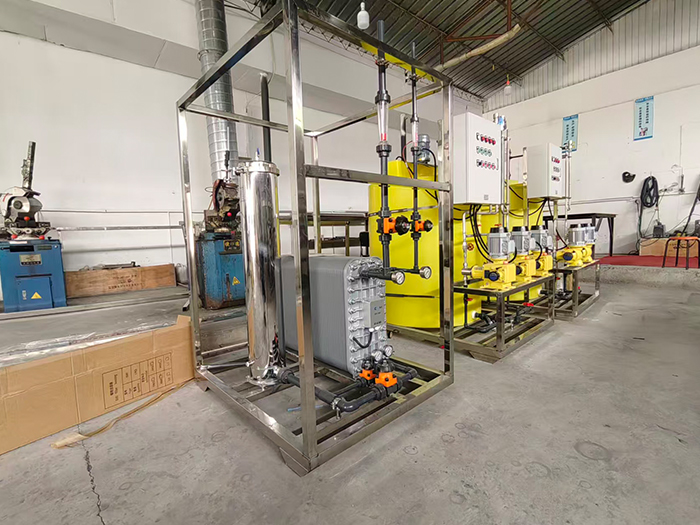
Yuan LaiEDIThe ultra-pure water equipment uses electro-deionization technology.EDIElectrodeionization is a water purification method that combines the dual advantages of electrodialysis and ion exchange. It does not require acid-base chemical regeneration and can continuously and stably prepare high-purity ultrapure water. Under the action of a direct current electric field, ion separation in water is completed. At the same time, water is electrolyzed to generate hydrogen ions and hydroxide ions, achieving automatic regeneration of the resin without the need to stop the machine for manual regeneration. The pre-treatment combined with reverse osmosis can prevent oxidized substances from damaging the resin, ensuring stable effluent quality and widely meeting the high-standard water usage requirements of various industries.
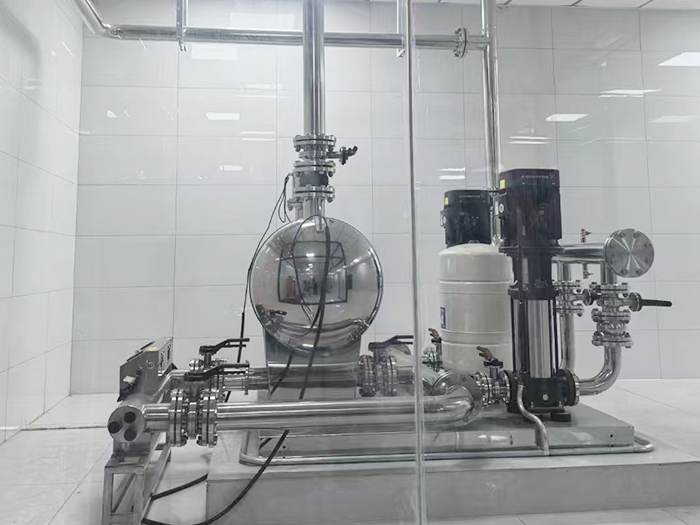
The non-negative pressure water supply equipment can be directly connected to the municipal water supply network, making full use of the residual pressure of the original network for superimposed water supply. Fully enclosed operation does not require the construction of a domestic water tank, eliminating secondary pollution. Intelligent variable frequency voltage stabilization, energy-saving, quiet and easy installation, it is the preferred equipment for secondary water supply in high-rise residential buildings and commercial buildings.
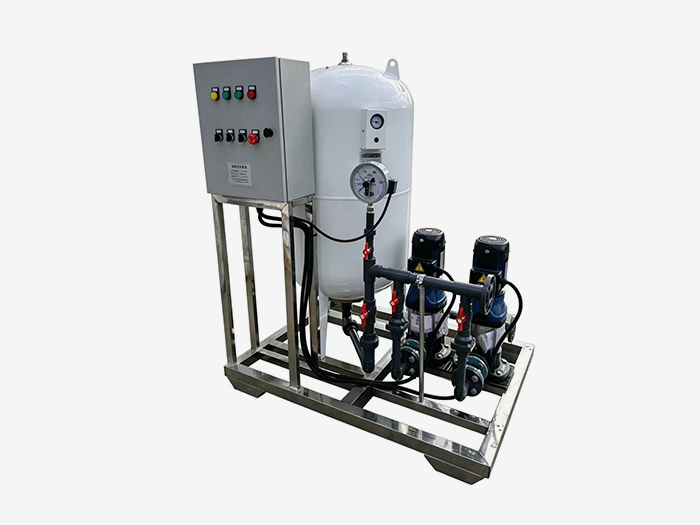
Constant pressure water supply equipment is widely used in central air conditioning, floor heating, industrial closed-loop water circulation, and boiler systems. It integrates automatic pressure stabilization, automatic water replenishment, automatic exhaust, pressure relief and buffering functions. It stabilizes the pressure in the pipeline network, eliminates abnormal sounds caused by air blockage, and prevents damage from negative pressure and water shortage in the pipeline. It is an essential supporting equipment for HVAC and circulating water systems.











 Landline:+86 010 59792055
Landline:+86 010 63780188
 Mobile:+86 13910114728
 Email:bjyuanlai@163.com
 Email:Wanda Plaza, Fengke Road, Fengtai District, BeijingBseat6Courtyard No.3Building No.7layer708
Yuanlai Homepage Softened water equipment Reverse osmosis pure water equipment Water supply equipment Engineering case Technical service Enter Yuanlai Site map
Softened water equipment Reverse osmosis pure water equipment Water purification equipment Water supply equipment Automatic dosing equipment High-purity water (ultra-pure water) equipment Wholesale of water treatment accessories
Electric power industry Petrochemical industry The electronic semiconductor industry The photovoltaic new energy industry Pharmaceuticals & Biochemical Engineering School research units Food and beverage industry Enterprises and public institutions
Reverse osmosis membrane Star-counting pump Fleck Valve Runxin Valve Instruments and meters Ultrafiltration membrane Softening resin Resin tank
