Bookmark this site Online message 中文站Welcome to the official website of Beijing Yuanlai Water Treatment Equipment Co., LTD.!
Service Hotline
+86 010 59792055 / +86 13910114728

Installation and commissioning of Fleck 5600 water softener
The installation of the water softener should be carried out by connecting the inlet, outlet and sewage outlet pipes as recommended by the manufacturer, and should comply with relevant pipeline specifications. Manually turn the control valve of the water softener to the working position to allow water to flow into the resin tank. When the water flow stops, open the inlet and outlet until all the air in the pipeline is discharged, and then close the inlet and outlet. Note: You can manually rotate the knob at the front of the control valve to set it to different regeneration positions until the water softener is displayed at the desired position. 2. Manually turn the control valve to the backwash position to allow water to flow out of the drain for 3 or 4 minutes. Example figure: 3. Remove the rear cover plate of the control valve. Example Figure: 4. Ensure that the amount of salt used is set as recommended by the manufacturer. If necessary, set the amount of salt according to the setting manual. Manually turn the control valve to the brine refilling position to fill the void with water
Details >Water quality standards for softened water equipment
Beijing Yuanlai Water Treatment Equipment Co., Ltd. provides (water quality standards for softened water equipment) : 1. The resistance value of water is related to the size of its resistance value when determining the electrical conductivity of water. A higher resistance value indicates poorer electrical conductivity, while a lower resistance value suggests better electrical conductivity. According to Ohm's Law, when the water temperature is constant, the resistance value R of water is inversely proportional to the vertical cross-sectional area F of the electrode and directly proportional to the distance L between the electrodes. The magnitude of water's resistivity is related to the amount of salt in the water, the concentration of ions in the water, the charge number of ions, and the speed of ion movement. Therefore, the resistivity of pure water is very high, and that of ultrapure water is even higher. The purer the water, the greater its resistivity. 2. The electrical conductivity of water is due to the presence of various dissolved salts in water, which exist in the form of ions. When a pair of electricity is inserted into water
Details >Common units used in water treatment
1. The length of 1 inch (inche) = 25.4 mm (mm) 1 feet (ft) = 30.480 centimeters (cm) = 0.3048 meters (m) & have spent 2. Area: 1 square foot (ft2)=0.093 square meters (m2)1 square meter (m2)=10.75 square feet (ft2) 3. Volume: 1 cubic foot (ft3)=28.317 liters (L)=0.028317 cubic meters (m ³); 1 Gallon (gal, Gallon)=4.54 liters (L) 4. Weight: 1 Pound (lb, Pound)=0.455 kilograms (Kg); 1 grain =64.8 milligrams (mg); 1 kilograin =0.0648 kilograms. 5. Flow
Details >Protective measures for the shutdown of ultra-pure water treatment equipment
Ultra-pure water treatment equipment takes the combination of RO membrane technology and EDI membrane block technology as its core technology. This new technology emerged in the late 1960s. Before that, enterprises that wanted to use ultra-pure water all prepared it through mixed bed technology. Once this kind of ultrapure water preparation equipment was introduced to the market, it was favored by the vast majority of enterprises. During the use of this equipment, there are many precautions. The following introduces the measures adopted for the shutdown protection of ultrapure water treatment equipment. When the ultrapure water treatment equipment is not in operation for a long time, relevant protective measures need to be implemented. In the case of long-term non-use of the equipment, the reverse osmosis membrane elements and precision filter elements in the equipment should be protected. Long-term shutdown usually refers to a shutdown of more than ten days. The reverse osmosis membrane elements need to use a concentration of one percent
Details >Precautions for the operation of water treatment equipment in winter
In winter, the temperature is low. Water treatment equipment operating under such low-temperature conditions is prone to problems. Now let's talk about the precautions for the operation of water treatment equipment in winter. In winter, due to the extremely low temperature, the water supply pipes are prone to burst. If the water supply pipes freeze and crack or the water supply is cut off, try not to use the equipment (especially the tankless machine) during the water outage. Close the inlet ball valve. After the water comes back, first open the tap water to discharge the sediment and other substances in the water supply pipes, and then open the inlet ball valve to let the reverse osmosis water purification equipment work. Avoid the entry of impurities such as sand and rust mixed in during the construction process into the reverse osmosis equipment, which may cause the filter element to be clogged in a short time and lead to a decrease in water production flow. The water production volume decreases, and the lower the temperature, the greater the decline in water production flow. This is because the viscosity of water is affected by temperature, and the reverse osmosis membrane
Details >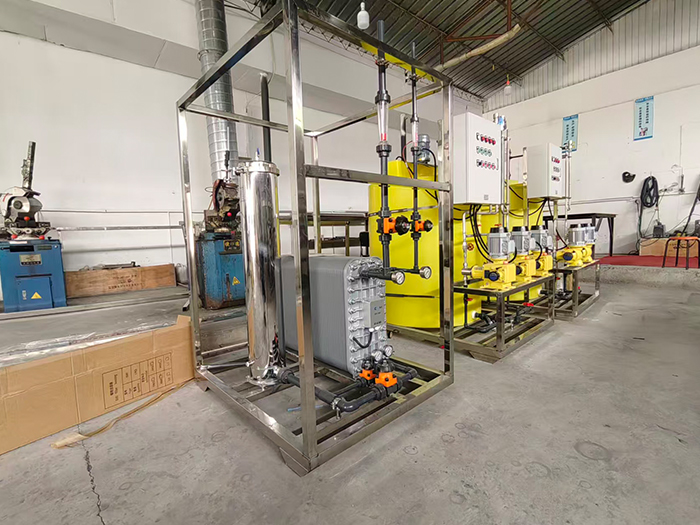
Yuan LaiEDIThe ultra-pure water equipment uses electro-deionization technology.EDIElectrodeionization is a water purification method that combines the dual advantages of electrodialysis and ion exchange. It does not require acid-base chemical regeneration and can continuously and stably prepare high-purity ultrapure water. Under the action of a direct current electric field, ion separation in water is completed. At the same time, water is electrolyzed to generate hydrogen ions and hydroxide ions, achieving automatic regeneration of the resin without the need to stop the machine for manual regeneration. The pre-treatment combined with reverse osmosis can prevent oxidized substances from damaging the resin, ensuring stable effluent quality and widely meeting the high-standard water usage requirements of various industries.
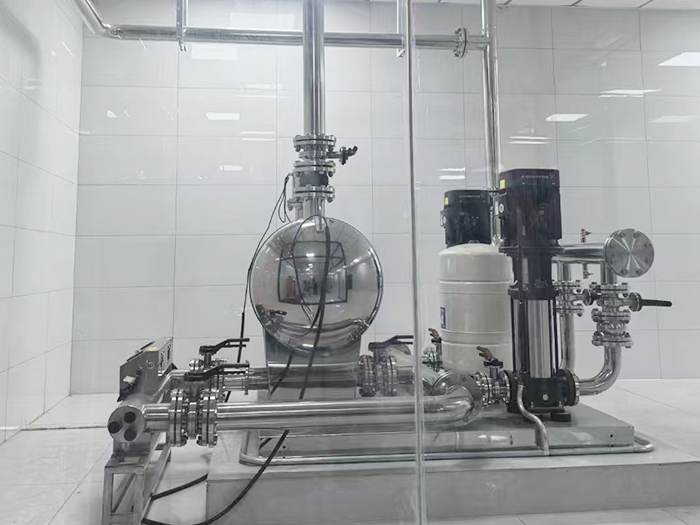
The non-negative pressure water supply equipment can be directly connected to the municipal water supply network, making full use of the residual pressure of the original network for superimposed water supply. Fully enclosed operation does not require the construction of a domestic water tank, eliminating secondary pollution. Intelligent variable frequency voltage stabilization, energy-saving, quiet and easy installation, it is the preferred equipment for secondary water supply in high-rise residential buildings and commercial buildings.
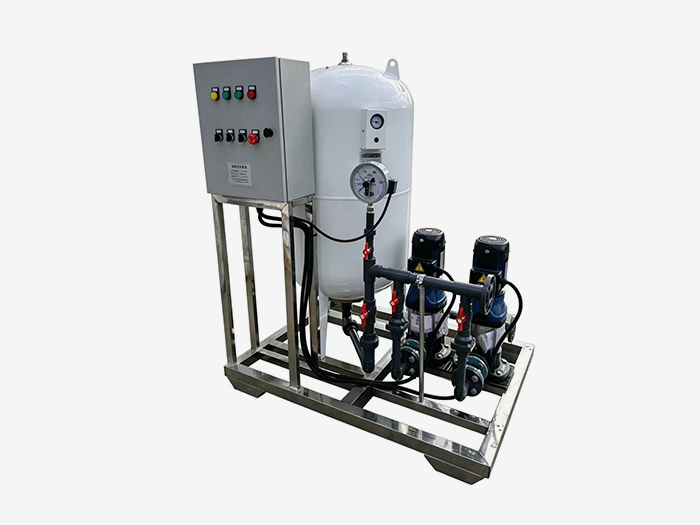
Constant pressure water supply equipment is widely used in central air conditioning, floor heating, industrial closed-loop water circulation, and boiler systems. It integrates automatic pressure stabilization, automatic water replenishment, automatic exhaust, pressure relief and buffering functions. It stabilizes the pressure in the pipeline network, eliminates abnormal sounds caused by air blockage, and prevents damage from negative pressure and water shortage in the pipeline. It is an essential supporting equipment for HVAC and circulating water systems.











 Landline:+86 010 59792055
Landline:+86 010 63780188
 Mobile:+86 13910114728
 Email:bjyuanlai@163.com
 Email:Wanda Plaza, Fengke Road, Fengtai District, BeijingBseat6Courtyard No.3Building No.7layer708
Yuanlai Homepage Softened water equipment Reverse osmosis pure water equipment Water supply equipment Engineering case Technical service Enter Yuanlai Site map
Softened water equipment Reverse osmosis pure water equipment Water purification equipment Water supply equipment Automatic dosing equipment High-purity water (ultra-pure water) equipment Wholesale of water treatment accessories
Electric power industry Petrochemical industry The electronic semiconductor industry The photovoltaic new energy industry Pharmaceuticals & Biochemical Engineering School research units Food and beverage industry Enterprises and public institutions
Reverse osmosis membrane Star-counting pump Fleck Valve Runxin Valve Instruments and meters Ultrafiltration membrane Softening resin Resin tank
