Bookmark this site Online message 中文站Welcome to the official website of Beijing Yuanlai Water Treatment Equipment Co., LTD.!
Service Hotline
+86 010 59792055 / +86 13910114728

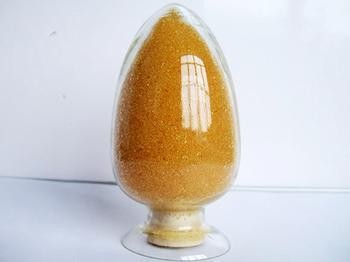
NewThe softening water resin (ion exchange resin) used in water softening equipment (water softeners) often contains a small amount of low relative molecular weight polymers and monomers that have not participated in polymerization. So when newSoftened water resinIon exchange resin)When in contact with water and solutions such as acids and bases, these low-molecular-weight polymers and monomers will transfer into the solution, affecting the quality of water treatment. Therefore, before using the resin, some pretreatment should be carried out to remove impurities and activate the resin. Otherwise, it will affect the normal quality of the effluent.
In addition, due to packaging, transportation and other reasons, ion exchange resins may also contain a small amount of inorganic impurities(Inorganic impurities such as iron, aluminium and copper)Therefore, in the desalination water process with high water quality requirements, new ion exchange resins usually need to undergo necessary treatment before use.
SoSoftening water resin (ion exchange resin) used in water softening equipment (water softener)How to replace it? Here's a brief introduction.
I.Softening water resin (ion exchange resin)ReplacePreparations before
ReplaceBefore resin application, carefully inspect the overall condition of the exchange column, pipelines and valves. Conduct a pressure test to confirm there is no leakage, and check whether the water collector, water distributor, inner lining and support layer and other components are safe and undamaged. For exchangers with quartz sand as the filter layer (generally large-scale equipment), quartz sand that has been cleaned with acid and alkali should be filled in, and the backwash water should be clear. Throughout the entire treatment stage, including the preparation of the regenerant, it is recommended to use soft water.
Ii.Softening water resin (ion exchange resin)ReplaceSteps
1,Remove the inlet and outlet water pipes, sewage pipe and salt suction pipe of the water softening equipment, and take off the control valve head.NoteBefore disassembly, cut off the power and water supply, and close the inlet and outlet water valves to reduce pressure.
2,Pull out the tubes of the softened water equipment and check whether the filter elements are damaged or clogged, such as the diameter of the tank>500mmThere is no need to remove the tube.
3,The resin is extracted by using the siphon principle of the water softening equipment.
4,Install the water softening equipment pipes and block the top of the pipes with plastic sheeting to prevent the resin from pouring into the pipes and filling up approximately the tank1/4"Water".
5"ReplaceWash your hands before loading the resin. Use the softened water flow to load the resin. The amount of resin loadedbigAbout the tank70%Install the control valve head,NoteResin that has fallen outside the tank or been contaminated on the ground should not be refilled into the tank.
6,Turn on the water softening equipment(Water softenerAdjust the control valve to the backwash position to regenerate a small amount of water in the downstream direction and discharge the air in the resin tank.
7"InspectSoftened water equipment(Water softenerIs there any leakage?
8,Backwashing: Water is washed in from the bottom of the resin and flows out from the top, which can wash away the dirt trapped at the top. This process usually requires30-40The actual operation lasts for minutes until the water is clear.
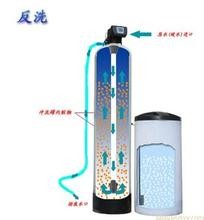
9,Salt absorption(Regeneration)The process of injecting brine into the resin tank is that traditional equipment uses a salt pump to inject brine, while fully automatic equipment uses a dedicated built-in injector to draw in the brine(As long as there is a certain pressure in the incoming water, it will be fine). In the actual working process, the regeneration effect of salt water flowing slowly through the resin is better than that of simply soaking the resin in salt water. Therefore, water softening equipment all adopt the method of salt water flowing slowly through the resin for regeneration. Salt absorption(Salt waterRegeneration usually requires soaking18-20If it is not actually allowed, absorb salt twice in a row2About an hour.
NoteSalt water(NaCl)Conductance>1500μs/cm The volume is that of the treated resin2"Double;"
10,Slow rinse(Replacement)This process is the main process of regeneration,After the salt water flows through the resin, the process of slowly rinsing all the salt in the resin with the raw water at the same flow rate is called slow rinsing. Since a large number of calcium and magnesium ions on the functional groups are still exchanged with sodium ions during this rinsing process, this process usually takes the same amount of time as the salt absorption, that is30-40Minutes.
11,Quick rinse: To thoroughly wash away the remaining salt, the resin should be rinsed with raw water at a flow rate close to the actual working condition. The effluent from this process should be qualified soft water. Under normal circumstances, the quick rinse process is5-15Minutes.
The above is new.Softening water resin (ion exchange resin) used in water softening equipment (water softener)Preparations before replacement and replacement steps. If there are any issues with resin replacement, please contact Beijing Yuanlai Water Treatment Equipment Co., LTD.
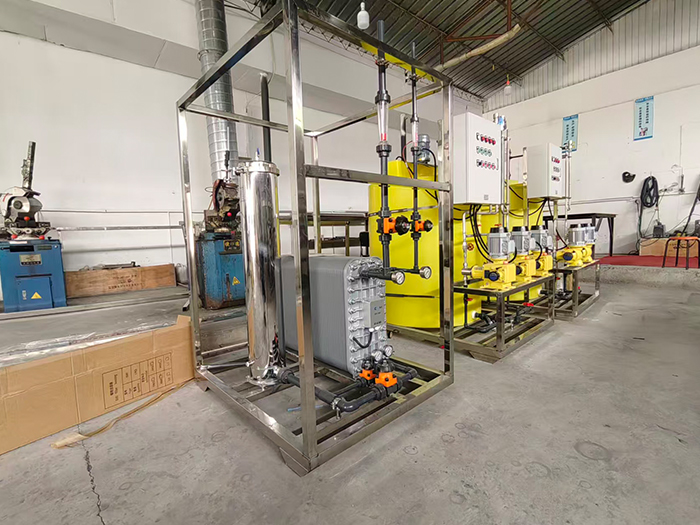
Yuan LaiEDIThe ultra-pure water equipment uses electro-deionization technology.EDIElectrodeionization is a water purification method that combines the dual advantages of electrodialysis and ion exchange. It does not require acid-base chemical regeneration and can continuously and stably prepare high-purity ultrapure water. Under the action of a direct current electric field, ion separation in water is completed. At the same time, water is electrolyzed to generate hydrogen ions and hydroxide ions, achieving automatic regeneration of the resin without the need to stop the machine for manual regeneration. The pre-treatment combined with reverse osmosis can prevent oxidized substances from damaging the resin, ensuring stable effluent quality and widely meeting the high-standard water usage requirements of various industries.
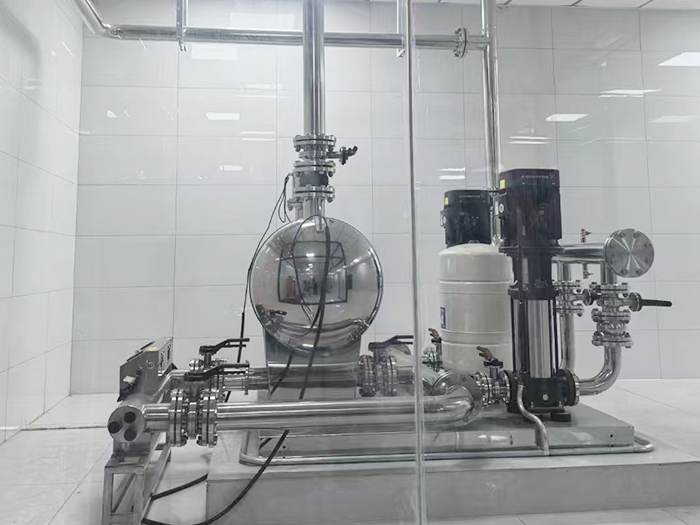
The non-negative pressure water supply equipment can be directly connected to the municipal water supply network, making full use of the residual pressure of the original network for superimposed water supply. Fully enclosed operation does not require the construction of a domestic water tank, eliminating secondary pollution. Intelligent variable frequency voltage stabilization, energy-saving, quiet and easy installation, it is the preferred equipment for secondary water supply in high-rise residential buildings and commercial buildings.
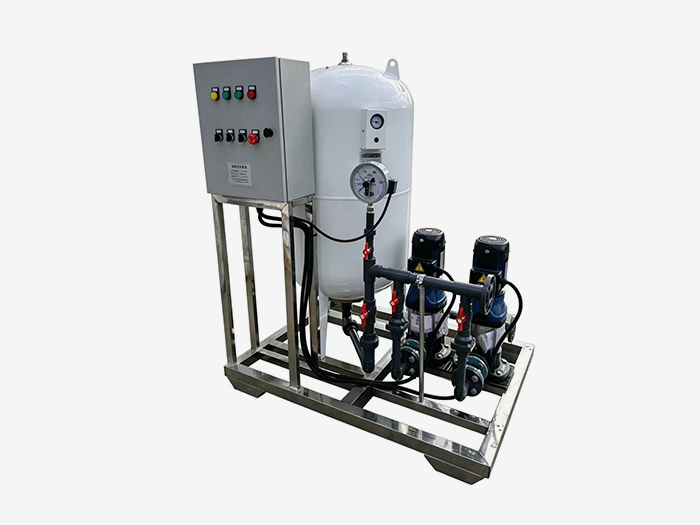
Constant pressure water supply equipment is widely used in central air conditioning, floor heating, industrial closed-loop water circulation, and boiler systems. It integrates automatic pressure stabilization, automatic water replenishment, automatic exhaust, pressure relief and buffering functions. It stabilizes the pressure in the pipeline network, eliminates abnormal sounds caused by air blockage, and prevents damage from negative pressure and water shortage in the pipeline. It is an essential supporting equipment for HVAC and circulating water systems.











 Landline:+86 010 59792055
Landline:+86 010 63780188
 Mobile:+86 13910114728
 Email:bjyuanlai@163.com
 Email:Wanda Plaza, Fengke Road, Fengtai District, BeijingBseat6Courtyard No.3Building No.7layer708
Yuanlai Homepage Softened water equipment Reverse osmosis pure water equipment Water supply equipment Engineering case Technical service Enter Yuanlai Site map
Softened water equipment Reverse osmosis pure water equipment Water purification equipment Water supply equipment Automatic dosing equipment High-purity water (ultra-pure water) equipment Wholesale of water treatment accessories
Electric power industry Petrochemical industry The electronic semiconductor industry The photovoltaic new energy industry Pharmaceuticals & Biochemical Engineering School research units Food and beverage industry Enterprises and public institutions
Reverse osmosis membrane Star-counting pump Fleck Valve Runxin Valve Instruments and meters Ultrafiltration membrane Softening resin Resin tank
