Bookmark this site Online message 中文站Welcome to the official website of Beijing Yuanlai Water Treatment Equipment Co., LTD.!
Service Hotline
+86 010 59792055 / +86 13910114728

Softening water equipment (water softener) brings great convenience and benefits to our daily life and production, especially in winter, it brings us warmth. The following will introduce the installation steps and precautions of softening water equipment (water softener) from the aspects of location selection, filling and testing.
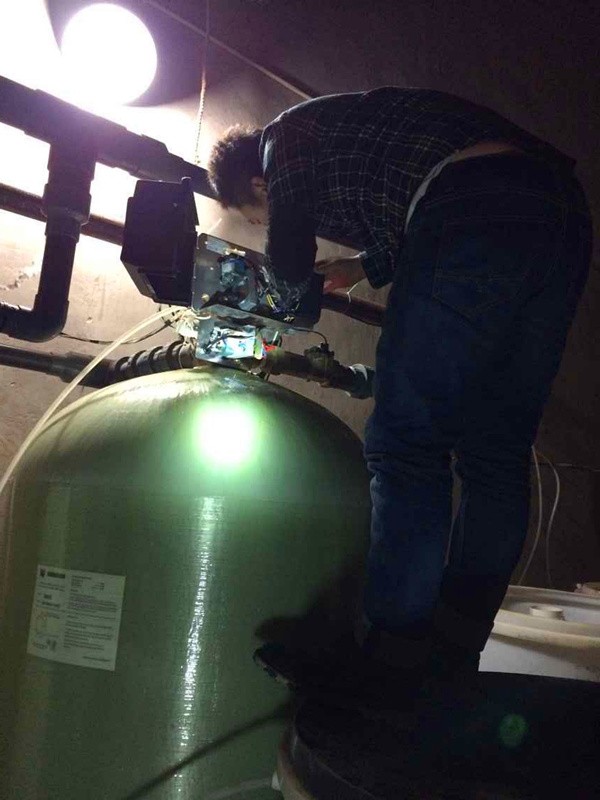
1The location selection of water softening equipment
The water softening equipment (softener) should be placed on a solid and level ground. The distance from the drainage ditch should be as short as possible, and it should also be kept away from heat sources such as boilers>3Over 100 meters.
Note: Do not approach acidic liquids or gases.
If it is necessary to add other water treatment equipment (deaerators, filters), space should be reserved.
2The location of the regeneration salt tank and resin for the water softening equipment
It should be placed as close as possible to the exchange column. To make full use of the salt solution, the size of the salt-absorbing plastic pipe should be shortened as much as possible.
3The water softening equipment is filled with quartz sand and resin
(aQuartz sand is laid at the bottom of the exchange column. Note that high-quality quartz sand helps ensure uniform water distribution.
(bBefore filling the resin, it is necessary to check the length of the lifting pipe to determine if it is suitable.
First, insert the upper water distributor into the bottom connection port of the control valve (automatic control machine head), then align the lower end of the pipe with the bottom groove of the exchange column, and insert the upper end into the lower end pipe opening of the upper water distributor. Then, carefully screw it into the upper end screw opening of the exchange column in the clockwise direction. Make sure that the entire control valve screw opening can be smoothly screwed into the upper end screw opening of the exchange column to confirm that the length of the pipe meets the requirements. And it can make the lifting pipe closely connect the valve head and remain concentric.
(cAfter the trial installation of the machine head is completed, rotate the machine head counterclockwise to remove it. Keep the pipe position centered again, align the end point of the lower water distributor that was originally firmly adhered to the bottom of the lifting pipe with the bottom slot, and seal the upper inlet of the lifting pipe with a soft cloth or plastic tape. Then, start to evenly fill quartz sand or resin.
(dWhen loading the resin, pay attention to the balanced loading around the lifting pipe. To ensure that the pre-calculated quantity is fully loaded into the column, during the loading process, continuously inject clean water into the exchange column to expel the air in the resin pores. It is a good method to maintain this water seal state when filling resin. Dry resin is difficult to ensure that the required filling amount is filled in full.
(eAfter the resin is fully filled, screw the control valve back into the upper threaded opening of the exchange column in a clockwise direction. At the same time, it is required to ensure that it is flat.
Note: Do not forget to install the upper water distributor into the control valve base.
4After connecting the pipes and power supply according to the installation diagram, conduct a water flow test
(aAll inlet and outlet pipelines have independent supports and cannot be supported by valve heads .
(bBefore pressing the start button of the water softening equipment (water softener), the discharge valve of the soft water outlet should be opened first, and then the valve of the water inlet should be slowly opened.
Note: The opening degree should increase from small to large. Do not open it too quickly to avoid resin loss.
(cThe soft water discharged from the resin for the first time has a slightly yellowish color. Test itpHThe value may be less than7It is acidic. After three to five minutes, the color of the effluent turns colorless. At this pointpHThe value rises to7(Neutral), and at the same time, the hardness of the soft water is qualified (in accordance with industry standards).
(dIf a boiler using softened water is urgently needed, after confirming that the softened water is qualified, it can be immediately introduced into the feed water tank.
(eFor the old pipes that have been used before, before connecting them to the water softening equipment (water softener), water should be passed through extremely carefully to flush away the rust residue, soil and other debris accumulated in the pipes, and it is strictly necessary to prevent steam from entering the resin tank and causing the resin to be scrapped.
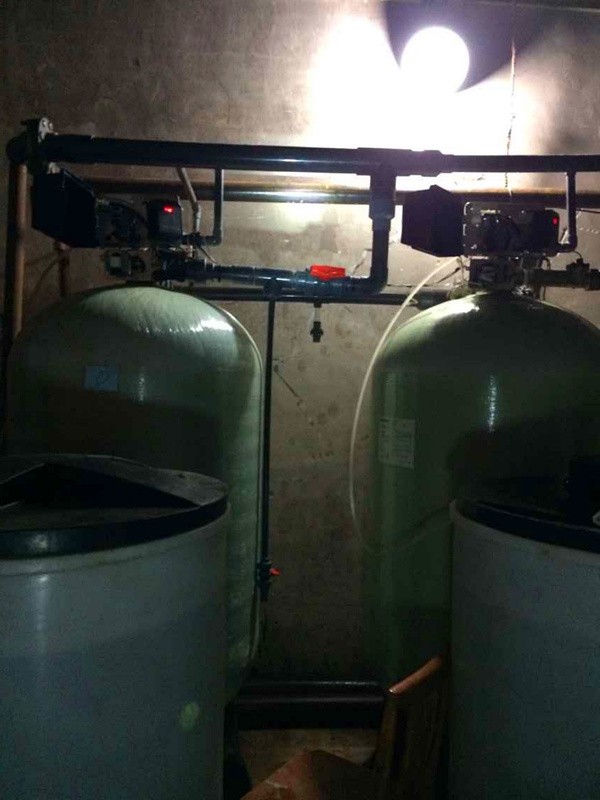
5,The trial rotation of the regeneration program and the issue of preparing brine
(aFor the softening equipment put into use, sufficient solid must be added to the regeneration salt tankNaCl.
(bWithout opening the water supply valve, the regeneration timer can be manually tested to check whether the backwashing, salt feeding, small flushing, large flushing, water production and salt preparation processes are operating normally. When it is confirmed that all functions are complete, the water production and salt preparation program stage can be maintained. When power and water are supplied, soft water will be output, and at the same time, dissolved water will start to be sent into the salt tankNaClAfter this process time ends, the soft water is transferred back to the automatic soft water production process. When the total time of the water production program set by this equipment is reached, it will immediately automatically switch to backwashing, salt feeding, small flushing, large flushing, water production, salt preparation, and water production in sequence. This process of water production and regeneration is completed automatically in a repetitive manner, and only solid substances need to be added to the salt tank in full in stagesNaClAnd regularly clean the impurities in the salt tank.
6Set the time and controller. During the initial operation stage, strengthen the laboratory monitoring of the effluent quality and adjust the restoration program according to the changes in water quality to achieve the best treatment condition.
7There should always be sufficient solid regenerant in the salt tank to maintain saturated brine and ensure the amount of salt used in each regeneration cycle.
8The drainage pipe installation system should not install any valves, and the shorter the pipe, the better. The total length<6The drainage pipes should not be raised, and the siphoning phenomenon of the drainage pipes should be prevented.
9A drain valve is set up before the soft water enters the water tank to urgently remove the water that exceeds the standard except for the feed.
The above are the installation steps and points to note for water softening equipment (water softener). Before specific construction, it is necessary to seek guidance from a professional to reduce unnecessary losses. If you encounter any problems during the installation of water softening equipment (water softener), you are welcome to consult Beijing Yuanlai Water Treatment Equipment Co., LTD.
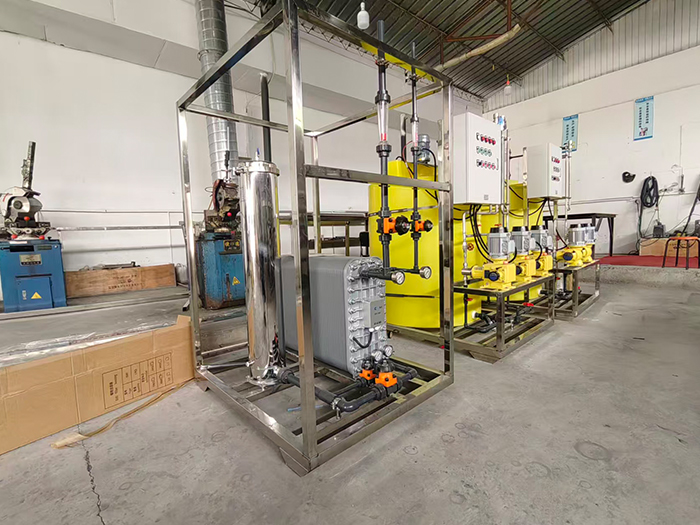
Yuan LaiEDIThe ultra-pure water equipment uses electro-deionization technology.EDIElectrodeionization is a water purification method that combines the dual advantages of electrodialysis and ion exchange. It does not require acid-base chemical regeneration and can continuously and stably prepare high-purity ultrapure water. Under the action of a direct current electric field, ion separation in water is completed. At the same time, water is electrolyzed to generate hydrogen ions and hydroxide ions, achieving automatic regeneration of the resin without the need to stop the machine for manual regeneration. The pre-treatment combined with reverse osmosis can prevent oxidized substances from damaging the resin, ensuring stable effluent quality and widely meeting the high-standard water usage requirements of various industries.
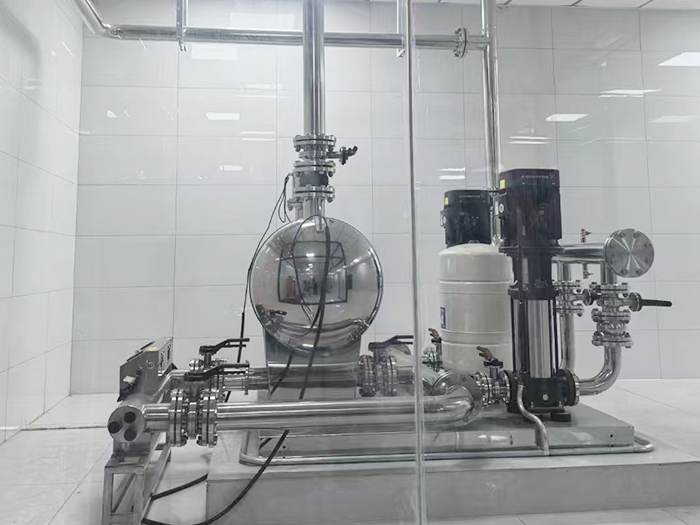
The non-negative pressure water supply equipment can be directly connected to the municipal water supply network, making full use of the residual pressure of the original network for superimposed water supply. Fully enclosed operation does not require the construction of a domestic water tank, eliminating secondary pollution. Intelligent variable frequency voltage stabilization, energy-saving, quiet and easy installation, it is the preferred equipment for secondary water supply in high-rise residential buildings and commercial buildings.
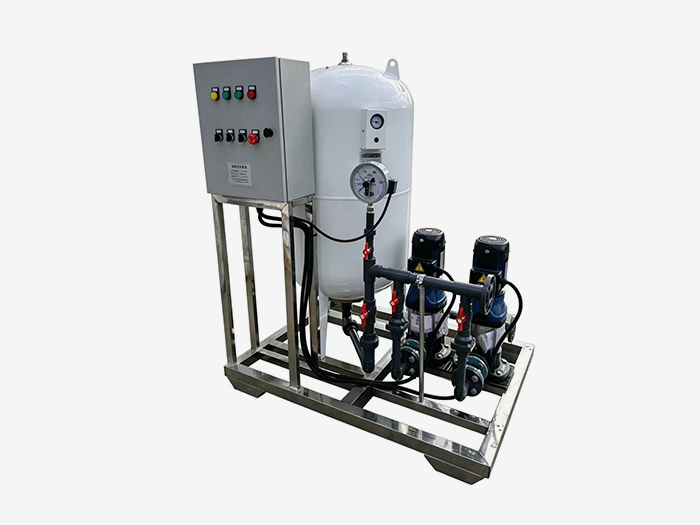
Constant pressure water supply equipment is widely used in central air conditioning, floor heating, industrial closed-loop water circulation, and boiler systems. It integrates automatic pressure stabilization, automatic water replenishment, automatic exhaust, pressure relief and buffering functions. It stabilizes the pressure in the pipeline network, eliminates abnormal sounds caused by air blockage, and prevents damage from negative pressure and water shortage in the pipeline. It is an essential supporting equipment for HVAC and circulating water systems.











 Landline:+86 010 59792055
Landline:+86 010 63780188
 Mobile:+86 13910114728
 Email:bjyuanlai@163.com
 Email:Wanda Plaza, Fengke Road, Fengtai District, BeijingBseat6Courtyard No.3Building No.7layer708
Yuanlai Homepage Softened water equipment Reverse osmosis pure water equipment Water supply equipment Engineering case Technical service Enter Yuanlai Site map
Softened water equipment Reverse osmosis pure water equipment Water purification equipment Water supply equipment Automatic dosing equipment High-purity water (ultra-pure water) equipment Wholesale of water treatment accessories
Electric power industry Petrochemical industry The electronic semiconductor industry The photovoltaic new energy industry Pharmaceuticals & Biochemical Engineering School research units Food and beverage industry Enterprises and public institutions
Reverse osmosis membrane Star-counting pump Fleck Valve Runxin Valve Instruments and meters Ultrafiltration membrane Softening resin Resin tank
