Bookmark this site Online message 中文站Welcome to the official website of Beijing Yuanlai Water Treatment Equipment Co., LTD.!
Service Hotline
+86 010 59792055 / +86 13910114728

All water purification filter materials (including manganese sand of course) must go through a backwashing process to clean the filter materials themselves before they can be used normally. However, currently in this regard, I have received many inquiries from customers asking, "Why was the backwashing process of manganese sand purchased from other manufacturers very troublesome or couldn't be cleaned thoroughly at all, but the manganese sand purchased from your factory can be cleaned very easily?" Now, I will briefly introduce this issue to everyone
1Manganese sand is processed from manganese ore after crushing. As we all know, the freshly mined manganese ore is very dirty. Moreover, a lot of dust is produced during the crushing process. If the manganese ore is very wet, there will inevitably be a lot of mud in the manganese sand. When our factory mines manganese ore and crushers it, water flushing is required. This process is quite extensive. Some manufacturers, for the sake of convenience and cost reduction, skip this step. It is easy to imagine that all the slurry and dust are mixed into the manganese sand.
2After the manganese sand is crushed, to ensure its content, we need to go through multiple magnetic separation processes. In this process, first, the content of manganese sand is guaranteed, and second, impurities and dust are screened out again.
3After magnetic separation, the content of manganese sand has been determined. For other manufacturers, the manganese sand needs to be sold at this stage. However, our factory still maintains the traditional production process. We still need to wash the manganese sand with water again. After washing, to avoid the mixture of dust, we directly dry it under natural conditions. While other manufacturers, in order to increase production capacity, either use machines for drying or skip this step altogether.
To sum up, the manganese sand we produce is sold from the time of mining. We go through multiple water washing and magnetic separation processes. Although the cost of this is much higher, it can not only ensure the content of manganese sand, but also significantly reduce the mud content of manganese sand, and also relieve the difficulty of backwashing for users.
Here I'd like to do a simple calculation for everyone:
The mud content of the manganese sand produced by our factory is basically around2%Up and down, that is to say, the customer purchases from our factory100During the backwashing process, there will be tons of manganese sand2About one ton of mud will be washed away and lost. Eventually, the manganese sand that is actually used is98Ton;
However, for manganese sand from other manufacturers that has not undergone water washing or machine drying, a low mud content is also required15%That is to say, to purchase from other manufacturers100There will be a shortage of tons of manganese sand during the backwashing process15Tons of mud will be washed away and lost, and in the end, only manganese sand is actually used85Tons.
In this case, the production cost of our factory is bound to be much higher, which is also the reason why our price is slightly expensive.
Since its establishment, our company has always adhered to the business philosophy of "surviving by quality and developing by reputation", and has won a good reputation and trust from a wide range of customers. We believe that all the efforts we make will bring you and society healthy water!
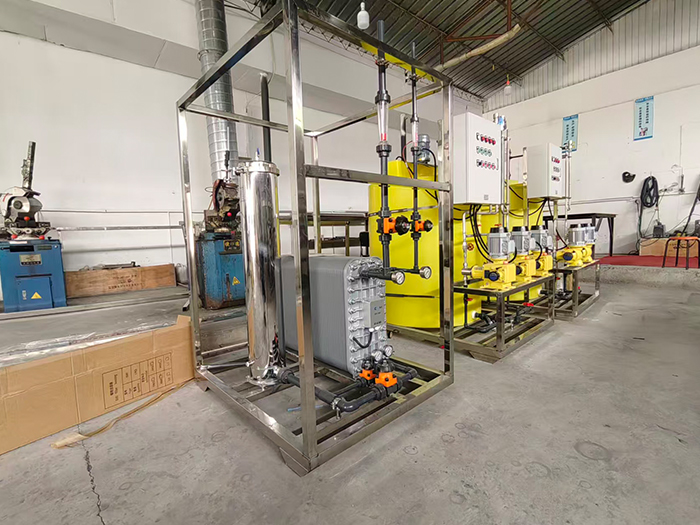
Yuan LaiEDIThe ultra-pure water equipment uses electro-deionization technology.EDIElectrodeionization is a water purification method that combines the dual advantages of electrodialysis and ion exchange. It does not require acid-base chemical regeneration and can continuously and stably prepare high-purity ultrapure water. Under the action of a direct current electric field, ion separation in water is completed. At the same time, water is electrolyzed to generate hydrogen ions and hydroxide ions, achieving automatic regeneration of the resin without the need to stop the machine for manual regeneration. The pre-treatment combined with reverse osmosis can prevent oxidized substances from damaging the resin, ensuring stable effluent quality and widely meeting the high-standard water usage requirements of various industries.
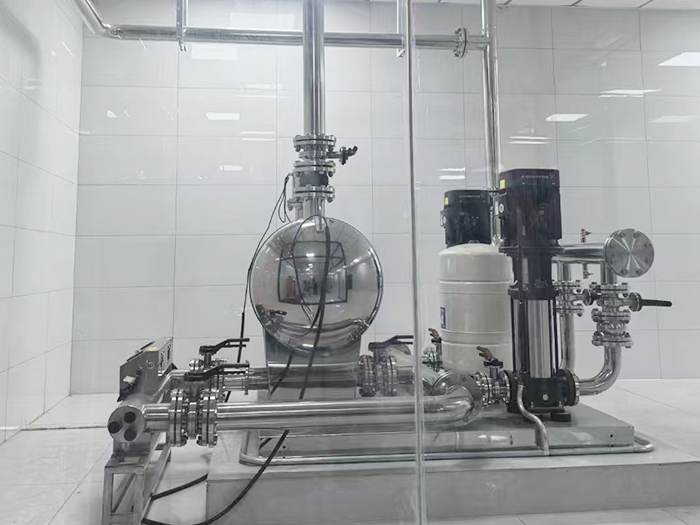
The non-negative pressure water supply equipment can be directly connected to the municipal water supply network, making full use of the residual pressure of the original network for superimposed water supply. Fully enclosed operation does not require the construction of a domestic water tank, eliminating secondary pollution. Intelligent variable frequency voltage stabilization, energy-saving, quiet and easy installation, it is the preferred equipment for secondary water supply in high-rise residential buildings and commercial buildings.
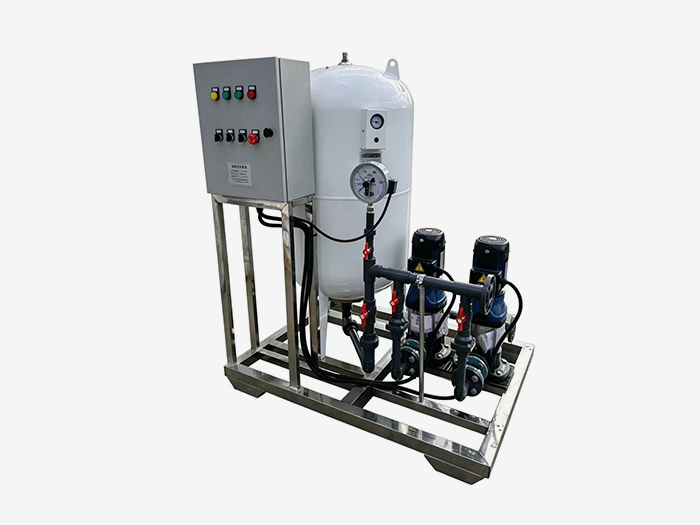
Constant pressure water supply equipment is widely used in central air conditioning, floor heating, industrial closed-loop water circulation, and boiler systems. It integrates automatic pressure stabilization, automatic water replenishment, automatic exhaust, pressure relief and buffering functions. It stabilizes the pressure in the pipeline network, eliminates abnormal sounds caused by air blockage, and prevents damage from negative pressure and water shortage in the pipeline. It is an essential supporting equipment for HVAC and circulating water systems.











 Landline:+86 010 59792055
Landline:+86 010 63780188
 Mobile:+86 13910114728
 Email:bjyuanlai@163.com
 Email:Wanda Plaza, Fengke Road, Fengtai District, BeijingBseat6Courtyard No.3Building No.7layer708
Yuanlai Homepage Softened water equipment Reverse osmosis pure water equipment Water supply equipment Engineering case Technical service Enter Yuanlai Site map
Softened water equipment Reverse osmosis pure water equipment Water purification equipment Water supply equipment Automatic dosing equipment High-purity water (ultra-pure water) equipment Wholesale of water treatment accessories
Electric power industry Petrochemical industry The electronic semiconductor industry The photovoltaic new energy industry Pharmaceuticals & Biochemical Engineering School research units Food and beverage industry Enterprises and public institutions
Reverse osmosis membrane Star-counting pump Fleck Valve Runxin Valve Instruments and meters Ultrafiltration membrane Softening resin Resin tank
