Bookmark this site Online message 中文站Welcome to the official website of Beijing Yuanlai Water Treatment Equipment Co., LTD.!
Service Hotline
+86 010 59792055 / +86 13910114728

Softening water equipment (softeners) mainly reduces the hardness of water by softening resins. These softening resins are also called ion exchange resins and are high-molecular compounds. Therefore, their performance varies due to differences in manufacturing processes, source formulas, polymerization temperatures, and crosslinking agents. Winter is approaching. How does temperature affect ion exchange resins? The following main performance is introduced in two parts.
(1"Physical properties"
aAppearance
Resin is a transparent or semi-transparent substance. Due to its different compositions, it comes in various colors. For instance, styrene resin is yellow, but it can also be black or brown. However, this has little impact on its performance. Under normal circumstances, if there are more impurities in the raw materials or more crosslinking agents, the color of the resin will be slightly darker. Particle size can be represented by the effective particle size and the coefficient of non-uniformity.
b"Particle size
The size of resin particles will affect the exchange rate, pressure loss, backwashing effect, etc. The particle sizes should not vary too much. The particles of ion exchange resins used for water treatment are mostly in0.32~1.25Within the range. Particle size can be represented by the effective particle size and the coefficient of non-uniformity.
cDensity
It is related to the water treatment process and the amount of resin filled. The representation methods of density include: dry true density, wet true density, and wet apparent density.
dMoisture content
The greater the moisture content of the resin, the larger the voids and the smaller the degree of crosslinking. The oxidation of resin or contamination by organic matter will cause changes in its moisture content.
eSwelling property
After being immersed in water, resin will swell, which is related to the degree of crosslinking, active groups, exchange capacity, density of electrolytes in water, and the nature of exchangeable ions, etc. During the exchange and regeneration process, resin will expand and contract. Repeated expansion and contraction of the resin is prone to cracking.
fWear resistance
Reflect the mechanical strength of the resin. It should ensure that the annual resin consumption does not exceed7%It can be expressed by the post-grinding sphericity rate or the infiltration grinding sphericity rate.
gSolubility
The low polymers contained in the resin need to dissolve gradually, and sol will also occur during the use of the resin.
hHeat resistance
Cationic resin is heat-resistant100~110℃Strongly alkaline anion resins can withstand high temperatures60℃Weakly alkaline anion resins can withstand high temperatures90℃. But the resin is lower than or equal to0℃At that time, it is prone to freezing and breaking.
iConductivity
Dry resin does not conduct electricity, while wet resin can.
(2"Chemical properties"
aThe exchange reaction of ion exchange resins is reversible, so they can not only be exchanged but also regenerated and reused repeatedly.
bIt is acidic or alkaline.HType cation exchange resin andOHThe performance of type anion exchange resins and others is the same as that of electrolyte acids and bases, and they can ionize into waterH+andOH-.
cIt has water-soluble and hydrolytic properties. Because it has the property of an electrolyte, it can undergo neutralization reactions with acids and bases and also undergo hydrolysis.
dIon exchange resins have different abilities to adsorb various ions and are selective.
eExchange capacity, which indicates the amount of ions exchanged, can be classified into equilibrium exchange capacity, total exchange capacity, working exchange capacity, etc.
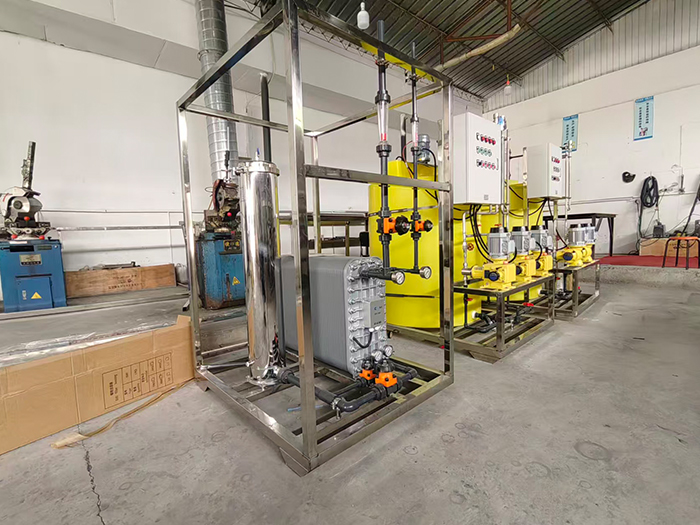
Yuan LaiEDIThe ultra-pure water equipment uses electro-deionization technology.EDIElectrodeionization is a water purification method that combines the dual advantages of electrodialysis and ion exchange. It does not require acid-base chemical regeneration and can continuously and stably prepare high-purity ultrapure water. Under the action of a direct current electric field, ion separation in water is completed. At the same time, water is electrolyzed to generate hydrogen ions and hydroxide ions, achieving automatic regeneration of the resin without the need to stop the machine for manual regeneration. The pre-treatment combined with reverse osmosis can prevent oxidized substances from damaging the resin, ensuring stable effluent quality and widely meeting the high-standard water usage requirements of various industries.
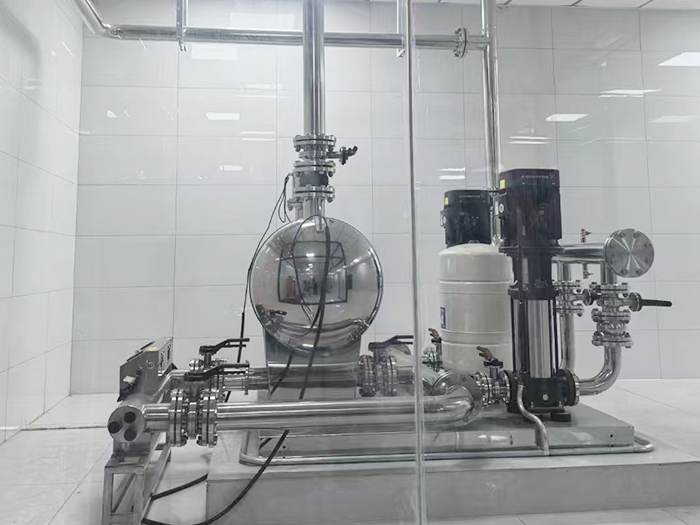
The non-negative pressure water supply equipment can be directly connected to the municipal water supply network, making full use of the residual pressure of the original network for superimposed water supply. Fully enclosed operation does not require the construction of a domestic water tank, eliminating secondary pollution. Intelligent variable frequency voltage stabilization, energy-saving, quiet and easy installation, it is the preferred equipment for secondary water supply in high-rise residential buildings and commercial buildings.
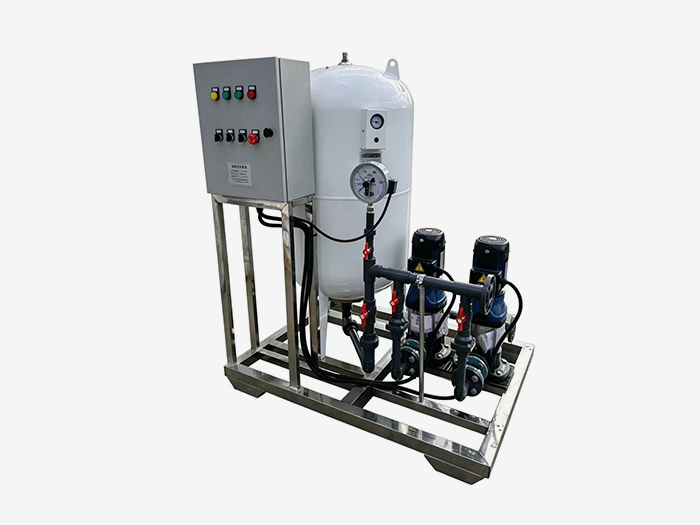
Constant pressure water supply equipment is widely used in central air conditioning, floor heating, industrial closed-loop water circulation, and boiler systems. It integrates automatic pressure stabilization, automatic water replenishment, automatic exhaust, pressure relief and buffering functions. It stabilizes the pressure in the pipeline network, eliminates abnormal sounds caused by air blockage, and prevents damage from negative pressure and water shortage in the pipeline. It is an essential supporting equipment for HVAC and circulating water systems.











 Landline:+86 010 59792055
Landline:+86 010 63780188
 Mobile:+86 13910114728
 Email:bjyuanlai@163.com
 Email:Wanda Plaza, Fengke Road, Fengtai District, BeijingBseat6Courtyard No.3Building No.7layer708
Yuanlai Homepage Softened water equipment Reverse osmosis pure water equipment Water supply equipment Engineering case Technical service Enter Yuanlai Site map
Softened water equipment Reverse osmosis pure water equipment Water purification equipment Water supply equipment Automatic dosing equipment High-purity water (ultra-pure water) equipment Wholesale of water treatment accessories
Electric power industry Petrochemical industry The electronic semiconductor industry The photovoltaic new energy industry Pharmaceuticals & Biochemical Engineering School research units Food and beverage industry Enterprises and public institutions
Reverse osmosis membrane Star-counting pump Fleck Valve Runxin Valve Instruments and meters Ultrafiltration membrane Softening resin Resin tank
