Bookmark this site Online message 中文站Welcome to the official website of Beijing Yuanlai Water Treatment Equipment Co., LTD.!
Service Hotline
+86 010 59792055 / +86 13910114728

Reverse osmosisROmembraneIt is the core part of the reverse osmosis pure water production system and is operating normallyReverse osmosisROmembraneThe degree of pollution will only become more and more serious, so the cleaning of the membrane is essential.Now let's talk about reverse osmosisROmembraneThe causes of pollution and physical and chemical cleaning methods.
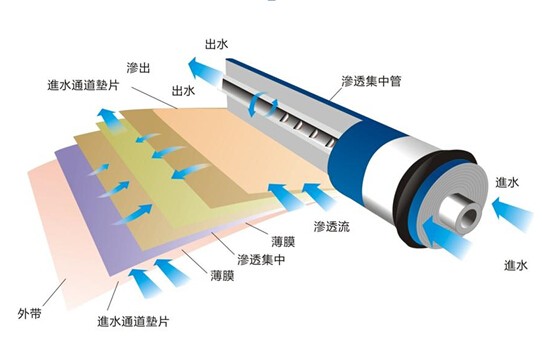
I. Reverse OsmosisROmembraneClassification and causes of pollution
1,Classify according to the location of pollution.
According to the location of contamination, membrane fouling can be classified into membrane adhesion layer fouling, membrane pore blockage and membrane flow channel blockage.
In the adherent layer, it was found that there were filter cake layers formed by suspended solids, colloidal substances and microorganisms, gel layers adhered after the concentration of dissolved organic matter, and scale layers formed by dissolved inorganic substances. However, the pollutants adhering to the membrane surface in a specific reactor vary with different experimental conditions and water quality.
Membrane pore clogging occurs when contaminants form adhesion layers within the porous structure of the membrane, leading to pore blockage and a decrease in membrane permeability as well as an increase in the pressure difference before and after the membrane.
Membrane flow channel blockage is caused by solid substances blocking the concentrated water flow channels within the membrane module. It usually occurs when the filter cake layer accumulates and Bridges or when larger particles are mixed in.
Membrane clogging is caused by the concentration, crystallization and precipitation of solutes in the above-mentioned liquid material, which leads to varying degrees of clogging of membrane pores and membrane flow channels.
2Adherent contamination can be classified into four types based on its causes: filter cake layer, gel layer, scale layer and adsorption layer contamination
The filter cake layer is mainly formed by suspended solids and colloids in the raw liquid. The filter cake layer is formed by metal oxides such as iron oxide and aluminum oxide produced by the process flow and pipeline corrosion, the main component of clay, aluminum silicate, as well as flocculants and activated sludge that leak from the pretreatment system.
Organic substances or soluble polymers in the original liquid form a non-flowing gel layer after concentration.
The scale layer is formed when insoluble salts such as calcium carbonate, calcium sulfate and silicon dioxide precipitate out when their solubilities exceed their limits.
The adsorption layer is formed by specific substances in the original solution that have a strong adsorption capacity for the membrane. For instance, oily components tend to adsorb onto the membrane surface composed of hydrophobic materials, while charged substances tend to adsorb onto the membrane surface with opposite charges.
Ii. Reverse OsmosisROmembranePhysical and chemical cleaning
Even if a relatively suitable membrane and appropriate operating conditions are selected for the application of any membrane separation technology, the long-term water permeability decreases with the increase of operation time, that is, the problem of membrane fouling will still occur. Therefore, by adopting certain cleaning methods, contaminants on the membrane surface or within the membrane pores can be removed, the water permeability can be restored, and the membrane's lifespan can be prolonged. Therefore, the research on cleaning and recovery is a hot topic in membrane application research both at home and abroad. The cleaning methods of membranes can be divided into physical cleaning and chemical cleaning. The choice of any method mainly depends on the characteristics, types, chemical resistance of the membrane itself and the types of contaminants.
1Physical cleaning
It generally refers to hydraulic cleaning, such as mechanical scrubbing and backwashing, etc. The main methods of hydraulic cleaning are backwashing, such as water flushing and air-water backwashing expansion. Because no chemicals are introduced in water washing, this method is relatively economical. For films with good heat resistance, high-temperature water washing is more effective.
For tubular ultrafiltration membranes, elastic polyurethane polymers are made into porous small balls, which circulate inside the tubes. The deposits are removed by the friction and physical impact between the small balls and the membrane. The method is simple and the effect is obvious, but friction will affect the integrity of the membrane surface and the performance of the membrane.
Backwashing refers to the method of removing the accumulated substances on the membrane surface by blowing gas or liquid through the side. External pressurization refers to the use0.1MPaCompressed air or pressurized liquid backwashing, internal suction refers to the periodic drawing of air or liquid from the outside of the membrane into the inside of the membrane for backwashing. After backwashing, the membrane filtration pressure difference may drop slightly. However, after operation, the membrane filtration pressure difference rises rapidly, and the water output decreases. Moreover, excessive backwashing water volume and backwashing pressure may cause damage to the membrane structure. With the advancement of technology, the suction cleaning method developed in recent years has the advantages of no need for new equipment, good cleaning effect and no damage to the membrane. In addition, electric field filtration, pulse cleaning, pulse electric field cleaning and electroosmosis backwashing have very good effects.
2Chemical cleaning
Chemical cleaning usually involves the use of chemical cleaning agents, which mainly include acidsH3PO4And lactic acid)Alkali, enzyme(Protease, amylase, glucanase), surfactant (alkaline, nonionic)Compounding agents, etc.
Chemical cleaning is an effective method for any kind of pollution. For gel layers formed on the membrane surface by macromolecular substances and the like, physical cleaning alone is not very effective. The contaminated membrane can be soaked and cleaned with acid or alkali solutions. Under alkaline conditions, organic matter, silicon dioxide and biological contaminants are easily washed away, while under acidic conditions, some metal ion contaminants are easily dissolved. Surfactants and chelating agents can remove firmly adhered substances, but they are expensive. Some people also believe that surfactants should be used with caution. Improper application may instead form a highly adsorbed film on the membrane surface, altering the original surface properties of the membrane.
For specific types of pollution, adopt specific cleaning methods. If the specific surface area of hollow fiber membranes is prone to microbial growth, they should be usedNaCIOThe cleaning of the inner surface has a particularly obvious effect on improving membrane flux. For ultrafiltration membranes contaminated by bacteria and macromolecules of multiple polysaccharides, the effect of oxidation cleaning with acidic potassium permanganate is more obvious than that with hydrogen peroxide. However, when using more than two agents in combination for cleaning or in conjunction with physical cleaning, the cleaning sequence needs to be carefully considered.
For different types of membranes and different types of contamination, the selection of chemical agents should be done with caution to prevent damage to the membranes caused by chemical cleaning agents. Choosing acid-based cleaning agents can dissolve and remove minerals andDNAAnd adoptNaOHAqueous solutions can effectively remove protein contamination. For membranes with severe protein contamination, use containing0.5%Pepsin0.01mol/LNaOHSolution cleaning30minIt can effectively restore the water permeability rate. In some applications, such as removing polysaccharides, soaking and cleaning in warm water can basically restore the water permeability.
The above is reverse osmosisROmembraneThe causes of pollution and physical and chemical cleaning methods are inReverse osmosisROIf you encounter any problems with the use or replacement of membranes, please consult Beijing Yuanlai Water Treatment Equipment Co., LTD.With years of focus on the water treatment industry, you can trust us!
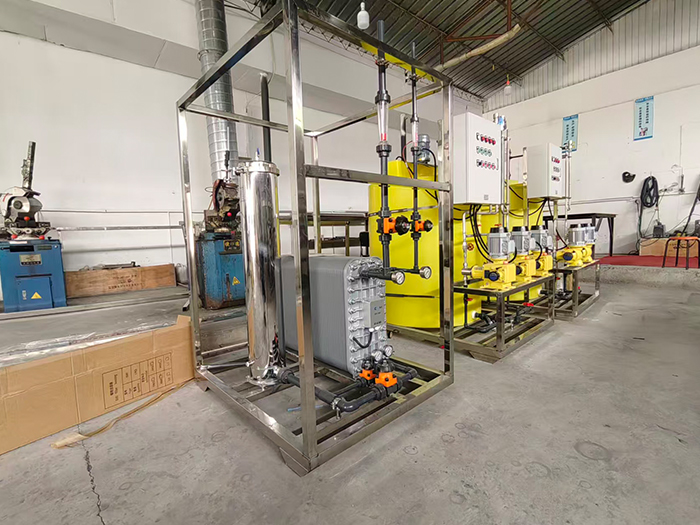
Yuan LaiEDIThe ultra-pure water equipment uses electro-deionization technology.EDIElectrodeionization is a water purification method that combines the dual advantages of electrodialysis and ion exchange. It does not require acid-base chemical regeneration and can continuously and stably prepare high-purity ultrapure water. Under the action of a direct current electric field, ion separation in water is completed. At the same time, water is electrolyzed to generate hydrogen ions and hydroxide ions, achieving automatic regeneration of the resin without the need to stop the machine for manual regeneration. The pre-treatment combined with reverse osmosis can prevent oxidized substances from damaging the resin, ensuring stable effluent quality and widely meeting the high-standard water usage requirements of various industries.
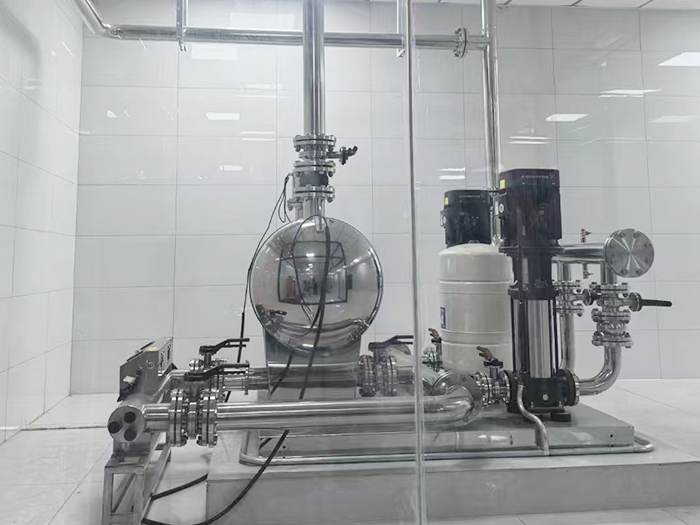
The non-negative pressure water supply equipment can be directly connected to the municipal water supply network, making full use of the residual pressure of the original network for superimposed water supply. Fully enclosed operation does not require the construction of a domestic water tank, eliminating secondary pollution. Intelligent variable frequency voltage stabilization, energy-saving, quiet and easy installation, it is the preferred equipment for secondary water supply in high-rise residential buildings and commercial buildings.
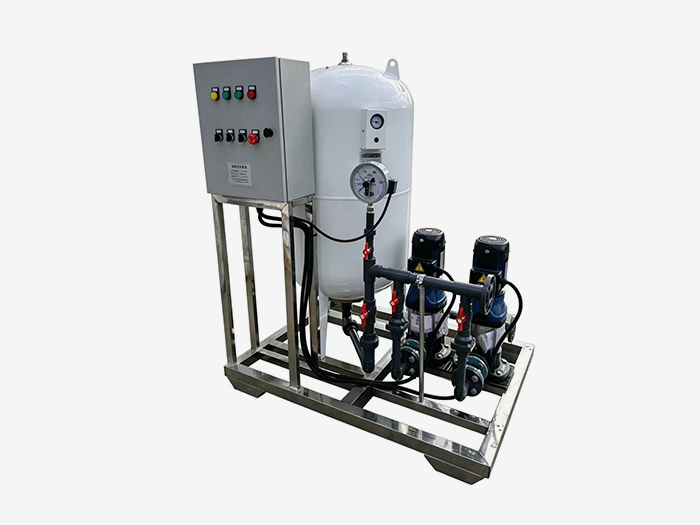
Constant pressure water supply equipment is widely used in central air conditioning, floor heating, industrial closed-loop water circulation, and boiler systems. It integrates automatic pressure stabilization, automatic water replenishment, automatic exhaust, pressure relief and buffering functions. It stabilizes the pressure in the pipeline network, eliminates abnormal sounds caused by air blockage, and prevents damage from negative pressure and water shortage in the pipeline. It is an essential supporting equipment for HVAC and circulating water systems.











 Landline:+86 010 59792055
Landline:+86 010 63780188
 Mobile:+86 13910114728
 Email:bjyuanlai@163.com
 Email:Wanda Plaza, Fengke Road, Fengtai District, BeijingBseat6Courtyard No.3Building No.7layer708
Yuanlai Homepage Softened water equipment Reverse osmosis pure water equipment Water supply equipment Engineering case Technical service Enter Yuanlai Site map
Softened water equipment Reverse osmosis pure water equipment Water purification equipment Water supply equipment Automatic dosing equipment High-purity water (ultra-pure water) equipment Wholesale of water treatment accessories
Electric power industry Petrochemical industry The electronic semiconductor industry The photovoltaic new energy industry Pharmaceuticals & Biochemical Engineering School research units Food and beverage industry Enterprises and public institutions
Reverse osmosis membrane Star-counting pump Fleck Valve Runxin Valve Instruments and meters Ultrafiltration membrane Softening resin Resin tank
