Bookmark this site Online message 中文站Welcome to the official website of Beijing Yuanlai Water Treatment Equipment Co., LTD.!
Service Hotline
+86 010 59792055 / +86 13910114728

In the practical application of reverse osmosis membrane separation technology, membrane fouling is inevitable, and the membrane fouling problem is the decisive factor affecting the stability of this technology. Therefore, studying the formation mechanism of membrane fouling and cleaning the membrane fouling are important guarantees for the normal operation of the reverse osmosis system and preventing its failure.
1Definition of membrane fouling
Membrane fouling refers to the phenomenon where particles, colloidal particles or macromolecules of solutes in the feed liquid in contact with the membrane interact physically or chemically with the membrane, or due to concentration polarization, the concentration of certain solutes on the membrane surface exceeds their solubility, or due to mechanical action, adsorption and deposition occur on the membrane surface or in the membrane pores, causing the membrane pore size to become smaller or blocked, resulting in irreversible changes in the membrane's permeation flow and separation characteristics.
The flux attenuation and reduced separation capacity caused by the adsorption of pollutants, especially macromolecules such as proteins, on the membrane surface and within the membrane pores are the main reasons for the membrane flux attenuation. However, the flux attenuation caused by membrane fouling is often mixed with the reversible flux decline resulting from concentration polarization, further reducing the membrane separation effect.
2Causes of membrane fouling
During the operation of the reverse osmosis system, metal ions, microorganisms, insoluble precipitates, organic pollutants, biofilm, colloids, oils and other substances in the wastewater come into prolonged contact with the membrane, which can cause membrane fouling, significantly reducing the membrane's flux and separation performance as well as increasing the pressure drop. The reasons mainly include the following aspects:
1Concentration polarization
In reverse osmosis desalination systems, the selective permeability of the membrane causes water molecules to continuously pass through the membrane from the high-pressure side, while solute molecules remain in the original solution, resulting in a concentration difference between the feed liquid on the membrane surface and the feed liquid at the inlet. In severe cases, a very high concentration gradient can occur, and this phenomenon is called concentration polarization. Concentration polarization increases the osmotic pressure of the feed liquid and reduces the effective driving force, resulting in a decrease in the water permeation rate and desalination rate.
2Ion scaling
CaCO3,CaSO4,BaSO4,SrSO4,CaF2andSiO2Salts with smaller isosolubility products may precipitate during reverse osmosis due to concentration exceeding their solubility products, resulting in deposits that remain on the membrane surface and in the feed water channels, forming scale. For example:CaCO3The solubility product is8.7×10-9(25℃That is[Ca2+]?[CO32-]Greater than8.7×10-9At that timeCaCO3It will settle down.J.H.BruusWhen discovered, it should be extracted from the sludgeCa2+Subsequently, it leads to an increase in the number of small particles and filtration resistance.
3Metal oxide deposition
Some well water sources in the brackish water range that generally contain low-valent iron ions and manganese ions have certain reducing properties. The main reason for membrane fouling caused by such water sources is the formation of colloidal particle fouling on the membrane surface by iron, aluminum, manganese, etc. What is needed for the oxidation of ironpHThe relatively low value leads to more frequent iron fouling in the reverse osmosis system. The possible situations of the related pollutants that cause the deposition of soluble divalent iron and trivalent iron on the membrane surface are: oxygen enters the influent containing divalent iron; Formation of high-alkalinity water sourcesFeCO3; Iron reacts with silicon to form insoluble ferric silicate. The oxidation effect of iron-reducing bacteria will intensify the growth of biofilms and the deposition of iron scale. Colloidal iron caused by the transformation of iron-containing flocculants; The characteristics of metal pollution caused by iron, aluminum, manganese, etc. are manifested as a decrease in water production and an increase in pressure difference.
4The generation of biological sludge
When the membrane surface is covered with vigorous microbial sludge, the salts removed by the membrane will be trapped in the sticky layer and are not easily washed away by water, providing rich nutrients for the reproduction of microorganisms. At the same time, the scale inhibitors (such as polymaleic acid, amino phosphoric acid, etc.) and water softeners added during the pretreatment of reverse osmosis feed water can also promote the growth of microorganisms. Organic and inorganic dissolved substances as well as particulate matter can be removed through effective pretreatment, but reproducible microbial particles remain even after pretreatment0.01%It can also utilize biodegradable substances in water for self-reproduction, which is one of the main reasons why biological sludge causes pollution in any system.
5Colloidal contamination
Both groundwater and surface water contain substances such as iron, aluminum, silicon, and organic matter. These substances, along with coagulants, flocculants, and scale inhibitors added during pretreatment, form colloids that deposit on the membrane surface, causing colloidal contamination. Silica colloid in water will
Hydrolysis to formSi(OH)4And under certain conditions, a polymerization reaction occurs:mSi(OH)4-(SiO2)m+2mH2O"GeneratedSiO2The gelatinous nucleus is then ionized in stages and releasedH+Form a negatively charged colloid, and its structural formula is:
[m(SiO2"nSiO3-2.2(n-x)H+]-2x2xH+
Colloidal contamination is difficult to handle because it carries the same charge, is relatively stable, not easy to settle, and is prone to contaminating the membrane, resulting in a decrease in water flux. Generally, this tendency is expressed by the pollution indexSDIMake an evaluation. Usually whenSDI<3At that time, no such dirt will be produced on the membrane surface. whensdi>3At that time, clogging will occur.
6The "water hammer" phenomenon
For reverse osmosis systems, due to improper design and during the initial commissioning stage, there is a large amount of air in the membrane housing filled with the membrane. When the liquid to be treated enters the membrane housing instantly, because air is compressible and cannot be completely discharged instantly, when the air reaches a certain pressure inside the membrane housing, it will suddenly burst and release, causing the reverse osmosis to collide, squeeze and move with each other inside the membrane housing. The "water hammer" phenomenon occurs. In reverse osmosis systems, the harm of water hammer lies in causing irreparable damage to reverse osmosis membrane elements.
7Pollution caused by suspended particulate matter
When the security filter has a "short circuit" or defect, causing leakage of the filter medium, corrosion debris and foreign objects (such as small core lint), or when the reverse osmosis is not thoroughly flushed during the first operation, it may lead to contamination of the membrane elements, blockage of the feed water channel and formation of amorphous sediment on the membrane surface. This kind of situation is rarely encountered.
8Pollution caused by other factors
Hydrocarbon and silicone-based oils and lipids can coat the membrane surface, causing membrane contamination. The hydrolysis of membranes, erosion by organic solvents and oxidizing substances, etc. can also cause essential changes in membrane materials.
Common pretreatment processes for reverse osmosis equipment
To ensure the smooth operation of the reverse osmosis system, pretreatment is required for different influent water qualities.
For reverse osmosis systems, it is customary to classify the influent into groundwater, tap water, surface water, seawater, wastewater (reclaimed water), etc. These water bodies are affected by various factors. Different geographical conditions and seasonal climates result in different characteristics of the water bodies and the impurities they contain. Therefore, the pretreatment processes for reverse osmosis will also vary.
Reasonable preprocessing should be able to meet the following requirements
1Reverse osmosis pretreatment can remove the vast majority of impurities in the raw water to meet the feed water requirements.
2Reverse osmosis pretreatment takes into account the changes in water quality to prevent fluctuations in the raw water quality from affecting the stable operation of the entire system.
3The reverse osmosis pretreatment process can operate stably, while simplifying the process as much as possible to reduce investment and operating costs.
The currently popular methods mainly include the following types:
(1"Physical method"
Physical methods include①Sedimentation method or air flotation separation method②Sand filtration, pre-coated (filter aid) filtration, filter cartridge filtration, fine filtration, etc.③Activated carbon adsorption method④Cool or heat.
(2"Chemical method"
Chemical methods include①Oxidation method: Oxidation is carried out using oxidants such as ozone, air, oxygen, and chlorine.②Reduction method③pHValue adjustment method
(3Photochemical method
The photochemical pretreatment method mainly refers to ultraviolet irradiation.
Which pretreatment method to adopt not only depends on the physical, chemical and biological properties of the feed liquid, but also needs to be judged based on the type and structure of the components used in the membrane separation process. The faults in actual operation are, on the one hand, directly contaminated by the separation on the membrane surface; On the other hand, it is related to the structure of the membrane module itself. The standards that need to be met for pretreatment vary depending on the type of membrane used.
The above content is compiled based on the problems encountered in the actual work of Yuanlai Water Treatment Company for reference. If there are any issues, please communicate in a timely manner!
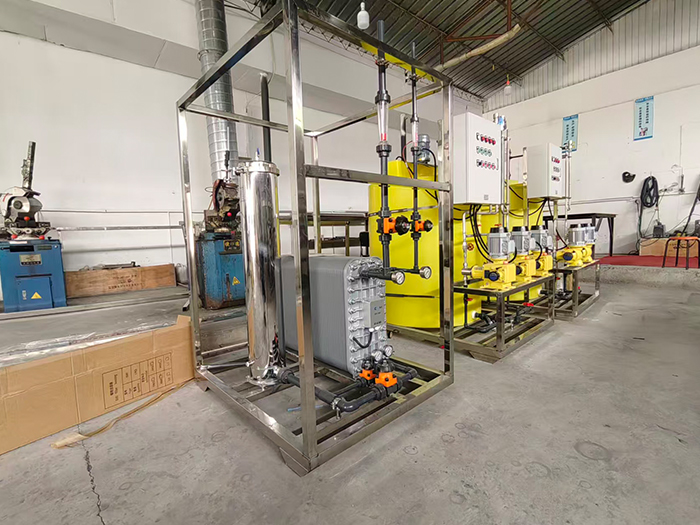
Yuan LaiEDIThe ultra-pure water equipment uses electro-deionization technology.EDIElectrodeionization is a water purification method that combines the dual advantages of electrodialysis and ion exchange. It does not require acid-base chemical regeneration and can continuously and stably prepare high-purity ultrapure water. Under the action of a direct current electric field, ion separation in water is completed. At the same time, water is electrolyzed to generate hydrogen ions and hydroxide ions, achieving automatic regeneration of the resin without the need to stop the machine for manual regeneration. The pre-treatment combined with reverse osmosis can prevent oxidized substances from damaging the resin, ensuring stable effluent quality and widely meeting the high-standard water usage requirements of various industries.
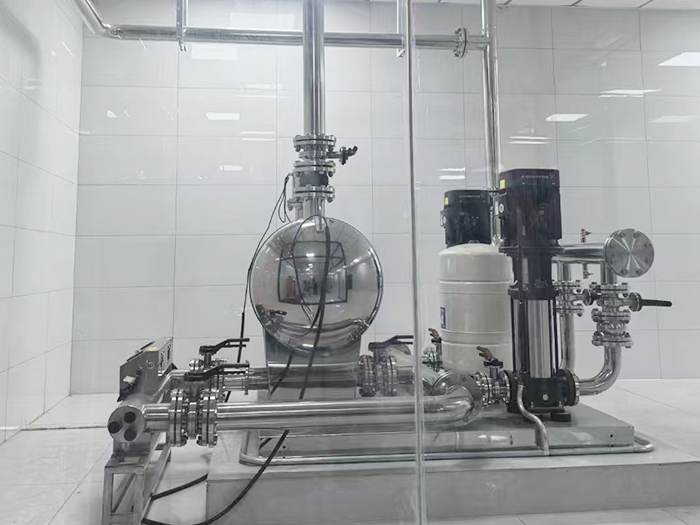
The non-negative pressure water supply equipment can be directly connected to the municipal water supply network, making full use of the residual pressure of the original network for superimposed water supply. Fully enclosed operation does not require the construction of a domestic water tank, eliminating secondary pollution. Intelligent variable frequency voltage stabilization, energy-saving, quiet and easy installation, it is the preferred equipment for secondary water supply in high-rise residential buildings and commercial buildings.
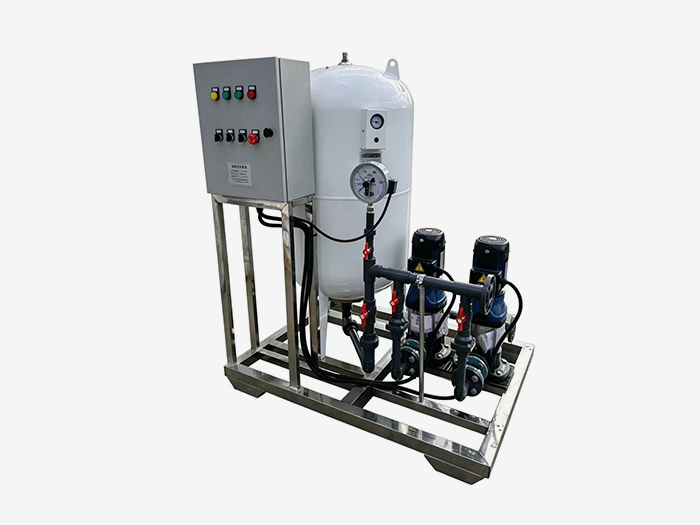
Constant pressure water supply equipment is widely used in central air conditioning, floor heating, industrial closed-loop water circulation, and boiler systems. It integrates automatic pressure stabilization, automatic water replenishment, automatic exhaust, pressure relief and buffering functions. It stabilizes the pressure in the pipeline network, eliminates abnormal sounds caused by air blockage, and prevents damage from negative pressure and water shortage in the pipeline. It is an essential supporting equipment for HVAC and circulating water systems.











 Landline:+86 010 59792055
Landline:+86 010 63780188
 Mobile:+86 13910114728
 Email:bjyuanlai@163.com
 Email:Wanda Plaza, Fengke Road, Fengtai District, BeijingBseat6Courtyard No.3Building No.7layer708
Yuanlai Homepage Softened water equipment Reverse osmosis pure water equipment Water supply equipment Engineering case Technical service Enter Yuanlai Site map
Softened water equipment Reverse osmosis pure water equipment Water purification equipment Water supply equipment Automatic dosing equipment High-purity water (ultra-pure water) equipment Wholesale of water treatment accessories
Electric power industry Petrochemical industry The electronic semiconductor industry The photovoltaic new energy industry Pharmaceuticals & Biochemical Engineering School research units Food and beverage industry Enterprises and public institutions
Reverse osmosis membrane Star-counting pump Fleck Valve Runxin Valve Instruments and meters Ultrafiltration membrane Softening resin Resin tank
