Bookmark this site Online message 中文站Welcome to the official website of Beijing Yuanlai Water Treatment Equipment Co., LTD.!
Service Hotline
+86 010 59792055 / +86 13910114728

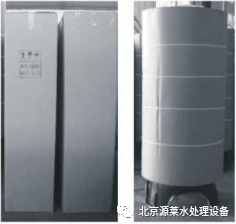
I.Receive RECEIVING
The client is at Beijing YuanlaiThe fiberglass reinforced plastic tank customized by the companyDiameter at shipment18FRP tanks of sizes below inches are all packed in cartons. Diameter21For fiberglass reinforced plastic (FRP) tanks of inches and above in size, the outside is covered with polyethylene gasket film and then protected by cardboard.
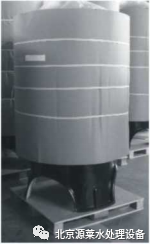
The customer isBeijing YuanlaiThe fiberglass reinforced plastic tank customized by the companyWhen shipped in containers, the diameter18FRP tanks of sizes below inches are all packed in cartons. Diameter21For fiberglass reinforced plastic (FRP) tanks of inches and above in size, the exterior is covered with polyethylene air cushion film and then protected by cardboard. Diameter40Wooden bases are added to the bottom of fiberglass reinforced plastic tanks larger than one inch.
Ii. Basic Loading and Unloading Rules
This guide instructs users to load and unload tanks using appropriate methods. Improper loading and unloading methods may lead to damage to the tank.
1, The tank should be stored in its packaging before installation. Please do not open the packaging before installation.
2, All4The inch threaded mouth cans are manually loaded and unloaded. Handle them with care to prevent dropping or impact.
3, 6When hoisting the tank body of the inch flange tank with a trolley or crane, the methods that are allowed to be used are:
(1) Hoist with a flange
Empty tank bodies can be hoisted using flanges, with a hanging device provided by the user installed on the upper part of the flange. Or it can be hung with a cable covered with nylon. The hoisting cable should at least be capable of hanging10000Pound4500Kilograms.
Note: If steel cables are used, their exterior must be protected with soft materials to prevent steelThe flange sealing surface of the cable is damaged.
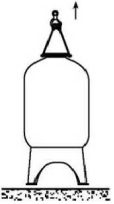
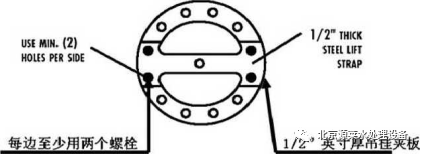
(2) Use fixed clamps for hoisting
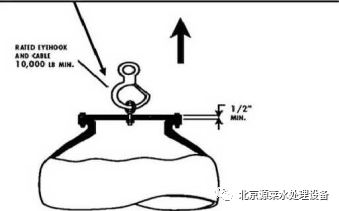
Use the thickness provided by the customer1/2Inches12.7mm The steel hanging device is connected to the flange.At least two bolts should be connected on each side. See the picture below. Then use hooks and steel cables (at least they can bear it. 10000Pound;4500Hoisting in kilograms.
The lifting hook and steel cable should be able to lift at least10000Pound4500"Kilogram"
4Prohibited loading and unloading methods
(1)Rolling or sliding the tank is prohibited.
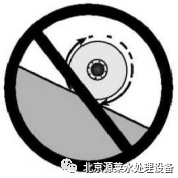
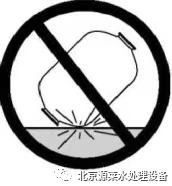
(2 )It is strictly prohibited to drop the tank, strike it with hard objects, or rub it against the walls, partition walls, tools or other equipment that come into contact with it.
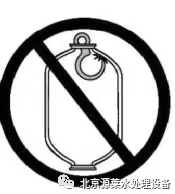
(3)It is prohibited to use hooks inside the tankHoisting.
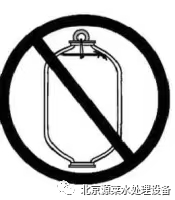
(4)It is prohibited to use stick-like objects inside the tankHoisting.
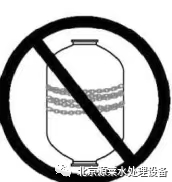
(5)Do not use steel wire ropes or chains to fix the tank.It can be fixed with canvas straps or nylon straps, which can avoid itDamage the flange part.
Iii. Installation of fiberglass three-legged base or circular base tank bodies
To prevent damage to the fiberglass base, it is recommended to use the following procedures for loading, unloading, operating and installing the tankBody.
Please use the recommended hoisting method mentioned above to lift the tank from the base and remove the packaging. Place the tank on the foundation platform to ensure it is level. Use the pressure plate and expansion bolts to fix the tank base to the ground.
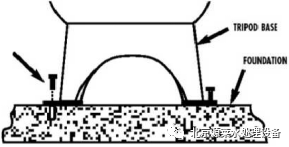 3/8(9millimeter)screw
The fixed pressure plates and expansion bolts shall be provided by the customer. (It is recommended to install them on the tank body, resin and pipelines.After installation, fix it to the ground.
four,Recommended installation methods for negative pressure protectors
The maximum negative pressure allowed to occur inside the tank is5 " Hg(127mmHg),Due to the water treatment equipment Negative pressure conditions often occur in the system. For instance, the high-pressure pump of reverse osmosis equipment often directly operates from the filter Water absorption in the tank; For instance, when the system is being emptied, the height difference between the tank position and the emptying point causes siphoningDue to the negative pressure generated, we require that each tank be equipped with a vacuum failure valve (for negative pressure protection)"Equipment." For those without a vacuum breaking valve installed, if there is a tank leakage, the user is responsible firstProvide the dealer with evidence that there is no possibility of negative pressure (such as equipment system process control installation diagrams, equipment operationThe instruction manual, photos of the leaking tank area, on-site installation photos, etc. have been approved by the dealer, and the negative pressure has been eliminatedOnly after it is possible can further investigation assistance and relevant warranty commitments be obtained.
For tank leakage caused by the absence of a vacuum failure valve installed and without providing evidence to rule out the negative pressure cause, our company shall not be held responsible for the quality guarantee.
For the convenience of our users, we offer our customers vacuum failure valves (anti-negative pressure protectors) at cost price.
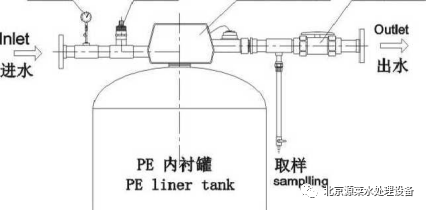
The method of installing the anti-negative pressure protector recommended by our company is shown in the following figure:
(1 )Top-mounted installation diagram
Pressure gauge Negative pressure valve Automatic or manual valve Manual ball valve
(2 ) 4Schematic diagram of side-mounted installation with a threaded mouth
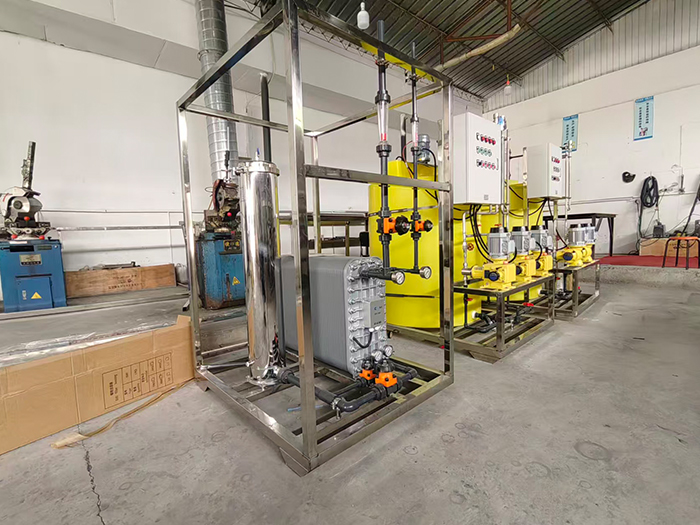
Yuan LaiEDIThe ultra-pure water equipment uses electro-deionization technology.EDIElectrodeionization is a water purification method that combines the dual advantages of electrodialysis and ion exchange. It does not require acid-base chemical regeneration and can continuously and stably prepare high-purity ultrapure water. Under the action of a direct current electric field, ion separation in water is completed. At the same time, water is electrolyzed to generate hydrogen ions and hydroxide ions, achieving automatic regeneration of the resin without the need to stop the machine for manual regeneration. The pre-treatment combined with reverse osmosis can prevent oxidized substances from damaging the resin, ensuring stable effluent quality and widely meeting the high-standard water usage requirements of various industries.
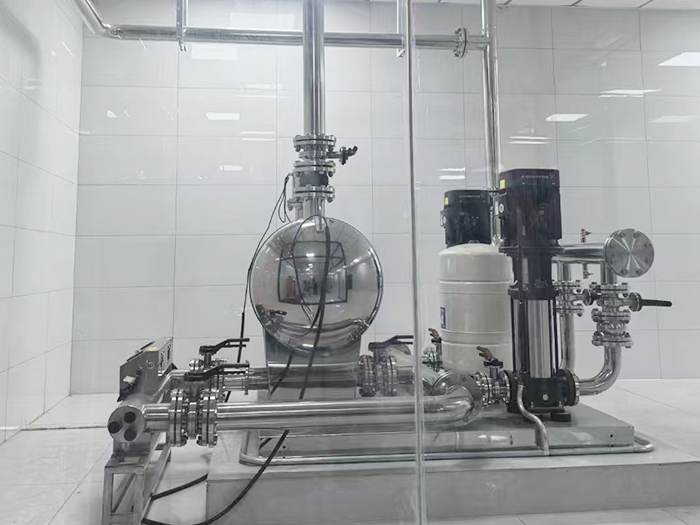
The non-negative pressure water supply equipment can be directly connected to the municipal water supply network, making full use of the residual pressure of the original network for superimposed water supply. Fully enclosed operation does not require the construction of a domestic water tank, eliminating secondary pollution. Intelligent variable frequency voltage stabilization, energy-saving, quiet and easy installation, it is the preferred equipment for secondary water supply in high-rise residential buildings and commercial buildings.
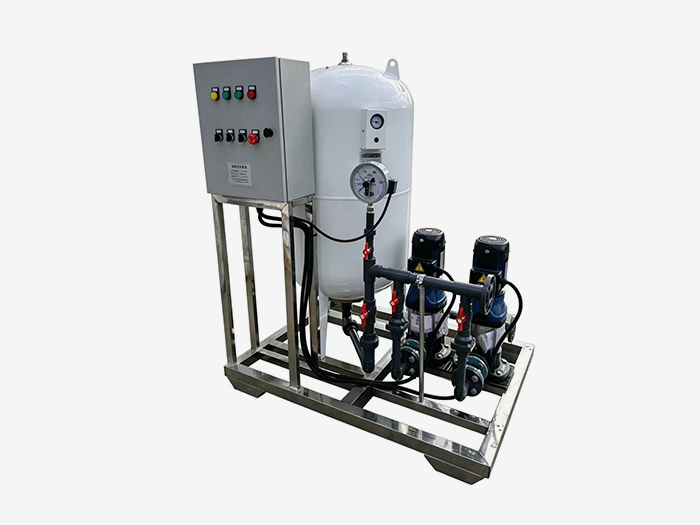
Constant pressure water supply equipment is widely used in central air conditioning, floor heating, industrial closed-loop water circulation, and boiler systems. It integrates automatic pressure stabilization, automatic water replenishment, automatic exhaust, pressure relief and buffering functions. It stabilizes the pressure in the pipeline network, eliminates abnormal sounds caused by air blockage, and prevents damage from negative pressure and water shortage in the pipeline. It is an essential supporting equipment for HVAC and circulating water systems.











 Landline:+86 010 59792055
Landline:+86 010 63780188
 Mobile:+86 13910114728
 Email:bjyuanlai@163.com
 Email:Wanda Plaza, Fengke Road, Fengtai District, BeijingBseat6Courtyard No.3Building No.7layer708
Yuanlai Homepage Softened water equipment Reverse osmosis pure water equipment Water supply equipment Engineering case Technical service Enter Yuanlai Site map
Softened water equipment Reverse osmosis pure water equipment Water purification equipment Water supply equipment Automatic dosing equipment High-purity water (ultra-pure water) equipment Wholesale of water treatment accessories
Electric power industry Petrochemical industry The electronic semiconductor industry The photovoltaic new energy industry Pharmaceuticals & Biochemical Engineering School research units Food and beverage industry Enterprises and public institutions
Reverse osmosis membrane Star-counting pump Fleck Valve Runxin Valve Instruments and meters Ultrafiltration membrane Softening resin Resin tank
