Bookmark this site Online message 中文站Welcome to the official website of Beijing Yuanlai Water Treatment Equipment Co., LTD.!
Service Hotline
+86 010 59792055 / +86 13910114728

Technical parameters of water softening equipment
Raw water hardness≤8mmol/L.
Effluent hardness≤0.03mmol/L.
Inlet pressure0.2 -0.5Mpa.
Water temperature5℃-45℃.
Free chlorine≤0.3mg/L.
Suspended matter<5mg/L.
Potassium and sodium content< Raw water hardness.
Iron content<0.3mg/L.
Working environment temperature5℃-50℃.
Relative humidity≤95%(25℃).
Power supply: AC220V±10%.
Resin model001×7Strongly acidic cation exchange resin.
Regenerative control: Co-current timing type, quantitative type.
Interface form: threaded orABSFrancois.
Power5-40W.
Product selection
one. Equipment selection
The selection of water softening equipment mainly depends on water consumption, raw water hardness and applicable sites
1.There are various models of equipment with the same water output, and they can be selected according to the actual water usage.
2.Raw water hardness
Hardness of raw water≤4nnol/LAt that time, the selection can be made based on the maximum water production capacity of the equipment listed in the table.
Hardness of raw water≤6mmol/LAt that time, the average water production capacity of the equipment can be selected for selection.
Hardness of raw water≤8mmol/LAt that time, it should be calculated based on the minimum water production capacity of the equipment.
Hardness of raw water>8mmol/LWhen necessary, multi-stage treatment should be selected. Generally, two-stage treatment can meet the requirements.
3.Water usage scenarios
If a hot water boiler or other similar equipment is used, the selection can be based on the high-water production capacity of the equipment. If water is supplied to a steam boiler, it is generally based on the evaporation capacity of the boiler1.2It should be matched with the water production capacity of the equipment.
two.Key points of design
The equipment itself has a simple structure and occupies a small area, so there are no special requirements in terms of design and installation. When installing the equipment, only the following points need to be noted
1.The equipment requires a simple horizontal foundation: approximately from the wall250-450mmDepending on the actual situation, you can stay on the edge and not know..
2.Since the equipment itself is relatively light, generally only the weight of the resin and water it contains needs to be considered.
3.Into the.The outlet pipe is generally a standard flange or threaded connection, and the material isU-PVC,It needs to be fixed and supported well. Do not rely on the valve body for support to prevent stress.
4.It should be installed on the water inlet pipeYType filter(Multi-media filters are excellent)And use a water pressure gauge to prevent dirt and impurities in the water inlet pipeline from clogging or damaging the control valve. When the equipment is being regenerated and flushed out, a floor drain or drainage system should be set up nearby.;
5.Salt water pipe: The salt water tank should be as close as possible to the softening tank, and the shorter the salt water pipe, the better.
6.The sewage pipe should not be longer than6Do not install a stop valve. The outlet should not be higher than the terminal opening of the valve body to avoid siphoning. The fewer elbows, the better.
7.Power distribution sockets should be installed on the wall near the equipment and be equipped with fuses(Generally, do not install switches)Good grounding is required.
Installation Guide
The water softener should be installed on a solid and level ground, and a drainage ditch should be designed nearby.
The salt tank should be placed close to the resin tank. To increase the salt absorption rate, the length of the smoking plastic pipe should be shortened as much as possible.
Filling resin: Pour the treated resin into the resin tank according to the approved filling quantity.
Remove the protective tape from the pipe, align the upper end of the pipe with the socket at the bottom of the control valve, and carefully turn the control valve clockwise(During the installation of the control valve, it is essential to ensure that the pipe is inserted into the valve body)The straight controller is fastened to the tank body.
Connect the pipes and power supply according to the installation diagram.
To start the water softener, the bypass valve should be closed first, then the outlet valve should be opened, and finally the inlet valve should be slowly opened(Note: If the inlet control valve is opened too quickly, the water and residual air in the pipeline will enter the water softener, causing the resin to flow out of the resin tank along with the water).
There should be sufficient regenerant in the salt tank to ensure the amount of salt used for regeneration in the next reduction cycle.
After the above installation and commissioning, samples should be taken for testing. Once the water quality meets the requirements, it can be put into water supply.
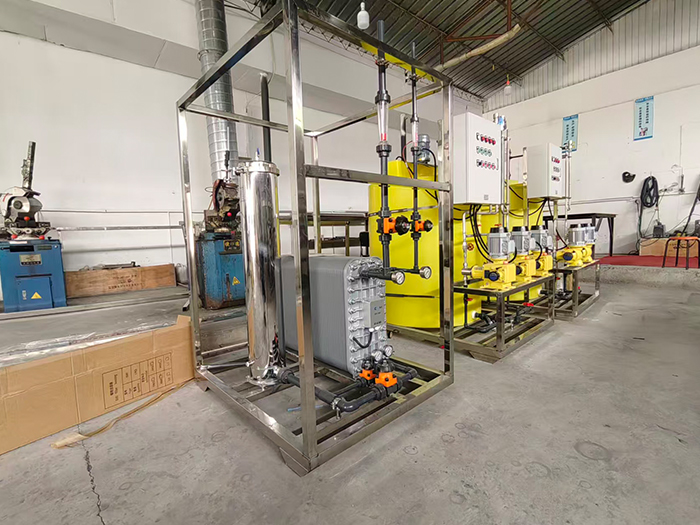
Yuan LaiEDIThe ultra-pure water equipment uses electro-deionization technology.EDIElectrodeionization is a water purification method that combines the dual advantages of electrodialysis and ion exchange. It does not require acid-base chemical regeneration and can continuously and stably prepare high-purity ultrapure water. Under the action of a direct current electric field, ion separation in water is completed. At the same time, water is electrolyzed to generate hydrogen ions and hydroxide ions, achieving automatic regeneration of the resin without the need to stop the machine for manual regeneration. The pre-treatment combined with reverse osmosis can prevent oxidized substances from damaging the resin, ensuring stable effluent quality and widely meeting the high-standard water usage requirements of various industries.
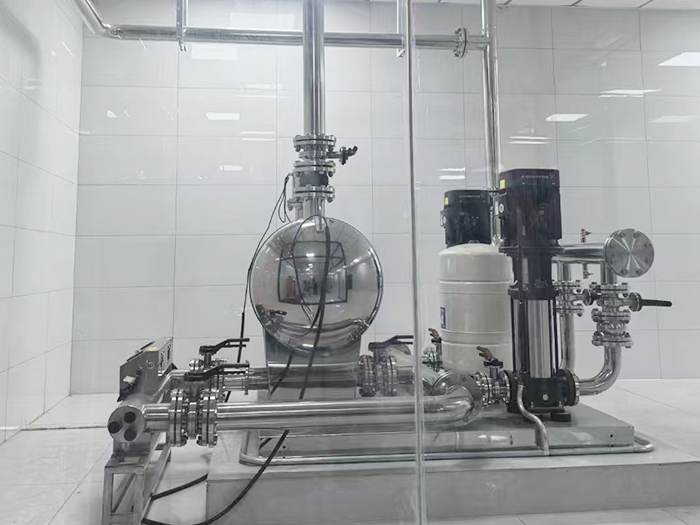
The non-negative pressure water supply equipment can be directly connected to the municipal water supply network, making full use of the residual pressure of the original network for superimposed water supply. Fully enclosed operation does not require the construction of a domestic water tank, eliminating secondary pollution. Intelligent variable frequency voltage stabilization, energy-saving, quiet and easy installation, it is the preferred equipment for secondary water supply in high-rise residential buildings and commercial buildings.
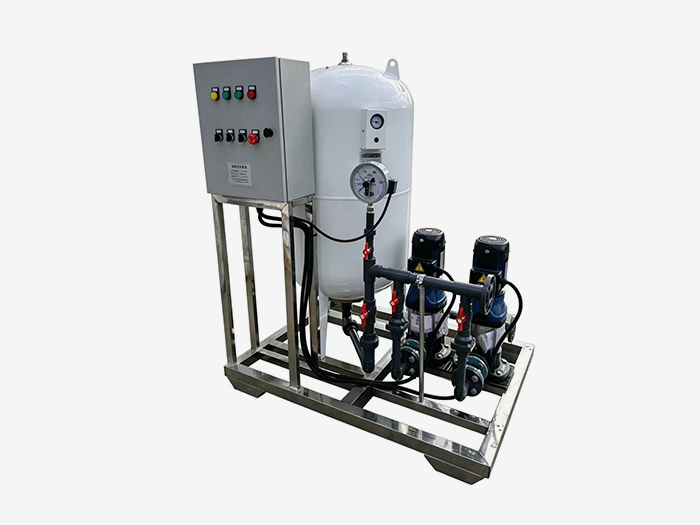
Constant pressure water supply equipment is widely used in central air conditioning, floor heating, industrial closed-loop water circulation, and boiler systems. It integrates automatic pressure stabilization, automatic water replenishment, automatic exhaust, pressure relief and buffering functions. It stabilizes the pressure in the pipeline network, eliminates abnormal sounds caused by air blockage, and prevents damage from negative pressure and water shortage in the pipeline. It is an essential supporting equipment for HVAC and circulating water systems.











 Landline:+86 010 59792055
Landline:+86 010 63780188
 Mobile:+86 13910114728
 Email:bjyuanlai@163.com
 Email:Wanda Plaza, Fengke Road, Fengtai District, BeijingBseat6Courtyard No.3Building No.7layer708
Yuanlai Homepage Softened water equipment Reverse osmosis pure water equipment Water supply equipment Engineering case Technical service Enter Yuanlai Site map
Softened water equipment Reverse osmosis pure water equipment Water purification equipment Water supply equipment Automatic dosing equipment High-purity water (ultra-pure water) equipment Wholesale of water treatment accessories
Electric power industry Petrochemical industry The electronic semiconductor industry The photovoltaic new energy industry Pharmaceuticals & Biochemical Engineering School research units Food and beverage industry Enterprises and public institutions
Reverse osmosis membrane Star-counting pump Fleck Valve Runxin Valve Instruments and meters Ultrafiltration membrane Softening resin Resin tank
