Bookmark this site Online message 中文站Welcome to the official website of Beijing Yuanlai Water Treatment Equipment Co., LTD.!
Service Hotline
+86 010 59792055 / +86 13910114728

The working principle of fully automatic water softening equipment
The working principle of fully automatic water softening equipment 1. Reaction process The fully automatic water softening equipment is a water treatment device that uses the principle of ion exchange. The sodium ion exchange resin in the water softening equipment adsorbs calcium and magnesium ions in the water and releases sodium ions to soften the water quality. The reaction equation for water softening is: (Where R represents the resin body) 2RNa+Ca2+=-R2Ca+2Na+ After the resin is saturated with calcium and magnesium ions, it can be reconverted into the sodium form and restore its exchange capacity after being treated with salt solution. The reaction equation of this regeneration process is: R2Ca+2NaCl=2RNa+CaCl2. The repeated forward and reverse ion exchanges mentioned above can continuously produce softened water. 2. Work process
Details >The working principle of water softening equipment
The working principle of water softening equipment is that since the hardness of water is mainly formed and represented by calcium and magnesium, cation exchange resin (water softener) is generally used to replace Ca2+ and Mg2+ (the main components of scale) in water. As the amount of Ca2+ and Mg2+ in the resin increases, the efficiency of the resin in removing Ca2+ and Mg2+ gradually decreases. When the resin has absorbed a certain amount of calcium and magnesium ions, it undergoes regeneration. The regeneration process involves flushing the resin layer with brine from the salt tank to displace the hardness ions on the resin and discharge them out of the tank with the regeneration waste liquid. Thus, the resin regains its softening exchange function. Since the hardness of water is mainly formed and represented by calcium and magnesium, the principle of sodium ion exchange softening treatment is to pass the raw water through sodium-type cation exchange resin
Details >With the development of industry, market demands and the requirements of environmental protection, the rational utilization and protection of water have been receiving increasing attention. It also puts forward higher requirements for water treatment technology. In water treatment equipment, membranes have become the core components, and their performance directly affects the quality of treatment. At the same time, the development of membrane technology has also given rise to different types of membranes. Now let's talk about what microfiltration membranes (NF), ultrafiltration membranes (UF), nanofiltration membranes (NF), and reverse osmosis membranes (RO) are? Type definition: Microfiltration membranes (NF) are a type of organic or inorganic membrane between conventional filtration and ultrafiltration, which is based on the size of the pores and uses pressure gradient as the driving force to selectively separate substances with a particle size larger than the pore size. Ultrafiltration membranes (UF) use pressure difference as the driving force and are based on ultrafiltration technology to selectively separate substances through the micropo
Details >How to distinguish the authenticity of Perlite resin
Polite resin is a product of the Polite Group. This resin effectively removes Ca2+ and Mg2+ from water through ion exchange technology, thereby reducing water hardness. It is widely used in softening and desalination, electronic scale removal devices, filtration and separation, boiler softening, industrial softening equipment, softening devices, household tap water softening, etc. Due to its superior performance, it has won a very good reputation. However, counterfeit and shoddy products are also emerging in an endless stream, which we call "shanzhai goods". If you accidentally spend money on counterfeit goods, it will seriously affect the production and usage efficiency. Now let's talk about how to tell the authenticity of Potalite resin. Packaging inspection method This method can quickly determine the authenticity of Perlite resin. As shown in the picture, it can be quickly obtained from the packaging
Details >Precautions when purchasing reverse osmosis membranes
The sources of general raw water can roughly be divided into ① Surface water - rivers, lakes and reservoirs; ② Groundwater - well water; ③ Wastewater - industrial wastewater and municipal wastewater; ④ Seawater. At present, reverse osmosis technology is commonly used in water treatment methods, among which reverse osmosis membranes (RO membranes) are the most crucial components. Reverse osmosis membranes are semi-permeable membranes capable of separating substances (dissolved salts, colloids, microorganisms, organic matter) from water. Due to the advantages of their systems such as good water quality, low energy consumption, no pollution, simple process, and easy operation, they are increasingly favored by all sectors. However, the market is flooded with various reverse osmosis membrane brands, and the same brand has multiple models, making it difficult to choose a reverse osmosis membrane. Therefore, here we will discuss the matters needing attention when purchasing reverse osmosis membranes. I. Water Quality and Quantity TDS (Total Dissolved
Details >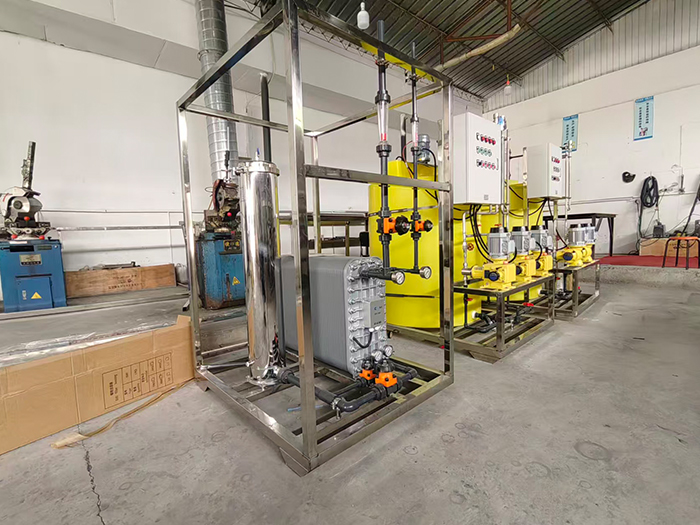
Yuan LaiEDIThe ultra-pure water equipment uses electro-deionization technology.EDIElectrodeionization is a water purification method that combines the dual advantages of electrodialysis and ion exchange. It does not require acid-base chemical regeneration and can continuously and stably prepare high-purity ultrapure water. Under the action of a direct current electric field, ion separation in water is completed. At the same time, water is electrolyzed to generate hydrogen ions and hydroxide ions, achieving automatic regeneration of the resin without the need to stop the machine for manual regeneration. The pre-treatment combined with reverse osmosis can prevent oxidized substances from damaging the resin, ensuring stable effluent quality and widely meeting the high-standard water usage requirements of various industries.
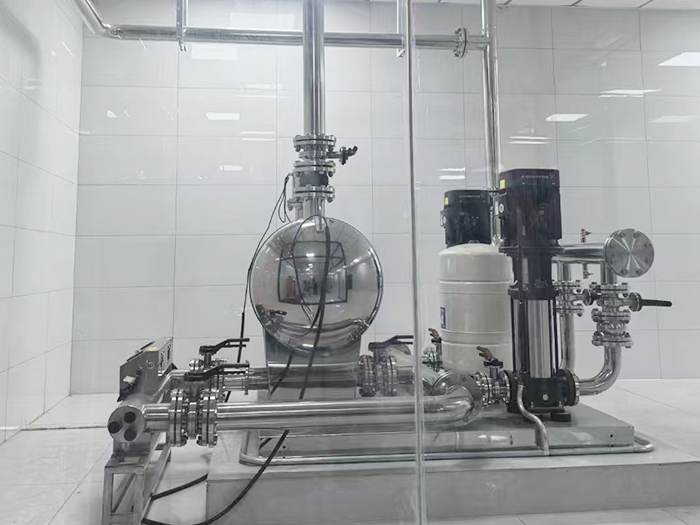
The non-negative pressure water supply equipment can be directly connected to the municipal water supply network, making full use of the residual pressure of the original network for superimposed water supply. Fully enclosed operation does not require the construction of a domestic water tank, eliminating secondary pollution. Intelligent variable frequency voltage stabilization, energy-saving, quiet and easy installation, it is the preferred equipment for secondary water supply in high-rise residential buildings and commercial buildings.
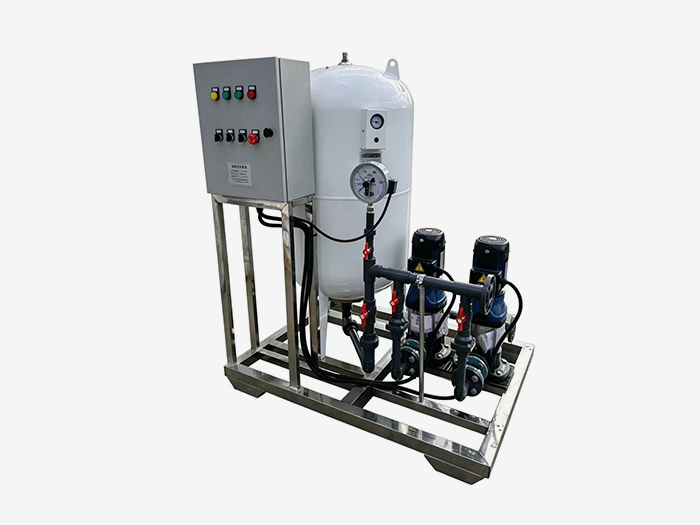
Constant pressure water supply equipment is widely used in central air conditioning, floor heating, industrial closed-loop water circulation, and boiler systems. It integrates automatic pressure stabilization, automatic water replenishment, automatic exhaust, pressure relief and buffering functions. It stabilizes the pressure in the pipeline network, eliminates abnormal sounds caused by air blockage, and prevents damage from negative pressure and water shortage in the pipeline. It is an essential supporting equipment for HVAC and circulating water systems.











 Landline:+86 010 59792055
Landline:+86 010 63780188
 Mobile:+86 13910114728
 Email:bjyuanlai@163.com
 Email:Wanda Plaza, Fengke Road, Fengtai District, BeijingBseat6Courtyard No.3Building No.7layer708
Yuanlai Homepage Softened water equipment Reverse osmosis pure water equipment Water supply equipment Engineering case Technical service Enter Yuanlai Site map
Softened water equipment Reverse osmosis pure water equipment Water purification equipment Water supply equipment Automatic dosing equipment High-purity water (ultra-pure water) equipment Wholesale of water treatment accessories
Electric power industry Petrochemical industry The electronic semiconductor industry The photovoltaic new energy industry Pharmaceuticals & Biochemical Engineering School research units Food and beverage industry Enterprises and public institutions
Reverse osmosis membrane Star-counting pump Fleck Valve Runxin Valve Instruments and meters Ultrafiltration membrane Softening resin Resin tank
