Bookmark this site Online message 中文站Welcome to the official website of Beijing Yuanlai Water Treatment Equipment Co., LTD.!
Service Hotline
+86 010 59792055 / +86 13910114728

Common questions about the process flow and operation of reverse osmosis equipment
Reverse osmosis is a membrane separation technology that uses pressure as the driving force and the mechanical energy of selectively permeable (semi-permeable) membranes. When the pressure applied in the system is greater than the osmotic pressure of the feed water solution, water molecules continuously pass through the membrane, flow through the product water channel into the pipe, and then flow out from one end. Impurities in the water, such as ions, organic matter, viruses, etc., are retained on the feed water side of the membrane. Then it flows out from the concentrated water outlet end, thereby achieving the purpose of separation and purification. Reverse osmosis equipment can block all dissolved salts and organic substances with a molecular weight greater than 100, but allow water molecules to pass through. The desalination rate of reverse osmosis composite membranes is generally over 98%. They are widely used in the preparation of industrial pure water and electronic ultrapure water, the production of drinking purified water, boiler feed water and other processes. Using reverse osmosis equipment before ion exchange can significantly reduce the operating
Details >A brief introduction to the regeneration of British Polite resin
To ensure that the resin can play its role and maintain good properties during use, the rational application of PUROLITE resin is of great significance for extending the resin's service life. Here we summarize three situations where anion resins are contaminated by regeneration acid for everyone. There are three situations where the British Polite resin can be contaminated. Due to poor stratification, the anion and cation resins will mix together. When the cation resin is regenerated, this part of the anion resin is often worn or broken, causing the particles to become smaller and the density to decrease, and they will mix with the anion resin and be difficult to separate. At this time, the anion resin is prone to acid contamination. One situation is due to design reasons, such as the middle drainage pipe being designed too high, causing the anion resin to be at the lower part of the middle drainage pipe, or because the ratio of cation and anion resins is not right during resin filling
Details >How does the sodium ion exchange water softening process reduce the alkalinity in the raw water?
The sodium ion exchange water softening method requires that the alkalinity of the raw water not be reduced during the softening process. When the alkalinity (pH value) in the raw water is too high, it will affect the quality of steam, increase the blowdown rate and raise the ineffective heat loss. The metal heating surfaces such as the drum may also become caustic embrittlement due to an excessively high PH value, which affects the operation and service life of the pot. Therefore, sulfuric acid solution should be added to the water after sodium ion exchange for neutralization treatment to reduce the alkalinity of the water. During the neutralization and acidification process, CO2 will be produced. A CO2 remover can be set up to remove it. When operating, pay attention to the control of the amount of acid added to prevent the boiler from being corroded by acid.
Details >Answer: (1) The heating system is divided into two forms: steam boiler heating and hot water boiler heating. The fuel for boilers can be classified into solid fuels (such as coal and other solid fuels), liquid fuels (such as diesel, heavy oil and other liquid fuels), and gaseous fuels (such as natural gas, coal gas, biogas and other gaseous fuels). The operation of boilers in sewage treatment plants is generally at medium pressure (with a rated pressure of 3.0 to 4.9MPa) and low pressure (with a rated pressure of 2.45MPa). The main contents of the individual commissioning and preliminary acceptance of the boilers include: ① Boiler body and pressure resistance test. ② Local switch control box of the boiler. ③ Boiler softening water treatment device, deionized water device. ④ Pressure testing of heating pipelines, valves and valves. ⑤ The tail gas treatment device of the boiler. ⑥ Storage device for boiler fuel. ⑦ Boiler room
Details >Reverse osmosis purified water equipment for beverage, beer, liquor and pharmaceutical production
Product function description: 1. The mechanical filter is mainly used to remove impurities such as rust, sediment, algae, and suspended solids from water, reduce water turbidity, and make the effluent turbidity less than 0.5NTU, CODMN less than 1.5mg/L, iron content less than 0.05mg/L, and SDI≤ 5 Backwashing, forward washing and steam-water scrubbing can be carried out at any time through multi-way valves or PLC control to wash away the dirt on its surface, prevent clogging and restore its filtering capacity. 2. Activated carbon filter: Activated carbon has extremely strong adsorption and filtration performance, and it can effectively adsorb residual chlorine, discoloration, odor, organic matter, etc. in water. As reverse osmosis membranes are highly sensitive to residual chlorine and organic matter, activated carbon is configured to adsorb residual chlorine and organic matter, ensuring that the residual chlorine in the effluent is... 0.1 mg
Details >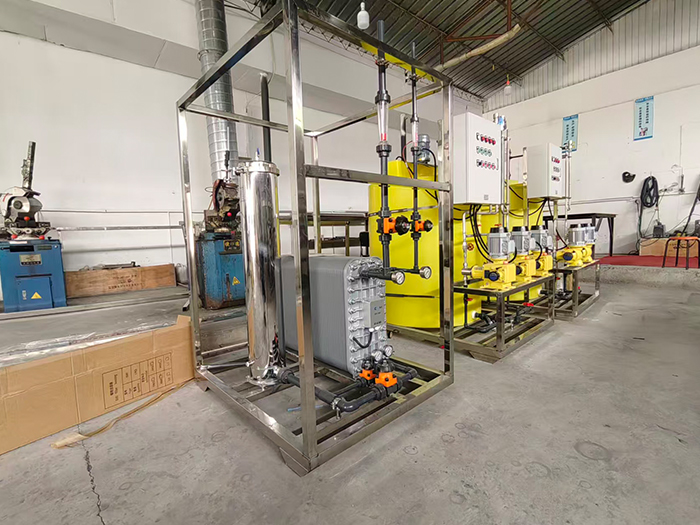
Yuan LaiEDIThe ultra-pure water equipment uses electro-deionization technology.EDIElectrodeionization is a water purification method that combines the dual advantages of electrodialysis and ion exchange. It does not require acid-base chemical regeneration and can continuously and stably prepare high-purity ultrapure water. Under the action of a direct current electric field, ion separation in water is completed. At the same time, water is electrolyzed to generate hydrogen ions and hydroxide ions, achieving automatic regeneration of the resin without the need to stop the machine for manual regeneration. The pre-treatment combined with reverse osmosis can prevent oxidized substances from damaging the resin, ensuring stable effluent quality and widely meeting the high-standard water usage requirements of various industries.
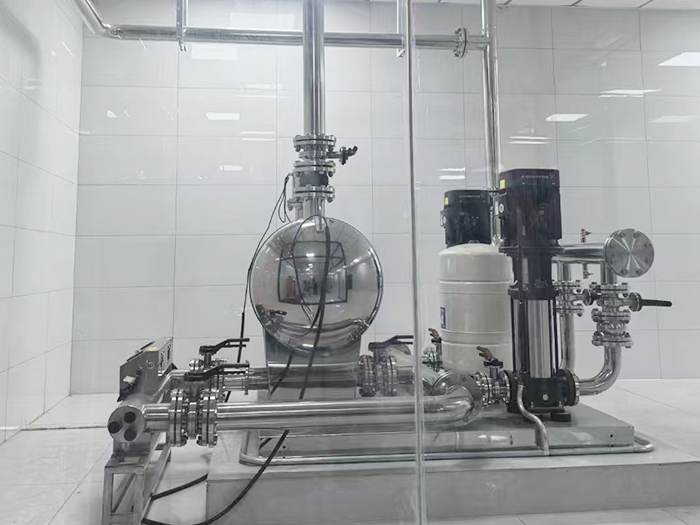
The non-negative pressure water supply equipment can be directly connected to the municipal water supply network, making full use of the residual pressure of the original network for superimposed water supply. Fully enclosed operation does not require the construction of a domestic water tank, eliminating secondary pollution. Intelligent variable frequency voltage stabilization, energy-saving, quiet and easy installation, it is the preferred equipment for secondary water supply in high-rise residential buildings and commercial buildings.
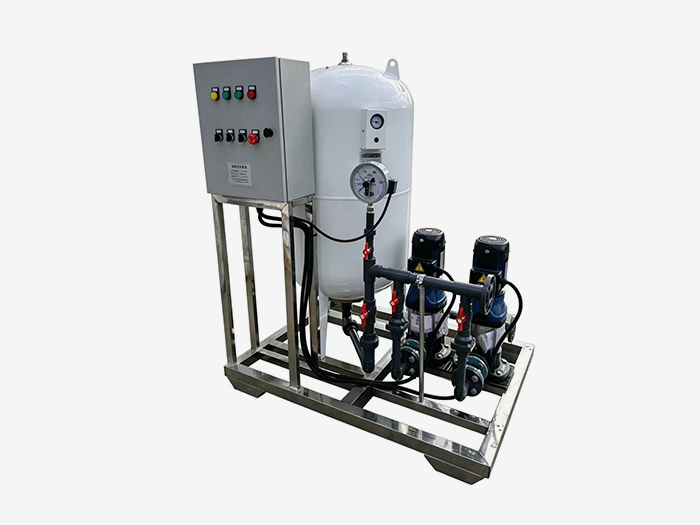
Constant pressure water supply equipment is widely used in central air conditioning, floor heating, industrial closed-loop water circulation, and boiler systems. It integrates automatic pressure stabilization, automatic water replenishment, automatic exhaust, pressure relief and buffering functions. It stabilizes the pressure in the pipeline network, eliminates abnormal sounds caused by air blockage, and prevents damage from negative pressure and water shortage in the pipeline. It is an essential supporting equipment for HVAC and circulating water systems.











 Landline:+86 010 59792055
Landline:+86 010 63780188
 Mobile:+86 13910114728
 Email:bjyuanlai@163.com
 Email:Wanda Plaza, Fengke Road, Fengtai District, BeijingBseat6Courtyard No.3Building No.7layer708
Yuanlai Homepage Softened water equipment Reverse osmosis pure water equipment Water supply equipment Engineering case Technical service Enter Yuanlai Site map
Softened water equipment Reverse osmosis pure water equipment Water purification equipment Water supply equipment Automatic dosing equipment High-purity water (ultra-pure water) equipment Wholesale of water treatment accessories
Electric power industry Petrochemical industry The electronic semiconductor industry The photovoltaic new energy industry Pharmaceuticals & Biochemical Engineering School research units Food and beverage industry Enterprises and public institutions
Reverse osmosis membrane Star-counting pump Fleck Valve Runxin Valve Instruments and meters Ultrafiltration membrane Softening resin Resin tank
