Bookmark this site Online message 中文站Welcome to the official website of Beijing Yuanlai Water Treatment Equipment Co., LTD.!
Service Hotline
+86 010 59792055 / +86 13910114728

Features of the double-valve and double-tank water softening equipment
The performance features of the equipment: The single-valve double-tank water softening equipment can be classified into various series such as time-controlled type, flow-controlled type, and continuous soft water supply system type. It has multiple combination forms including single-valve single-tank, single-valve double-tank, double-valve double-tank in parallel, and large multi-valve multi-tank in series, meeting users' different water usage demands. The flow type is fully automatic regeneration with the set flow control. The flow rate can be set according to the different resin filling volume and water quality conditions. The time type is based on the resin filling volume and water quality conditions, combined with the specific hourly demand to convert the time. The fully automatic regeneration is controlled by the set time (the regeneration cycle can be set within 7 days or 12 days as needed, and the regeneration time can be selected arbitrarily within 24 hours). &
Details >Selection Guidelines for Water Softening Equipment (Water Softener
There are different models of water softening equipment (softeners), and different models of water softening equipment (softeners) have different performances. When choosing a water softening equipment (water softener) that suits your actual situation, you should select it based on the following aspects. The selection of the water softening equipment (water softener) should be based on the industry to which it is applied. The main application industries of water softening equipment (softeners) include: water for heating, water for steam boilers, water for the steel smelting industry, water for heat exchange stations, process water, and cooling make-up water, etc. Different models of water softening equipment (softeners) can be selected based on the water consumption and industry characteristics of different industries. 2. It is also necessary to provide the requirements for water supply, flow rate, operating time, water consumption, and whether continuous water supply is needed. If so,
Details >Installation steps and precautions for water softening equipment (water softener)
Softening water equipment (water softener) brings great convenience and benefits to our daily life and production, especially in winter, it brings us warmth. The following will introduce the installation steps and precautions of softening water equipment (water softener) from the aspects of location selection, filling and testing. The location selection of the water softening equipment: The water softening equipment (water softener) should be placed on a solid and level ground. The distance from the drainage ditch should be as short as possible, and the distance from heat sources such as boilers should be more than 3 meters. Note: Do not approach acidic liquids or gases. If it is necessary to add other water treatment equipment (deaerators, filters), space should be reserved. 2. The position of the regeneration salt tank and resin of the softened water equipment should be placed as close as possible to the exchange column. To make full use of the salt solution, the size of the salt suction plastic pipe should be shortened as much as possible. 3. Softening
Details >What should be noted when storing softened water resin?
Softening resin (also known as ion exchange resin) plays a crucial role in water softening equipment, and its quality directly affects the softening effect. So, what should be noted when storing softening resin? (1) Anti-freezing ion exchange resin should be stored indoors, and the ambient temperature should be maintained between 5 and 40 degrees Celsius. Resins all contain a certain amount of moisture when leaving the factory. If the temperature drops below 0℃, the water in the resin will freeze and increase in volume, causing the resin to break and crack, thereby losing its ion exchange capacity. If the ambient temperature around the resin may be below 5℃, to prevent the resin from freezing, it can be stored in a salt water solution. However, the concentration of brine should be prepared according to the temperature conditions. Different temperatures require the preparation of brine of different concentrations to prevent the brine from freezing and to protect the resin from being damaged
Details >Operating Precautions for Activated carbon filters
Let's start with the function of the activated carbon filter to talk about the precautions for its operation. The activated carbon filter has two functions: (1) It utilizes the active surface of activated carbon to remove free chlorine from water, thereby preventing ion exchange resins, especially cation exchange resins, in chemical water treatment systems from being oxidized by free chlorine. (2) Remove organic matter from water, such as humic acid, to reduce the contamination of strongly basic anion exchange resins by organic matter. According to statistics, through activated carbon filters, 60% to 80% of colloidal substances, about 50% of iron and 50% to 60% of organic matter in water can be removed. In the actual operation of activated carbon filters, the main considerations include the turbidity of the influent water, the backwashing cycle, and the backwashing intensity, etc. (a) High turbidity of the incoming bed will bring excessive impurities to the activated carbon filter layer, which
Details >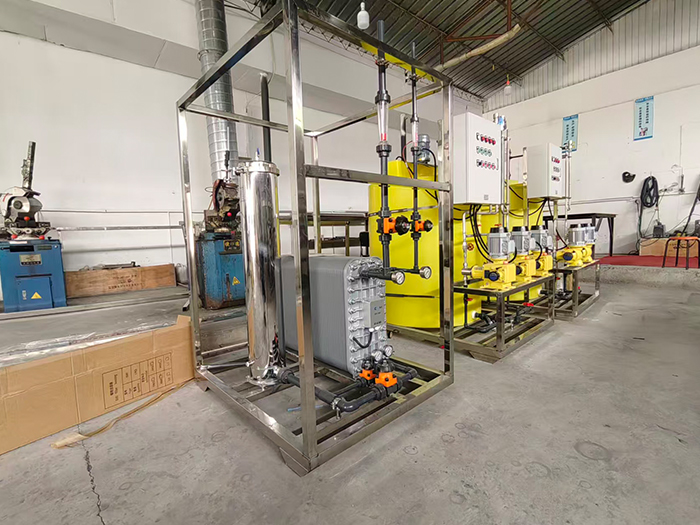
Yuan LaiEDIThe ultra-pure water equipment uses electro-deionization technology.EDIElectrodeionization is a water purification method that combines the dual advantages of electrodialysis and ion exchange. It does not require acid-base chemical regeneration and can continuously and stably prepare high-purity ultrapure water. Under the action of a direct current electric field, ion separation in water is completed. At the same time, water is electrolyzed to generate hydrogen ions and hydroxide ions, achieving automatic regeneration of the resin without the need to stop the machine for manual regeneration. The pre-treatment combined with reverse osmosis can prevent oxidized substances from damaging the resin, ensuring stable effluent quality and widely meeting the high-standard water usage requirements of various industries.
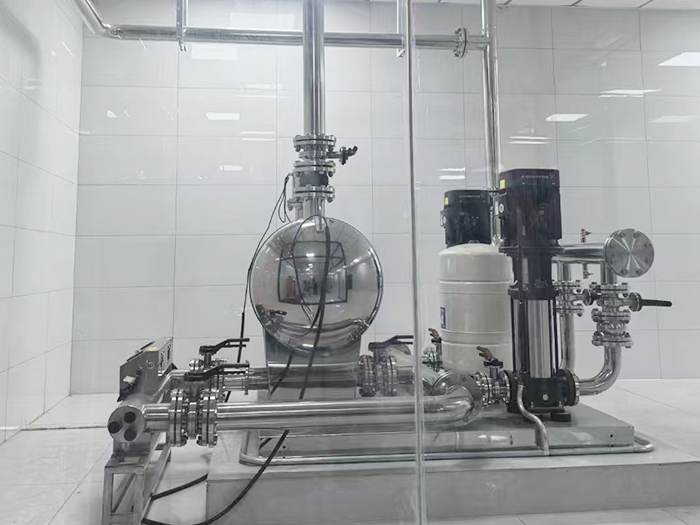
The non-negative pressure water supply equipment can be directly connected to the municipal water supply network, making full use of the residual pressure of the original network for superimposed water supply. Fully enclosed operation does not require the construction of a domestic water tank, eliminating secondary pollution. Intelligent variable frequency voltage stabilization, energy-saving, quiet and easy installation, it is the preferred equipment for secondary water supply in high-rise residential buildings and commercial buildings.
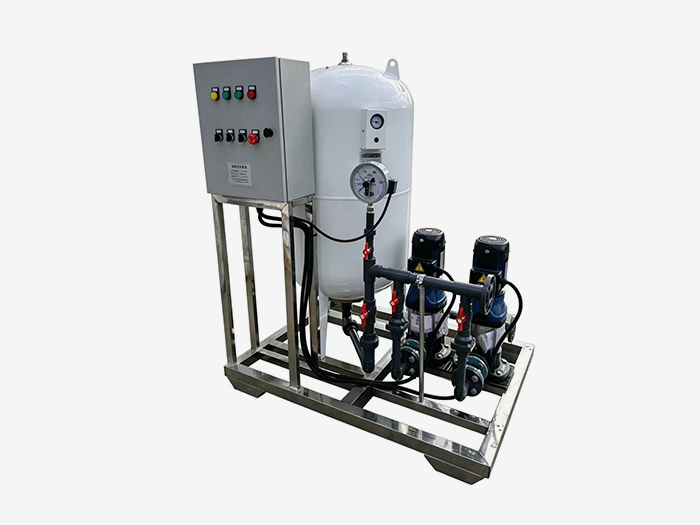
Constant pressure water supply equipment is widely used in central air conditioning, floor heating, industrial closed-loop water circulation, and boiler systems. It integrates automatic pressure stabilization, automatic water replenishment, automatic exhaust, pressure relief and buffering functions. It stabilizes the pressure in the pipeline network, eliminates abnormal sounds caused by air blockage, and prevents damage from negative pressure and water shortage in the pipeline. It is an essential supporting equipment for HVAC and circulating water systems.











 Landline:+86 010 59792055
Landline:+86 010 63780188
 Mobile:+86 13910114728
 Email:bjyuanlai@163.com
 Email:Wanda Plaza, Fengke Road, Fengtai District, BeijingBseat6Courtyard No.3Building No.7layer708
Yuanlai Homepage Softened water equipment Reverse osmosis pure water equipment Water supply equipment Engineering case Technical service Enter Yuanlai Site map
Softened water equipment Reverse osmosis pure water equipment Water purification equipment Water supply equipment Automatic dosing equipment High-purity water (ultra-pure water) equipment Wholesale of water treatment accessories
Electric power industry Petrochemical industry The electronic semiconductor industry The photovoltaic new energy industry Pharmaceuticals & Biochemical Engineering School research units Food and beverage industry Enterprises and public institutions
Reverse osmosis membrane Star-counting pump Fleck Valve Runxin Valve Instruments and meters Ultrafiltration membrane Softening resin Resin tank
