Bookmark this site Online message 中文站Welcome to the official website of Beijing Yuanlai Water Treatment Equipment Co., LTD.!
Service Hotline
+86 010 59792055 / +86 13910114728

Classification and water quality standards of laboratory ultrapure water equipment
Laboratory ultrapure water equipment is a specialized pure water preparation device for experiments in laboratories and tests in testing rooms. It is particularly suitable for application in testing, scientific research institutions, hospital testing rooms and laboratories, etc. Laboratory ultrapure water equipment can be regarded as a second-generation product in terms of grade, with the first generation being the traditional distiller. Now let's talk about the classification of laboratory ultrapure water equipment and water quality standards. I. Classification of Laboratory Ultrapure Water Equipment Types 1. Conventional analytical Ultrapure water machine. This relatively common type of equipment is more suitable for routine analytical experiments and buffer solution preparation, etc. 2. Low organic matter type ultrapure water machine, which focuses on removing organic matter from water, is more suitable for liquid chromatography, gas chromatography, total organic carbon analysis, toxicology research, environmental protection experiment analysis, etc. 3. Non-heat source type ultrapure water machine, this type of ultrapure water machin
Details >Pharmaceutical factory ultrapure water equipment must be strictly implemented in accordance with GMP standards. The relevant material selection and installation standards are as follows: 1. The design, selection and installation of pharmaceutical ultrapure water equipment should meet production requirements, be easy to clean, or be convenient for production operation and maintenance, and be able to prevent errors and reduce pollution. 2. The surfaces of the equipment in direct contact should be smooth, flat, easy to clean, corrosion-resistant, and not undergo chemical changes or adsorption. The lubricants, coolants and other substances used in the equipment must not cause contamination to or to the containers. 3. The main fixed pipelines connected to the equipment should be marked with the names and flow directions of the materials inside the pipelines. 4. The preparation, storage and distribution of purified water and water for injection should be capable of preventing the growth and contamination of microorganisms. The materials used for storage tanks and conveying pipelines should be corrosion-resistant
Details >7 Factors to Consider when Selecting a water pump
In water treatment equipment, the use of water pumps is indispensable. The correct selection of water pumps directly affects the operation of the equipment. Generally speaking, the selection of water pumps should be based on the process flow and water supply and drainage requirements. Now let's talk about the 7 factors that need to be considered when selecting water pumps. The operating environment of the equipment includes the layout of the equipment, terrain conditions, water level conditions, and operating conditions. It is necessary to determine the selection of horizontal, vertical, and other types (pipeline type, submersible type, submerged type, non-clogging type, self-priming type, gear type, etc.) pumps. 2. Flow rate: Flow rate is one of the important performance data for selecting a water pump, as it directly affects the production capacity and conveying capacity of the entire device. Based on the flow rate, determine whether to select a single suction pump or a double suction pump. Depending on the head level, choose between a single-stage pump or a multi-stage pump, a high-speed pump or a low-speed pump (air conditioning pump), and the efficiency of a mul
Details >The causes of reverse osmosis RO membrane fouling and physical and chemical cleaning methods
The reverse osmosis (RO) membrane is the core component of the reverse osmosis pure water production system. During normal operation, the contamination level of the reverse osmosis RO membrane will only become more severe. Therefore, membrane cleaning is essential. Now let's talk about the causes of reverse osmosis (RO) membrane contamination and the physical and chemical cleaning methods. I. Classification and Causes of Reverse Osmosis (RO) Membrane Fouling 1. Classification by fouling Location. According to the location of contamination, membrane fouling can be classified into membrane adhesion layer fouling, membrane pore blockage and membrane flow channel blockage. In the adherent layer, it was found that there were filter cake layers formed by suspended solids, colloidal substances and microorganisms, gel layers adhered after the concentration of dissolved organic matter, and scale layers formed by dissolved inorganic substances. However, the pollutants adhering to the membrane surface in a specific reactor vary with different experimental conditions and water quality. Membrane pore blockage occurs when pollutants adhere within the porous stru
Details >Introduction to commonly used flocculants
In water treatment, we often use flocculants. According to their chemical composition, flocculants can be generally classified into two categories: inorganic flocculants and organic flocculants. Among them, inorganic flocculants include inorganic coagulants and inorganic polymer flocculants. Organic flocculants include synthetic organic polymer flocculants, natural organic polymer flocculants and microbial flocculants. The following is an introduction to the commonly used flocculants. Inorganic flocculants include aluminium sulfate, aluminium chloride, ferric sulfate and ferric chloride. Modified single cationic inorganic flocculants include polysilicate flocculant (PSAA), polyferric silicate sulfate (PFSS), polyphosphorus ferric chloride (PPFC), polyphosphorus aluminum chloride (PPAC), and polyferric silicate (PSF). 2. Modified multi-cationic inorganic flocculants such as polyaluminium ferric sulfate chloride (PAFCS) and Poly
Details >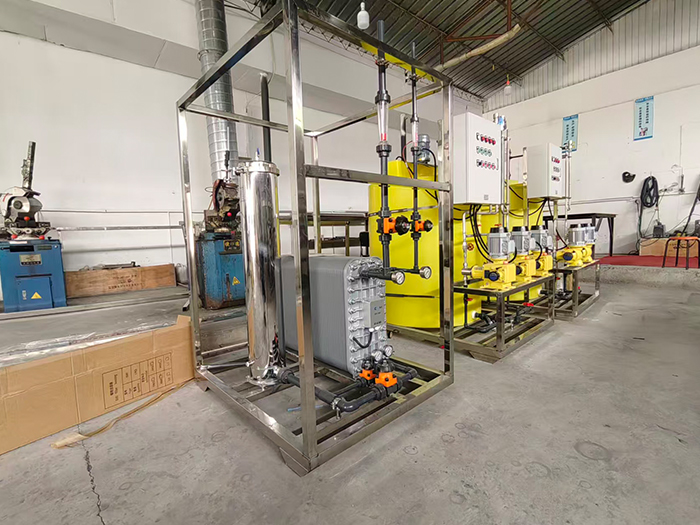
Yuan LaiEDIThe ultra-pure water equipment uses electro-deionization technology.EDIElectrodeionization is a water purification method that combines the dual advantages of electrodialysis and ion exchange. It does not require acid-base chemical regeneration and can continuously and stably prepare high-purity ultrapure water. Under the action of a direct current electric field, ion separation in water is completed. At the same time, water is electrolyzed to generate hydrogen ions and hydroxide ions, achieving automatic regeneration of the resin without the need to stop the machine for manual regeneration. The pre-treatment combined with reverse osmosis can prevent oxidized substances from damaging the resin, ensuring stable effluent quality and widely meeting the high-standard water usage requirements of various industries.
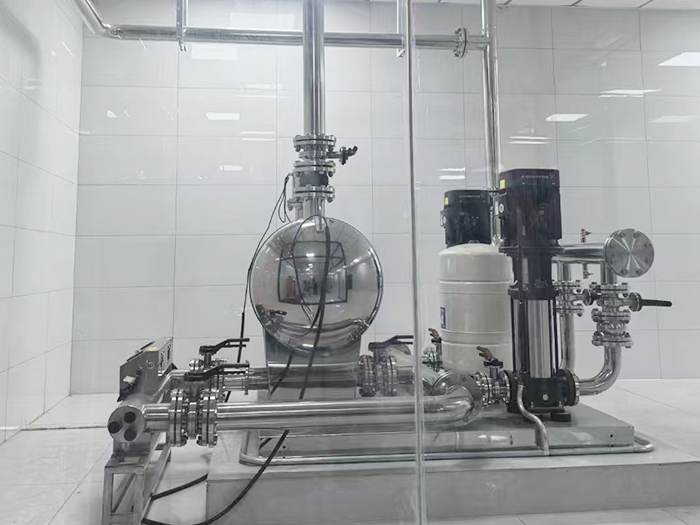
The non-negative pressure water supply equipment can be directly connected to the municipal water supply network, making full use of the residual pressure of the original network for superimposed water supply. Fully enclosed operation does not require the construction of a domestic water tank, eliminating secondary pollution. Intelligent variable frequency voltage stabilization, energy-saving, quiet and easy installation, it is the preferred equipment for secondary water supply in high-rise residential buildings and commercial buildings.
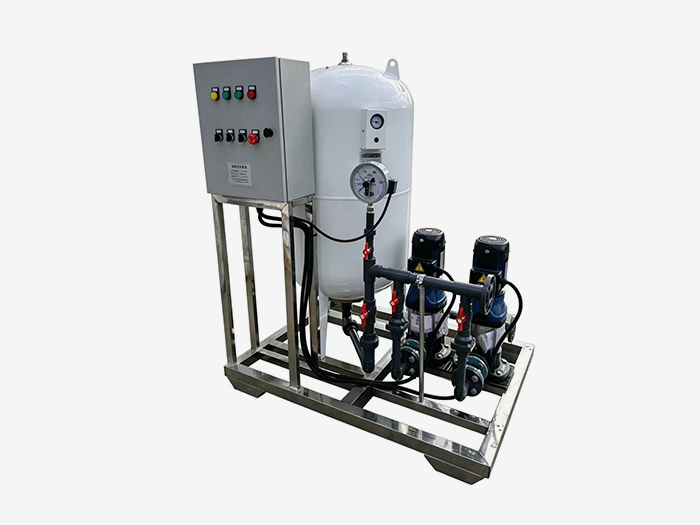
Constant pressure water supply equipment is widely used in central air conditioning, floor heating, industrial closed-loop water circulation, and boiler systems. It integrates automatic pressure stabilization, automatic water replenishment, automatic exhaust, pressure relief and buffering functions. It stabilizes the pressure in the pipeline network, eliminates abnormal sounds caused by air blockage, and prevents damage from negative pressure and water shortage in the pipeline. It is an essential supporting equipment for HVAC and circulating water systems.











 Landline:+86 010 59792055
Landline:+86 010 63780188
 Mobile:+86 13910114728
 Email:bjyuanlai@163.com
 Email:Wanda Plaza, Fengke Road, Fengtai District, BeijingBseat6Courtyard No.3Building No.7layer708
Yuanlai Homepage Softened water equipment Reverse osmosis pure water equipment Water supply equipment Engineering case Technical service Enter Yuanlai Site map
Softened water equipment Reverse osmosis pure water equipment Water purification equipment Water supply equipment Automatic dosing equipment High-purity water (ultra-pure water) equipment Wholesale of water treatment accessories
Electric power industry Petrochemical industry The electronic semiconductor industry The photovoltaic new energy industry Pharmaceuticals & Biochemical Engineering School research units Food and beverage industry Enterprises and public institutions
Reverse osmosis membrane Star-counting pump Fleck Valve Runxin Valve Instruments and meters Ultrafiltration membrane Softening resin Resin tank
