Bookmark this site Online message 中文站Welcome to the official website of Beijing Yuanlai Water Treatment Equipment Co., LTD.!
Service Hotline
+86 010 59792055 / +86 13910114728

What are the basic principles of boiler softened water treatment equipment?
What are the basic principles of boiler softened water treatment equipment? Boiler softened water treatment equipment can be used for steam boilers, hot water boilers, air conditioners, steam condensers, heat exchangers and other make-up water equipment. It can also be used for the treatment of domestic water in hotels, restaurants, office buildings, apartments, etc., as well as for soft water treatment in industries such as beverages, brewing, chemicals, and pharmaceuticals. The water softener uses strong acidic cation resin to replace calcium and magnesium ions in the raw water. The water flowing out of this equipment is softened water with extremely low hardness. The chemical reaction is: 2RNa Ca2 (Mg2)=R2Ca(Mg) 2Na. When the resin has adsorbed a certain amount of calcium and magnesium ions, it is regenerated - the resin is soaked in saturated brine to displace the calcium, magnesium ions and other hardness in the resin, restoring the softening exchange of the resin
Details >How should softened water treatment equipment be maintained and serviced
Softened water equipment, as the name suggests, is a device that reduces water hardness. It mainly removes calcium and magnesium ions from water. In simple terms, it is a device that reduces water hardness. Its main functions include removing calcium and magnesium ions from water, activating water quality, eliminating algae, and preventing and removing scale. It can be widely applied to the softening of make-up water in systems such as steam boilers, hot water boilers, exchangers, evaporative condensers, air conditioners, and direct-fired machines. So, how should water softening treatment equipment be maintained? It is recommended that you maintain and service the softened water treatment equipment in accordance with the following requirements. 1. Ensure the stability of the input voltage and current to prevent the electrical control device from burning out. A sealed cover should be installed on the outside of the electronic control device to prevent moisture and water immersion. 2. Regularly add solid granular table salt to the salt tank (it is strictly forbidden to add refined salt or iodized salt) to ensure that the salt solution in the tank is in a saturated stat
Details >How does the sodium ion exchange water softening process reduce the alkalinity in the raw water?
The sodium ion exchange water softening method requires that the alkalinity of the raw water not be reduced during the softening process. When the alkalinity (pH value) in the raw water is too high, it will affect the quality of steam, increase the blowdown rate and raise the ineffective heat loss. The metal heating surfaces such as the drum may also become caustic embrittlement due to an excessively high PH value, which affects the operation and service life of the pot. Therefore, sulfuric acid solution should be added to the water after sodium ion exchange for neutralization treatment to reduce the alkalinity of the water. During the neutralization and acidification process, CO2 will be produced. A CO2 remover can be set up to remove it. When operating, pay attention to the control of the amount of acid added to prevent the boiler from being corroded by acid.
Details >Answer: (1) The heating system is divided into two forms: steam boiler heating and hot water boiler heating. The fuel for boilers can be classified into solid fuels (such as coal and other solid fuels), liquid fuels (such as diesel, heavy oil and other liquid fuels), and gaseous fuels (such as natural gas, coal gas, biogas and other gaseous fuels). The operation of boilers in sewage treatment plants is generally at medium pressure (with a rated pressure of 3.0 to 4.9MPa) and low pressure (with a rated pressure of 2.45MPa). The main contents of the individual commissioning and preliminary acceptance of the boilers include: ① Boiler body and pressure resistance test. ② Local switch control box of the boiler. ③ Boiler softening water treatment device, deionized water device. ④ Pressure testing of heating pipelines, valves and valves. ⑤ The tail gas treatment device of the boiler. ⑥ Storage device for boiler fuel. ⑦ Boiler room
Details >Water equipment - ultraviolet device
I. The specific features of the imported ultraviolet device (with manual cleaning device) are as follows: 1. The high-intensity ultraviolet C lamp used in our company's ultraviolet device: High-quality ultraviolet C lamp tubes are adopted, and the continuous service life of the lamp tubes is over 9,000 hours. The system structure is reasonably designed, effectively ensuring the stability of system operation and having a low failure rate. The system of the ultraviolet device has a higher efficiency and stronger reliability under the same dosage and the same number of lamp tubes. And there are high-power ultraviolet lamps available for users to choose from. 2. This equipment adopts intelligent electronic ballasts. 3. The UV intensity monitor of this ultraviolet device: The design integrates the monitoring of ultraviolet C-band (200-280nm) radiation intensity and sound and light alarm into one, and is made of all stainless steel casing
Details >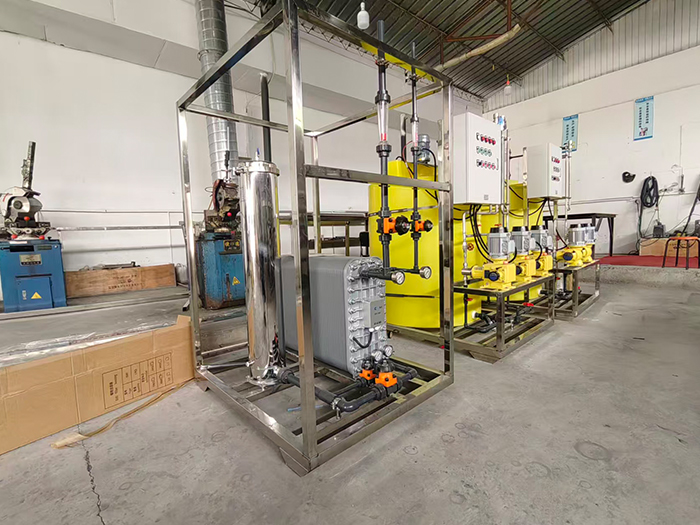
Yuan LaiEDIThe ultra-pure water equipment uses electro-deionization technology.EDIElectrodeionization is a water purification method that combines the dual advantages of electrodialysis and ion exchange. It does not require acid-base chemical regeneration and can continuously and stably prepare high-purity ultrapure water. Under the action of a direct current electric field, ion separation in water is completed. At the same time, water is electrolyzed to generate hydrogen ions and hydroxide ions, achieving automatic regeneration of the resin without the need to stop the machine for manual regeneration. The pre-treatment combined with reverse osmosis can prevent oxidized substances from damaging the resin, ensuring stable effluent quality and widely meeting the high-standard water usage requirements of various industries.
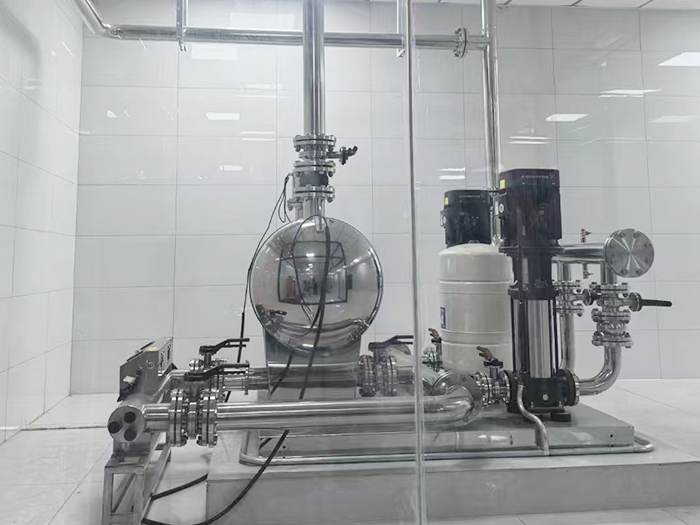
The non-negative pressure water supply equipment can be directly connected to the municipal water supply network, making full use of the residual pressure of the original network for superimposed water supply. Fully enclosed operation does not require the construction of a domestic water tank, eliminating secondary pollution. Intelligent variable frequency voltage stabilization, energy-saving, quiet and easy installation, it is the preferred equipment for secondary water supply in high-rise residential buildings and commercial buildings.
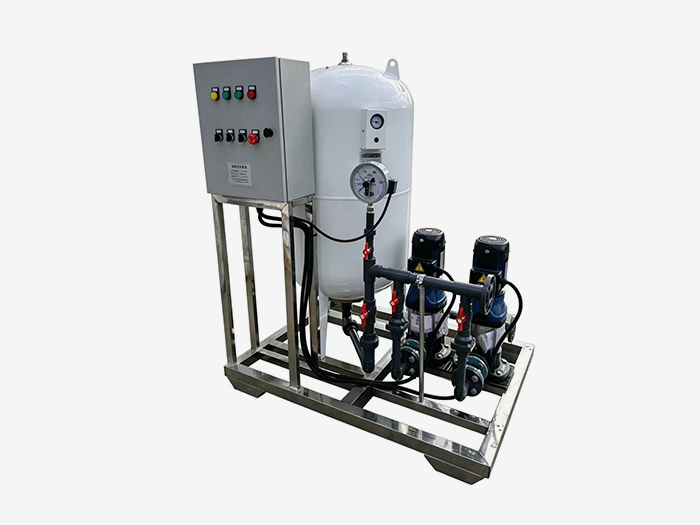
Constant pressure water supply equipment is widely used in central air conditioning, floor heating, industrial closed-loop water circulation, and boiler systems. It integrates automatic pressure stabilization, automatic water replenishment, automatic exhaust, pressure relief and buffering functions. It stabilizes the pressure in the pipeline network, eliminates abnormal sounds caused by air blockage, and prevents damage from negative pressure and water shortage in the pipeline. It is an essential supporting equipment for HVAC and circulating water systems.











 Landline:+86 010 59792055
Landline:+86 010 63780188
 Mobile:+86 13910114728
 Email:bjyuanlai@163.com
 Email:Wanda Plaza, Fengke Road, Fengtai District, BeijingBseat6Courtyard No.3Building No.7layer708
Yuanlai Homepage Softened water equipment Reverse osmosis pure water equipment Water supply equipment Engineering case Technical service Enter Yuanlai Site map
Softened water equipment Reverse osmosis pure water equipment Water purification equipment Water supply equipment Automatic dosing equipment High-purity water (ultra-pure water) equipment Wholesale of water treatment accessories
Electric power industry Petrochemical industry The electronic semiconductor industry The photovoltaic new energy industry Pharmaceuticals & Biochemical Engineering School research units Food and beverage industry Enterprises and public institutions
Reverse osmosis membrane Star-counting pump Fleck Valve Runxin Valve Instruments and meters Ultrafiltration membrane Softening resin Resin tank
