Bookmark this site Online message 中文站Welcome to the official website of Beijing Yuanlai Water Treatment Equipment Co., LTD.!
Service Hotline
+86 010 59792055 / +86 13910114728

How to regenerate Perlite soft water resin for boilers?
Pelleite resin is a commonly used variety in boiler equipment. Soft water resin is the core component of boiler soft water equipment. Its quality directly affects the efficiency and service life of the boiler. When raw water passes through soft water resin, calcium and magnesium ions in the water can be removed, reducing water hardness and the formation of scale. When the soft water resin has replaced a certain amount of hardness ions such as calcium and magnesium in the water, it can no longer soften the water. At this point, a water softener is needed to regenerate the resin, which is the reduction and regeneration method after the resin is contaminated by calcium. Now let's talk about how to regenerate the Perlite soft water resin used in boilers. When regenerating strong cation exchange resin with Na solution in step one, it is advisable to adopt a stepwise regeneration method. Start regeneration with a low-concentration Na solution because at this time, the concentration of Ca2+ desorbed from the resin is high, but the concentration of Na is low. Even if a small amount of Ca2+Na precipitate is formed, it will be absorbed
Details >The process in which some solutes are inevitably retained during membrane separation and the retained solutes deposit on the membrane surface or in the membrane pores, leading to a decline in membrane performance, is called membrane fouling. The main manifestations of membrane fouling are: reducing the membrane flux of the solvent; Reduce or increase the retention rate of solutes. Membrane fouling is an inevitable by-product phenomenon in membrane technology processes. Membrane fouling driven by pressure in membrane processes mainly includes three categories: inorganic fouling, organic fouling and microbial fouling. Inorganic contamination refers to the precipitation of particulate matter and insoluble salts on the membrane surface. Organic pollution refers to the adsorption, clogging and retention of organic substances within the membrane pores, as well as the formation of a gel layer on the membrane surface. Microbial contamination refers to the adhesion, clogging and proliferation of microorganisms on the membrane surface. The synthesis of three types of membrane fouling factors can clog membrane pores or form filter cakes, deteriorating the separ
Details >How to determine the replacement of softened water resin?
Winter is approaching. In the north, heating is our weapon against the cold. The commonly used heating equipment transfers heat by generating steam through boiling water in boilers. The water used usually contains calcium and magnesium ions. During the heating process, these calcium and magnesium ions will form substances such as calcium carbonate, magnesium carbonate, and magnesium hydroxide, which are commonly known as scale. When scale accumulates to a certain extent, it will cause uneven heat transfer in the boiler and easily lead to explosion. Therefore, before boiling water, it is necessary to soften the water first. Generally, water softening is carried out using water softening resin. Water softening resin is a type of resin that reduces calcium and magnesium ions in water through ion exchange, thereby lowering water hardness. However, the general service life of softened water resin is 3 to 5 years. If it is used for a long time, the resin will lose its effectiveness, and the effluent will be substandard, which will affect the service life of the boiler. So,
Details >The reasons why manganese sand is not thoroughly backwashed
Why can't manganese sand be cleaned thoroughly during backwashing?
Details >According to the different flow patterns of the treated elements and the permeate, membrane processes are divided into two forms: total (or dead end) filtration (also known as co-current filtration) and cross-flow filtration. The process of total filtration is simple, with a high recovery rate, and it operates in an intermittent mode. The cross-flow filtration process is complex and has a low recovery rate, and it operates in a continuous mode. One of the important technical indicators of membrane technology is the process recovery rate, which is the ratio of the process permeable flow rate to the raw water flow rate: recovery rate; = The recovery rate of the permeable water flow/raw water flow in the full filtration method is always equal to 1, while that in the cross-flow filtration method is less than 1. Under the total filtration mode, the permeate passes vertically through the membrane, while the retained substances remain on the raw liquid side, especially accumulating on the membrane surface on the raw liquid side, causing membrane contamination. The rate of membrane contamination is relatively fast. Under cross-flow filtration, the permeate passes through the me
Details >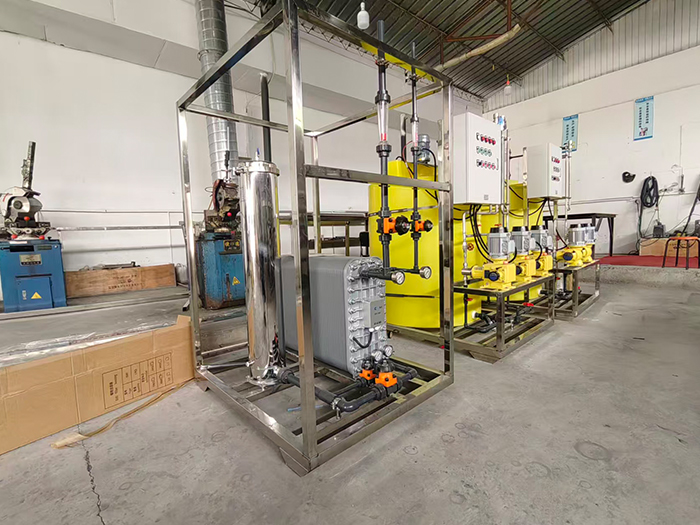
Yuan LaiEDIThe ultra-pure water equipment uses electro-deionization technology.EDIElectrodeionization is a water purification method that combines the dual advantages of electrodialysis and ion exchange. It does not require acid-base chemical regeneration and can continuously and stably prepare high-purity ultrapure water. Under the action of a direct current electric field, ion separation in water is completed. At the same time, water is electrolyzed to generate hydrogen ions and hydroxide ions, achieving automatic regeneration of the resin without the need to stop the machine for manual regeneration. The pre-treatment combined with reverse osmosis can prevent oxidized substances from damaging the resin, ensuring stable effluent quality and widely meeting the high-standard water usage requirements of various industries.
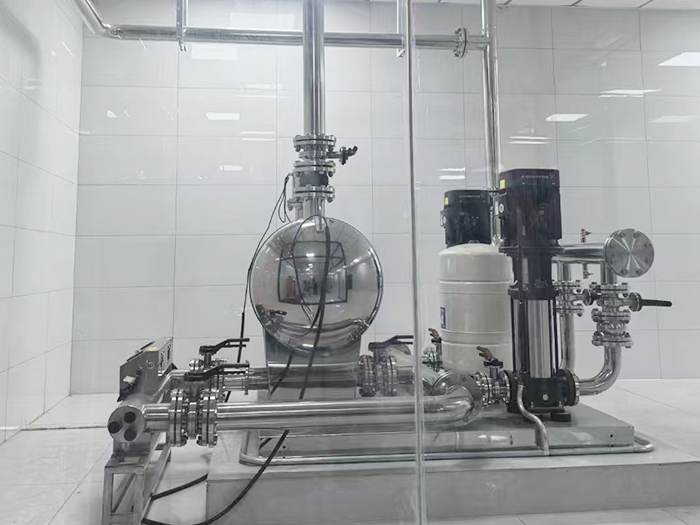
The non-negative pressure water supply equipment can be directly connected to the municipal water supply network, making full use of the residual pressure of the original network for superimposed water supply. Fully enclosed operation does not require the construction of a domestic water tank, eliminating secondary pollution. Intelligent variable frequency voltage stabilization, energy-saving, quiet and easy installation, it is the preferred equipment for secondary water supply in high-rise residential buildings and commercial buildings.
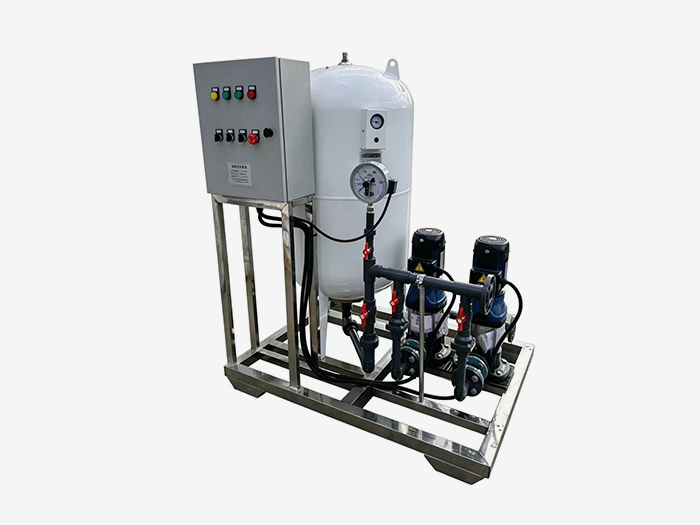
Constant pressure water supply equipment is widely used in central air conditioning, floor heating, industrial closed-loop water circulation, and boiler systems. It integrates automatic pressure stabilization, automatic water replenishment, automatic exhaust, pressure relief and buffering functions. It stabilizes the pressure in the pipeline network, eliminates abnormal sounds caused by air blockage, and prevents damage from negative pressure and water shortage in the pipeline. It is an essential supporting equipment for HVAC and circulating water systems.











 Landline:+86 010 59792055
Landline:+86 010 63780188
 Mobile:+86 13910114728
 Email:bjyuanlai@163.com
 Email:Wanda Plaza, Fengke Road, Fengtai District, BeijingBseat6Courtyard No.3Building No.7layer708
Yuanlai Homepage Softened water equipment Reverse osmosis pure water equipment Water supply equipment Engineering case Technical service Enter Yuanlai Site map
Softened water equipment Reverse osmosis pure water equipment Water purification equipment Water supply equipment Automatic dosing equipment High-purity water (ultra-pure water) equipment Wholesale of water treatment accessories
Electric power industry Petrochemical industry The electronic semiconductor industry The photovoltaic new energy industry Pharmaceuticals & Biochemical Engineering School research units Food and beverage industry Enterprises and public institutions
Reverse osmosis membrane Star-counting pump Fleck Valve Runxin Valve Instruments and meters Ultrafiltration membrane Softening resin Resin tank
