Bookmark this site Online message 中文站Welcome to the official website of Beijing Yuanlai Water Treatment Equipment Co., LTD.!
Service Hotline
+86 010 59792055 / +86 13910114728

What are the advantages and disadvantages of ultraviolet rays?
Advantage 1: Ultraviolet rays can generally kill 99% to 99.9% of viruses within 0.5 minutes. 1. It has a high sterilization rate, fast speed and high efficiency. 2. Broad-spectrum property: Ultraviolet light can effectively kill harmful substances such as bacteria, viruses and spores, and has broad-spectrum property. It can remove spores and viruses that are difficult to kill by liquid chlorine method. 3. No secondary pollution: Ultraviolet light is a physical process without the addition of any chemical agents. Therefore, it will not cause secondary pollution to water bodies and the surrounding environment, nor will it leave any harmful residual effects on humans and aquatic life, nor will it change any components in the water. Compared with chemistry, it avoids the dangers and corrosiveness existing in the generation, handling and transportation. 4. Easy operation: It is relatively reliable and convenient for the surrounding environment and operators
Details >“ "Water distribution"; It is to arrange the water volume in a certain working area according to a certain rule. The common practice is to evenly distribute water on the working surface. The device that accomplishes this task is called a water distributor. Common types of water distributors include perforated pipes, nozzles, filter heads and rotary water distributors. For instance, the water distributor in a sand filter is composed of a main pipe - branch pipes - water distribution holes. On the lower side of each branch pipe, there are many small holes of equal spacing and diameter evenly arranged. The water for backwashing of the filter flows from the main pipe to the branch pipes and then flows out through the holes of the branch pipes to uniformly flush the filter sand upward. A rotary water distributor is a perforated pipe that can rotate and is also frequently used in water treatment. Scope of application: reclaimed water and wastewater reuse equipment ------ reclaimed water and wastewater reuse in industrial fields such as electroplating, electronics, and textile printing and dyeing
Details >How long is the regeneration time for water softening equipment?
How long does it take for a softened water device to regenerate (backwashing, brine drawing, forward washing, and water injection)
Details >The bag filter used for liquid filtration consists of three parts: the filter container, the supporting screen basket and the filter bag. Its original working principle is pressure surface filtration. In the filtration system, the filter bags are supported by the supporting screen baskets. The liquid to be filtered flows in from the top of the filter bag and is evenly distributed on the inner surface of the filter bag without the negative effect of turbulence. The filtered particulate impurities are throttled in the filter bag, completing the filtration process. The bag filter can effectively remove particles of different sizes from the liquid, thereby achieving the purpose of liquid filtration, purification, separation and recovery. There are various types of bag filters. Classified by the number of filter bags, they can be divided into single-bag, double-bag and multi-bag types. According to the way the liquid flows, there are side-entry type and top-entry type. According to different usage requirements, bag filters can be matched with various types of filter bags of different structures, shapes and materials, and their filtration accuracy is 1
Details >How to choose a metering pump?
The metering pump mainly consists of three parts: power drive, fluid transportation and regulation control. Metering pumps can be classified into motor-driven, electromagnetic driven and pneumatic types based on their power drive. According to the fluid transportation mode, they are classified into plunger pumps and diaphragm pumps. Diaphragm pumps are further divided into mechanical transmission diaphragm pumps and hydraulic transmission diaphragm pumps. Since the coagulants used in water treatment projects are mostly corrosive liquids, diaphragm pumps are often adopted. When choosing a metering pump, it is generally necessary to know the rated pressure, rated flow rate, type (diaphragm type or plunger type), and flow-through material. The rated pressure of a metering pump usually refers to the outlet pressure. When selecting a model, it is generally advisable to choose a rated pressure that exceeds the actual operating pressure by 10% to 20%. This not only saves resources and reduces costs but also improves the metering accuracy of the metering pump during actual use. When the metering pump is in operation, it is generally at a rated flow rate of 10
Details >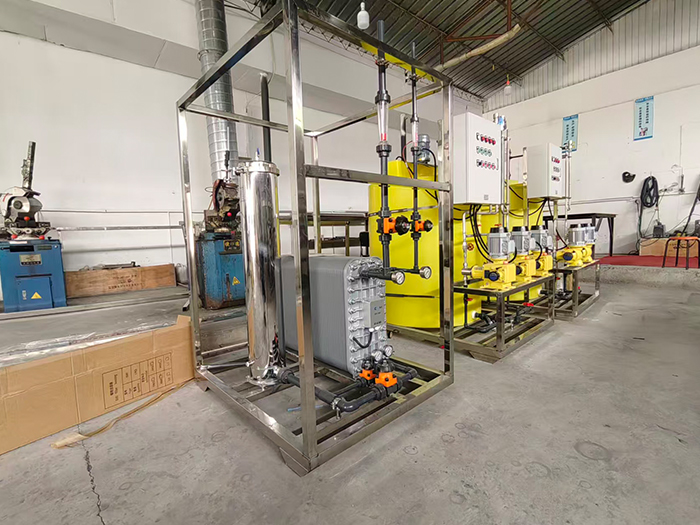
Yuan LaiEDIThe ultra-pure water equipment uses electro-deionization technology.EDIElectrodeionization is a water purification method that combines the dual advantages of electrodialysis and ion exchange. It does not require acid-base chemical regeneration and can continuously and stably prepare high-purity ultrapure water. Under the action of a direct current electric field, ion separation in water is completed. At the same time, water is electrolyzed to generate hydrogen ions and hydroxide ions, achieving automatic regeneration of the resin without the need to stop the machine for manual regeneration. The pre-treatment combined with reverse osmosis can prevent oxidized substances from damaging the resin, ensuring stable effluent quality and widely meeting the high-standard water usage requirements of various industries.
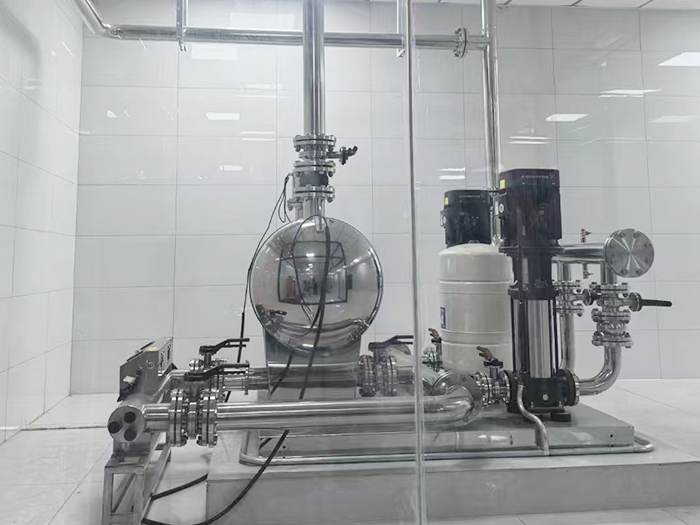
The non-negative pressure water supply equipment can be directly connected to the municipal water supply network, making full use of the residual pressure of the original network for superimposed water supply. Fully enclosed operation does not require the construction of a domestic water tank, eliminating secondary pollution. Intelligent variable frequency voltage stabilization, energy-saving, quiet and easy installation, it is the preferred equipment for secondary water supply in high-rise residential buildings and commercial buildings.
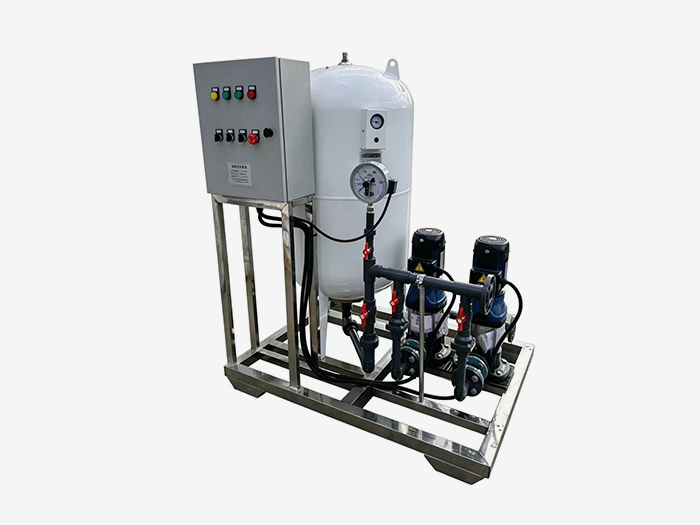
Constant pressure water supply equipment is widely used in central air conditioning, floor heating, industrial closed-loop water circulation, and boiler systems. It integrates automatic pressure stabilization, automatic water replenishment, automatic exhaust, pressure relief and buffering functions. It stabilizes the pressure in the pipeline network, eliminates abnormal sounds caused by air blockage, and prevents damage from negative pressure and water shortage in the pipeline. It is an essential supporting equipment for HVAC and circulating water systems.











 Landline:+86 010 59792055
Landline:+86 010 63780188
 Mobile:+86 13910114728
 Email:bjyuanlai@163.com
 Email:Wanda Plaza, Fengke Road, Fengtai District, BeijingBseat6Courtyard No.3Building No.7layer708
Yuanlai Homepage Softened water equipment Reverse osmosis pure water equipment Water supply equipment Engineering case Technical service Enter Yuanlai Site map
Softened water equipment Reverse osmosis pure water equipment Water purification equipment Water supply equipment Automatic dosing equipment High-purity water (ultra-pure water) equipment Wholesale of water treatment accessories
Electric power industry Petrochemical industry The electronic semiconductor industry The photovoltaic new energy industry Pharmaceuticals & Biochemical Engineering School research units Food and beverage industry Enterprises and public institutions
Reverse osmosis membrane Star-counting pump Fleck Valve Runxin Valve Instruments and meters Ultrafiltration membrane Softening resin Resin tank
