Bookmark this site Online message 中文站Welcome to the official website of Beijing Yuanlai Water Treatment Equipment Co., LTD.!
Service Hotline
+86 010 59792055 / +86 13910114728

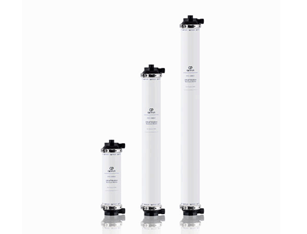
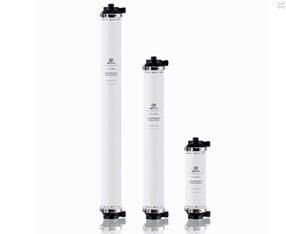
The contamination and cleaning of ultrafiltration membranes: As the contaminants retained by the ultrafiltration membrane continuously accumulate on the inner surface and in the membrane pores, the water flux and separation capacity of the ultrafiltration membrane gradually decline. Backwashing can partially restore the water flux of the membrane, but it cannot achieve a 100% recovery effect. Therefore, when the water flux of the ultrafiltration membrane drops by more than 30%, cleaning should be carried out Timely clean the contaminants adhering to the walls and pores of the ultrafiltration membrane to prevent irreversible clogging of the ultrafiltration membrane. The main cleaning methods are as follows: 1. Prepare the pH value of RO water or ultrafiltration water to 2 with HY-410 cleaning agent, inject it into the inlet valve of the ultrafiltration membrane through a booster pump, and circulate it back from the discharge valve. Adjust the discharge valve to stabilize the pressure at 0.25Mpa. After 30 minutes of circulation cleaning, adjust the inlet valve, discharge valve and other valves
The application of ultrafiltration in water treatment, Beijing water treatment equipment, Beijing ultrafiltration equipment, Beijing ultrafiltration membrane. Ultrafiltration is a membrane system between microfiltration and nanofiltration, with an average pore size ranging from 3 to 100nm. Ultrafiltration membrane is a membrane separation technology that can purify, separate and concentrate solutions. Its retention mechanism is mainly sieving, but sometimes the membrane pores are larger than the solvent molecules. It is also larger than the solute molecules. The chemical properties of the membrane surface also play a role in retention. With the pressure difference on both sides of the membrane as the driving force and the ultrafiltration membrane as the filtration medium, under a certain pressure, when water flows over the membrane surface, only water and low-molecular-weight solutes are allowed to pass through, thereby achieving the purpose of purifying, separating and concentrating the solution. The application of ultrafiltration in water treatment: Ultrafiltration in drinking water treatment can generally remove water from water including water fleas, algae, protozoa, and even viruses
Dear users: Yuanlai Company is the specially authorized agent of purolite in the UK, with complete agency qualifications. On the occasion of the 16th anniversary of our company's establishment, we are grateful for the strong support of all our peers and users. We are now offering a discount on our Poulite resin, Resin C100E. For more details, please consult our sales department. Also: Kaineng Huayu resin tank, Canpure EDI module, Nanfang Special Pump, Sehan membrane, Dow membrane, FRP membrane housing, Stainless steel membrane housing Precision filters: American FLECK control valves, AUTOTROL control valves, ultrafiltration membranes, GEosmonics filter elements, UV ultraviolet rays, ozone, membrane housings, SEKO Mitonro, channel metering pumps, Grundfos water pumps, pressure protection switches, flow meters, scale inhibitors, level switches, GF instruments and meters, solenoid valves
What are the ways to add scale inhibitors to circulating water? To meet the diverse demands in industrial production, scale inhibitors can be classified into many types, and circulating water scale inhibitor is one of them. Circulating water scale inhibitor is specifically designed to clean organic and biological scale on reverse osmosis membranes and ultrafiltration membranes. Different usage methods of reverse osmosis chemicals achieve different effects. Let's take a look at the dosing methods of circulating water scale inhibitor below 1. Shock addition: As there are still a small amount of surviving bacteria, algae and microbial salts retained on the surface of the reverse osmosis membrane, these bacteria and algae will reproduce and grow within a certain period of time. Therefore, it is necessary to regularly shock add scale inhibitors to promptly remove the bacteria and algae on the membrane surface. Shock addition should be carried out once or every two weeks to centrally kill the bacteria and algae in the system. The dosage for shock dosing is generally around 100ppm.
【 Customer Question 】 How to clean a clogged reverse osmosis membrane? 【 Yuanlai Solution 】 Water Supply and process Water Treatment (Separation, Concentration, Classification and Purification) In various industrial production processes, there is often a need to separate, concentrate, classify and purify certain aqueous solutions. The traditional methods used include processes such as sedimentation, filtration, heating, freezing, distillation, extraction and crystallization. These methods exhibit disadvantages such as long processes, high energy consumption, significant material loss, large equipment, low efficiency, and cumbersome operation. The economic benefits that can be achieved by replacing certain traditional technologies with ultrafiltration membrane technology. The reverse osmosis system needs to be cleaned. It is recommended that you clean the RO system when it shows signs of contamination, before it is shut down for a long time, or during regular maintenance as planned.










 Landline:+86 010 59792055
Landline:+86 010 63780188
 Mobile:+86 13910114728
 Email:bjyuanlai@163.com
 Email:Wanda Plaza, Fengke Road, Fengtai District, BeijingBseat6Courtyard No.3Building No.7layer708
Yuanlai Homepage Softened water equipment Reverse osmosis pure water equipment Water supply equipment Engineering case Technical service Enter Yuanlai Site map
Softened water equipment Reverse osmosis pure water equipment Water purification equipment Water supply equipment Automatic dosing equipment High-purity water (ultra-pure water) equipment Wholesale of water treatment accessories
Electric power industry Petrochemical industry The electronic semiconductor industry The photovoltaic new energy industry Pharmaceuticals & Biochemical Engineering School research units Food and beverage industry Enterprises and public institutions
Reverse osmosis membrane Star-counting pump Fleck Valve Runxin Valve Instruments and meters Ultrafiltration membrane Softening resin Resin tank
