Bookmark this site Online message 中文站Welcome to the official website of Beijing Yuanlai Water Treatment Equipment Co., LTD.!
Service Hotline
+86 010 59792055 / +86 13910114728

Which type of activated carbon is used in water purification and water treatment?
Activated carbon can be classified into wood-based carbon and coal-based carbon according to the raw materials used in production. Activated carbon made from raw materials such as wood, sawdust, fruit shells, and plant fibers is called wood-based carbon. Another type of activated carbon made from lignite, peat, bituminous coal, semi-bituminous coal and anthracite is called coal-based carbon. If classified by particle size, there are powdered carbon (less than 200 mm) and granular carbon (1.6-3.2mm). If classified by application, there are catalyst carrier carbon, recovery adsorption carbon, desulfurization and decolorization carbon, and activated carbon for water purification. Finished activated carbon is a black solid substance with no odor or taste. Its main component is carbon, accounting for over 80%, and the rest are hydrogen, oxygen, iron, sulfur, phosphorus, calcium, as well as moisture and ash. It is insoluble in water and solvents. All types of activated carbon are spongy substances composed of microcrystalline carbon. Activated carbon for water purification is generally made from anthracite as raw material and is crushed
Details >The reasons for the large amount of floc floating in the clarification tank
The reasons for the floc floating in the clarifier are multi-faceted. It will directly affect the effluent quality, so it should be taken seriously. The reasons for the large amount of floc floating in the clarifier are as follows. (1) The rotational speed of the agitator in the clarifier was too high, breaking up the flocs. As a result, it became more difficult for the broken flocs to coagulate again, reducing the strength of the sludge and causing the flocs to float up. When encountering such a situation, the linear velocity at the outer edge of the mixer impeller should be well controlled and must not exceed the design specification. At the same time, the dosage of coagulant should be appropriately increased to re-form the suspended sludge layer. (2) The reflux joint of the clarifier is clogged, preventing the activated sludge from flowing back and causing flocs to float up along the tank wall. At this point, the reflux joint should be opened to flush the pipeline, clear the blockage, appropriately drain the sewage, and increase the reflux flow of the mixer by 4 to 5 times. This can prevent the floating phenomenon. (3) Failure to discharge pollutants in a timely and regular manner,
Details >Factors affecting coagulation effect
The factors influencing the coagulation effect include: (1) water temperature; At low temperatures, the coagulation effect is poor and the coagulation is very slow. At that time, due to the endothermic reaction of inorganic salt coagulants during hydrolysis, hydrolysis is very difficult when the water temperature is low. Secondly, in low-temperature water, the annual temperature is large, and the thermal motion of impurities in water is slow, reducing the chance of batch contact and collision, which is unfavorable for mutual coagulation. When the viscosity of water is high, the shear force of water flow increases, and the growth of flocs is hindered. Therefore, the coagulation effect is poor when the water temperature is low. When the water temperature rises, the diffusion rate between molecules accelerates, which is conducive to the progress of coagulation reactions. The usual temperature is 20 to 29 degrees Celsius. (2) The pH value and alkalinity of water and their influences Excessively high pH value and alkalinity can also affect the coagulation effect. (3) The influence of the composition, nature and concentration of impurities in water &
Details >Why is it necessary to control head loss?
Head loss refers to the pressure of water passing through the filter layer. Head loss is one of the indicators often used to determine whether a filter needs to be flushed. When the head loss of the filter reaches a certain value during operation, it should be shut down and backwashing should be carried out. The reasons why the filter cannot be operated with excessive head loss are as follows: (1) When the head loss is large, the pressure during the filtration operation increases, which easily leads to the rupture of the filter layer and the occurrence of cracks in certain parts of the filter layer. At this point, most of the water passes through the crack, creating a short circuit in the water flow and disrupting the Bob filtration effect, thereby affecting the water quality. (2) Head loss is related to the impurity content in the filter layer. If the investment loss is too large, it indicates that there are too many impurities in the filter layer, which will cause the filter material to clump and be difficult to clean thoroughly during backwashing and other adverse consequences. In addition, each part of the filter layer equipment is designed according to a certain pressure and cannot
Details >Calculation methods for the regeneration of boiler softened water equipment and solutions for you
Calculation method for flow regeneration of boiler softened water equipment and calculation method for regeneration cycle: 1. Inlet and outlet water quality of boiler softened water: Inlet water hardness: 6.0mmol/L. Effluent hardness: 0.03mmol/L. Ii. Parameters of Boiler Softened Water Equipment: Water production capacity: 0.2-0.5T/h. Resin content: 25L. Resin tank: Φ200× 1200. Salt tank: 25L. Iii. Calculation Process of Boiler Softened Water. 1. Calculation parameters for boiler softened water. The volumetric total exchange capacity of the resin: ≥ 1900mmol/L. (Zhejiang Zhengguang General Resin: 001×7) The working exchange capacity of the resin: ≥ 1200mmol/L.
Details >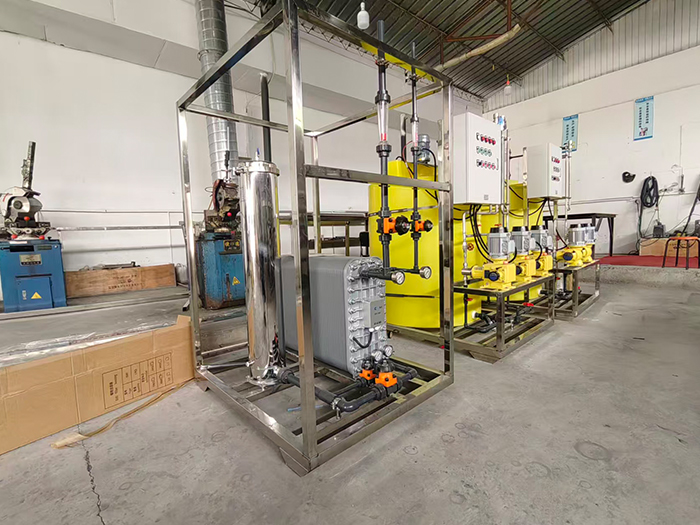
Yuan LaiEDIThe ultra-pure water equipment uses electro-deionization technology.EDIElectrodeionization is a water purification method that combines the dual advantages of electrodialysis and ion exchange. It does not require acid-base chemical regeneration and can continuously and stably prepare high-purity ultrapure water. Under the action of a direct current electric field, ion separation in water is completed. At the same time, water is electrolyzed to generate hydrogen ions and hydroxide ions, achieving automatic regeneration of the resin without the need to stop the machine for manual regeneration. The pre-treatment combined with reverse osmosis can prevent oxidized substances from damaging the resin, ensuring stable effluent quality and widely meeting the high-standard water usage requirements of various industries.
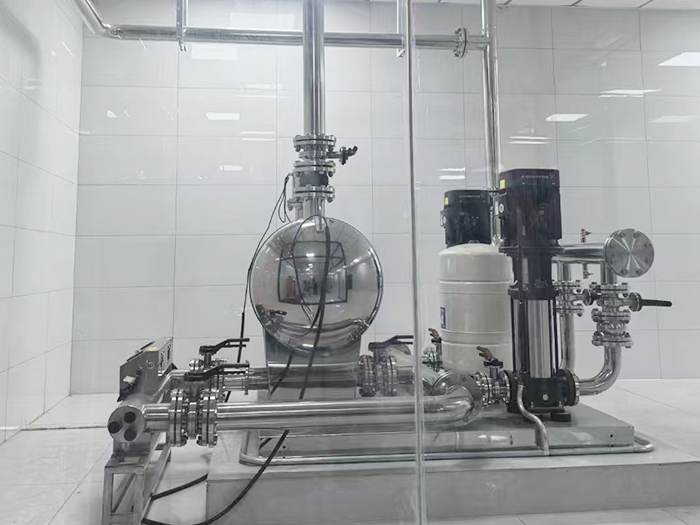
The non-negative pressure water supply equipment can be directly connected to the municipal water supply network, making full use of the residual pressure of the original network for superimposed water supply. Fully enclosed operation does not require the construction of a domestic water tank, eliminating secondary pollution. Intelligent variable frequency voltage stabilization, energy-saving, quiet and easy installation, it is the preferred equipment for secondary water supply in high-rise residential buildings and commercial buildings.
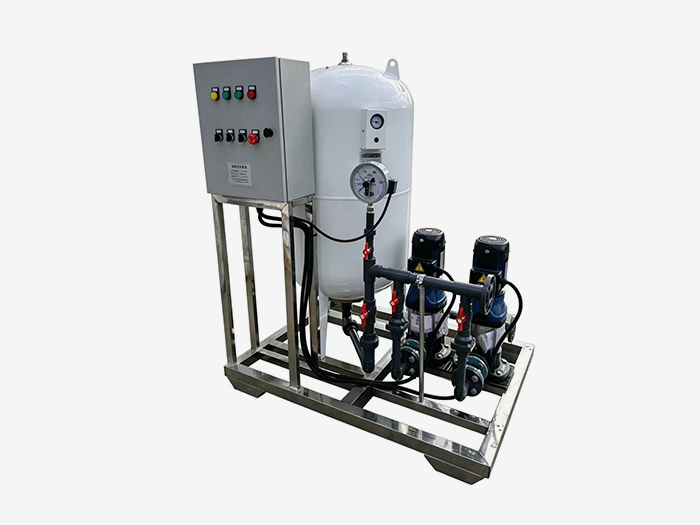
Constant pressure water supply equipment is widely used in central air conditioning, floor heating, industrial closed-loop water circulation, and boiler systems. It integrates automatic pressure stabilization, automatic water replenishment, automatic exhaust, pressure relief and buffering functions. It stabilizes the pressure in the pipeline network, eliminates abnormal sounds caused by air blockage, and prevents damage from negative pressure and water shortage in the pipeline. It is an essential supporting equipment for HVAC and circulating water systems.











 Landline:+86 010 59792055
Landline:+86 010 63780188
 Mobile:+86 13910114728
 Email:bjyuanlai@163.com
 Email:Wanda Plaza, Fengke Road, Fengtai District, BeijingBseat6Courtyard No.3Building No.7layer708
Yuanlai Homepage Softened water equipment Reverse osmosis pure water equipment Water supply equipment Engineering case Technical service Enter Yuanlai Site map
Softened water equipment Reverse osmosis pure water equipment Water purification equipment Water supply equipment Automatic dosing equipment High-purity water (ultra-pure water) equipment Wholesale of water treatment accessories
Electric power industry Petrochemical industry The electronic semiconductor industry The photovoltaic new energy industry Pharmaceuticals & Biochemical Engineering School research units Food and beverage industry Enterprises and public institutions
Reverse osmosis membrane Star-counting pump Fleck Valve Runxin Valve Instruments and meters Ultrafiltration membrane Softening resin Resin tank
